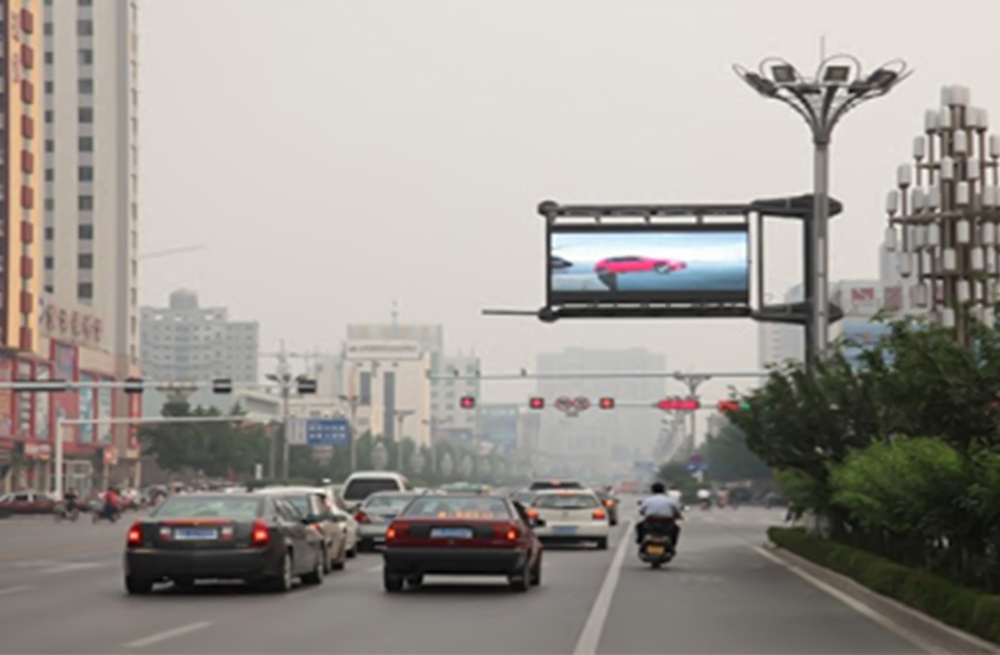
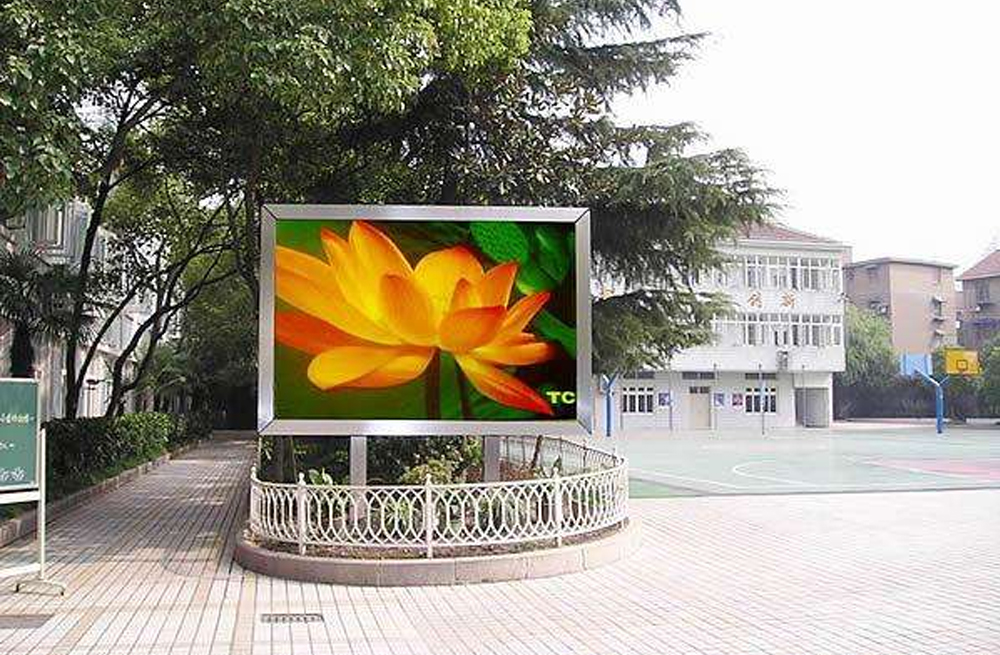
Outdoor LED advertising screens are popular because they combine high visibility, flexible content, durable hardware, and efficient campaign management. Unlike printed billboards, a digital advertising board can show multiple messages, update them in minutes, and adapt content to the time, audience, location, or event.
This guide explains the seven main benefits of outdoor LED advertising, how it compares with traditional signage, where it works best, and what to check before choosing a display.
Ŝlosilaj sendaĵoj
- Outdoor LED screens deliver bright, moving content that is easier to notice from a distance.
- One screen can support multiple campaigns without repeated printing and installation.
- Content can be scheduled and updated remotely for timely, location-specific messaging.
- Purpose-built outdoor displays are designed for sunlight, rain, dust, wind, and temperature changes.
- The best screen depends on viewing distance, pixel pitch, brightness, protection rating, installation, and lifetime operating cost.
Why are outdoor LED advertising screens so popular?
The short answer is versatility. An outdoor LED display functions as a large, programmable communication platform rather than a fixed sign. Businesses, venues, transport operators, and public organizations can use the same screen for promotions, live information, wayfinding, safety notices, and event content.
1. High visibility in busy outdoor environments
Outdoor advertising competes with traffic, buildings, daylight, and other signs. LED displays use high-brightness modules and strong color contrast to keep content visible in these conditions. Motion and scheduled content changes can also attract attention more effectively than a static message.
Visibility still depends on good planning. Brightness should match the installation environment, while text size, contrast, dwell time, and viewing angle should suit the expected audience distance. More brightness is not always better: the screen should be readable without causing glare or wasting energy.
2. Dynamic content and fast updates
A printed billboard shows one message until it is physically replaced. An outdoor LED advertising screen can rotate several campaigns and change content without reprinting. This makes it useful for messages that vary throughout the day.
- A restaurant can promote breakfast in the morning and dinner specials in the evening.
- A shopping center can combine promotions, event announcements, and wayfinding.
- A stadium can switch between sponsor content, scores, replays, and safety information.
- A transport hub can display schedules, service updates, and commercial advertising.
With a suitable LED controller and content management system, operators can schedule media in advance and manage one screen or a network of displays from a central location.
3. Better use of one advertising location
A digital advertising board can divide available screen time among multiple messages, departments, or advertisers. Instead of dedicating a location to a single campaign, the operator can build a playlist and control when each item appears.
This flexibility is especially valuable in premium locations where physical space is limited. It can also make campaign testing easier: operators can change headlines, images, calls to action, and schedules without rebuilding the sign.
4. Lower content-change costs over time
An LED display normally costs more upfront than a printed sign, but it removes many recurring print, transport, and installation tasks. For businesses that change promotions frequently, this can reduce the cost and delay associated with each new campaign.
The financial comparison should include the full lifecycle, not only the purchase price. Electricity, maintenance access, spare modules, control equipment, structure, installation, and expected service life all affect the total cost of ownership.
5. Durable technology for outdoor operation
Outdoor LED screens are engineered differently from indoor displays. Their cabinets, modules, connectors, power systems, and ventilation must cope with environmental exposure. Depending on the location, this can include direct sunlight, rain, dust, humidity, wind load, salt air, and large temperature changes.
Important specifications include the IP protection rating, operating temperature range, cabinet material, corrosion resistance, drainage, heat management, and front or rear service access. These factors should be matched to the actual installation site rather than treated as optional upgrades.
6. Stronger message recall through clear visual communication
People are more likely to notice content that is timely, relevant, and easy to understand. LED screens support motion, color, video, countdowns, and real-time information, but effective creative remains simple. A short headline, one focal image, high contrast, and a clear call to action usually work better than a crowded layout.
For roadside installations, the message must be understood quickly. Avoid small text, long sentences, rapid transitions, and distracting animation. Local rules may also limit brightness, motion, operating hours, or content near roads.
7. Flexible applications across industries
Outdoor LED advertising is not limited to roadside billboards. The same core technology can be configured for many sizes, viewing distances, and operating needs.
- Podetalaj vendejoj kaj butikcentroj: promotions, store directories, launches, and seasonal campaigns.
- Hotels and restaurants: offers, menus, events, welcome messages, and wayfinding.
- Transporto: schedules, passenger information, alerts, and advertising.
- Sportoj kaj distro: live video, scores, sponsor messages, and audience engagement.
- Nemoveblaĵoj: property promotions, development updates, and sales information.
- Korporaciaj kaj publikaj spacoj: announcements, safety information, community messages, and event coverage.
Outdoor LED screens vs. traditional advertising boards
| Faktoro | Subĉiela LED-reklama ekrano | Printed advertising board |
|---|---|---|
| enhavo | Video, animation, images, text, and live data | One fixed printed design |
| ĝisdatigoj | Remote or scheduled updates can be made quickly | Requires new printing and physical replacement |
| Campaign capacity | Multiple messages can share one display | Usually one campaign per board |
| Nokta videbleco | Self-illuminated and brightness-adjustable | Needs external lighting |
| Komenca kosto | Higher hardware and installation investment | Lower initial production cost |
| Daŭraj kostoj | Electricity and maintenance | Printing, transport, labor, and disposal for each change |
How to choose an outdoor LED advertising display
Start with the viewing conditions and business objective, then specify the hardware. A screen selected only by price may be too low in resolution, difficult to maintain, or unsuitable for the local climate.
Vida distanco kaj piksela paŝo
Pixel pitch is the center-to-center distance between adjacent pixels. A smaller pitch can provide finer detail at a shorter viewing distance, while a larger pitch is often suitable for long-distance viewing. Choose the pitch based on the nearest important viewer, screen size, content type, and budget.
Brileco kaj aŭtomata alĝustigo
The required brightness depends on whether the screen faces direct sunlight, sits in shade, or operates mainly at night. A light sensor and automatic brightness control can improve readability while reducing glare and unnecessary power use.
Weather protection and climate
Check the IP rating for the front and rear of the display, not just a general claim that the product is waterproof. Consider local heat, cold, rainfall, humidity, airborne dust, coastal corrosion, and ventilation. The supporting structure must also be designed for the site’s wind conditions.
Service access and maintenance
Front-service cabinets are useful where there is little space behind the screen. Rear-service designs may be practical when a service corridor is available. Ask how modules, power supplies, receiving cards, and cables can be replaced, and confirm that spare parts will be available.
Kontrolsistemo kaj konektebleco
The control solution determines how content reaches the screen. Some installations use a synchronous system connected to a live video source; others use an asynchronous media player with scheduled content. Network reliability, remote monitoring, user permissions, backup settings, and fail-safe content should be planned before installation.
Energy use and total cost
Compare typical power consumption as well as maximum power. Screen area, brightness, content, ventilation, operating hours, and local electricity prices all influence running cost. A realistic budget should include the display, controller, structure, cabling, installation, commissioning, permits, maintenance, and spare parts.
Foliumu nian subĉielaj LED-ekranaj ekranoj to compare available options for advertising and information display projects.
What determines an outdoor advertising LED screen price?
There is no single price that applies to every project. The main cost drivers are screen dimensions, pixel pitch, LED type, cabinet construction, brightness, refresh rate, protection level, control system, steel structure, installation method, shipping, and service requirements.
For a useful quotation, provide the screen width and height, installation location, viewing distance, mounting method, content type, required operating hours, and whether front or rear maintenance is needed. This produces a more accurate comparison than evaluating the display by square-meter price alone.
Oftaj Demandoj
What is an outdoor LED advertising screen?
An outdoor LED advertising screen is a weather-resistant digital display made from LED modules. It presents video, images, text, and live information in outdoor locations where high brightness and long viewing distances are required.
Why use an LED screen instead of a printed billboard?
An LED screen can show multiple campaigns, update content remotely, operate day and night, and display motion or real-time information. A printed billboard has a lower initial cost but must be physically replaced whenever the message changes.
Can an outdoor LED display be viewed in direct sunlight?
Yes, when the display is specified for the site’s ambient light and uses suitable brightness and contrast. Screen orientation, pixel pitch, viewing angle, content design, and automatic brightness control also affect daylight readability.
Are outdoor LED advertising screens waterproof?
Outdoor displays are designed with environmental protection, but protection levels vary. Check the IP rating for both sides of the product and ensure the cabinet, connectors, ventilation, drainage, and installation method are appropriate for the site’s weather conditions.
How long does an outdoor LED screen last?
Service life depends on component quality, operating hours, brightness settings, temperature, ventilation, maintenance, and environmental exposure. Ask the supplier about rated component life, warranty coverage, spare-part availability, and the expected brightness decline over time.
How often can the advertising content be changed?
Content can be changed whenever the control system and network setup allow. Many systems support scheduled playlists, remote publishing, and time-based campaigns, so messages can change by hour, day, event, or audience need.
konkludo
Outdoor LED advertising screens have become popular because they turn a fixed advertising location into a flexible digital channel. Their advantages are strongest when the screen is correctly specified, the content is easy to read, and operating costs are considered from the start.
For help selecting an outdoor LED display, controller, and related components for your project, kontaktu nian teamon with the installation size, location, viewing distance, and application requirements.