Respuesta directa: An Tarjeta de envío LED sits at the signal source (PC, media player, or video processor) to encode video input into data packets over Ethernet or fiber, while an Tarjeta receptora LED is installed inside each LED cabinet to decode that data and drive the LED modules. Every synchronous LED screen needs both—and both must come from the same brand ecosystem.
Whether you are building a new LED video wall or ordering replacement spare parts, understanding how sending cards, sending boxes, and receiving cards work together prevents signal failure, color mismatch, and wasted budget.
Quick Comparison: LED Sending Card vs Receiving Card
| Elemento | LED Sending Card / Sending Box | Tarjeta receptora LED |
|---|---|---|
| Rol primario | Captures HDMI/DVI/SDI video and transmits control signals | Receives Ethernet data and drives LED modules via HUB75/board-to-board interfaces |
| Ubicación de la instalación | Control room, rack, PC PCIe slot, or inside a buzón de envío / video controller | Mounted directly inside every LED display cabinet |
| Cantidad necesaria | Usually 1 unit per screen (or multiple synced units for ultra-large 4K/8K walls) | 1 card per cabinet (sometimes 1 card per 2–4 small cabinets depending on pixel load) |
| Especificaciones clave a comprobar | Input ports (HDMI/DVI/DP/SDI), total pixel capacity, number of Ethernet/fiber outputs | Per-card pixel capacity, HUB interface type, grayscale/HDR support, RCFGX/config compatibility |
| Síntoma típico de falla | Entire screen goes black or loses video input | A single cabinet (or downstream daisy-chained cabinets) goes black or shows garbled colors |
What Is an LED Sending Card?
An Tarjeta de envío LED is the bridge between your video source and the LED screen. It accepts standard video signals (HDMI, DVI, DisplayPort, or 12G-SDI), maps the resolution to your physical cabinet layout, and sends synchronized data out through Gigabit Ethernet (RJ45) or 10G optical fiber ports.
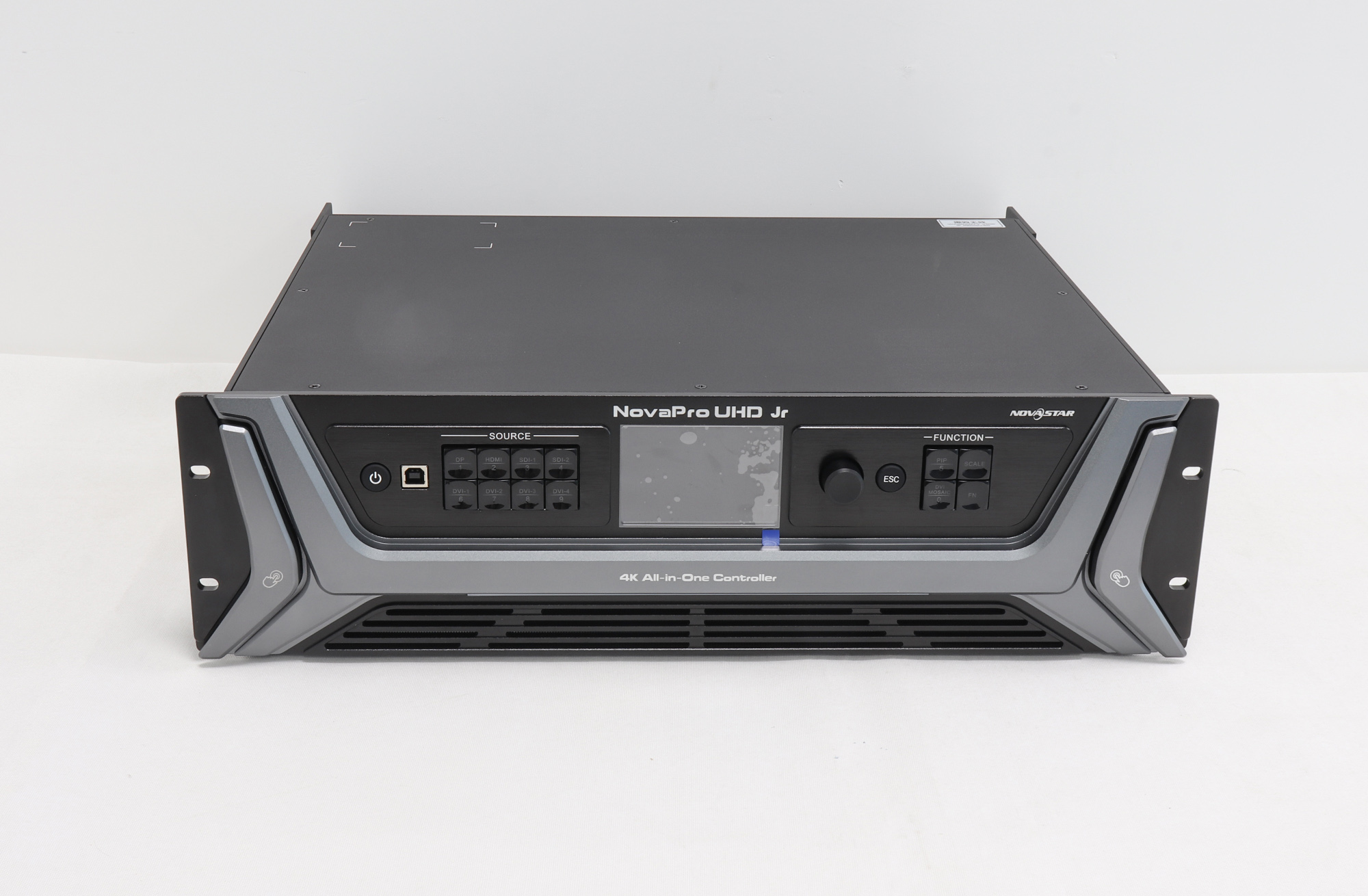
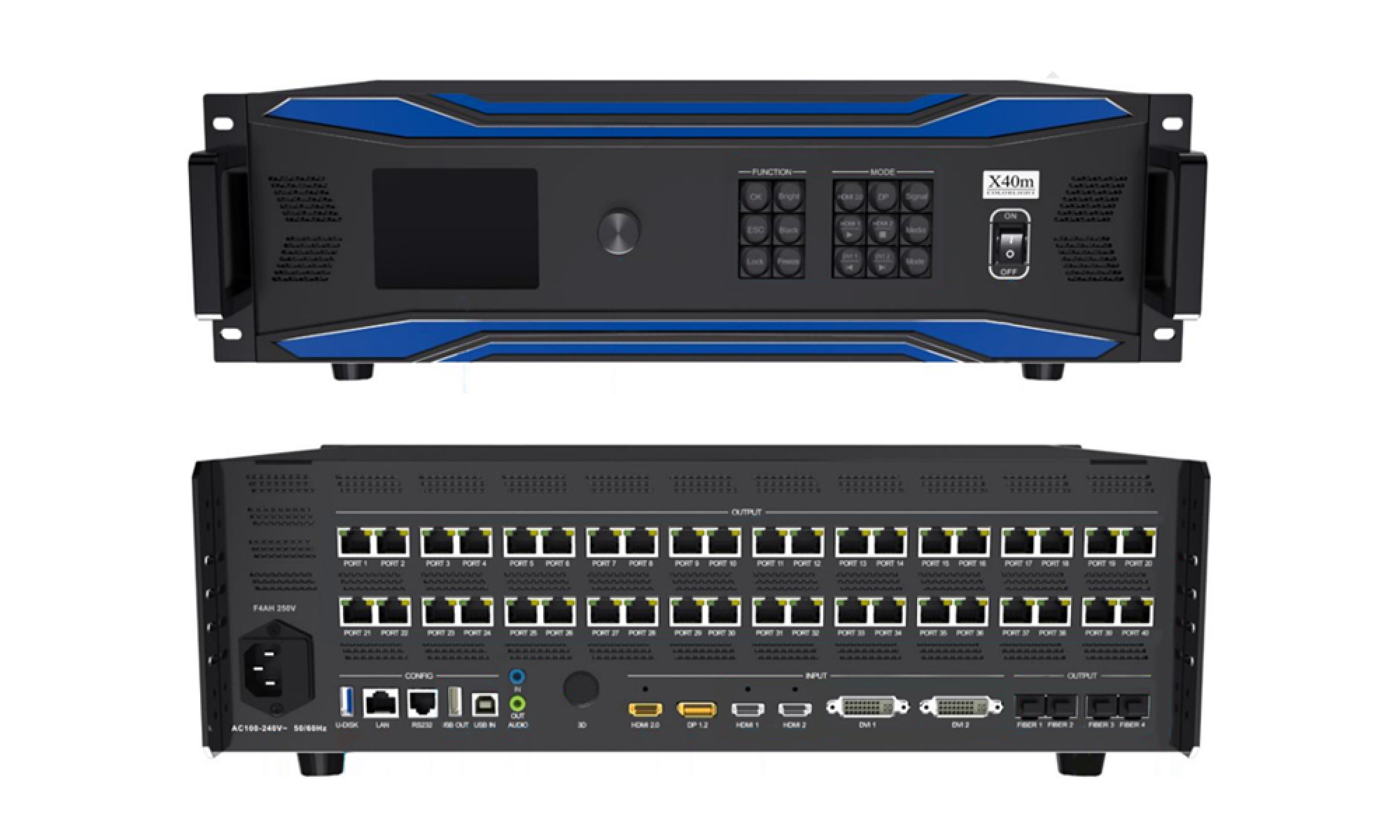
In modern installations, standalone PCIe sending cards are often replaced by external Cajas de envío LED or all-in-one controladores de vídeo LED (tales como el NovaPro UHD Jr. or Luz de color X40m), which integrate video scaling, multi-window switching, and sending functions in one rack-mounted chassis.
¿Qué es una tarjeta receptora LED?
An Tarjeta receptora LED is installed inside each LED cabinet. It receives the digital video stream over Cat5e/Cat6 cable from the sending card (or from the previous cabinet in a daisy chain), decodes the pixel data assigned to that specific cabinet, and distributes it to the LED modules through HUB75E ribbon cables or a hard-connection backplane.
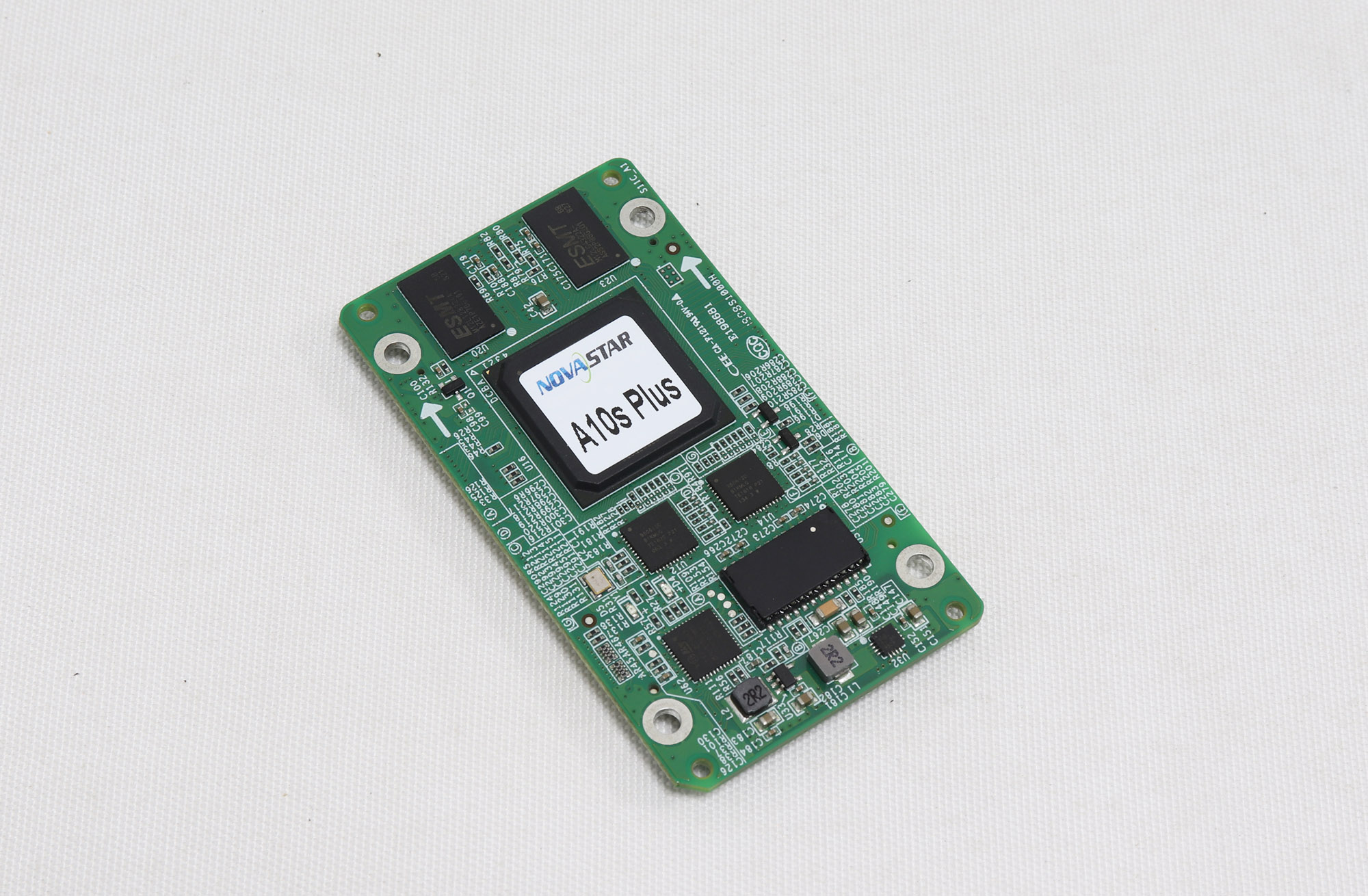
High-performance receiving cards like the NovaStar A10s Plus also handle pixel-level brightness and chroma calibration, 18-bit+ grayscale enhancement, low-latency mode, and dual-receiver redundancy for mission-critical rental and broadcast screens.
How to Calculate How Many Sending & Receiving Cards You Need
Sizing your control system accurately requires checking three limits—never just total pixel count:
- Step 1 — Total Screen Resolution: Multiply cabinet pixel width × number of columns, and cabinet pixel height × number of rows.
- Step 2 — Receiving Card Count: Most LED cabinets use 1 receiving card per cabinet for clean wiring and easy maintenance. Verify that your chosen receiving card supports both the cabinet’s pixel area and its physical HUB interface count.
- Step 3 — Sending Card / Controller Ethernet Ports: A standard Gigabit Ethernet output typically loads up to 650,000 pixels at 8-bit 60Hz (reduced to roughly half at 10-bit/12-bit or 120Hz). Divide your total screen pixels by the per-port capacity, then round up—and always confirm the controller’s maximum horizontal width and vertical height limits.
How to Choose & Replace LED Control Cards Without Compatibility Issues
- Keep the Brand Ecosystem Identical: Novastar, Color claro, Huidu, y Linsn use proprietary protocols. A sending card from one brand cannot drive receiving cards from another. (See our NovaStar vs Colorlight vs Huidu guía de comparación.)
- Match the Exact Receiving Card Model & Firmware: When replacing a single faulty receiving card in an existing wall, match the exact model and hardware version whenever possible, and load the original configuration file (such as
.rcfgxfor NovaStar or.rcvpfor Colorlight) so brightness and color match neighboring cabinets. - Plan for Asynchronous vs Synchronous Needs: If you do not want a dedicated PC running 24/7, choose an tarjeta de control LED asíncrona tales como el Huidu HD-C16L, which combines media playback and sending functions in one unit.
Video Guide: Installing & Configuring LED Receiving Cards
Watch this step-by-step EagerLED walkthrough on installing and configuring LED receiving cards for stable display performance.
Preguntas frecuentes
Can an LED screen work without a sending card?
Only if it uses an asynchronous media player or direct-load control card (such as certain Huidu or NovaStar Taurus models) that has built-in sending outputs. Any synchronous LED display connected to a live HDMI/DVI/SDI video source requires a sending card, sending box, or all-in-one video controller.
Can I use a newer receiving card model as a spare part in an older LED cabinet?
Sometimes, provided it is from the same brand, has a compatible HUB interface (for example, HUB75E), and is supported by your sending card’s firmware. However, you must load the matching module configuration file and check color/grayscale consistency across the screen before deploying.
What is the maximum Ethernet cable distance between a sending card and the first receiving card?
Standard Cat5e/Cat6 Ethernet cable supports up to diez metros. (80 meters recommended for stable commercial operation). For longer runs, use an optical fiber converter with single-mode or multi-mode SFP modules.
Order Genuine LED Control Cards & Spare Parts from EagerLED
Fundada en 2009, Shenzhen EagerLED Co., Ltd. is a professional LED display manufacturer offering OEM/ODM services, complete LED displays via ansiosoled.com, and genuine LED display spare parts through ledcontrollercard.comCon una fábrica de más de 5,000 m², una capacidad de producción mensual de más de 6,000 m², un equipo de más de 150 personas y un laboratorio de pruebas propio de 100 m², sometemos cada módulo LED a una prueba de envejecimiento de 24 horas y cada pantalla completa a una prueba de envejecimiento de 72 horas antes del envío. Nuestros productos cuentan con las certificaciones CE, RoHS, FCC y CB, y nuestra fábrica posee las certificaciones ISO 9001, ISO 14001 e ISO 45001.
Con la confianza de clientes en más de 120 países, todos EagerLED products come with a 2-year warranty, 2% free spare parts with every order, and free remote technical support. Need help selecting compatible sending cards, receiving cards, or configuration files? Contacta con nuestro equipo (Email: info@eagerled.com WhatsApp/Teléfono: +86 15361038665) — En días laborables, respondemos a todas las consultas en un plazo de 12 horas y enviamos un presupuesto en un plazo de 24 horas.
Compre una pantalla LED estable, vaya a EagerLED.