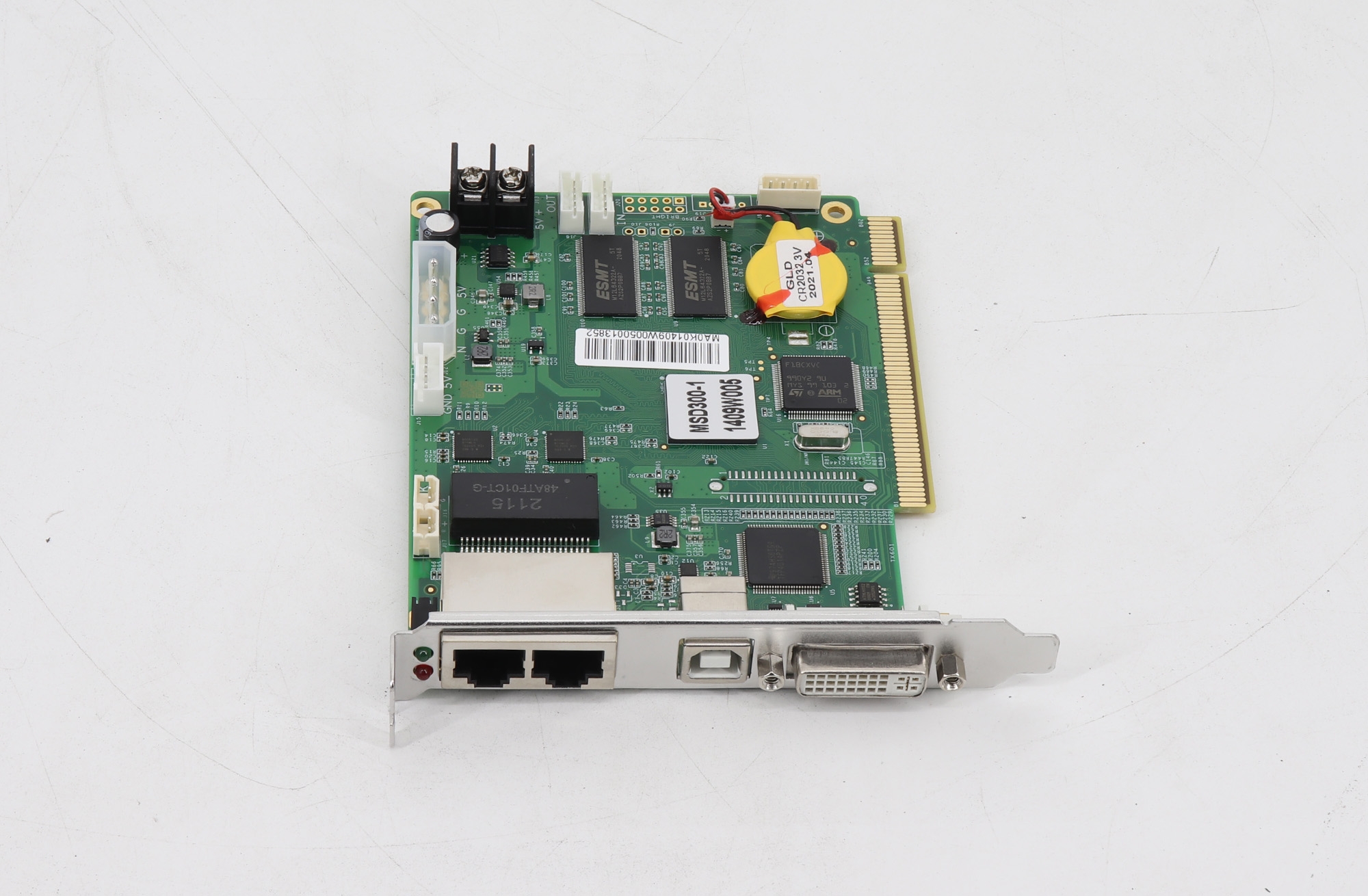
visión global
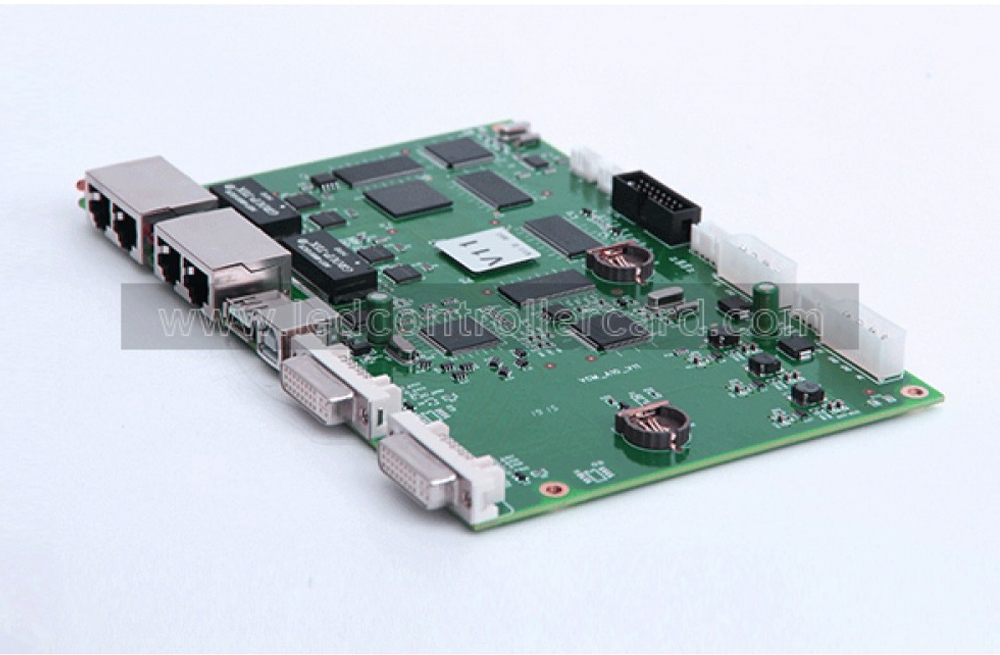
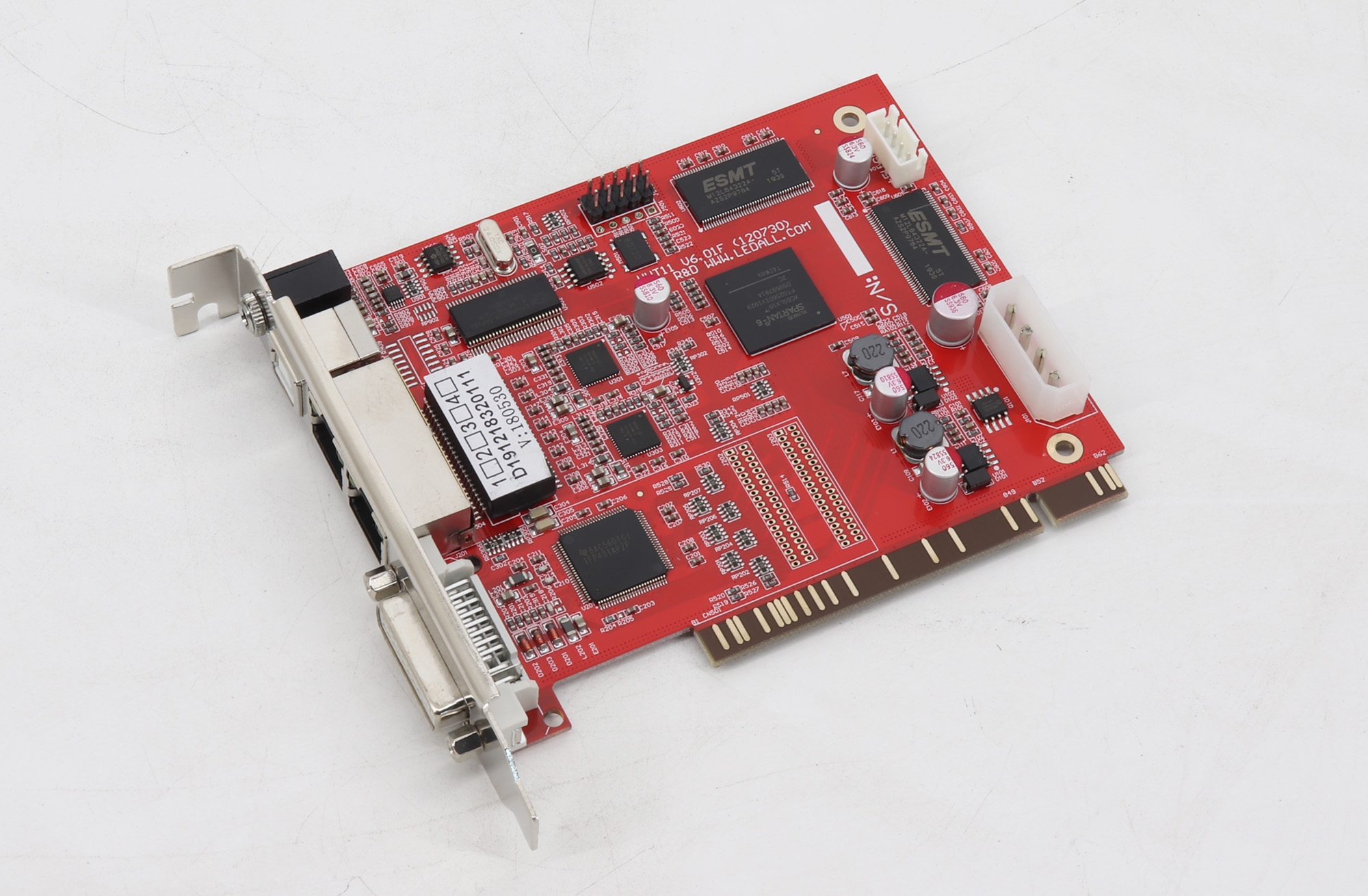
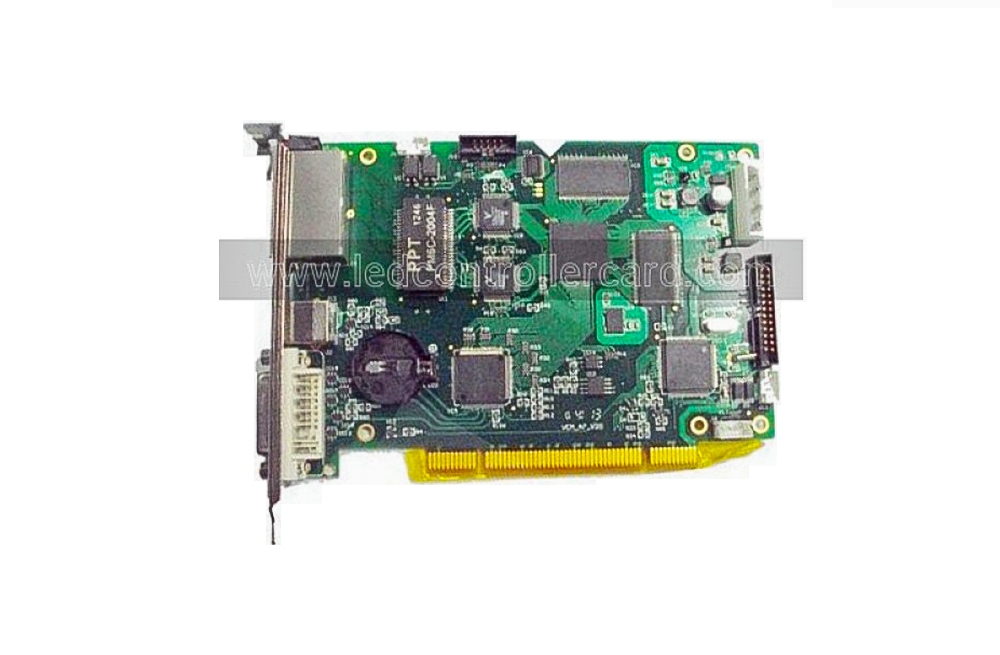
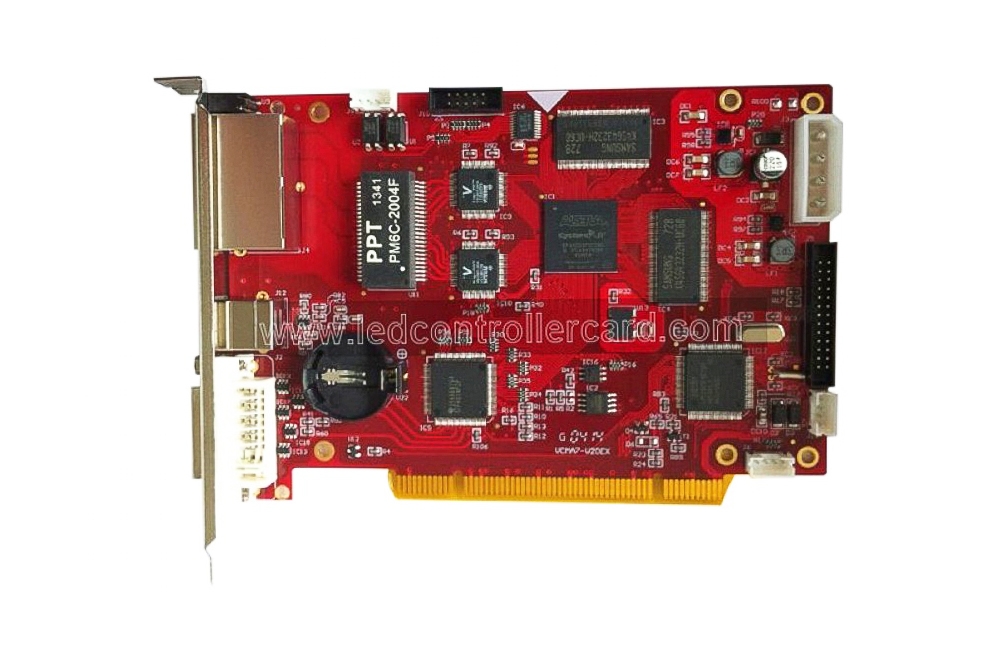
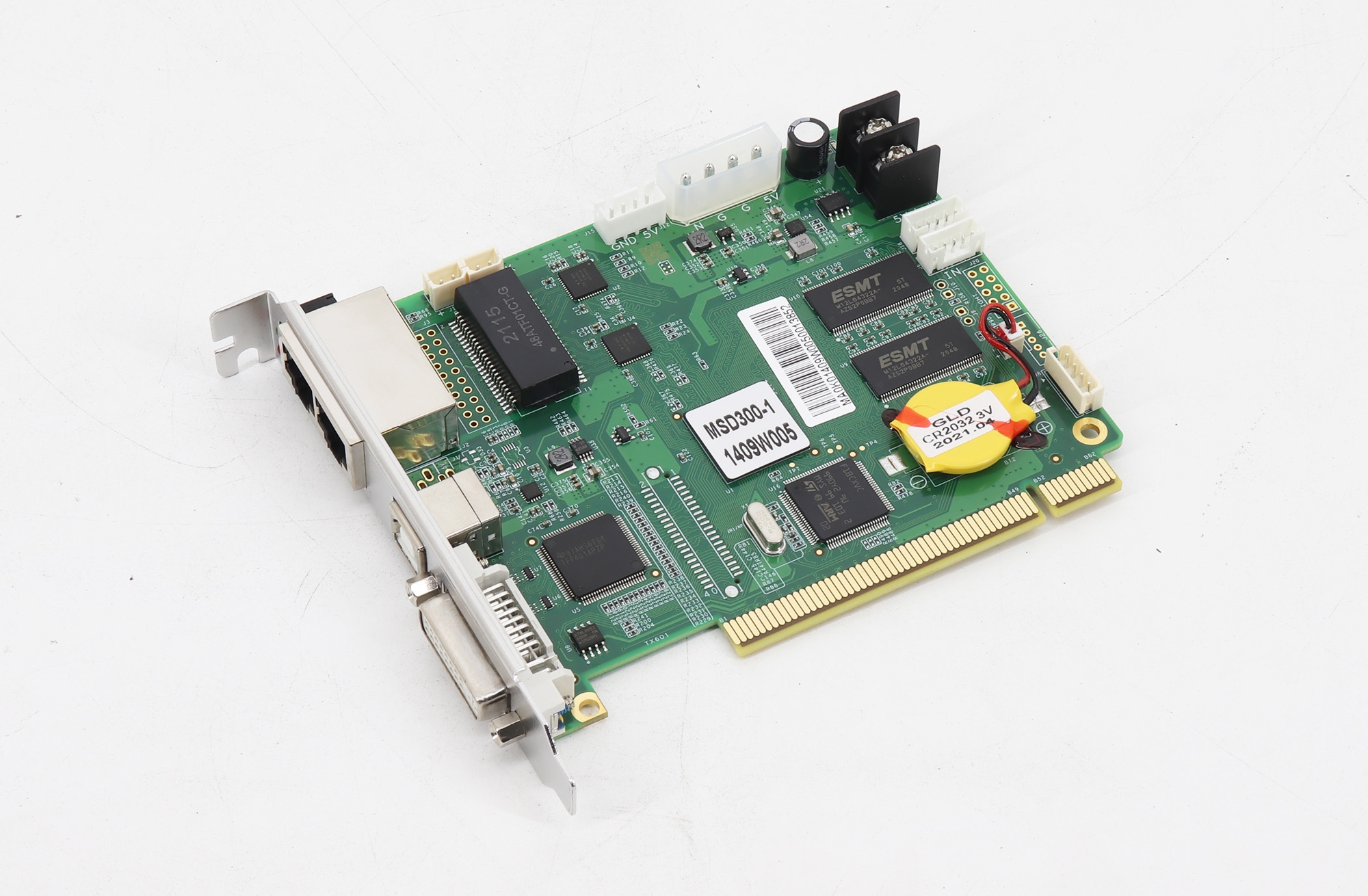
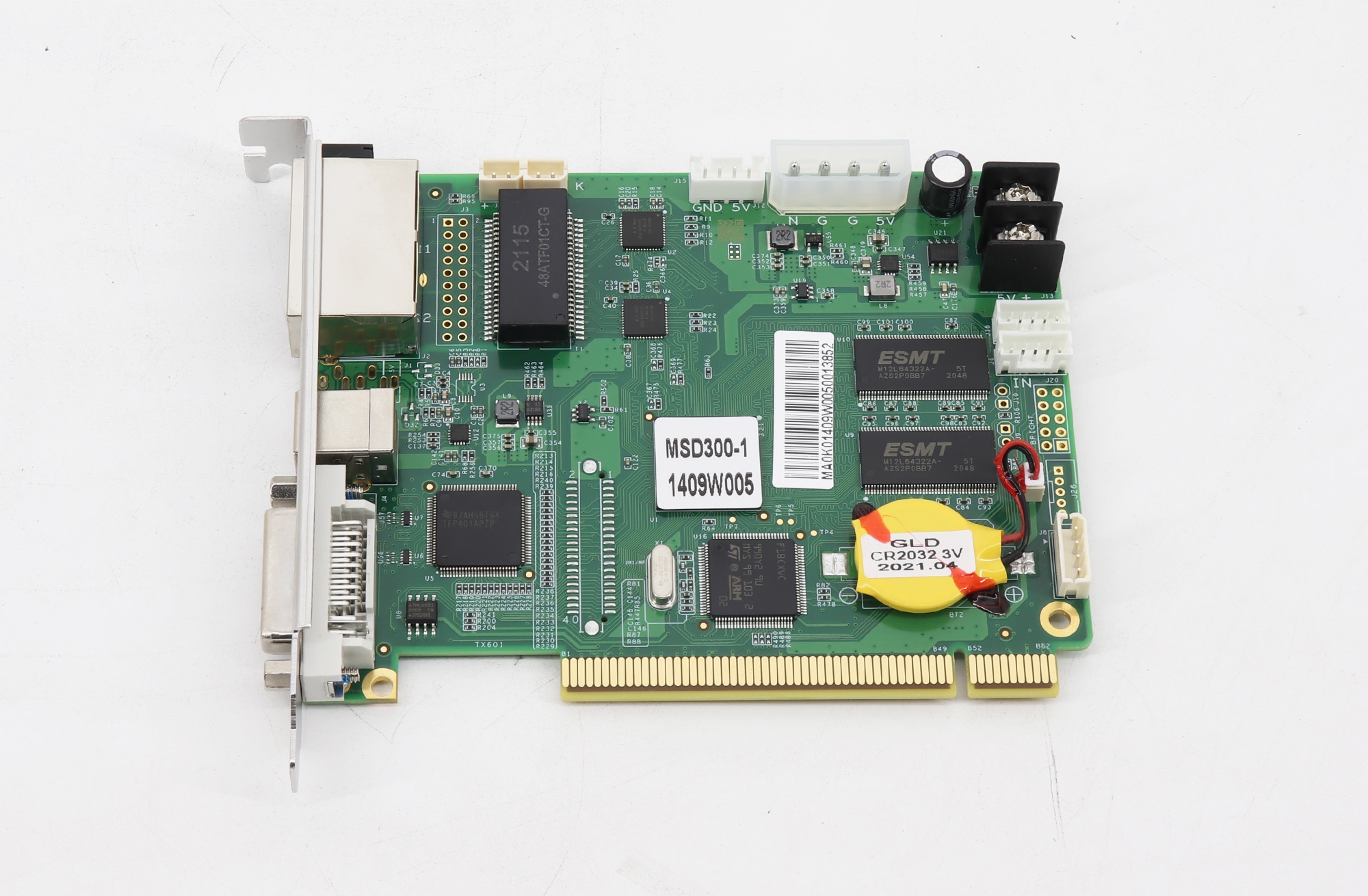
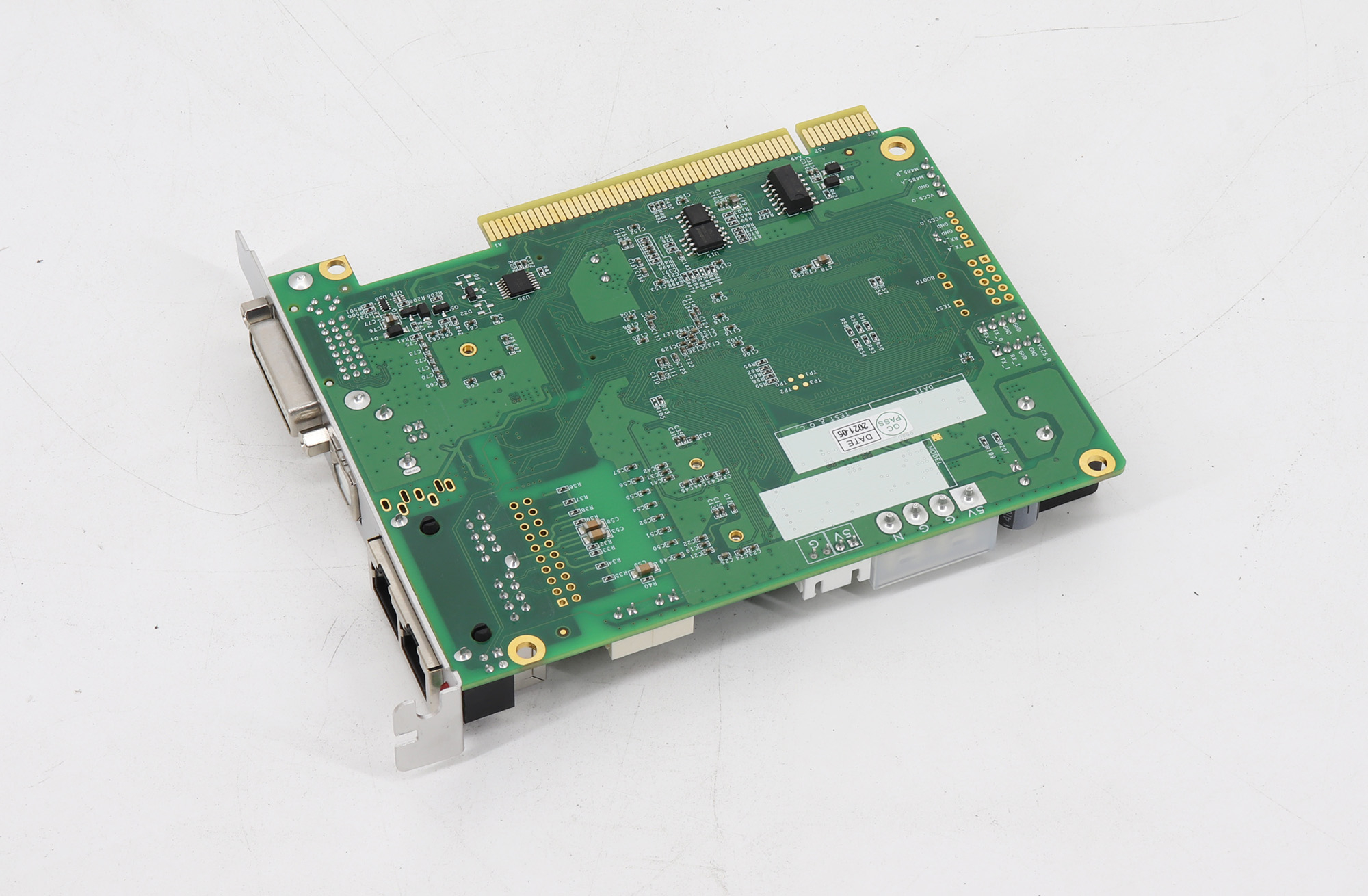
NovaStar MSD300-1 is a highly cost-effective LED sending card that takes one single-link DVI input and sends the picture to the LED screen through 2 × Gigabit Ethernet outputs. A single MSD300-1 accepts video up to 1920×1200@60Hz and loads up to 1,300,000 píxeles — 650,000 pixels per Ethernet port — which is why it is the standard sender for rental LED screens and fixed indoor or outdoor LED displays.
The card talks to the PC over a USB Type-B port, and up to 20 MSD300-1 cards can be cascaded through the UART IN/OUT ports, which keeps multi-screen projects simple. NovaStar pixel-level calibration is supported, so brightness and chroma can be calibrated on every individual LED.
NovaStar MSD300-1 key specifications
| Elemento | especificación |
| modelo | NovaStar MSD300-1 LED sending card |
| Entrada de vídeo | 1 × single-link DVI (SL-DVI), 8-bit, RGB 4:4:4 |
| Resolución máxima de entrada | 1920×1200@60Hz, downward compatible; custom resolutions supported (max width 3840 px, max height 3840 px) |
| Interlaced signal input | Non é compatible |
| Saídas Ethernet | 2 × RJ45 Gigabit Ethernet, redundancy between the two ports supported |
| Capacidade de carga | 650,000 pixels per port — 1,300,000 pixels per card |
| Portos de control | 1 × USB Type-B (to PC) and 2 × UART IN/OUT, up to 20 cards cascaded |
| Function connector | Light sensor input for automatic screen brightness adjustment |
| Calibración | Calibración de brillo e croma a nivel de píxel |
| tensión de entrada | DC 3.3 V – 5.5 V |
| Rated current and power | 0.6 A/3 W |
| Entorno operativo | –20°C to +75°C, 10%–90% RH, non-condensing |
| dimensións | 138.8 × 120.6 × 22.0 mm |
| Peso neto | 104.3 g |
| No cadro | 1 × MSD300-1 card, 1 × USB cable, 1 × DVI cable |
MSD300-1 connectors and indicator lights
| conector | tipo | O que fai |
| DVI | 1 × SL-DVI input | Receives the video signal from the PC or video processor, up to 1920×1200@60Hz |
| RJ45 | 2 × Gigabit Ethernet output | Sends the processed picture to the receiving cards, 650,000 pixels per port |
| USB | Type-B USB 2.0 | Connects the card to the PC running NovaLCT |
| UART IN / OUT | 2 × UART | Cascades devices; up to 20 MSD300-1 cards in one chain |
| SENSOR DE LUZ | Conector do sensor de luz | Monitors ambient brightness for automatic screen brightness adjustment |
| poder | DC 3.3 V – 5.5 V | Powers the card from the screen power supply or the supplied cable |
| Indicador | Estado | Significado |
| CORRE (verde) | Slow flashing, once every 2 s | Non hai entrada de vídeo dispoñible |
| CORRE (verde) | Intermitente normal, 4 veces por segundo | Video input is available |
| CORRE (verde) | Intermitente rápido, 30 veces por segundo | A pantalla mostra a imaxe de inicio |
| CORRE (verde) | Respiración | A redundancia do porto Ethernet entrou en vigor |
| STA (vermello) | Sempre aceso | A fonte de alimentación é normal |
| STA (vermello) | Fóra | Power is not supplied or the power supply is abnormal |
MSD300-1 vs MSD300: what is the difference?
Both cards belong to the same NovaStar MSD300 sending card family and share the same output stage: 2 × Gigabit Ethernet, 650,000 pixels per port and 1,300,000 pixels per card. The difference is on the input and mechanical side, so the choice depends on whether the project needs audio pass-through.
| Elemento | MSD300-1 | MSD300 |
| Entrada de vídeo | 1 × SL-DVI | 1 x DVI |
| A entrada de audio | No audio input | 1 × entrada de son |
| Saídas Ethernet | 2 × Gigabit Ethernet, 650,000 px each | 2 × Gigabit Ethernet, 650,000 px each |
| Fervenza | UART IN/OUT, up to 20 devices | UART IN/OUT cascade |
| Sensor de luz | si | si |
| Input voltage / power | CC 3.3–5.5 V, 0.6 A, 3 W | CC 3.3–5.5 V, 0.5 A, 2.5 W |
| dimensións | 138.8 × 120.6 × 22.0 mm | 126.1 × 99.7 × 14.0 mm |
| Peso neto | 104.3 g | 108.7 g |
If the LED screen needs audio, choose the NovaStar MSD300; if only video is needed, the MSD300-1 does the same job at a lower cost. For larger screens that need more ports and HDMI input, step up to the NovaStar MSD600.
Where the NovaStar MSD300-1 is used
- Rental LED screens and stage backdrops for concerts, live events and touring shows
- Fixed indoor LED displays in lobbies, shops and meeting rooms
- Fixed outdoor LED signs and advertising screens
- Security monitoring centres and control rooms
- Sports centres and stadium screens
Because the card is small, needs no external driver and cascades up to 20 units, it also fits retrofit jobs where an older NovaStar sender has to be replaced one to one. Pair it with Tarxetas receptoras de LED of the same brand for a full NovaStar control chain.
How to install and cascade the MSD300-1
- Fit the MSD300-1 into the sending box or the PC slot and connect the power lead (DC 3.3 V – 5.5 V).
- Connect the DVI source (PC or video processor) to the DVI input, and the PC to the USB Type-B port.
- Install NovaStar NovaLCT on the PC and let it detect the sending card.
- Connect output port 1 to the first receiving card with a Gigabit Ethernet cable; use ports 1 and 2 in parallel for screens above 650,000 pixels.
- Use UART IN/OUT to cascade a second MSD300-1 when the project needs more than two Ethernet runs. Up to 20 devices can be chained.
- Read the RUN and STA indicators: red on means the power is normal, slow green flashing means no video input, normal green flashing means the video is present, and breathing means Ethernet redundancy is active.
NovaStar MSD300-1 FAQ
How many pixels can one MSD300-1 send?
One MSD300-1 handles up to 1,300,000 pixels in total, split over its two Gigabit Ethernet ports at 650,000 pixels each. Screens larger than 650,000 pixels are normally driven from both ports at the same time.
What input resolution does the MSD300-1 support?
The single-link DVI input accepts up to 1920×1200@60Hz and is downward compatible. Custom resolutions are supported as well, with a maximum width of 3840 pixels (3840×600@60Hz) or a maximum height of 3840 pixels (548×3840@60Hz). Interlaced signal input is not supported.
How many MSD300-1 cards can be cascaded?
Up to 20 MSD300-1 cards can be cascaded through the UART IN and UART OUT ports, so one PC can control a large multi-screen project.
What is the difference between the MSD300-1 and the MSD300?
The output stage is the same — 2 × Gigabit Ethernet, 650,000 pixels per port. The MSD300-1 has no audio input, while the MSD300 has one. The MSD300-1 also uses a slightly larger PCB (138.8 × 120.6 × 22.0 mm) which weighs 104.3 g.
Is the MSD300-1 the same as the MSD300 1 or MSD-300-1?
Yes. NovaStar MSD300-1, MSD300 1 and MSD-300-1 all refer to the same sending card; sellers simply write the model number in different ways.
Does the MSD300-1 support light sensor and pixel-level calibration?
Yes. A light sensor can be connected to adjust screen brightness automatically with the ambient light, and the card supports NovaStar pixel-level brightness and chroma calibration to remove brightness and colour differences between LEDs.
What is in the box and how is the card powered?
Each MSD300-1 is shipped with one USB cable and one DVI cable in a NovaStar-printed cardboard box. The card runs on DC 3.3 V – 5.5 V and draws 0.6 A (3 W), so it is normally powered from the LED screen power supply.
How much does the NovaStar MSD300-1 cost and is it in stock?
US$88.00 per card with 233 pcs in stock right now, so orders can ship from stock. Delivery is usually made within 24 hours after the payment is received. See the full range in Tarxetas de envío LED.
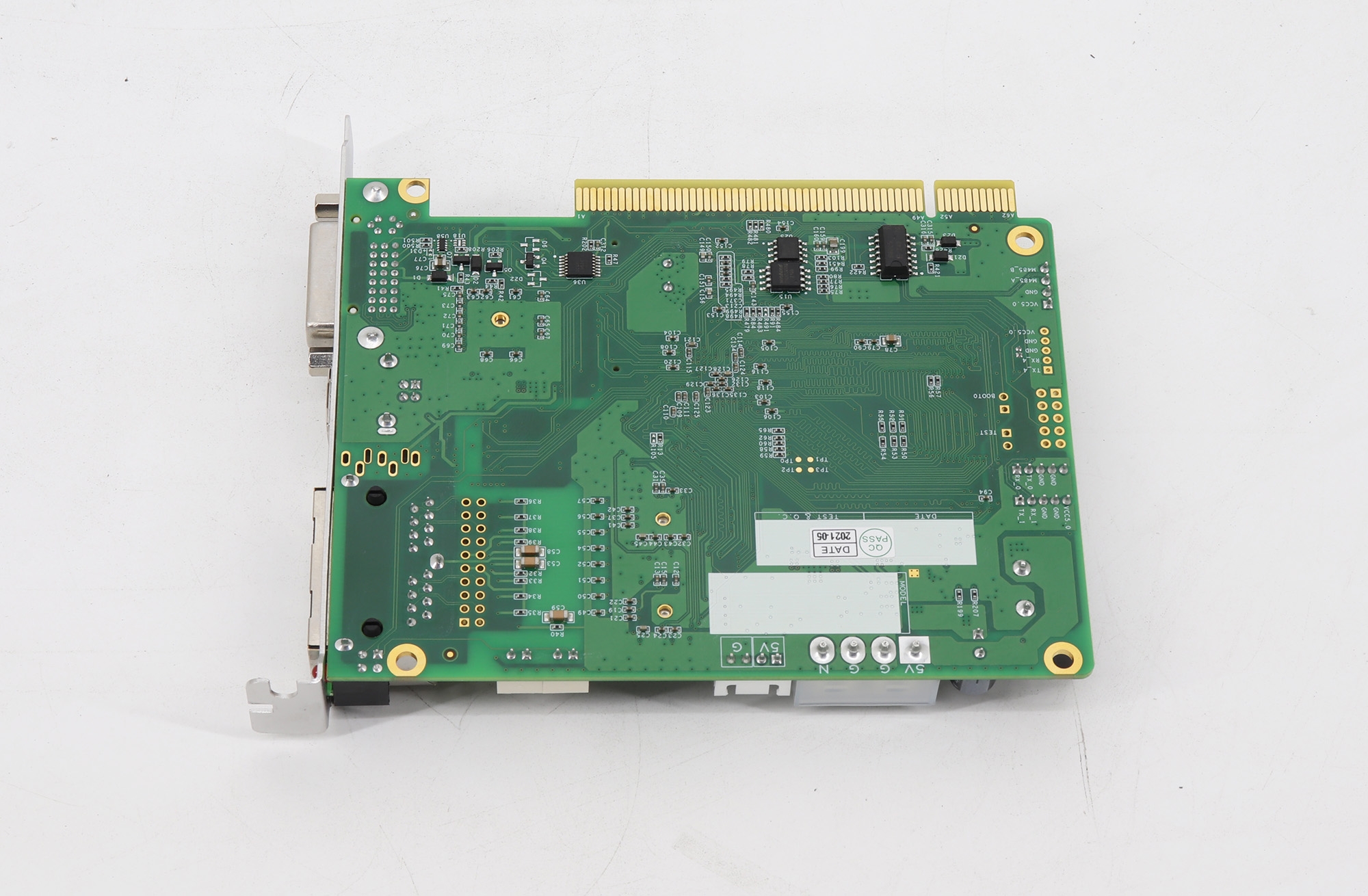
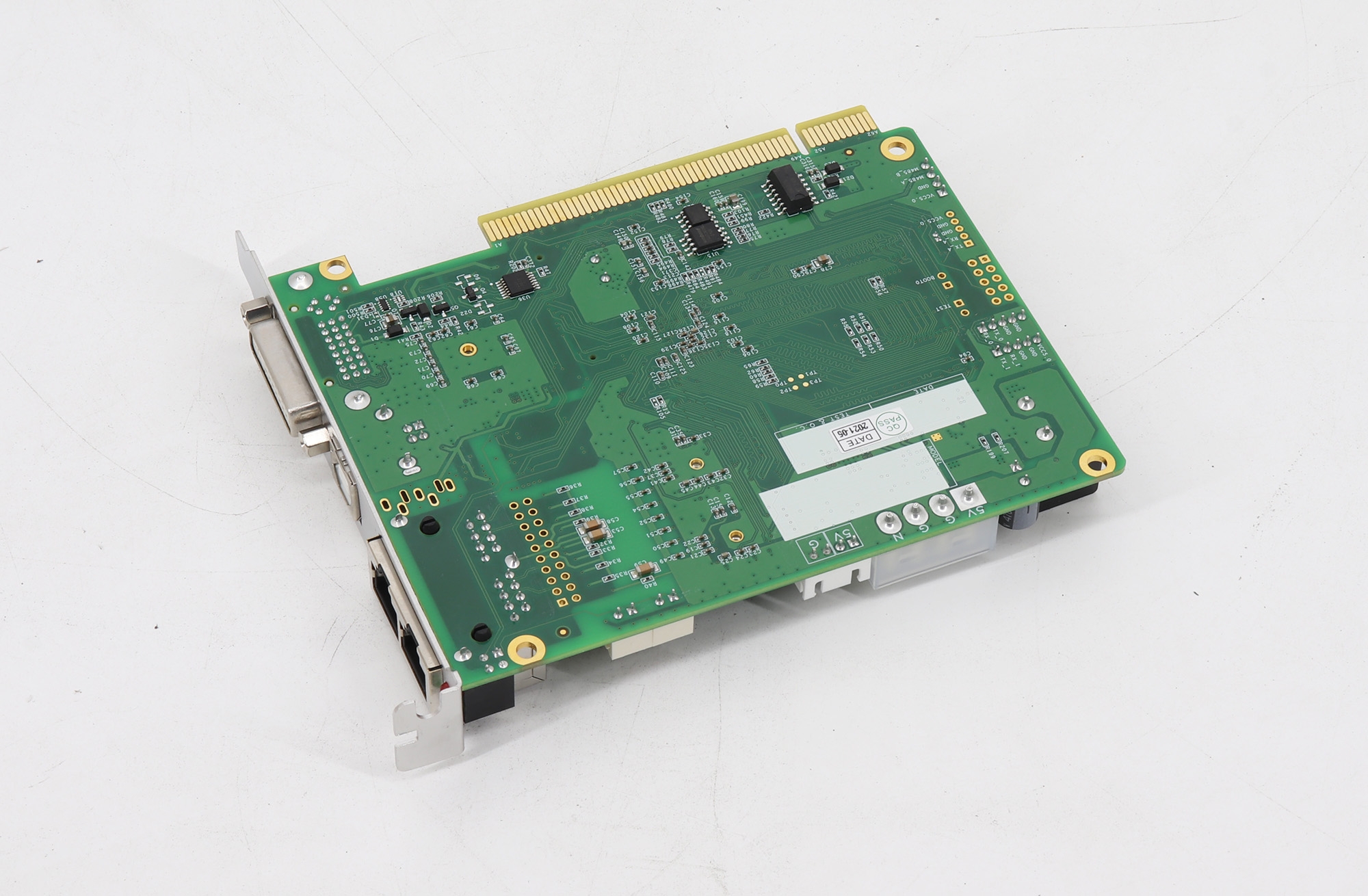
More pictures of the NovaStar MSD300-1 LED sending card
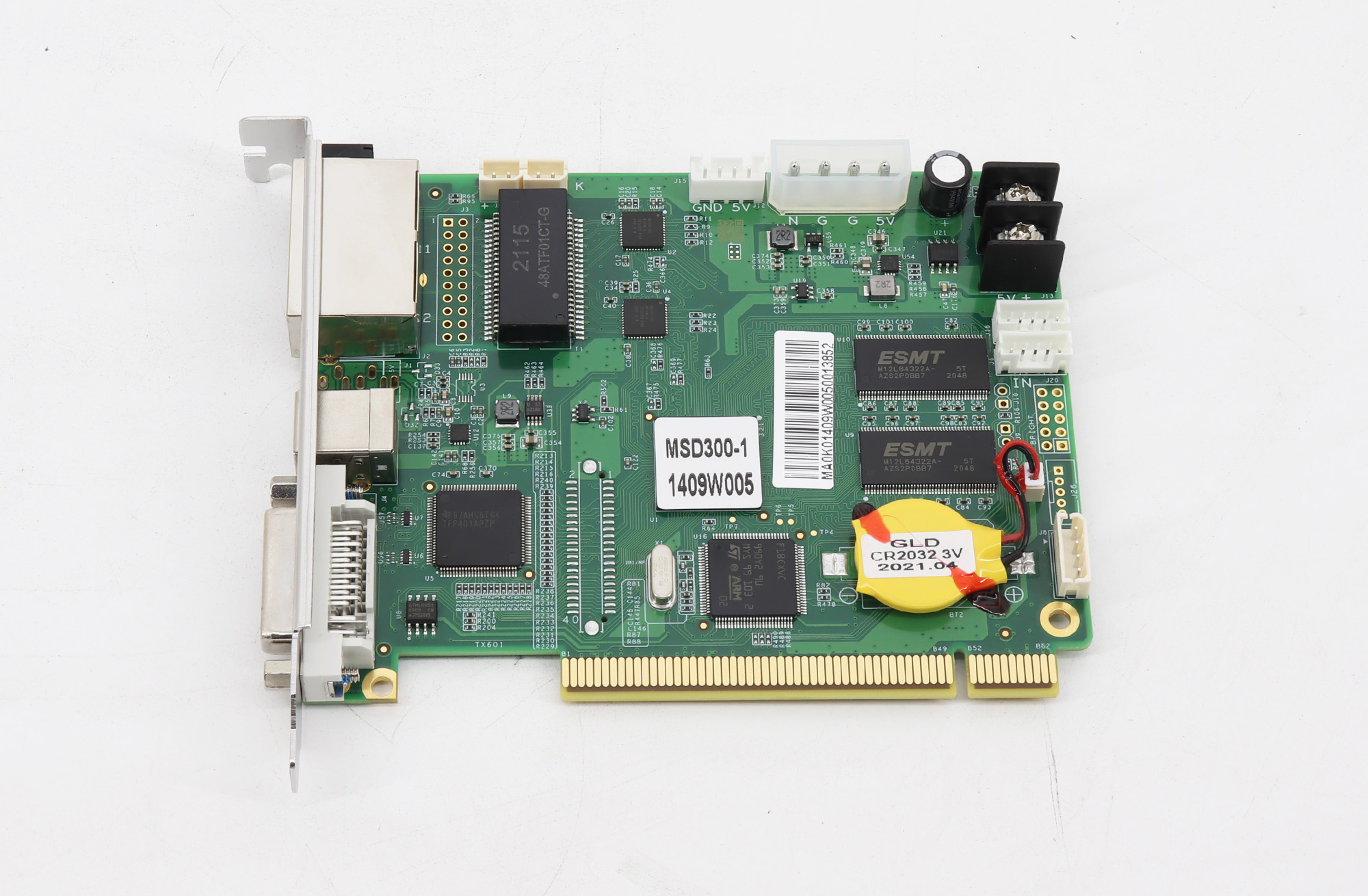
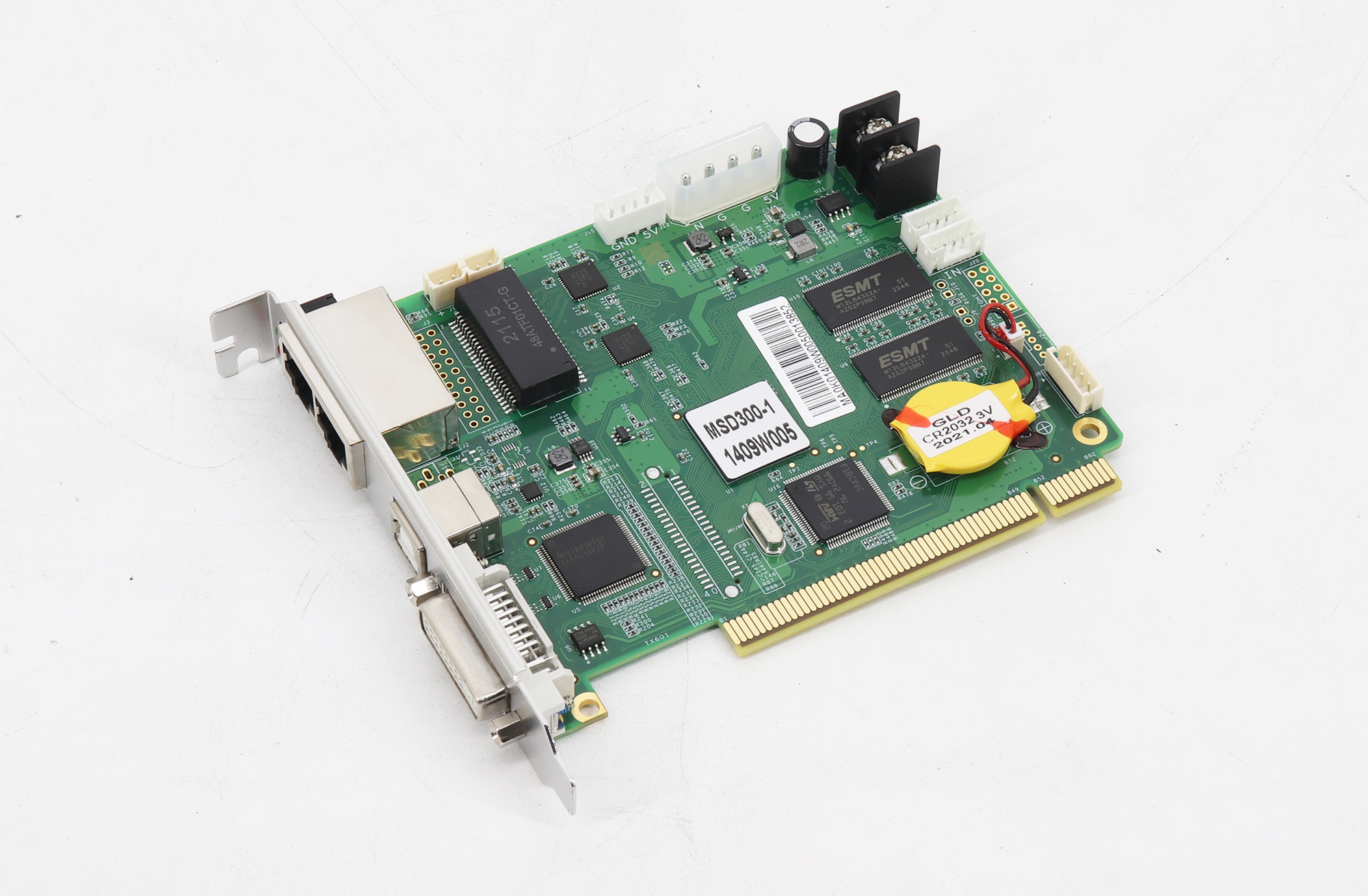
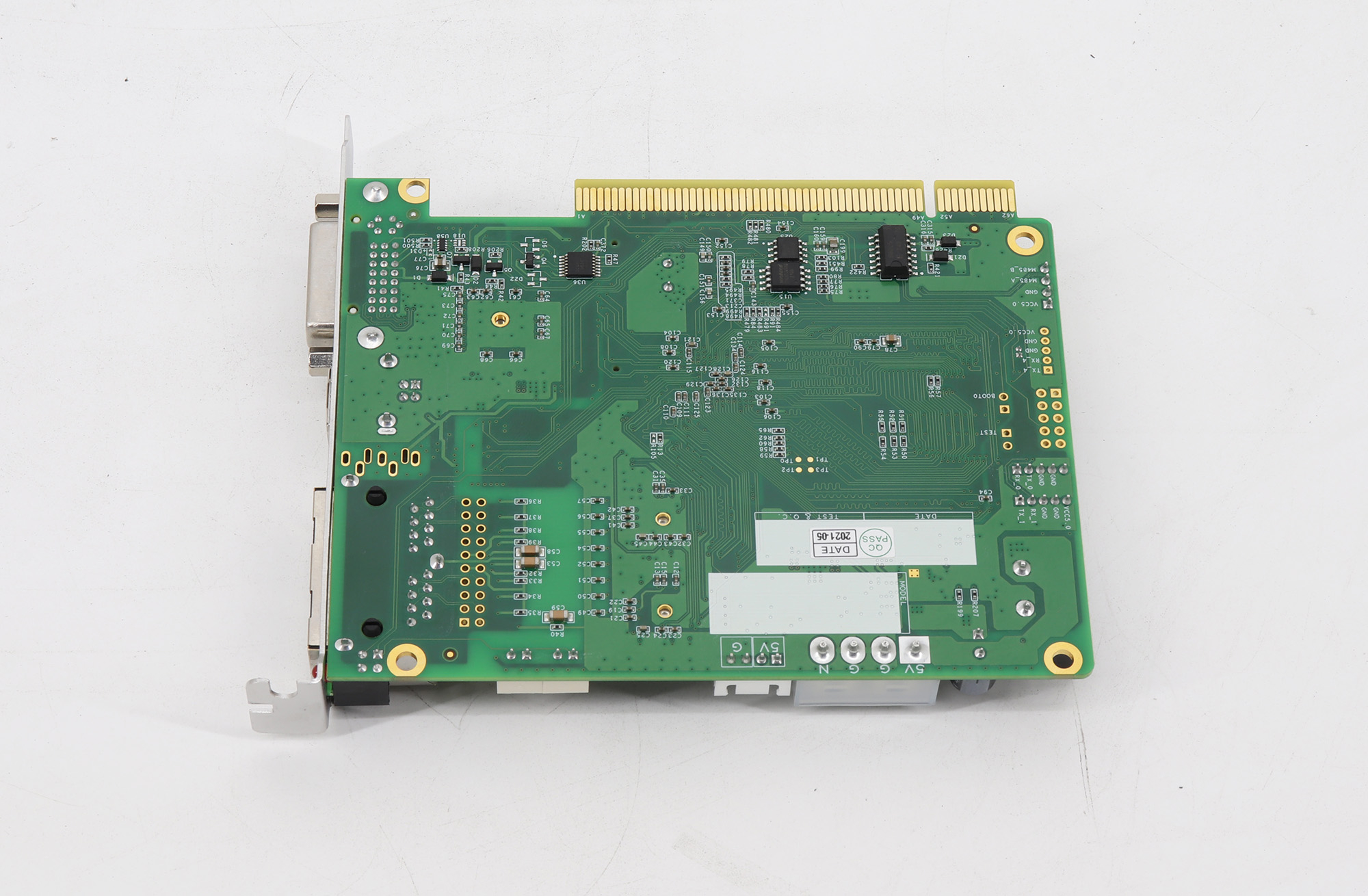
Descargar especificación
NovaStar MSD300 series sending card specifications (PDF, V2.2.0)
Referencia do fabricante: NovaStar (Xi’an NovaStar Tech Co., Ltd.).