Brevis responsum: DIP LED displays use separate, through-hole red, green, and blue diodes, while SMD LED displays combine the three colors in one surface-mounted package. DIP is often chosen for maximum brightness and long-distance outdoor visibility. Modern outdoor SMD is usually the better choice when you need a finer pixel pitch, wider viewing angles, smoother color, and closer viewing distances.
Neither technology is automatically better for every project. The right choice depends on viewing distance, sunlight, pixel pitch, image quality, weather protection, maintenance, and total operating cost.
What do SMD and DIP mean in LED displays?
What is an SMD LED display?
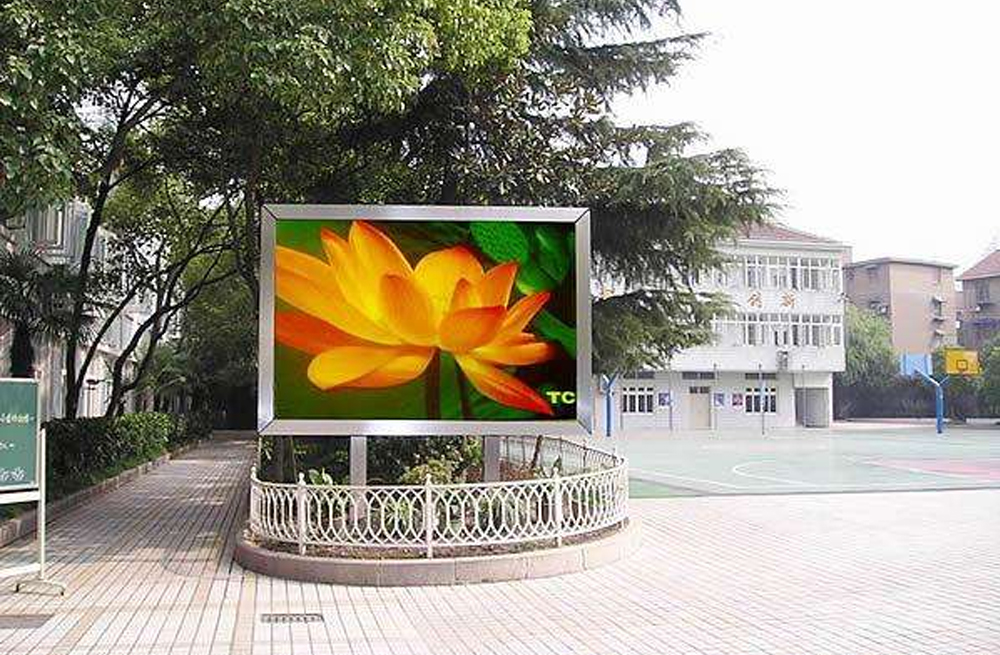
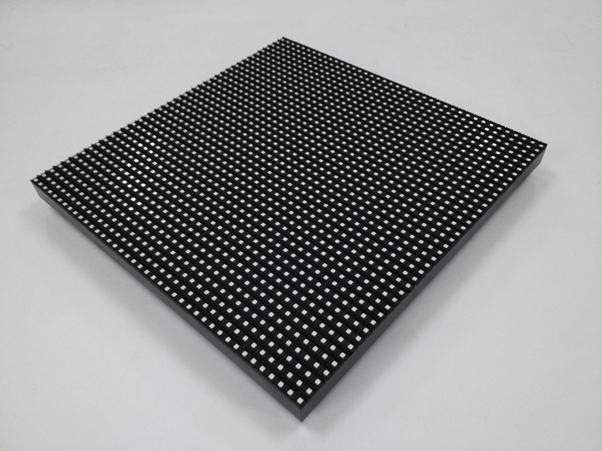
SMD significat Superficie-evectus Fabrica. In an SMD LED pixel, the red, green, and blue chips are integrated into a compact package mounted directly on the printed circuit board (PCB). This creates a flat display surface and allows manufacturers to build smaller pixel pitches.
Because the RGB chips sit close together, SMD screens generally deliver smooth color mixing, consistent images, and broad horizontal and vertical viewing angles. SMD technology is widely used for indoor displays and is now common in weather-rated outdoor LED screens.
What is a DIP LED display?
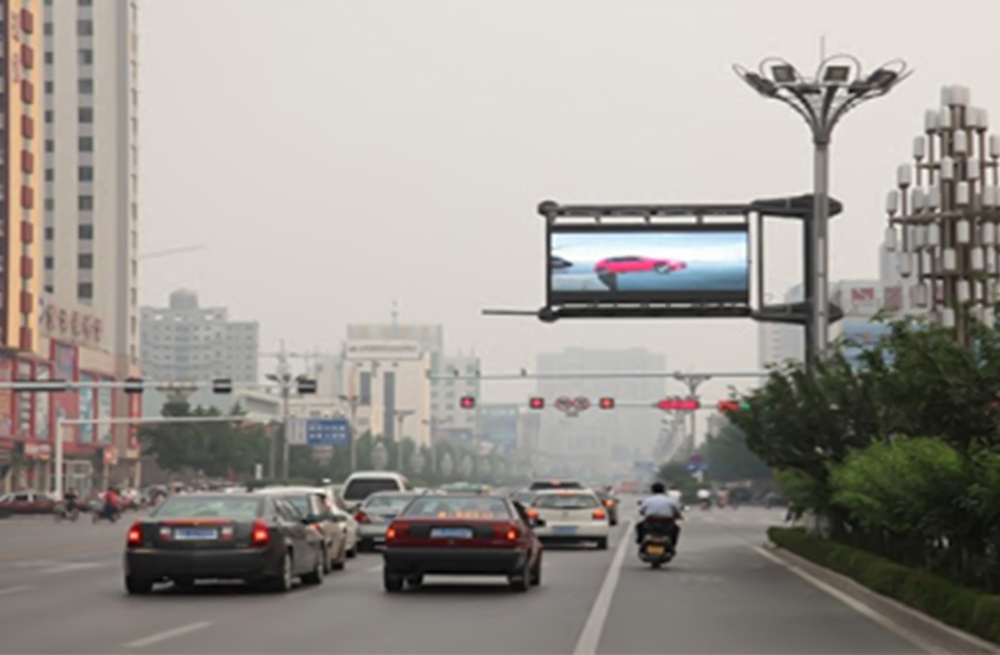
SUMMERGO significat Dual in linea Package. A DIP pixel normally uses three separate red, green, and blue LED lamps. Their leads pass through the PCB and are soldered on the back, so the lamps protrude from the face of the module.
This traditional through-hole construction is known for high brightness, strong direct-sunlight visibility, and mechanical robustness. DIP remains useful for large-format outdoor displays viewed from a long distance, especially where maximum light output is more important than a very fine pixel pitch.
SMD vs DIP LED display: key differences at a glance
| elementum | Ostentus LED SMD | DIP LED display |
|---|---|---|
| Structura fasciculi | RGB chips combined in one surface-mounted package | Separate red, green, and blue through-hole lamps |
| Propono superficies | Flat and uniform | Individual lamps protrude from the module |
| pixel picem | Supports finer pitches for closer viewing | Typically used at wider pitches for long viewing distances |
| viewing angulus | Solet latior | Usually narrower and more directional |
| Color uniformitas | Generally smoother at close range | Strong visibility at long range; color mixing improves with distance |
| candor | High-brightness outdoor options are available | Often selected when maximum brightness is the priority |
| uti velit | Well suited to modern fine-pitch outdoor applications when properly weather-rated | Well suited to high-brightness, long-distance outdoor applications |
| typical applications | Retail facades, stadium ribbons, transport displays, and closer-view outdoor advertising | Roadside billboards, building-top signs, and large displays viewed from far away |
Maximus: These are typical characteristics, not guarantees. Actual performance depends on the LED package, driver IC, module design, cabinet, calibration, and manufacturer specifications.
Which is better for an outdoor LED display?
Choose outdoor SMD when image detail and viewing angle matter most. It is usually the stronger option for audiences who can approach the screen, content with fine text or detailed video, and installations seen from multiple directions. Modern SMD modules can provide high outdoor brightness and weather resistance while supporting a smaller pixel pitch.
Choose DIP when maximum brightness and long-distance visibility are the main priorities. Its directional lamps can produce strong contrast in direct sunlight, making DIP practical for large roadside signs and other wide-pitch displays viewed mainly from the front.
For many current projects, the decision is no longer simply “SMD indoors, DIP outdoors.” Both technologies can be used outdoors. Compare the complete module specification and a sample under real lighting conditions before making a final choice.
How do SMD and DIP compare in direct sunlight?
DIP often has an advantage when a screen needs very high brightness and the audience views it from a relatively narrow frontal area. The protruding lamps and directional light output can perform well under intense sunlight.
Outdoor SMD performance has improved significantly. A well-designed SMD display can remain clear in daylight while providing a wider viewing angle and more consistent color. Ask the supplier for the sustained brightness after calibration, not only the maximum advertised value, because excessive brightness can increase power consumption and heat.
How does pixel pitch affect the choice?
Pixel pitch is the center-to-center distance between adjacent pixels. A smaller pitch creates higher pixel density and supports a shorter comfortable viewing distance.
- For close viewing: SMD is generally preferred because its compact package supports finer pixel pitches.
- For medium-distance viewing: compare both technologies based on brightness, image quality, and cost.
- For long-distance viewing: DIP can be an efficient option when a wider pitch and high brightness meet the content requirements.
Do not pay for a finer pitch than the audience can perceive. Screen size, content type, and the nearest viewing distance should determine the practical pixel pitch.
Is DIP more durable than SMD outdoors?
DIP’s through-hole leads create a strong mechanical connection to the PCB, which is one reason the technology has a reputation for durability. However, LED package type alone does not determine service life.
For either SMD or DIP, outdoor reliability also depends on conformal coating, mask quality, waterproof seals, drainage, cabinet ventilation, power supplies, operating temperature, and installation workmanship. Verify the enclosure’s tested IP rating and confirm that it applies to the front and rear of the display as required. IP ratings are defined by IEC 60529.
What specifications should you compare before buying?
Use the following checklist when evaluating an Velit DUXERIT propono screen:
- Spatium pixelorum et distantia visionis: match resolution to the nearest viewer and the content.
- Calibrated brightness: confirm daylight readability for the actual installation direction.
- Viewing angulus: consider where people will stand or travel in relation to the screen.
- Ingress praesidium: check the front and rear IP ratings for rain and dust exposure.
- Refresh rate and grayscale: important for camera use, smooth video, and low-brightness image quality.
- Designatio potentiae et thermalis: compare typical consumption, maximum consumption, cooling, and operating temperature.
- Aditus ad sustentationem: choose front or rear service based on installation space.
- Compatibilitas moderationis: confirm that the Chartae recipientes LED et video processus support the required resolution and signal workflow.
- Garantia et partes reservatae: ask about module batch matching, replacement availability, and technical support.
SMD vs DIP cost: which offers better value?
SMD is highly automated in production and often offers good value for fine-pitch, high-resolution displays. DIP can remain cost-effective for wide-pitch outdoor screens where extreme brightness and long-distance visibility are more important than close-range detail.
Compare total cost rather than module price alone. Include power consumption, structural requirements, installation, calibration, spare modules, maintenance access, and expected operating life. A lower purchase price can be offset by higher energy use or more difficult servicing.
Frequenter interrogavit quaestiones
What is the full form of DIP LED?
DIP LED means Dual In-line Package light-emitting diode. In an LED display module, the lamp leads pass through holes in the PCB and are soldered on the rear side.
What is the full form of SMD LED?
SMD LED means Surface-Mounted Device light-emitting diode. The compact LED package is mounted on the surface of the PCB.
Is SMD or DIP brighter?
DIP has traditionally offered higher maximum brightness and directional intensity. High-quality outdoor SMD displays can also achieve strong daylight readability, so compare verified module specifications and calibrated samples instead of relying on package type alone.
Can SMD LED displays be used outdoors?
Yes. Outdoor SMD displays are common. The module and cabinet must be designed for outdoor brightness, moisture, dust, temperature changes, and UV exposure. An indoor SMD module should not be installed outdoors simply because it uses the same package type.
Which has a wider viewing angle, SMD or DIP?
SMD typically provides a wider viewing angle because the RGB chips are integrated in one compact package. DIP lamps are more directional, which can help frontal brightness but may reduce off-axis visibility.
Conclusion: should you choose SMD or DIP?
For most close-view or fine-pitch outdoor projects, SMD offers the best balance of resolution, color uniformity, and viewing angle. For a wide-pitch display viewed from far away in intense sunlight, DIP remains a practical choice when maximum brightness and directional visibility are the priorities.
The final decision should be based on the complete screen specification, site conditions, and a visual test with your actual content. Contact LEDControllerCard.com with the screen size, viewing distance, installation location, and brightness requirements for a project-specific recommendation.