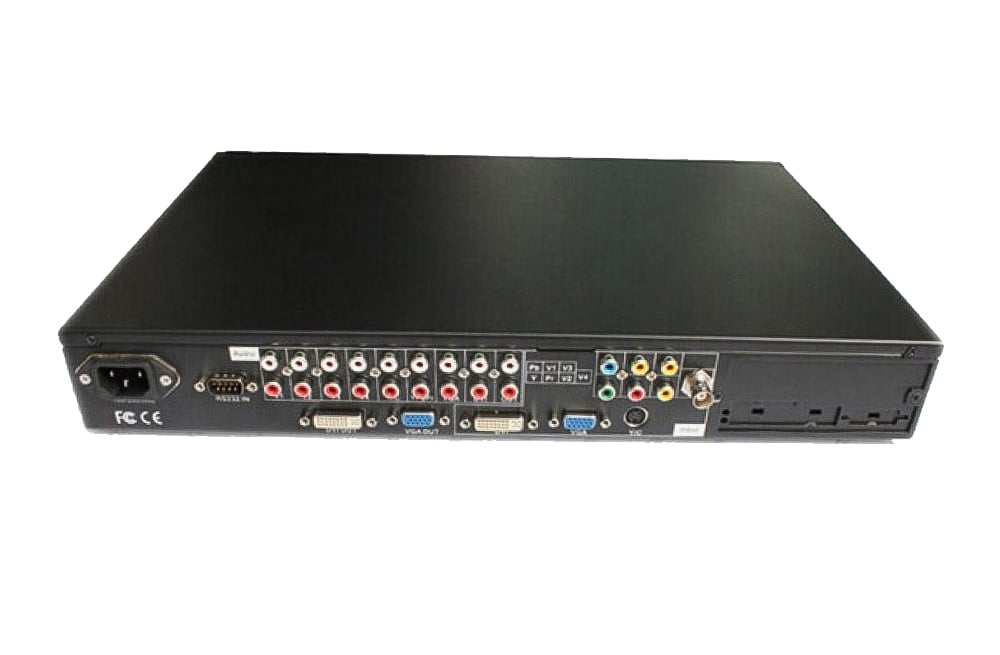
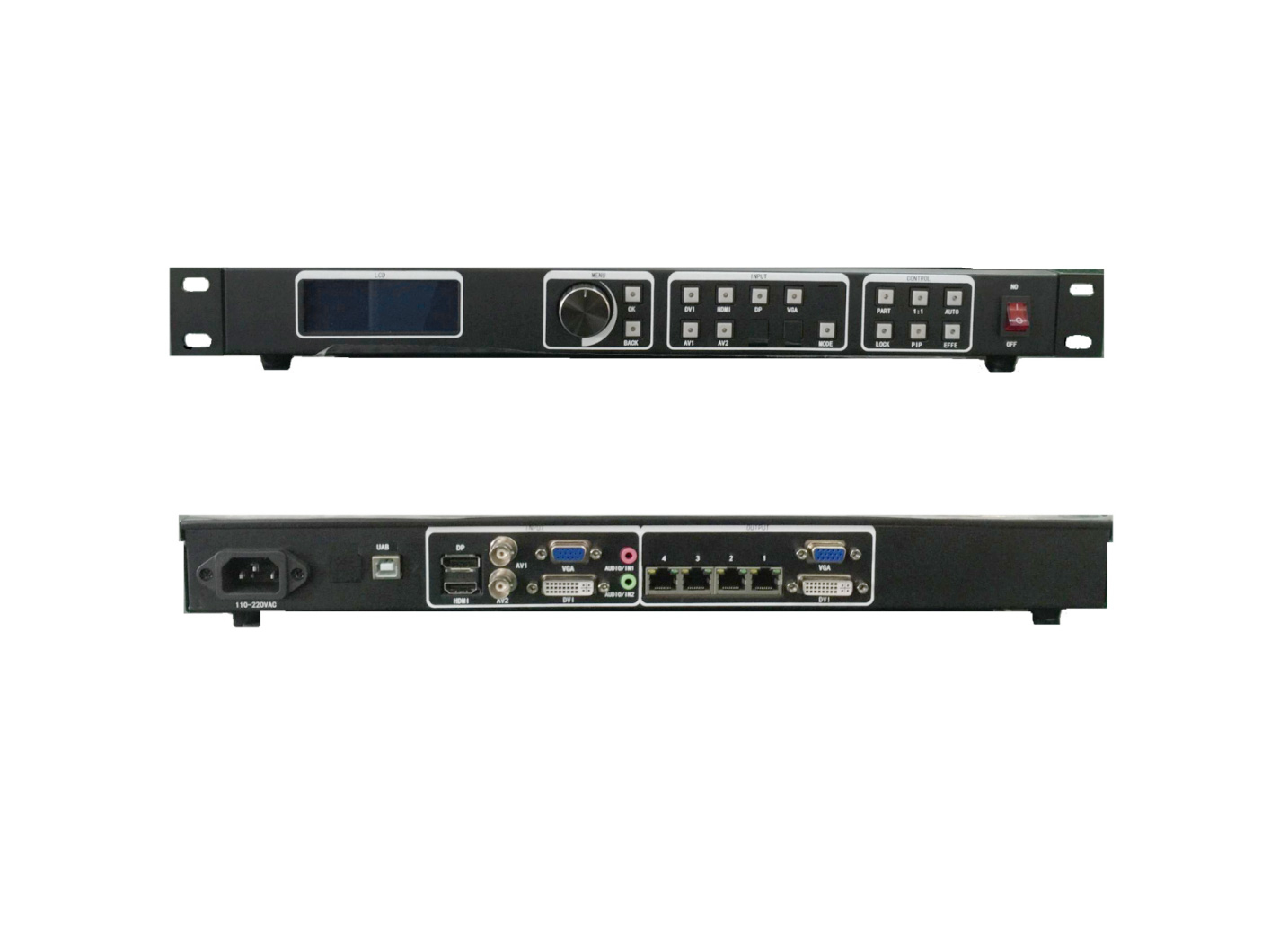
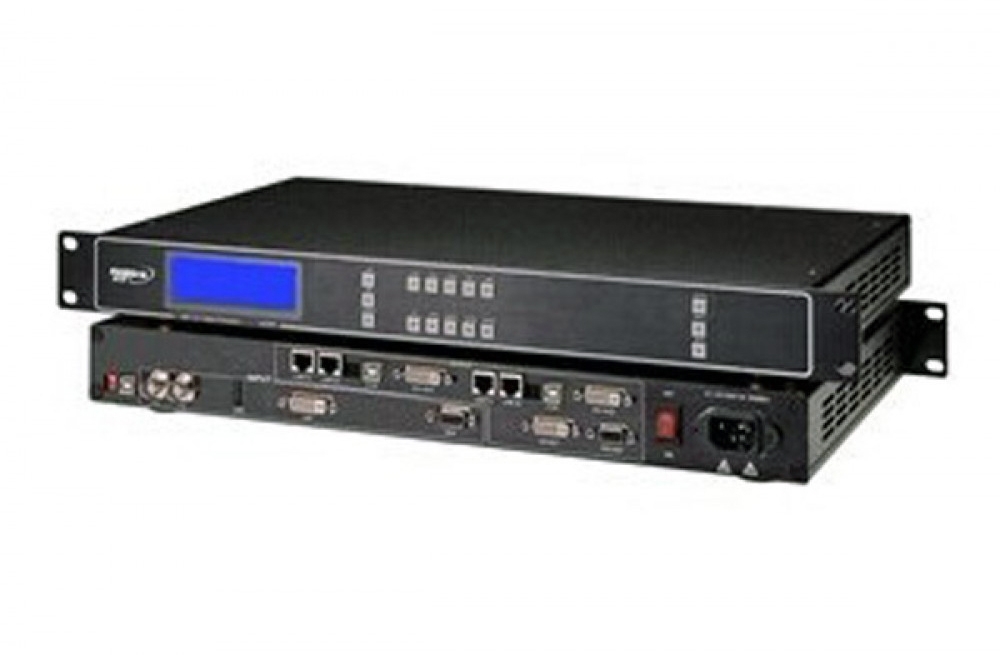
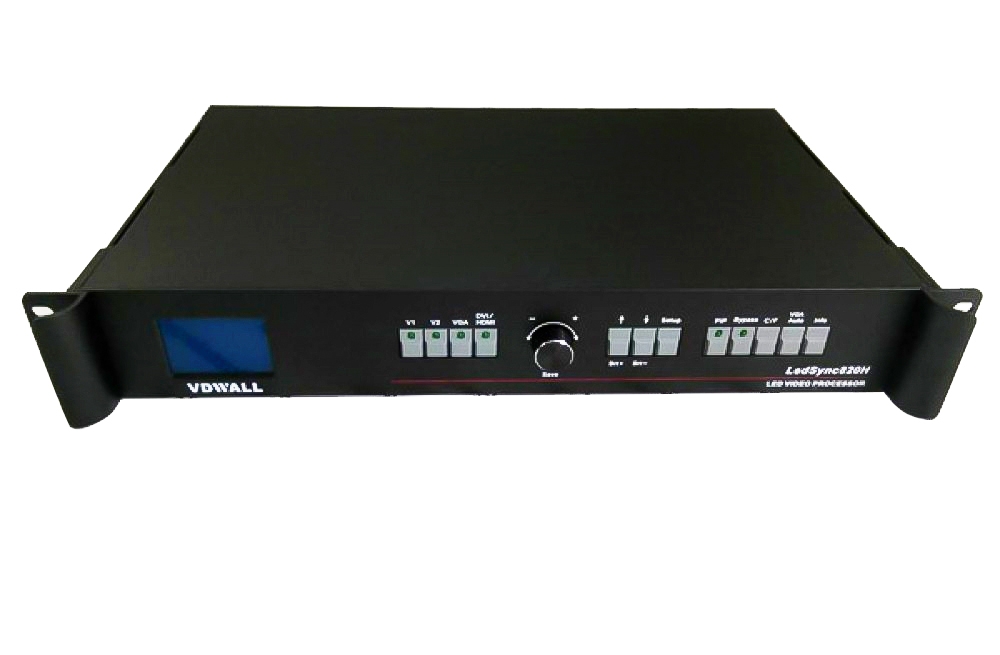
Huidu HD-VP2060 LED video processor and sender
The HD-VP2060 switches and scales video sources and sends the result directly to compatible LED receiving cards. V1.0 lists 20 Gigabit outputs and up to 13.1 million LED pixels.
Count connected sources separately from the windows on screen. There are two physical 4K60 inputs. The V1.0 layout table also lists a three-window 4K arrangement, which is a canvas layout and does not add another 4K input.
| Ngā tāurunga 4K | 1 × HDMI 2.0 and 1 × DP 1.2, up to 4,096 × 2,160 at 60 Hz |
|---|---|
| Other HDMI | 4 × HDMI 1.3, tae atu ki te 1,920 × 1,200 i te 60 Hz ia |
| Ngā putanga LED | 20 × Gigabit Ethernet, up to 13.1 million pixels total in V1.0 |
| Ngā rohe o te kānawehi | Tae atu ki te 16,384 pika te whānui, tae atu rānei ki te 8,192 teitei, i roto i te kawenga katoa |
| Ororongo | 3.5 mm TRS stereo input and output; embedded HDMI or DP audio |
| mana | 16 stored scenes, brightness control, key lock and central control. Infrared remote optional. |
| 4K layouts | Up to three 4K windows, subject to the source and canvas layout |
|---|---|
| Mixed layout | Two 4K windows plus four 2K windows |
| 2K layout | Up to six 2K windows |
Map the cabinets before connecting sources
A 3,840 × 2,160 wall contains 8,294,400 pixels. It fits below the rated total, but the receiving cards and each port still need to match the cabinet layout. Use the original connection diagram to plan the signal path.
Set up recurring presentations
Crop to the part of the source you want, scale it to fit the assigned window, then store the layout in one of the 16 scene presets.
Nga paatai puta noa
Me whai pouaka tuku motuhake ahau?
The VP2060 includes the LED sending function. Connect its numbered Gigabit outputs to compatible cabinet receiving cards.
Do six windows require six 4K sources?
No. V1.0 lists specific mixed and 2K layouts. Use the HDMI 2.0 and DP 1.2 ports for 4K60 sources.
Hua whakaahua