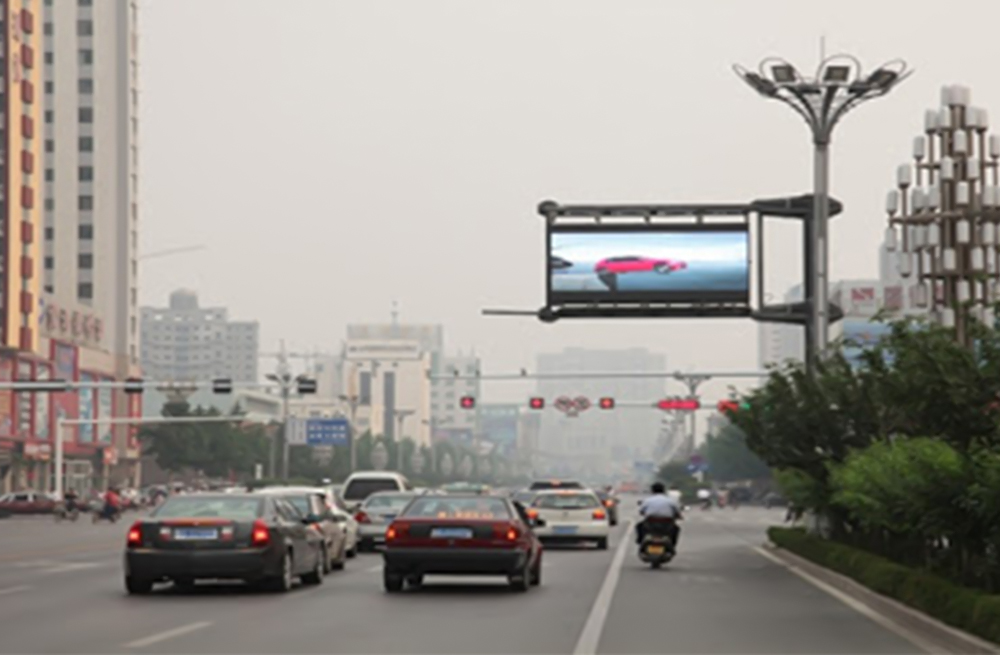
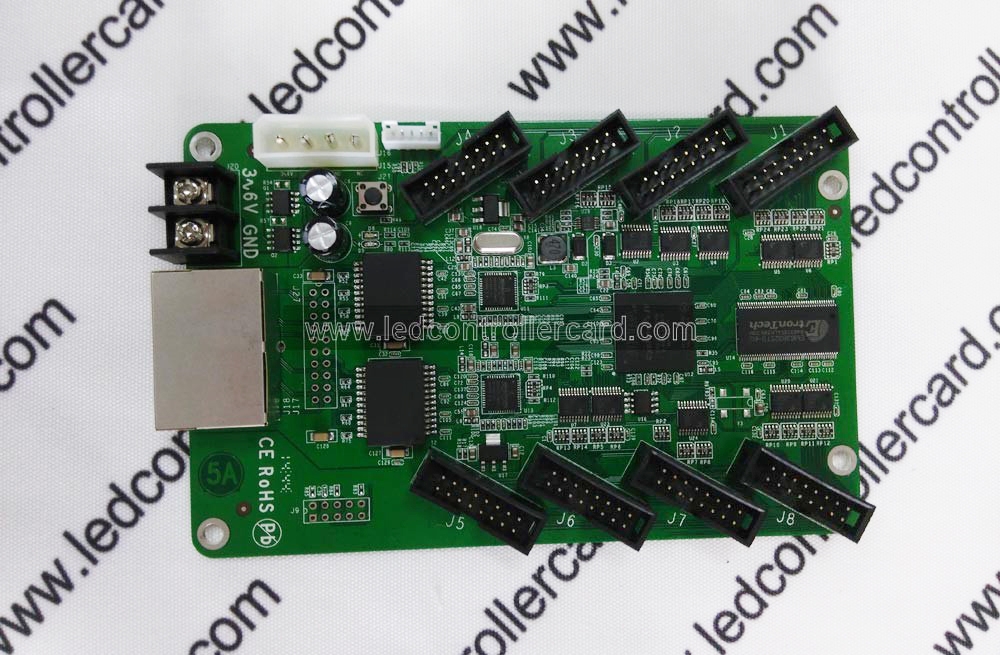
Ho kgetha pakeng tsa Colorlight 5A-75B le 5A-75E ho itshetlehile ka hore na ke dihlooho tse kae tse bataletseng tsa ribone tsa HUB75 tse nang le dipin tse 16 tseo khabinete ya hao e di sebedisang le hore na ke dihlopha tse kae tsa data tsa RGB tse bapileng tseo mokhanni wa hao wa IC a di hlokang. Tsamaya le Colorlight 5A-75B ya diport tse 8 (dihlopha tse 16 tse bapileng kapa tse 32 tsa serial RGB, ho fihlela ho dipiksele tse 192 x 1024 ho di-chips tsa PWM) bakeng sa dikhabinete tsa kgwebo tse tloaelehileng tsa mela e 4 ho isa ho e 8. Nyolohela ho diport tse 16 tsa Colorlight 5A-75E (dihlopha tse 32 tsa RGB tse bapileng, ho fihlela ho dipiksele tse 512 x 512) ha dikhabinete tse telele tsa mela e 9 ho isa ho e 16 di hloka dijo tse otlolohileng tsa ribone ntle le ho beha boto e arohaneng ya hub.
Spend enough years troubleshooting LED video walls and you’ll pull dozens of Colorlight boards out of rain-soaked signs, touring rental frames, and dusty retail fascias. Most blacked-out or shimmering cabinets trace back to a corroded ribbon latch, a sagging 5 V supply rail, or a tech who tried plugging an 8-port board into a 12-ribbon harness—or renamed a legacy .rcvp file extension on a laptop instead of exporting a valid .rcvbp file from LEDVISION.
Pele o odara di-spare kapa o notlela bili ya khabinete ya thepa, ha re hlahlobeng se arolang lefa la 5A-75, current 5A-75B, dense 5A-75E, and compact i5A-907 on a live shop bench—including HUB75E pinouts, driver IC limits, and clean .rcvbp loading steps.
1. Hardware split: Colorlight 5A-75B vs 5A-75E, 5A-75 & i5A-907
Hang feela ka hara mokotla o thibelang ho sisinyeha, leseli le bonolo ka ho fetisisa tlhahlobong ea Colorlight 5A-75B khahlanong le 5A-75E ha se processor ea FPGA—ke kamoo lihlooho tse ntšo tse 16-pin li tletseng kateng ho potoloha PCB e tala. Likarete tsena ka bobeli li sebelisa meralo e se nang hub, ho bolelang hore lithapo tse bataletseng tsa ribone e putsoa ea conductor tse 16 li tlola ka ho toba ho tloha kareteng e amohelang ho ea ho li-module. Ho tlosa backplane e eketsehileng ea hub ea boto ho ea ho boto ho tlosa liphoso tse tloaelehileng tsa ho thothomela ka har'a liforeimi tsa maeto le mabota a tereilara a tsamaeang.
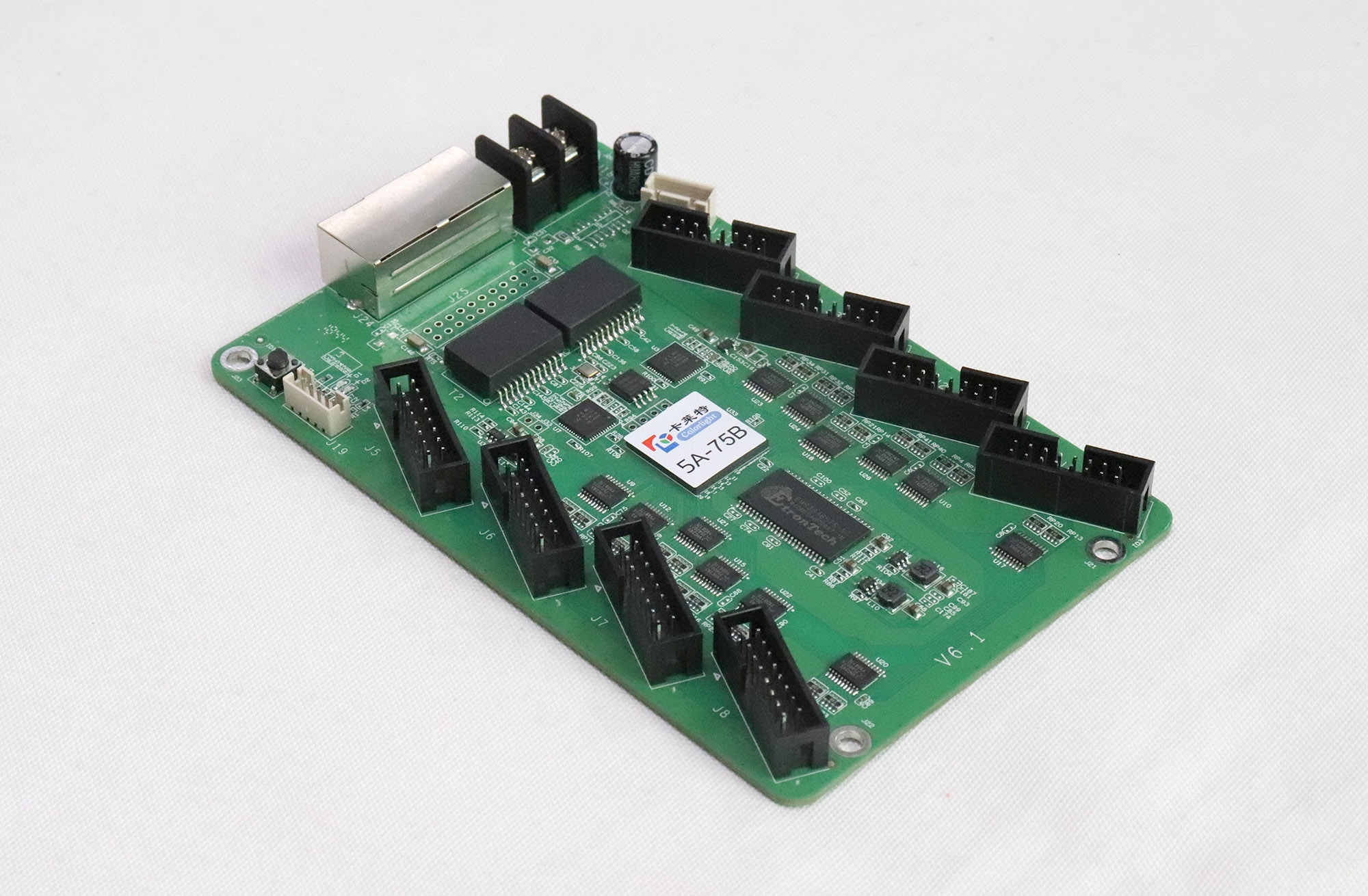
01. 8-port vs 16-port HUB75 connector density
The Leseli la mebala 5A-75B carries eight 16-pin HUB75 headers (JH1 through JH8). Because each HUB75 port sends two vertical RGB channels (R1/G1/B1 and R2/G2/B2), eight headers deliver 16 groups of parallel RGB data (or 32 serial RGB groups). That matches 500 x 500 mm (19.7 x 19.7 in) or 640 x 640 mm (25.2 x 25.2 in) cabinets stacked four to eight module rows high, where each horizontal row receives one short direct ribbon cable.
Kena ka hare ho khabinete e telele ea kantle ea 960 x 960 mm (37.8 x 37.8 in) kapa foreimi e ntle e hahiloeng ka li-module tse leshome le metso e 'meli tsa 320 x 160 mm (12.6 x 6.3 in), 'me li-header tse robeli lia haella kapele. Ho seng joalo u ne u tla tlameha ho kopanya li-module tse peli ka ketane lenteng e le 'ngoe—u arola sekhahla sa khatholoho ka halofo le ho phahamisa mocheso holim'a li-pin tsa mokhanni—kapa u kenye liboto tse peli tse arohaneng tsa ho amohela ka sekoting ka seng. Colorlight 5A-75E e beha li-header tse 16 tsa HUB75 ka har'a PCB e le 'ngoe, e fepa lihlopha tsohle tse 32 tsa data tsa RGB tse tsamaeang ka tsela e tšoanang ho tsoa ho lerotholi le le leng la Ethernet. Kahong ea 'nete ea Colorlight 5A-75B khahlanong le 5A-75E , ho qoba boto eo ea bobeli ea ho amohela ho boloka lithapo tse peli tsa patch tsa Ethernet, harness e le' ngoe ea motlakase ea 5 V DC, le ntlha e 'ngoe e eketsehileng ea ho hloleha ka har'a mamati a tšepe a koetsoeng ke boemo ba leholimo.
Also inspect the power screw terminals while the cabinet door is open. Both boards accept 3.3 to 5.5 V DC (target 4.95 to 5.10 V DC under load) through dual parallel power blocks or auxiliary pin-header pads. Using clean 20 AWG copper leads directly from the cabinet Mean Well or Rong Electric power supply keeps logic voltage stable across high-brightness white frames so the FPGA never drops out or resets mid-show.

02. Pixel load ceiling under standard & PWM modes
Likarete tsa boholo bo sa lebelloang tse tsoang sehloohong se le seng sa pixel se tloaelehileng. Papisong efe kapa efe ea Colorlight 5A-75B khahlanong le 5A-75E , bokhoni ba 'nete ba pixel boa fetoha ka chip ea mokhanni holim'a backplane ea module. Ho 5A-75B, Colorlight e totobatsa ho fihlela ho li-pixel tse 128 x 1024 (li-pixel tse 131,072) ka li-chips tse tloaelehileng tsa ho ngolisa shift, li-pixel tse 162 x 1024 ka li-chips tsa Shixin, le li- pixel tse 192 x 1024 (li-pixel tse 196,608) ka li-chips tsa PWM tse sa fetoheng.
On the 5A-75E, unlocking 32 parallel RGB groups expands manufacturer-rated capacity up to 512 x 512 pixels (Dipiksele tse 262,144). Setšoantšo seo sa 512 x 512 se emela moeli o ka holimo oa hardware, ha se tiisetso ea hore khabinete e 'ngoe le e 'ngoe e nang le molumo o motle e fihla khatholohong ea 3,840 Hz ha e tlatsoa ho fihlela molomong. Leha ho le joalo, ho ba le lihlooho tsa ribone tse habeli ho u lumella ho boloka liketane tse otlolohileng li le khutšoane.
03. Where legacy 5A-75 and compact i5A-907 fit in
Litsebi tsa theknoloji ea masimong li atisa ho kopana le bana ba babeli ba banab'eso mehala ea litšebeletso tsa khale: ea pele Leseli la 'mala 5A-75 le tse tšesaane Leseli la mebala i5A-907. Although the pre-2020 5A-75 also carries 8 HUB75 headers, its older hardware design lacks newer PWM driver definitions added in recent LEDVISION releases. Meanwhile, the i5A-907 isn’t a direct-ribbon card at all—it measures 137 x 48 mm (5.39 x 1.89 in) with five 26-pin headers built to dock onto a die-cast cabinet’s rigid hub board, rated at 256 x 256 pixels conventional load and 1/64 scan.
| ea mohlala | Mojule Interface | Lihlopha tsa Lintlha tsa RGB | Rated Loading Capacity | Skena Tšehetso | Primary Cabinet Use |
|---|---|---|---|---|---|
| Leseli la mebala 5A-75B | 8 x 16-pin HUB75 onboard | 16 e tšoanang kapa 32 serial RGB | 128 x 1024 e tloaelehileng; 162 x 1024 Shixin; 192 x 1024 PWM | E tsitsitse ho isa ho 1/128 scan | Mabota a khoebo a mela e 4 ho isa ho e 8, likhabinete tsa 500 x 500 mm |
| Leseli la mebala 5A-75E | 16 x 16-pin HUB75 onboard | 32 parallel RGB groups | Ho fihlela ho 512 x 512 px (ho itshetlehile ka ho skena le chip) | Static through high-scan PWM | 9-to-16-row 960 x 960 mm outdoor & fine-pitch frames |
| Leseli la 'mala 5A-75 | 8 x 16-pin HUB75 onboard | 16 parallel RGB groups | Legacy 5A range; varies by board batch | Static to 1/32 typical | Litokiso tsa ho kena meahong ea matšoao a khale |
| Leseli la mebala i5A-907 | 5 x 26-pin hub headers (J5 mirrors J1) | 16 RGBR’ or 24 RGB parallel | 256 x 256 px conventional (1,024-col special) | E tsitsitse ho isa ho 1/64 scan | Likhabinete tse hiriloeng tse tšesaane tse nang le die-cast tse sebelisang hub backplane |

2. HUB75 vs HUB75E pinouts & scan ratio wiring (1/16 to 1/128 scan)
Buyers often see HUB75 printed beside the sockets on a Colorlight 5A-75B vs 5A-75E board and wonder if it breaks compatibility with modules labeled HUB75E. In practice, both boards share the full 16-pin HUB75E footprint supporting five scan-address lines (A through E). Even so, spending thirty seconds checking silkscreen pins prevents dead rows on custom modules.
01. Mela ya aterese A ho isa ho E: di-check pin 8 le 14
Legacy 1/8-scan and 1/16-scan modules only use address bits A, B, C, and D on pins 9, 10, 11, and 12 (leaving pin 8 or pin 14 tied to ground). Higher-density indoor modules running 1/32 scan or 1/64 scan require a fifth address bit (E), typically placed on pin 14—or pin 4 and pin 8 on certain custom layouts.
If an older receiving card forces pin 14 straight to chassis ground, half of a 1/32-scan module mirrors the other half identically. Both the 5A-75B and 5A-75E route address lines A through E across every header cleanly; match the exact module silkscreen labels inside LEDVISION’s pin-mapping screen before saving settings to flash.
02. Meeli ea bolelele ba thapo ea ribone e bataletseng le thibelo ea ho bua ka tsela e fapaneng
More ports on the 5A-75E also shorten cable geometry inside big frames. Try routing eight ribbons from a 5A-75B across a wide 960 x 960 mm (37.8 x 37.8 in) steel frame and outer corner IDC ribbons stretch past 450 mm (17.7 in), swinging directly across noisy AC power lines.
Once unshielded gray ribbon cables exceed roughly 400 mm (15.7 in) at 25 MHz shift clocks, crosstalk triggers green pixel sparkle or dropped data lines in warm weather. Mounting a 16-port 5A-75E centered in the cabinet keeps most ribbons between 150 and 280 mm (5.9 and 11.0 in) for rock-solid high-frequency stability.
03. Upgrading older 5A-75 cabinets to 5A-75B or 5A-75E
Can you drop a newer 5A-75B into a dead cabinet that shipped with a legacy 5A-75? Physically, both feature eight HUB75 headers and 3.3–5.5 V DC power blocks, though hole spacing varies slightly by cabinet bracket. Because the older binary file doesn’t transfer cleanly across hardware generations, pull chip timing and scan geometry from a healthy neighbor card in LEDVISION and compile a clean configuration for the new 5A-75B.
Likewise, you can install a 16-port 5A-75E where an 8-port 5A-75B sat if you plug your eight existing ribbons into ports JH1 through JH8 and leave JH9 through JH16 open—just never the reverse. Walk through our Colorlight 5A-75B wiring checklist pele o kenya matla likhabote tse sa tloaelehang.
3. Driver IC limits: conventional latch ICs vs PWM chips
Leraba le leholo ka ho fetisisa la ho lekola Colorlight 5A-75B vs 5A-75E cards is chasing raw pixel totals while ignoring refresh rate and driver chip timing. Receiving card bandwidth depends heavily on how LED module ICs convert serial video bits into light pulses.
01. How Colorlight firmware drives PWM multipliers
Conventional shift-register drivers (like ICN2037, MBI5024, or SM16207) need constant high-speed clock toggling from the receiving card to sustain grayscale levels, topping out the 5A-75B at 128 x 1024 pixels. Modern PWM drivers (ICN2053, ICN2153, MBI5153, DP3264) buffer brightness data internally and generate high-frequency PWM cycles locally from a master GCLK line. Offloading those cycles raises 5A-75B capacity to 192 x 1024 pixels and unlocks 512 x 512 capacity across the 5A-75E’s 32 data paths.
02. Ho lokisa ho fetoha ha 'mala o khanyang hanyane le ghosting e lefifi ea mola oa pele
Indoor meeting rooms rarely run past 15% to 25% brightness. On basic latch chips running low brightness, white slides pick up reddish tints or faint vertical shadows above bright headlines. Both cards in a Colorlight 5A-75B vs 5A-75E comparison let you enable low-grayscale calibration and tune pre-charge blanking timing inside LEDVISION—and splitting ribbons across 16 ports on the 5A-75E doubles per-ribbon timing headroom to keep cameras flicker-free at 3,840 Hz.
03. Pixel calibration storage across replacement batches
If replacement LED modules ordered two years later glow noticeably cooler than surrounding cabinets, remember that both 5A-75B and 5A-75E store 8-bit brightness and chromaticity calibration tables onboard. Back up existing factory calibration coefficients before pulling a damaged card on a calibrated fine-pitch screen so the repaired panel blends evenly.
| Sebopeho sa Khabinete le Sekontiri | Modules Inside Cabinet | Qeto ea Khabinete | Ho Hlokahala Liribone | Recommended Card | Lebaka la Boenjiniere |
|---|---|---|---|---|---|
| 500 x 500 mm (19.7 x 19.7 in) P3.91 Rental | Dimojule tse 2 x 4 (250 x 250 mm) | Dipiksele tse 128 x 128 (dipiksele tse 16,384) | Liribone tse 4 kapa tse 8 | Leseli la mebala 5A-75B (or i5A-907 backplane) | Fits comfortably inside 8 ports; loads up to 40 cabinets per 1 Gbps link |
| 640 x 480 mm (25.2 x 18.9 in) P2.5 Indoor | Dimojule tse 2 x 3 (320 x 160 mm) | Dipiksele tse 256 x 192 (dipiksele tse 49,152) | 6 ribbons | Leseli la mebala 5A-75B | Uses 6 of 8 headers with plenty of refresh headroom on PWM ICs |
| 960 x 960 mm (37.8 x 37.8 in) P4 Outdoor | Dimojule tse 3 x 6 (320 x 160 mm) | Dipiksele tse 240 x 240 (dipiksele tse 57,600) | Liribone tse 9 kapa tse 12 | Leseli la mebala 5A-75E | Liribone tse 12 tse otlolohileng li lula hantle lihloohong tse 16 tse nang le litsela tse khutšoane tsa cable |
| 640 x 640 mm (25.2 x 25.2 in) P1.86 Indoor | Dimojule tse 2 x 4 (320 x 160 mm) | Dipiksele tse 344 x 344 (dipiksele tse 118,336) | 8 or 16 split ribbons | Leseli la mebala 5A-75E | 32 parallel groups sustain smooth grayscale at low meeting-room dimming |
4. Sender pairing & multifunction relays (X20m, X8m, X6 & iM9)
Ha ho karete e le 'ngoe ho Colorlight 5A-75B vs 5A-75E matchup communicates with NovaStar, Huidu, kapa Linsn senders—both listen solely to Colorlight Ethernet frames. If a project compares brands during early design, review our NovaStar vs Colorlight control guide pele.

01. 655,360-pixel RJ45 limits on X20m, X8m & X6 senders
Ho tloha ho processor ea Colorlight X6 le X8m ho fihlela ho 20-port Colorlight X20m (li-pixel tse limilione tse 13.1 ka kakaretso ho pholletsa le li-jack tsa Gigabit tse 20 kapa li-port tse 'ne tsa optical tsa 10G ka lipara tse sebetsang/tse emeng), thapo ka 'ngoe ea RJ45 e jara li-pixel tse fihlang ho 655,360 ho 8-bit 60 Hz . Ho kenya video ho ea ho 10-bit kapa 12-bit ho fokotsa bokhoni ba port bo ka sebelisoang ka halofo. Boloka koporo ea Cat6 e tiileng e matha ka tlase ho 100 m (328 ft), kapa u kene ho optical fiber neng kapa neng ha li-rack tsa taolo li lutse holim'a li-arena.
02. Bidirectional RJ45 jacks & loop backup
Ka bobeli li sirelelitse li-socket tsa RJ45 ho 5A-75B le 5A-75E li buisana ka boiketsetso ka mokhoa o hloekileng ntle le mabitso a thata a ho kenya/ho ntša. Lits'ebetsong tse bohlokoa haholo, kgutlisa mola o le mong oa Cat6 ho tloha khabineteng ea ho qetela ho khutlela koung ea moromelli ea sa hlokahaleng 'me u behe 'mapa oa ho se sebetse hantle ha bekapo ka hare ho LEDVISION e le hore li-switch tsa cable ea yank tse sa reroang li fepe litaelo ka mokhoa o hloekileng foreiming e le 'ngoe.
03. Adding the iM9 multifunction card for power staging
Matšoao a kantle a hloka ho fifala ha letsatsi/ho likela ha letsatsi le letsatsi le tatellano e bolokehileng ea breaker. Ho fanyeha karete ea mesebetsi e mengata ea Colorlight iM9 ketane ea Cat6 ho eketsa tokiso ea khanya e potolohileng, litemoso tsa mosi/mongobo/mocheso, le li-switch tse 7 tsa relay tse hlophisitsoeng e le hore lisebelisoa tsa motlakase tsa khabinete li kene hantle ntle le ho khopa li-breaker tsa lisebelisoa.

5. Loading RCVBP vs RCVP files in LEDVISION safely
Bongata ba di-callback tsa kamora ho lokiswa di etsahala ka hara software metsotso e mehlano kamora ho tiisa di-screw tsa ho ema. Kemiso e hlophisehileng ya LEDVISION e qoba methalo e otlolohileng e sothehileng kapa dimmapa tsa khabinete tse hlakotsweng ha motlakase o fela.
01. Password 168 & cloning a healthy reference cabinet
Grab the matching release from our Colorlight LEDVISION and iSet download library, link your PC via USB or LAN, open Control → Screen Management, and type engineering password 168. Never wipe a working wall by starting a Smart Setting wizard from scratch—simply read Load from Receiver off an intact cabinet next door, immediately save a desktop backup (.rcvbp), ebe o tobetse Romela ho Moamoheli targeting only the single replacement card coordinate before mapping its X/Y coordinates. Keeping separate labeled folders for every Colorlight 5A-75B vs 5A-75E cabinet batch avoids mixing up driver-IC profiles during multi-year maintenance.
02. Converting legacy .RCVP files properly (never rename extensions)
E ntse e tšoere lefa .rcvp file from an old install? Don’t rename .rcvp ho .rcvbp in Windows Explorer—as detailed in our guide on why renaming RCVP to RCVBP fails, changing letters leaves the old binary header intact and fails checksum loading. Open the .rcvp natively inside LEDVISION’s receiver dialog and save it back out as a clean .rcvbp faele.
03. Ho boloka ho benya pele o tsamaisa motlakase oa AC
Sending parameters writes settings into volatile RAM so techs can test tweaks safely first. Before packing your bag, click Save to Receiver tlas'a tab ea Liparamitha tsa Receiver le tab ea Receiver Mapping, emela hore e phethoe ka 100%, ebe u tima lebota la ho tima le ho bula hang ho netefatsa hore phanele e lokisitsoeng e buloa ka ho toba videong e phelang. Boloka ea hau e netefalitsoeng .rcvbp 'me .clm mapping files onto a backup USB stick inside the rack after every Colorlight 5A-75B vs 5A-75E swap.
Hangata ile a botsa lipotso
Phapang e sebetsang ke efe papisong ea Colorlight 5A-75B khahlanong le 5A-75E?
Ka bobeli ke likarete tsa ho amohela Colorlight tse se nang hub, empa Colorlight 5A-75B e fana ka dihlooho tse 8 tsa HUB75 tse ka hare ho sekepe (dihlopha tse 16 tsa data tsa RGB tse bapileng, ho fihlela dipiksele tse 192 x 1024 ho PWM ICs) athe Colorlight 5A-75E e fana ka dihlooho tse 16 tsa HUB75 tse ka hare ho sekepe (dihlopha tse 32 tsa data tsa RGB tse bapileng, ho fihlela dipiksele tse 512 x 512). Kgetha 5A-75B bakeng sa dikhabote tsa ribone tse 4 ho isa ho tse 8 le 5A-75E bakeng sa dikhabote tse telele kapa tse teteaneng tsa ribone tse 9 ho isa ho tse 16.
Can I replace a discontinued or older Colorlight 5A-75 board with a 5A-75B?
Hangata e, ha feela masoba a ho kenya le di-pinout tsa dihlooho tse 8 di tshwana. Ntlafatsa LEDVISION ho ya phetolelong ya moraorao, bala diparamithara ho tswa khabineng e sebetsang e seng e ntse e le teng leboteng, di romele feela ho index ya karete ya 5A-75B e nkelang sebaka, ebe o tobetsa Boloka ho Moamoheli e le hore ditlhophiso di tswelle pele ho tsosoloso.
Do Colorlight 5A-75B or 5A-75E cards support 1/32-scan and 1/64-scan HUB75E panels?
Yes. Colorlight specifies up to 1/128 scan on the 5A-75B and supports five address lines (A through E) across the 5A-75B/5A-75E family. Check whether address line E sits on pin 14 or pin 8 of your module PCB and match the pin assignment inside LEDVISION.
What do the status LED blink patterns mean on a Colorlight 5A-75B or 5A-75E?
A steady red light confirms 5 V DC power reaches the board. A fast green flash (about 4 times per second) shows active Gigabit video sync. One slow green flash per second indicates no valid Ethernet link from the sender, while three quick flashes with a pause mean link is connected but no video input or screen mapping covers that card.
Na nka sebelisa Colorlight 5A-75B kapa 5A-75E ho tsoa ho NovaStar VX600 kapa Huidu processor?
Tjhe. Dikarete tse amohelang mabone a mebala di hloka moromelli wa mabone a mebala (jwalo ka taolo ya S2, S4, X6, X8m, kapa X20m). O ke ke wa kopanya dikarete tse amohelang mabone a mebala ho NovaStar kapa Huidu signal chain.
Pele o odara dikarete tsa ho amohela Colorlight: lenane la tlhahlobo la tshimo
Pele o etsa odara ya dintho tse ding kamora ho hlahloba Colorlight 5A-75B vs 5A-75E Litlhaloso, bula khabinete e le 'ngoe e phetseng hantle ka toche 'me u ngole lintlha tse hlano: leibole e nepahetseng ea PCB ea silkscreen le e tšoeu (5A-75, 5A-75B, 5A-75E, kapa i5A-907), hore na ke liribone tse kae tse bataletseng tsa li-pin tse 16 tse kenngoeng botong, mohlala oa moromelli oa hau rack ea taolo, nomoro ea karolo ea mokhanni ea IC e hatisitsoeng ka morao ho mojule, le hore na u se u ntse u tšoere e bolokiloeng. .rcvbp backup.
If an older cabinet carries an unfamiliar PCB revision or you’re unsure which board fits your ribbon harness cleanly in a Colorlight 5A-75B vs 5A-75E fetola, Romela linepe tse hlakileng tsa karete ea hau ea ho amohela le leibole ea mojule ka leqephe la rona la ho ikopanya so our technicians verify compatibility before dispatch. And if weathered steel cabinets need complete screen replacement rather than piecemeal card repairs, you can browse complete indoor and outdoor LED walls over at EagerLED.