Cerdas Penentuan ukuran catu daya LED starts with one rule you only break once before smelling burnt silicon: standard HUB75 LED modules (P1.86, P2.5, P3.91, P10) run on 4.2 V hingga 5 V DC, whereas 24 V bricks like the Berarti Baik LRS-350-24 (24 V, 14.6 A, 350.4 W) belong on 24 V strip signage, cabinet fans, and step-down bus runs. Wire a 24 V supply into a 5 V LED panel or receiving card and you’ll pop every driver IC on the board the second the breaker closes. For standard 5 V video walls, build around 5 V 40 A (200 W) or 5 V 60 A (300 W) supplies—such as the Berarti Baik LRS-350-5, LRS-200-5, atau UHP-200-5—and keep continuous full-white load at or below 75% untuk 80% of nameplate watts.
You can skip expensive callbacks on hot summer afternoons once you treat nameplate ratings honestly. Most cabinet shutdowns, dim reddish tiles, and mystery breaker trips on North American (110–120 V AC) or European (220–240 V AC) feeds trace back to doing Penentuan ukuran catu daya LED around average video draw instead of peak white current, ignoring thermal derating inside sealed steel doors, or forgetting the side 115 V / 230 V switch.
Mari kita bandingkan berarti Yah LRS-350-24 side by side against 5 V 40 A and 60 A supplies from Mean Well, CZCL, Rong-Electric, dan G-Energy, work through real module-per-PSU math using the 80% rule, and walk through AC breaker sizing and DC wiring habits that keep boards alive.
1. Arsitektur 24V vs 5V: kapan menggunakan catu daya LRS-350-24 vs 5V 40A/60A
Pull an Catu daya LED off a parts shelf—specifically the Berarti Baik LRS-350-24 dan Berarti Baik LRS-350-5—and they look like twins at arm’s length. Both share a 215 x 115 x 30 mm (8.46 x 4.53 x 1.18 in) stamped aluminum grille housing, the exact same 9-screw terminal block, and the exact same recessed 115 V / 230 V switch on the flank. Look at the output sticker before picking up a screwdriver, though, because they feed totally different hardware.
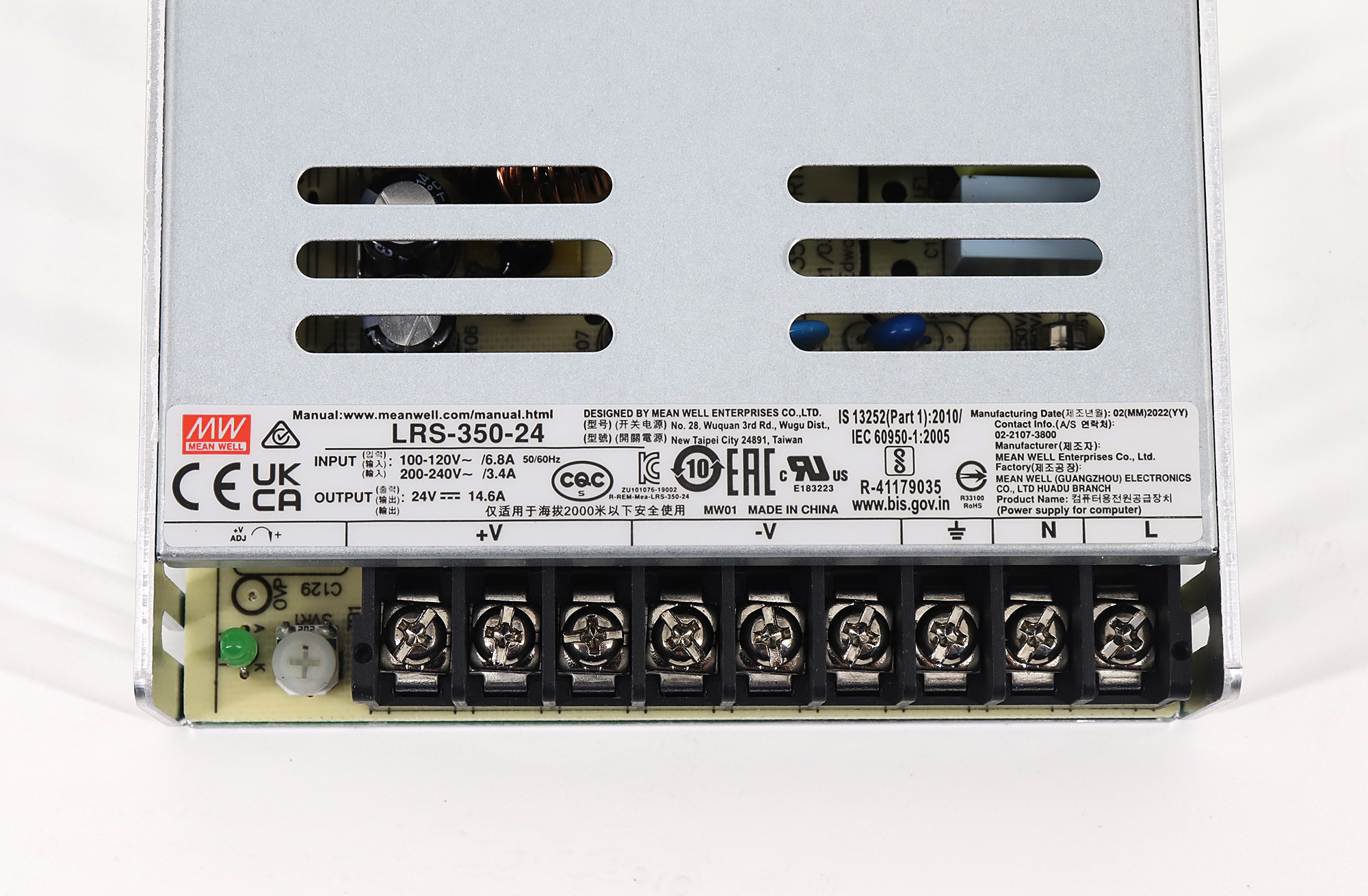
01. Di mana Mean Well LRS-350-24 berada
The Berarti Baik LRS-350-24 puts out 24 V DC at up to 14.6 A (350.4 W), with a tiny trim pot (SVR1) letting you dial voltage between roughly 21.6 V and 28.8 V DC. You’ll normally run into it in three places around a sign shop:
- 24 V channel letters, lightboxes, and facade strip signs: Long perimeter runs stick with 24 V DC instead of 5 V DC because moving 300 W at 24 V only pulls 12.5 A instead of 60 A—cutting I2R copper losses dramatically over 10 to 30 m (32.8 to 98.4 ft) runs.
- Cabinet exhaust blowers, motorized kiosks, and contactor coils: Heavy outdoor pylons often park one LRS-350-24 in the service bay strictly to run 24 V cooling fans, louvers, and relay control loops.
- High-voltage curtain walls with local DC-DC converters: Certain architectural mesh screens push 24 V DC up the structural frame and step down locally inside each bar.
02. Mengapa modul tampilan LED HUB75 standar memerlukan catu daya 5V 40A atau 5V 60A?
Matrix video tiles are a different animal altogether. Almost every full-color HUB75 display module—from fine-pitch P1.25 indoor conference boards to P10 outdoor billboards—plus every Kartu penerima LED inside the box expects 5 V DC (or 4.2 V to 4.5 V DC on common-cathode energy-saving boards). That’s why Penentuan ukuran catu daya LED for cabinet screens revolves around parallel 5 V 40 A (200 W) or 5 V 60 A (300 W) feeds, with each brick driving four to eight modules cleanly.
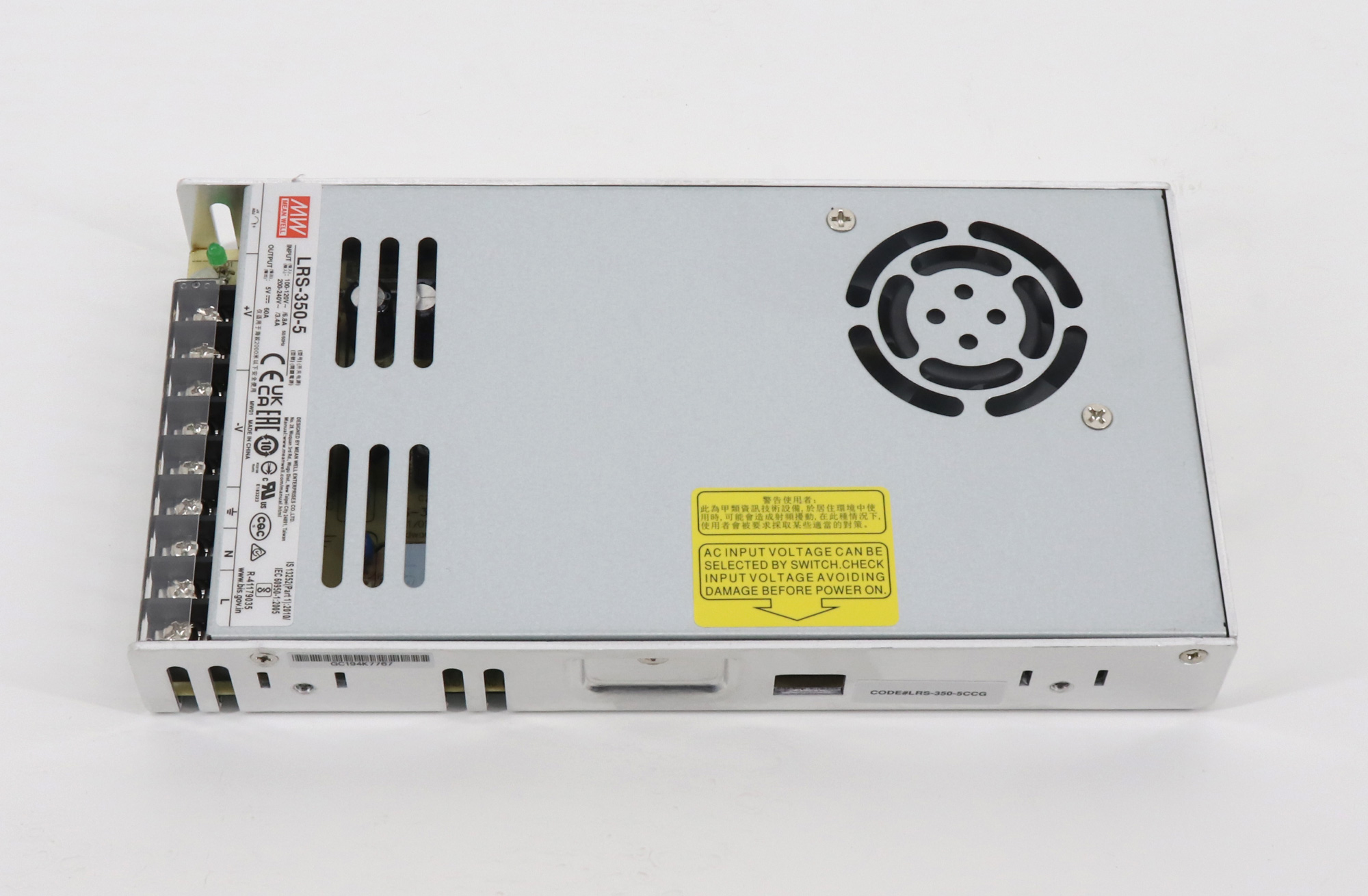
Don’t get fooled by the shared “350” model prefix either. While the 24 V LRS-350-24 hits 350.4 W at around 88% efficiency, the 5 V LRS-350-5 caps at 300 W (5 V x 60 A) at ~83.5% efficiency because shoving 60 amps through output rectifiers creates way more internal heat. Treating an LRS-350-5 as a “350-watt supply” during Penentuan ukuran catu daya LED is an easy way to shortchange yourself by 50 W per brick.
2. Perbandingan berdampingan antara Mean Well, CZCL, Rong-Electric, dan G-Energy unit
Electrical ratings are only half the puzzle when replacing a dead unit inside an existing frame. Mounting hole spacing, total depth, terminal orientation, and whether the room tolerates fan noise all decide what physically fits. You can also compare series families in our Mean Well power supply guide dan kami LED display power supply overview.
Here’s how eight popular supplies stocked on ledcontrollercard.com compare when you’re doing Penentuan ukuran catu daya LED or hunting a drop-in spare.
| Pilih Model | Keluaran DC (V / A / W) | Metode Input AC | Pendinginan & Faktor Bentuk | Dimensi (L x W x H) | Di Mana Anda Akan Melihatnya |
|---|---|---|---|---|---|
| Berarti Baik LRS-350-24 | 24 V / 14.6 A / 350.4 W | Saklar manual 115 V / 230 V | Kipas DC terintegrasi (kontrol hidup/mati), sasis 1U | 215 x 115 x 30 mm (8.46 x 4.53 x 1.18 in) | 24 V strip signage, channel letters, cabinet blowers |
| Berarti Baik LRS-350-5 | 5 V / 60 A / 300 W | Saklar manual 115 V / 230 V | Kipas DC terintegrasi, sasis berlubang 1U | 215 x 115 x 30 mm (8.46 x 4.53 x 1.18 in) | High-brightness outdoor 960 x 960 mm cabinets |
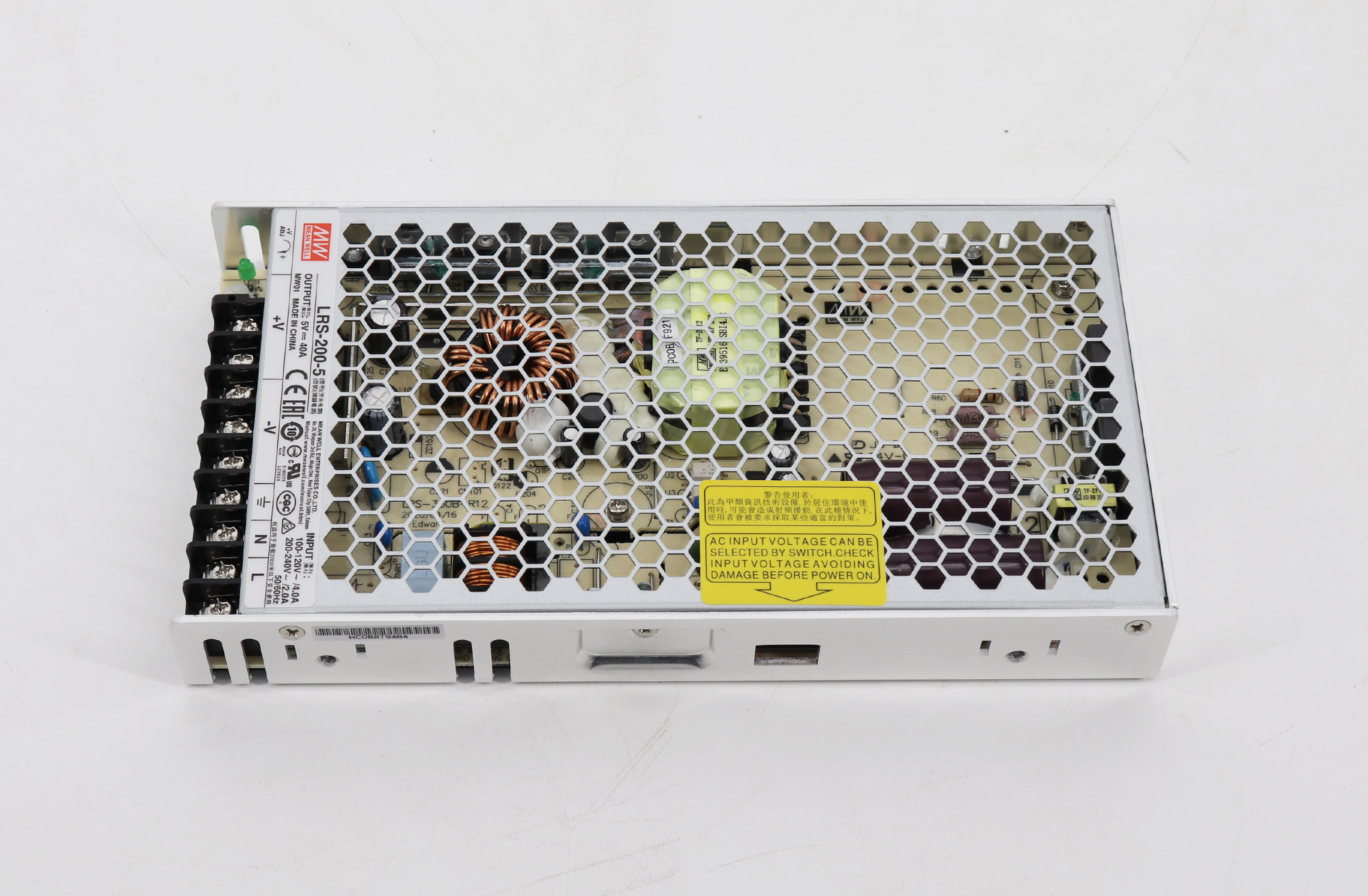
| Berarti Baik LRS-200-5 | 5 V / 40 A / 200 W | Saklar manual 115 V / 230 V | Konveksi udara bebas tanpa kipas, sasis 1U | 215 x 115 x 30 mm (8.46 x 4.53 x 1.18 in) | Quiet indoor walls & moderate commercial frames |
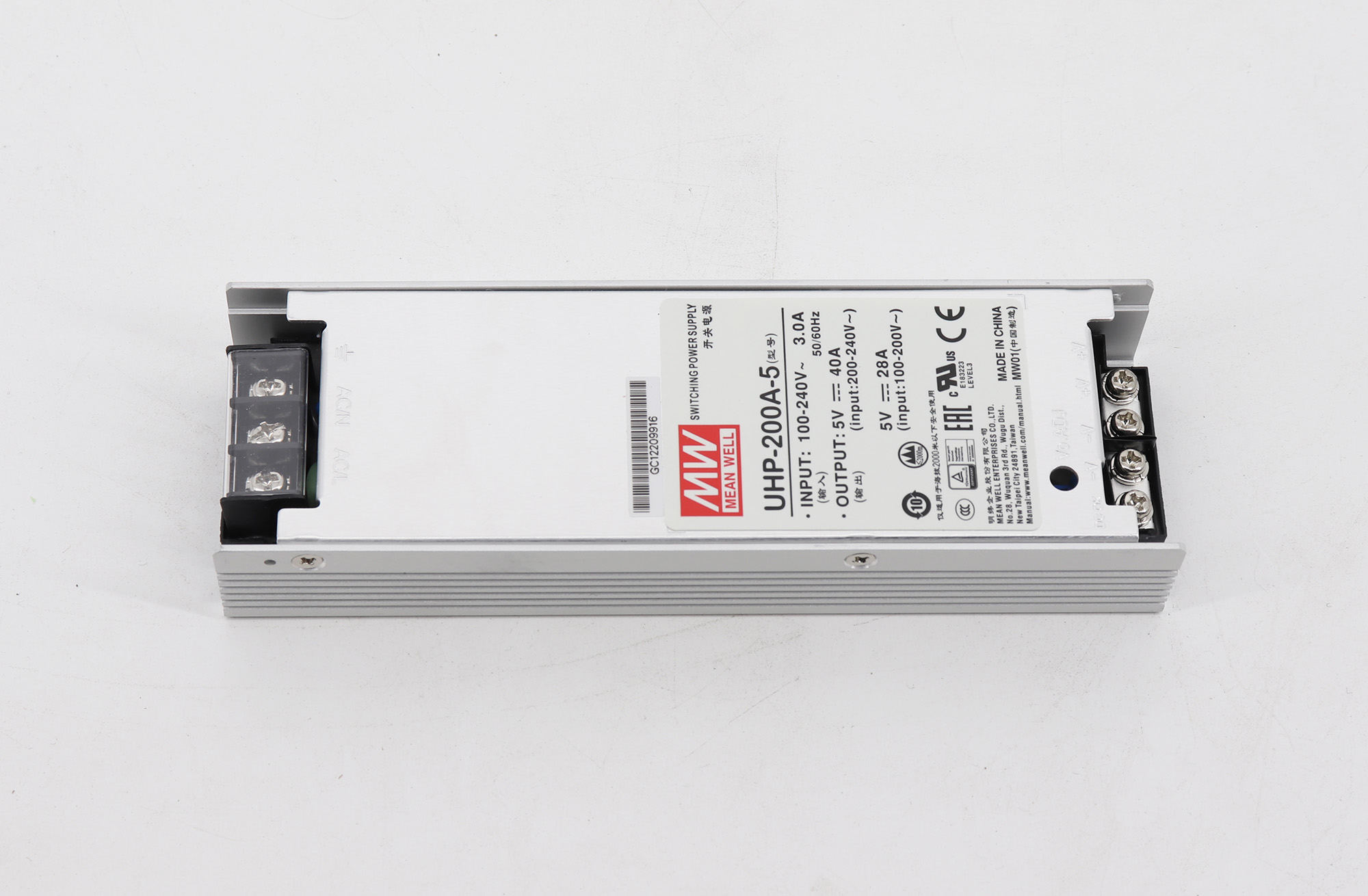
| Mean Well UHP-200-5 | 5 V / 40 A / 200 W | Universal 90–264 V AC + PFC aktif | Konduksi/konveksi tanpa kipas, ultra-tipis 26 mm | 194 x 55 x 26 mm (7.64 x 2.17 x 1.02 in) | Whisper-quiet conference walls & die-cast rental panels |
| CZCL A-200W-5 | 5 V / 40 A / 200 W | Tegangan AC 200–240 V (atau rentang spesifik model) | Fanless convection, compact LED cabinet housing | 190 x 82 x 30 mm (7.48 x 3.23 x 1.18 in) | Narrow-bracket indoor & outdoor LED cabinets |
| CZCL A-350AK-5 / A-300FAY-5 | 5 V / 60 A / 300 W | Tegangan AC 110 V / 220 V yang dapat diubah (A-350AK-5) | Low-profile LED cabinet chassis | ~212 x 81.5 x 30 mm (8.35 x 3.21 x 1.18 inci) | Outdoor billboards needing 110 V / 220 V compatibility |
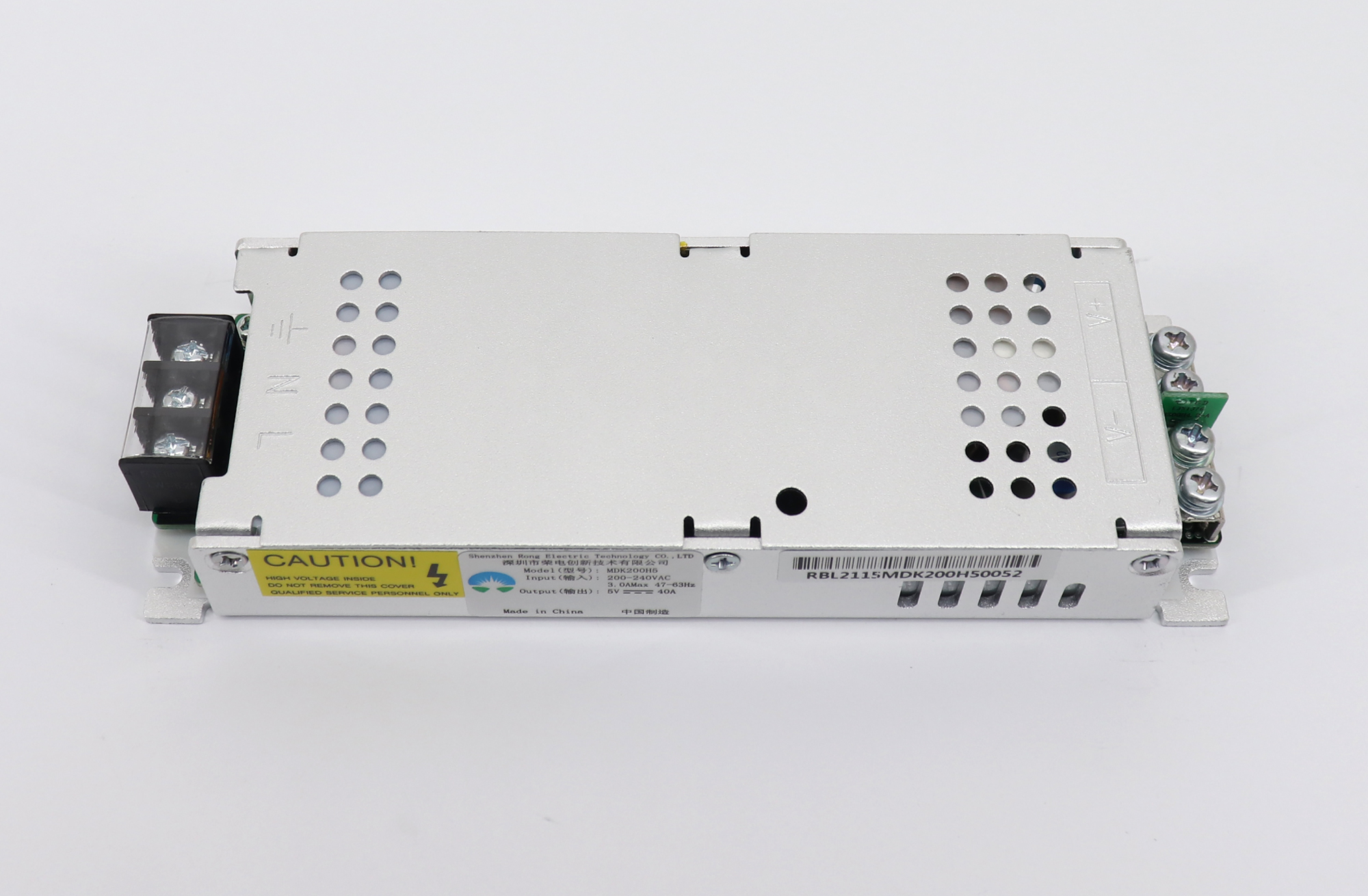
| Rong-Electric MDK200H5 | 5 V / 40 A / 200 W | Input AC jangkauan lebar | Tata letak terminal tembus ramping (kedua ujung) | Profil strip ramping untuk pemasangan di kabinet | Die-cast rental & front-service indoor frames |
| G-Energy JPS300V / JPS200V5-A | 5 V / 60 A (300 W) atau 40 A (200 W) | input harness kabinet AC | Penutup logam berventilasi profil rendah | Pola pemasangan standar layar LED | OEM cabinet swaps on commercial signs |
01. Fanless 200W vs fan-cooled 300W supplies: noise and dust trade-offs
Put thirty fan-cooled 300 W bricks behind a boardroom wall and every presenter starts asking what’s humming behind the screen. Worse yet, small 60 mm PSU fans suck chalk dust, lobby fuzz, and outdoor pollen straight across primary heatsinks until bearings seize two years in. That’s why indoor Penentuan ukuran catu daya LED leans heavily on fanless 200 W (5 V 40 A) supplies like the Berarti Baik LRS-200-5.
Inside tight die-cast rental panels with less than 65 mm (2.56 in) of cavity depth, the 55 mm (2.17 in) wide Mean Well UHP-200-5 bolts flat to the aluminum backplate to shed heat by conduction. Better yet, its universal 90–264 V AC auto-ranging input and active PFC (> 0.95) mean a touring tech won’t blow up a rack by leaving a voltage slide switch on 115 V at a European venue.
02. Narrow cabinet footprints: CZCL, Rong-Electric, dan G-Energy
Plenty of factory cabinets skip wide 115 mm boxes completely and punch screw standoffs for narrow 55 to 82 mm (2.17 to 3.23 in) LED bricks. Checking mounting holes before checking out keeps you from drilling metal ribs ten feet up a scissor lift during an Penentuan ukuran catu daya LED penggantian.
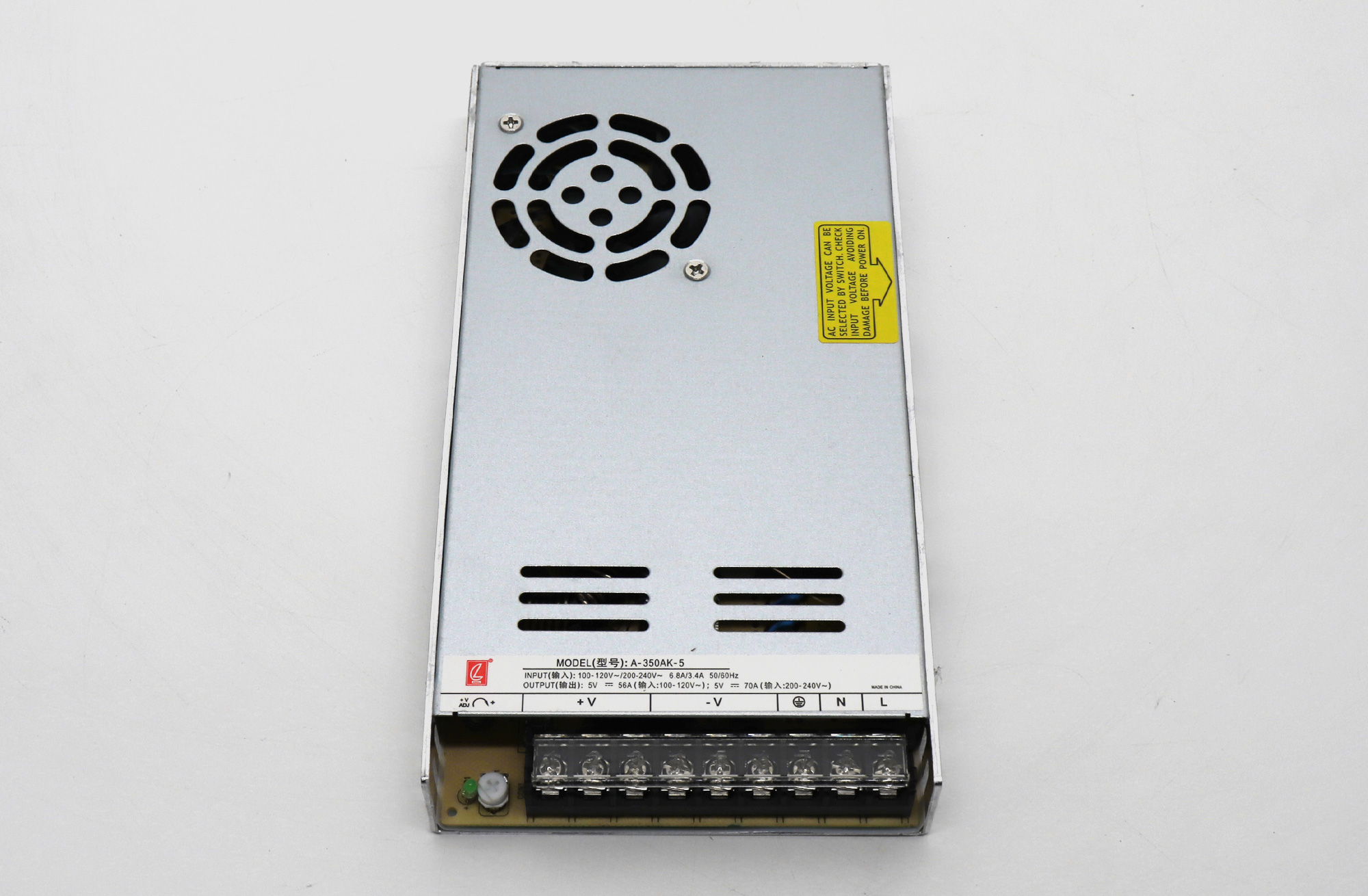
Unit seperti CZCL A-350AK-5 (300 W) dan CZCL A-200W-5 (200 W) fit narrow OEM rails cleanly, whereas the Rong-Electric MDK200H5 puts AC input on one short end and 5 V DC output on the far end—a classic layout in front-service magnetic panels.
3. Perhitungan ukuran catu daya LED langkah demi langkah dan aturan penurunan daya 80%.
Never load a switching brick to 100% on a video wall. Flashing from a dark title card straight into a bright white background slams peak current into every LED diode at once, while air inside a closed sun-lit cabinet easily sits 15 to 25 °C (27 to 45 °F) hotter than outside shade. Real-world Penentuan ukuran catu daya LED always stops at an 80% continuous ceiling (75% inside sealed outdoor frames in hot states):
- 200 W (5 V 40 A) safe continuous cap: 200 W x 0.80 = 160 W (32 A kontinu pada 5 V).
- 300 W (5 V 60 A) safe continuous cap: 300 W x 0.80 = 240 W (48 A kontinu pada 5 V).
- 350.4 W (24 V LRS-350-24) safe continuous cap: 350.4 W x 0.80 = 280.3 W (11.68 A kontinu pada 24 V).
01. Worked math: how many 320 x 160 mm modules per power supply?
Selalu berlari Penentuan ukuran catu daya LED off each module’s maximum full-white wattage, never the “typical/average” wattage quoted on sales brochures. Video averages 30% to 45% of peak power, which lulls buyers into under-sizing—right up until a client puts a bright white slide deck or Excel sheet on screen and trips Over-Load Protection (OLP) across half the display. Also hold 5 W in reserve on the cabinet’s main PSU for the Kartu penerima LED (about 1 A at 5 V).
| Screen Build | Asumsi Konsumsi Daya Modul Puncak | Target PSU & 80% Budget | Safe Modules per PSU | Cabinet Example & Total Bricks |
|---|---|---|---|---|
| Indoor P2.5 (600 nits) | ~22 W (4.4 A @ 5 V) per 320 x 160 mm tile | 200 W (5 V 40 A) → 160 W Safety | modul 6 (6 x 22 W + 5 W card = 137 W) | 640 x 480 mm frame (6 modules) → 1 x PSU 200 W |
| Outdoor P4 (5,500 nits) | ~38 W (7.6 A @ 5 V) per 320 x 160 mm tile | 200 W (5 V 40 A) → 160 W Safety | modul 4 (4 x 38 W = 152 W) | 960 x 960 mm frame (18 modules) → 5 x PSU 200 W (or 4 x 300 W) |
| Outdoor P6 / P8 (6,500 nits) | ~42 W (8.4 A @ 5 V) per 320 x 160 mm tile | 300 W (5 V 60 A) → 240 W Safety | modul 5 (5 x 42 W = 210 W) | 960 x 960 mm frame (18 modules) → 4 x PSU 300 W |
| Tanda strip arsitektur 24 V | 14.4 W/m (4.4 W/ft) @ 24 V DC | LRS-350-24 (350.4 W) → 280 W Safety | Hingga 19 m (62.3 kaki) total strip per PSU | Tap power every 5 m (16.4 ft) in parallel to stop tail dimming |
02. Sizing primary AC breakers & handling startup inrush
Electricians sizing feeder cables can’t just divide DC watts by 120 V or 230 V—you have to factor in both PSU conversion efficiency (roughly 0.83 to 0.89) and power factor (around 0.55–0.65 on non-PFC supplies like LRS-350, versus ~0.95 on active-PFC supplies like UHP-200-5):
I AC = P DC / (Efisiensi x V AC x PF)
Don’t ignore cold-start inrush either. A single Mean Well LRS-350 draws up to 60 A at 230 V AC (or 30 A at 115 V AC) for a few milliseconds while its input caps charge. Snap forty bricks onto one breaker simultaneously through a single contactor and a sensitive B-curve breaker will slam right back off. Spec C-curve or D-curve breakers and stagger cabinet banks across 2 to 4 delayed relay stages (1–2 seconds apart).
4. Penurunan daya dan desain termal AC 115V Amerika Utara vs 230V Eropa
One detail that ruins international Penentuan ukuran catu daya LED plans faster than anything else is ignoring how line voltage and cabinet heat shave off usable output wattage on the manufacturer’s derating chart:
- Check that 115 V / 230 V switch every single time: Unit seperti LRS-350-24, LRS-350-5, LRS-200-5, dan CZCL A-350AK-5 carry a side toggle for 115 V AC (90–132 V) vs 230 V AC (180–264 V). Feed 230 V Europe mains or 208 V US two-pole power into a switch left on 115 V and you’ll detonate the input capacitors instantaneously. Leave it on 230 V in a 115 V shop and the wall drops into brownout resets whenever graphics turn white.
- Rural sag below 100 V AC: Even in 115 V position, sagging farm-road lines under 100 V AC trim LRS output curves down toward 80% of rated current.
- Sun-baked cabinets above 45–50 °C (113–122 °F): Mean Well LRS-350 units hold 100% power up to 50 ° C (122 ° F) (45 °C / 113 °F on certain fanless 5 V bricks), then drop linearly down to half output by 70 ° C (158 ° F). Dark outdoor boxes facing west sunlight easily clear 55 °C (131 °F) without exhaust louvers, making your 80% derating buffer a lifesaver.
5. Pengkabelan DC, penurunan tegangan, dan pencegahan kerusakan papan sirkuit dari 24V ke 5V
Sempurna Penentuan ukuran catu daya LED math still leaves you chasing flickering rows if sloppy DC terminations overheat inside the cabinet. Stick to four shop habits on every repair:
- Share load evenly across all three V+ / V- pairs: Every 60 A brick like the LRS-350-5 or G-Energy JPS300V has three V+ and three V- (COM) screws because each M3.5/M4 screw caps around 20 to 25 A. Spread module leads cleanly across all three pairs using crimped fork lugs on 14 to 16 AWG (1.5 to 2.5 mm²) copper leads—never cram 60 amps onto one terminal post.
- Never tie V+ rails of two PSUs together: Non-redundant LED bricks don’t share current cleanly; tying two V+ rails together makes whichever unit sits 0.05 V higher carry the whole wall until it trips. Share common DC ground (V-) cleanly, but keep each supply’s V+ islands isolated to its assigned modules.
- Verify Vadj / SVR1 with a multimeter before plugging modules in: Dial unloaded terminal output right around 4.95 V to 5.05 V DC before snapping VH4 plugs onto modules or Kartu penerima LED. Pushing 5.3 V+ bakes red diodes early; dropping under 4.6 V makes whites look muddy pink and resets cards mid-video.
- Keep 24 V LRS-350-24 harnesses miles away from 5 V connectors: If one cabinet houses both a 24 V supply for fans and 5 V supplies for tiles, wrap bright warning tape or use keyed plugs so nobody jams 24 V into a 5 V receiving board at 2:00 AM.
Pertanyaan yang sering diajukan
Bisakah saya menggunakan Mean Well LRS-350-24 untuk memberi daya pada modul tampilan LED standar P2.5, P3.91, atau P10?
No. Standard full-color HUB75 modules and receiving cards run on 5 V DC (or 4.2 V–4.5 V DC on common-cathode energy-saving tiles). The Berarti Baik LRS-350-24 outputs 24 V DC and will fry 5 V driver chips immediately. Order a 5 V 60 A LRS-350-5 atau 5 V 40 A LRS-200-5 sebagai gantinya.
Berapa banyak modul LED 5V yang dapat dioperasikan oleh satu catu daya 200W (5V 40A) atau 300W (5V 60A)?
Using the 80% continuous rule (160 W safe on 200 W; 240 W safe on 300 W), one 200 W brick usually covers 4 to 6 indoor tiles (pada daya puncak ~20–25 W masing-masing) atau 3 to 4 bright outdoor tiles (~35–42 W peak each). One 300 W brick typically handles 5 to 6 outdoor tiles. Always divide safe derated watts by each module’s full-white peak draw.
Why does my LED cabinet shut off or blink only during bright white video scenes?
Full white puts every red, green, and blue diode at 100% duty simultaneously. If your Penentuan ukuran catu daya LED used typical video watts instead of full-white peak wattage—or cabinet air cleared 50 °C (122 °F)—the unit trips Over-Load Protection (OLP) or Over-Temperature Protection (OTP) and hiccups off until the bright scene passes.
Apa yang terjadi jika sakelar 115V / 230V pada catu daya LRS-350 disetel salah?
Leave the toggle on 115 V and plug it into 220–240 V mains (or 208 V phase-to-phase) and the primary doubler pops its fuse and main capacitors immediately. Leave it on 230 V in a 115 V circuit and it drops voltage under moderate load. Flip the switch carefully before closing any breaker—or spec auto-ranging units like the Mean Well UHP-200-5 (90–264 V AC).
Can I swap a CZCL, G-Energy, atau Rong-Electric Catu daya 5V 40A dengan Mean Well LRS-200-5?
Electrically yes, as long as voltage, amperage, and AC line range match. Mechanically though, check cabinet space first: the Mean Well LRS-200-5 measures 215 x 115 x 30 mm with single-end screw terminals, whereas narrow CZCL A-200W-5 or Rong-Electric MDK200H5 units use slimmer rails or double-ended terminals.
Daftar periksa kelistrikan sebelum memesan catu daya LED pengganti.
Before submitting a parts PO after running your Penentuan ukuran catu daya LED math, grab six quick facts off the open cabinet: exact DC output voltage (5 V vs 4.2 V/4.5 V vs 24 V), continuous amperage/watts (40 A / 200 W vs 60 A / 300 W vs 14.6 A / 350 W), site mains voltage (110–120 V vs 220–240 V or auto-ranging PFC), physical chassis dimensions and mounting hole spacing, terminal layout (single-end block vs opposite-end plugs), and whether silent rooms require fanless convection cooling.
Not sure whether an unfamiliar cabinet PSU drops straight into a Mean Well, CZCL, atau Rong-Electric bracket? Snap a clear photo of the existing power supply sticker and send it through our contact page so our bench team can match the footprint and electrical rating before shipping. And if weather-damaged screens need brand-new pre-wired enclosures rather than individual spare bricks, you can browse full LED display cabinets over at EagerLED.