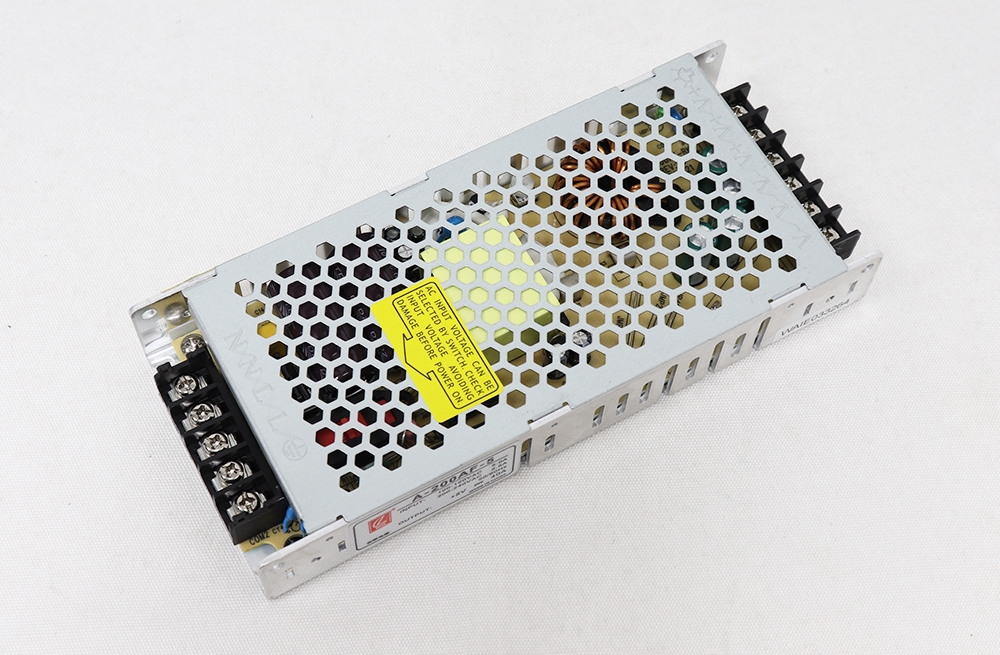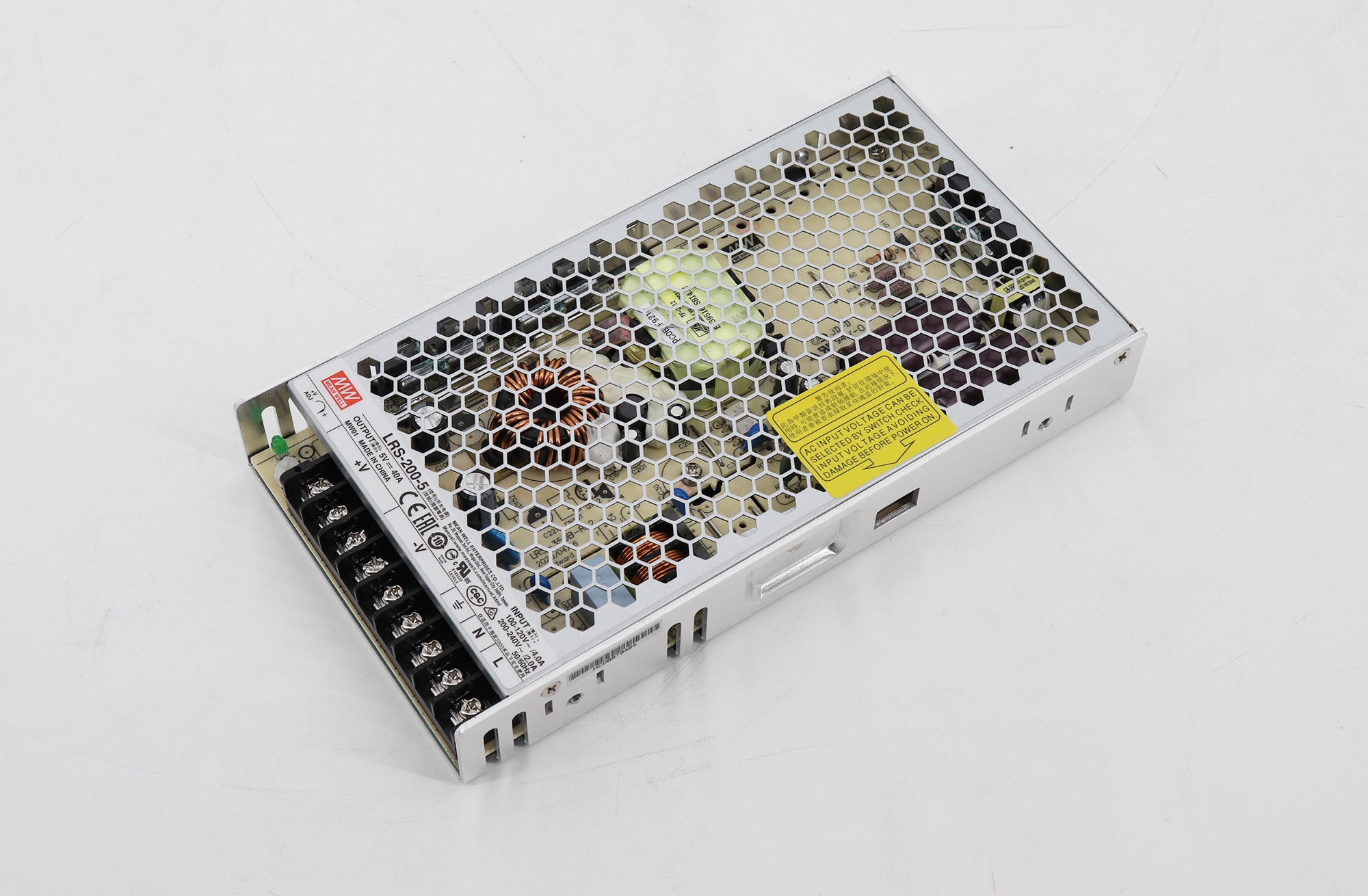
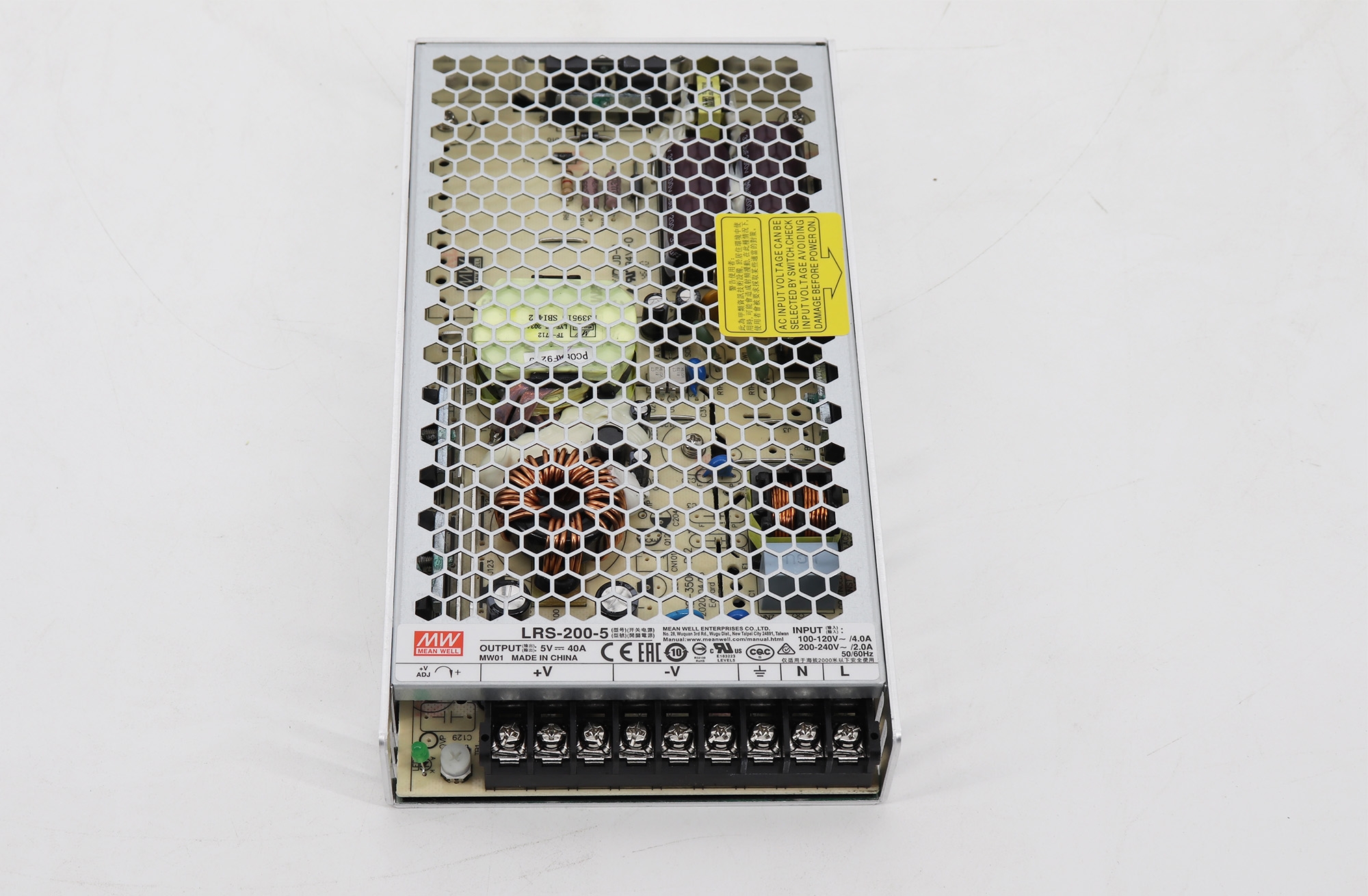
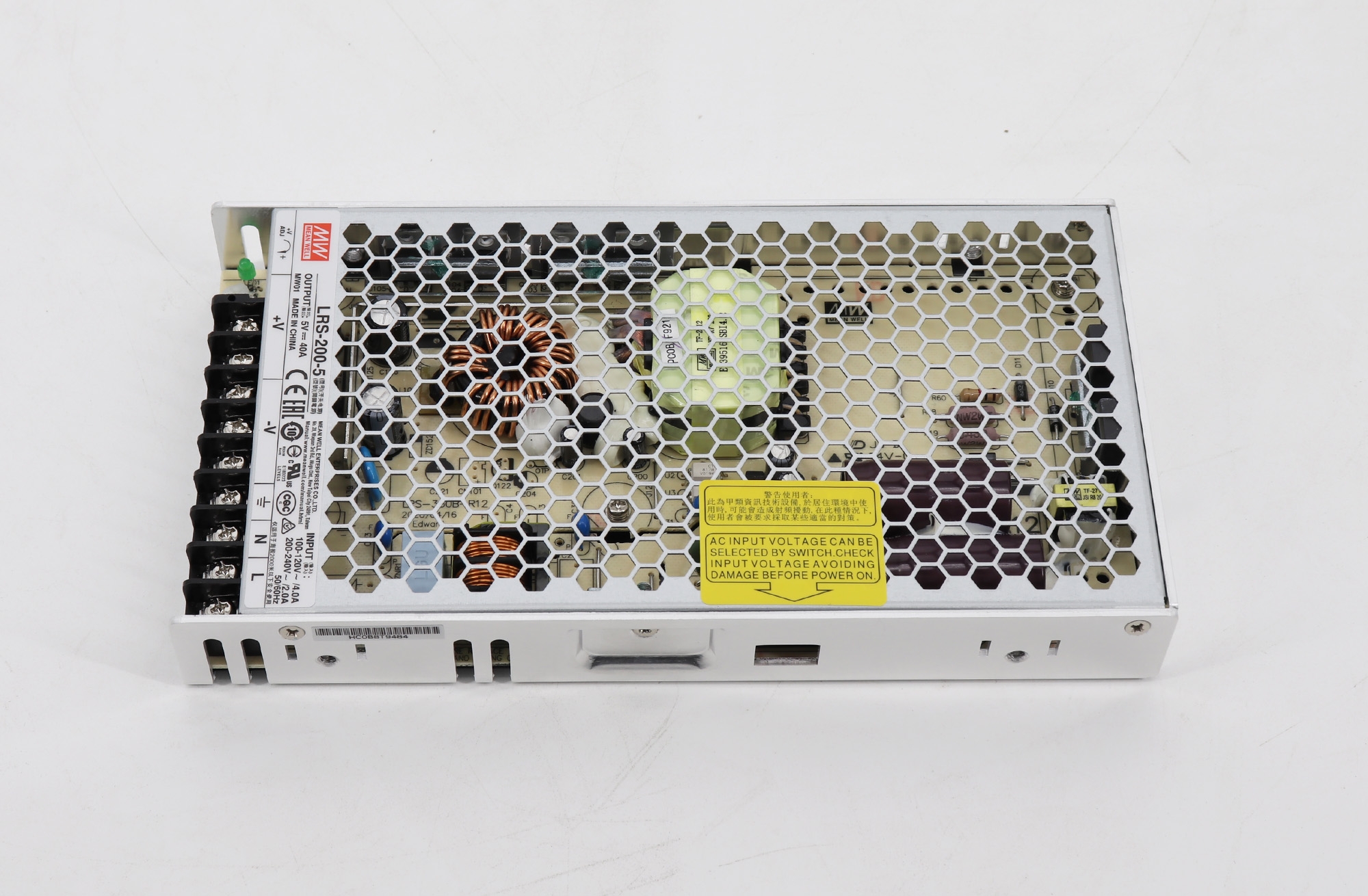
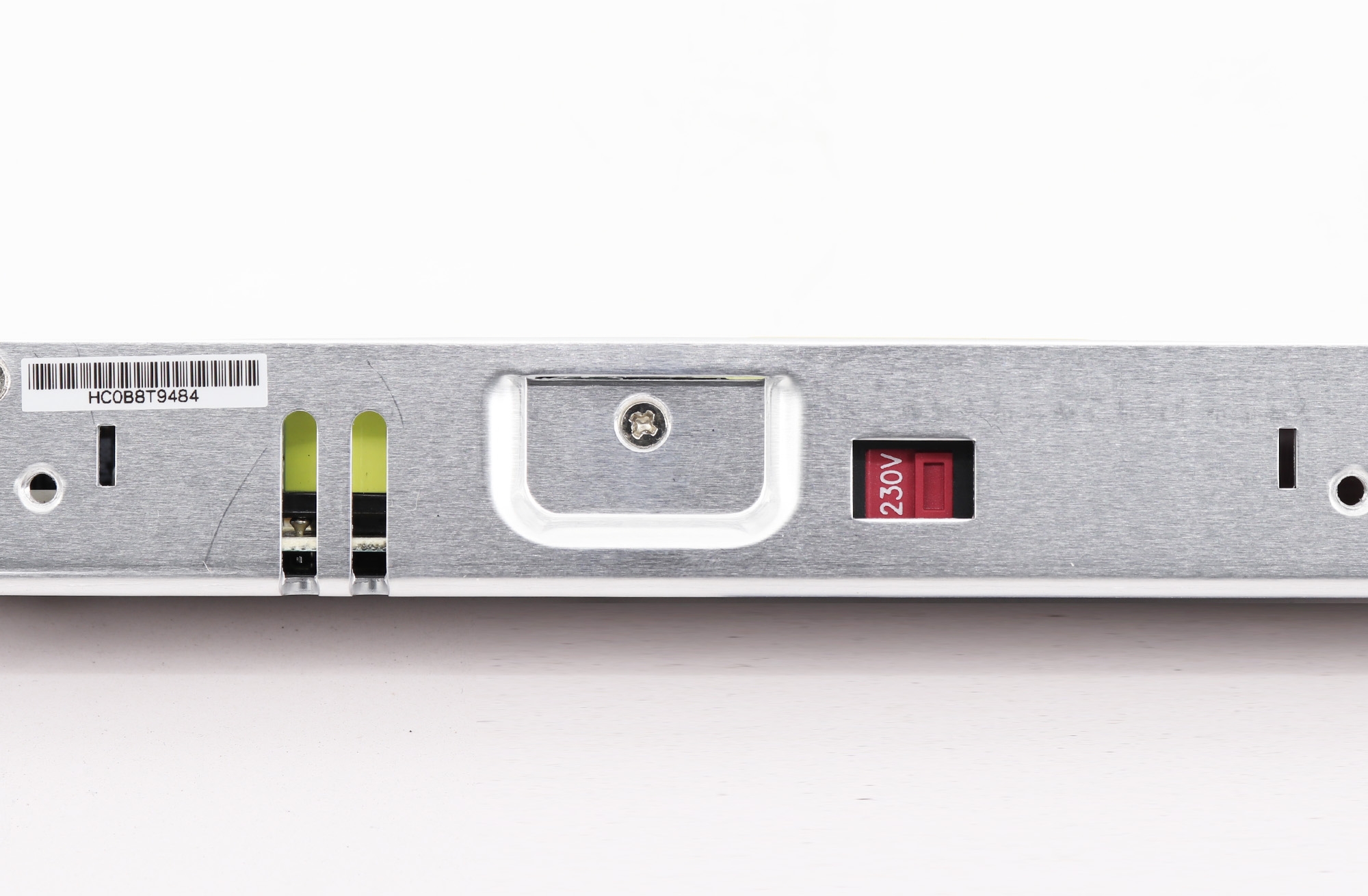
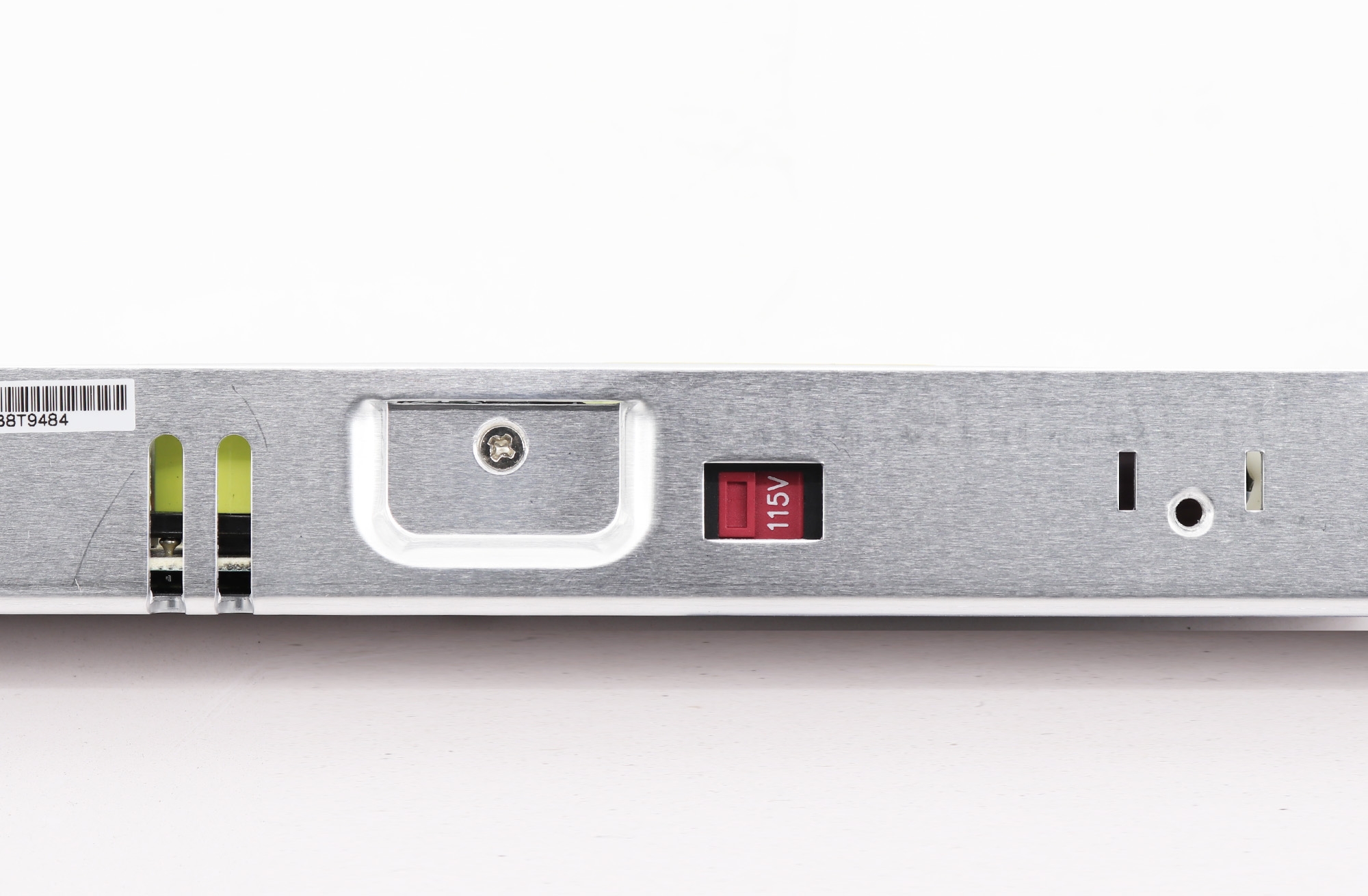
5V 40A power supply for LED display systems
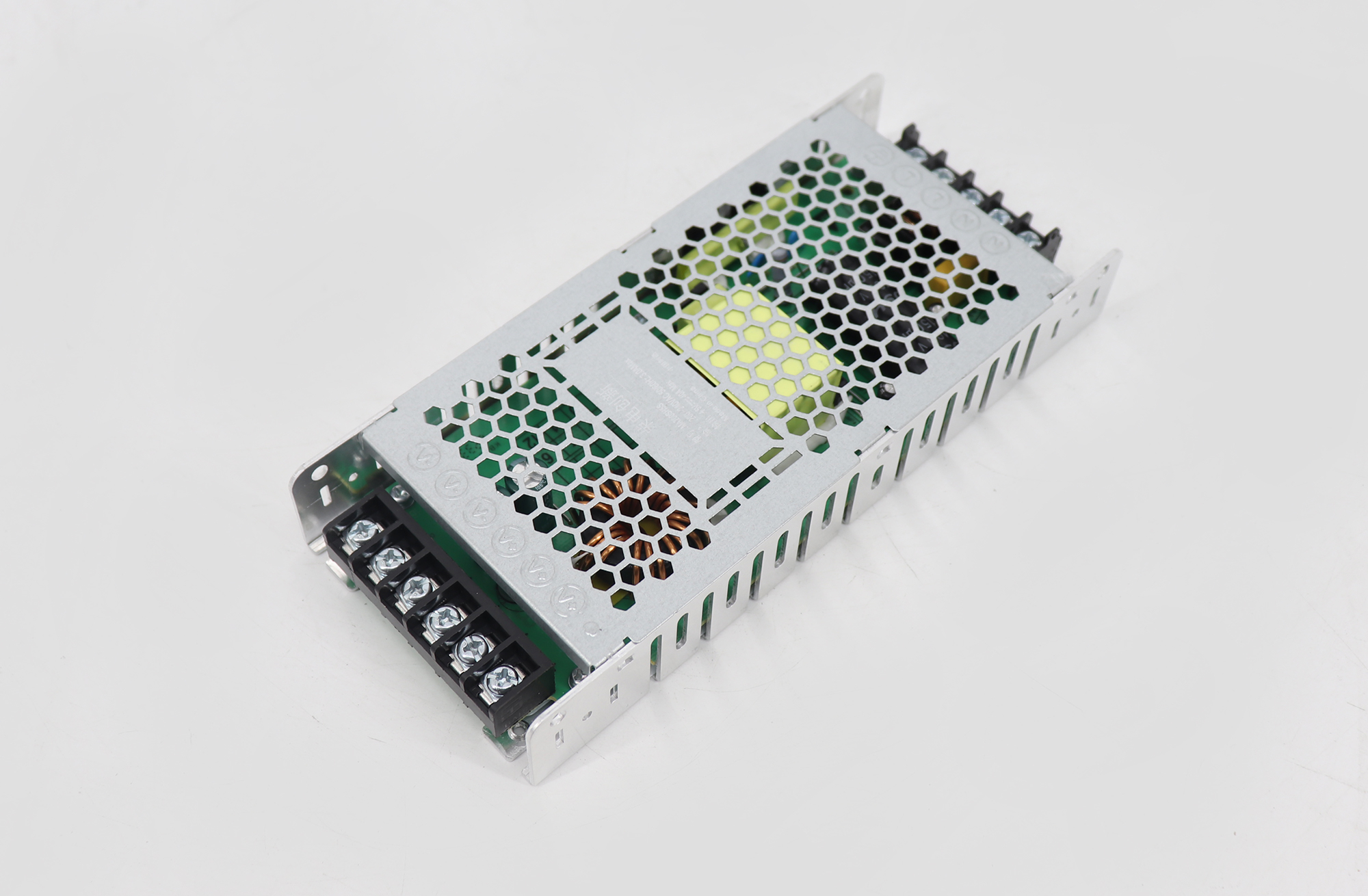
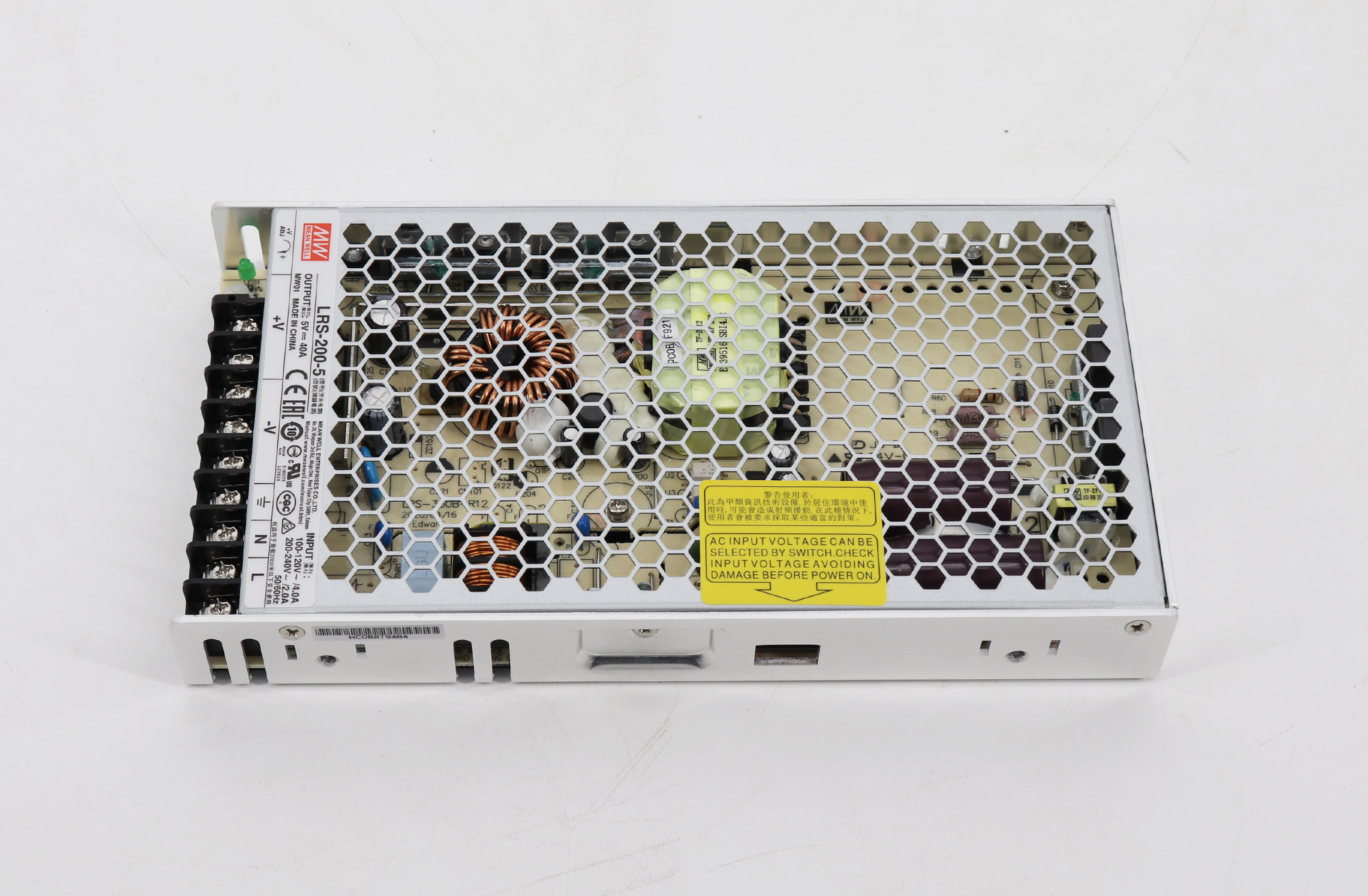
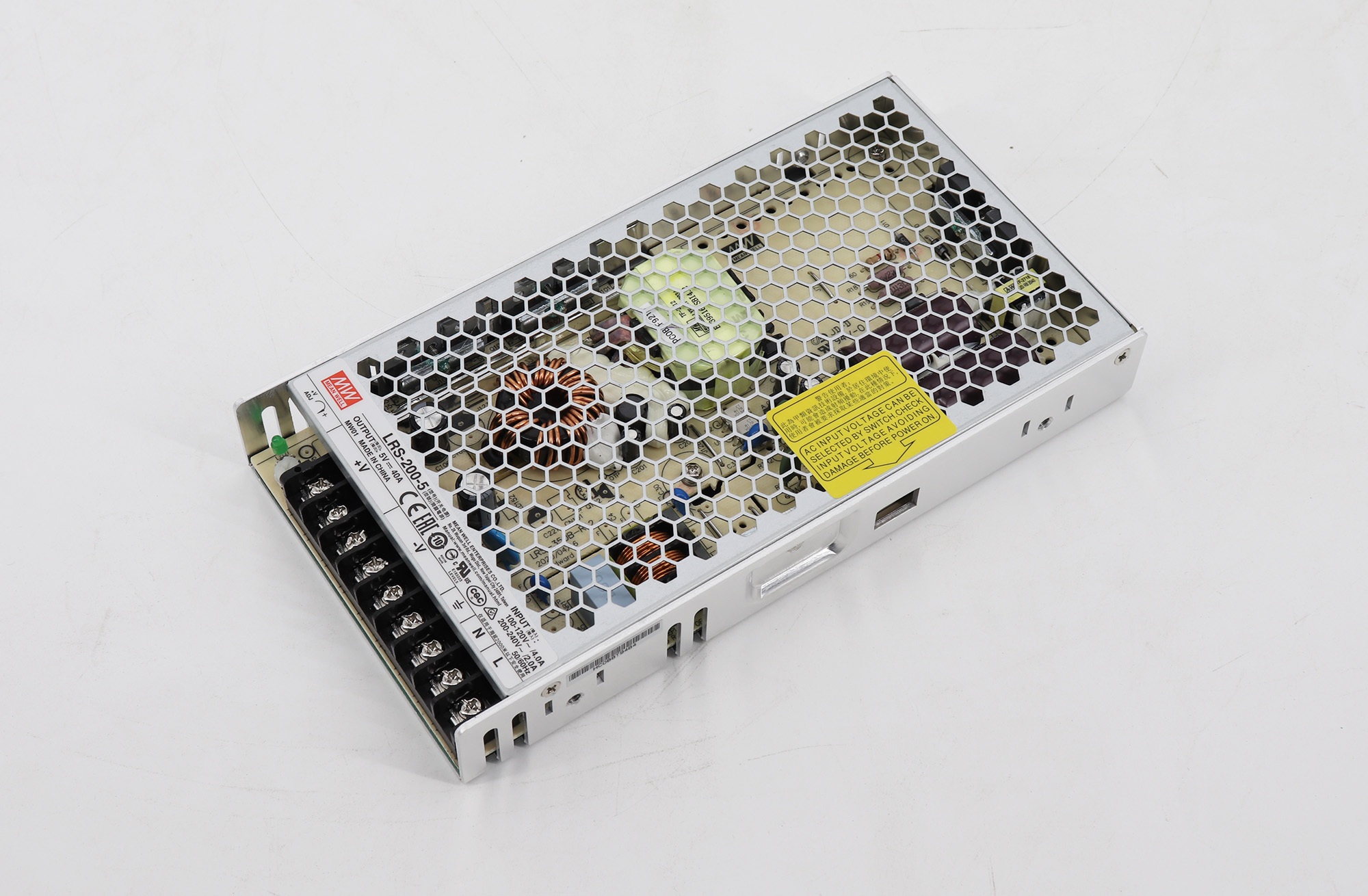
The Mean Well LRS-200-5 provides a single 5V DC output rated at 40A and 200W. Its metal mesh enclosure uses free-air convection, making it suitable for installations where fanless cooling is preferred. Check the LED module voltage, total load and cabinet ventilation before selecting the supply.
LRS-200-5 specifications
| Parameter | Specification |
|---|---|
| DC output | 5V; 40A; 200W |
| Output adjustment | 4.5–5.5V |
| AC input | 90–132VAC / 180–264VAC, selected by switch |
| Input frequency | 47–63Hz |
| Typical efficiency | 87% |
| Cooling | Free-air convection; no fan |
| Dimensions (L × W × H) | 215 × 115 × 30mm |
| Working temperature | −25 to +70°C; refer to the PDF derating curve |
Input selection and installation
Set the input selector to match the supply voltage before applying power. The two AC ranges are switch selected, so this model should not be treated as an automatically ranging input. Keep the mesh enclosure ventilated and apply the temperature derating requirements in the specification.
Protection functions cover short circuit, overload, overvoltage and overtemperature. The power-on LED provides a visual operating indicator.
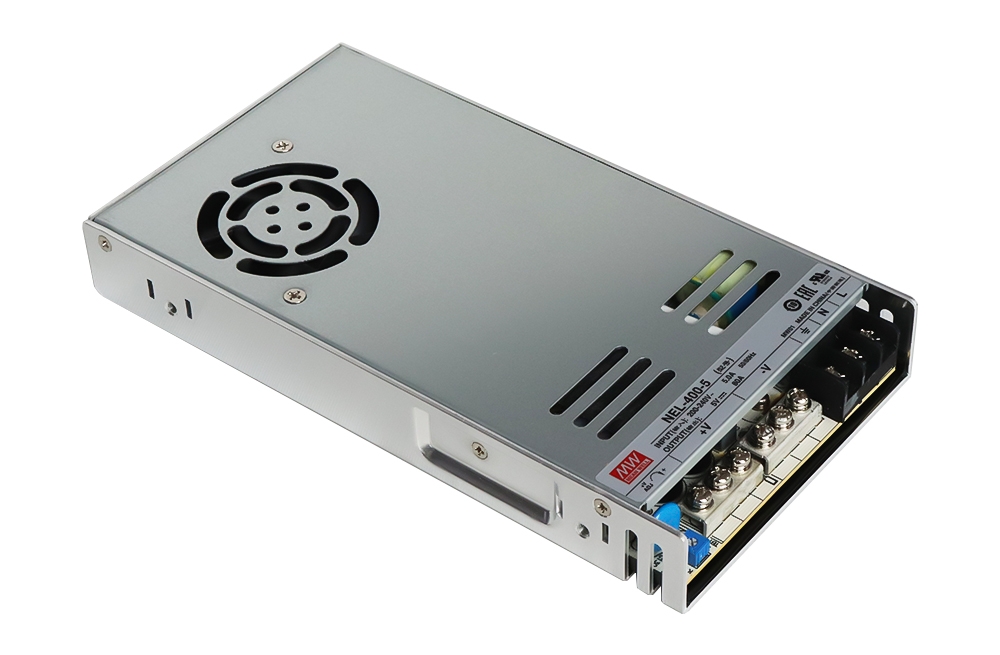
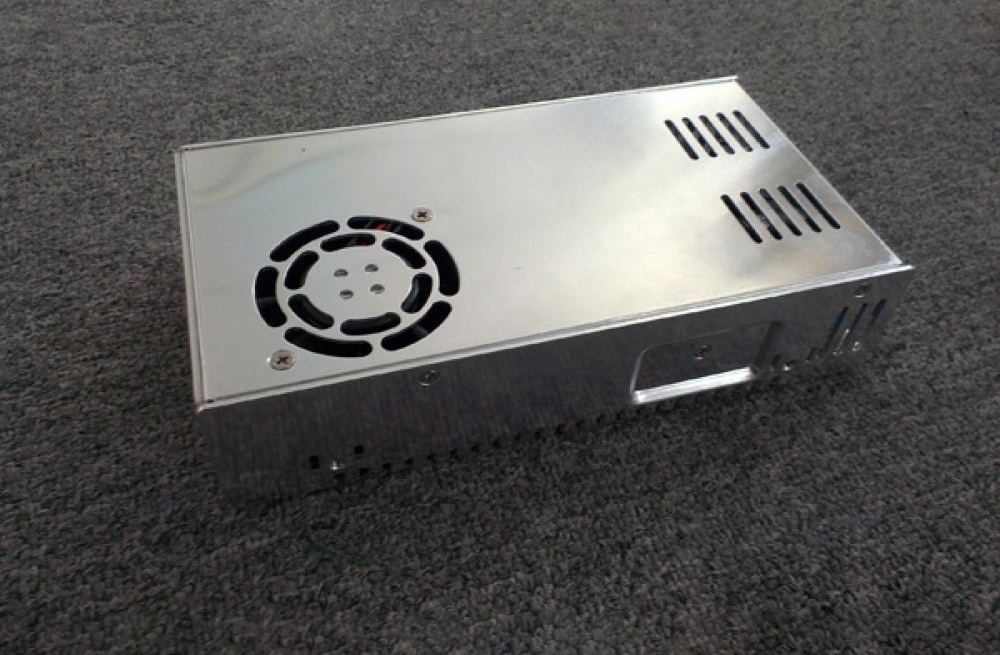
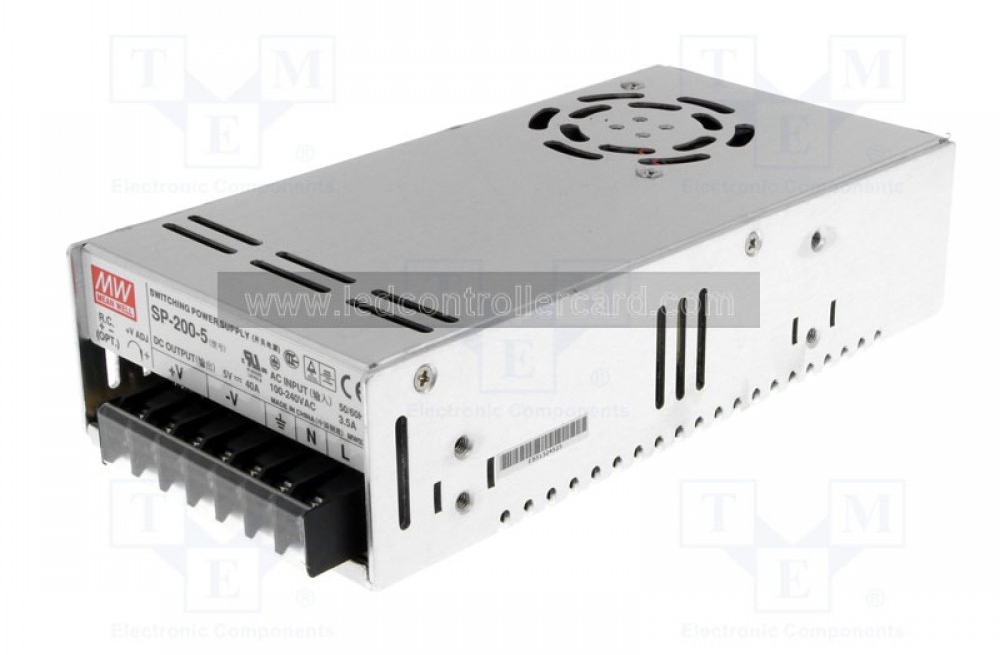
Product photos
Specification PDF
Meanwell LRS-200-5 5V40A Switching LED Power Supply Specification
Frequently Asked Questions
What is the output of the LRS-200-5?
The rated output is 5V DC at 40A, with a rated power of 200W.
Does it accept both 115V and 230V AC?
Yes. Select the appropriate range with the input switch: 90–132VAC or 180–264VAC. Set the switch before powering the unit.
Does the LRS-200-5 have a cooling fan?
No. It uses free-air convection through its metal mesh enclosure. Allow sufficient ventilation and follow the derating curve.
Can the 5V output be adjusted?
The specified adjustment range is 4.5–5.5V. Set it to the voltage required by the connected equipment.
Where can I find dimensions and the datasheet?
The enclosure measures 215 × 115 × 30mm. Use the specification PDF above for mechanical drawings, connection details and derating curves.