స్మార్ట్ LED power supply sizing starts with one rule you only break once before smelling burnt silicon: standard HUB75 LED modules (P1.86, P2.5, P3.91, P10) run on 4.2 V నుండి 5 V DC, whereas 24 V bricks like the మీన్ వెల్ LRS-350-24 (24 V, 14.6 A, 350.4 W) belong on 24 V strip signage, cabinet fans, and step-down bus runs. Wire a 24 V supply into a 5 V LED panel or receiving card and you’ll pop every driver IC on the board the second the breaker closes. For standard 5 V video walls, build around 5 V 40 A (200 W) or 5 V 60 A (300 W) supplies—such as the మీన్ వెల్ LRS-350-5, LRS-200-5లేదా UHP-200-5—and keep continuous full-white load at or below 75% కు 80% of nameplate watts.
You can skip expensive callbacks on hot summer afternoons once you treat nameplate ratings honestly. Most cabinet shutdowns, dim reddish tiles, and mystery breaker trips on North American (110–120 V AC) or European (220–240 V AC) feeds trace back to doing LED power supply sizing around average video draw instead of peak white current, ignoring thermal derating inside sealed steel doors, or forgetting the side 115 V / 230 V switch.
పోల్చి చూద్దాం బాగా అర్థం LRS-350-24 side by side against 5 V 40 A and 60 A supplies from Mean Well, CZCL, Rong-Electricమరియు G-Energy, work through real module-per-PSU math using the 80% rule, and walk through AC breaker sizing and DC wiring habits that keep boards alive.
1. 24V vs 5V architectures: when to use LRS-350-24 vs 5V 40A/60A supplies
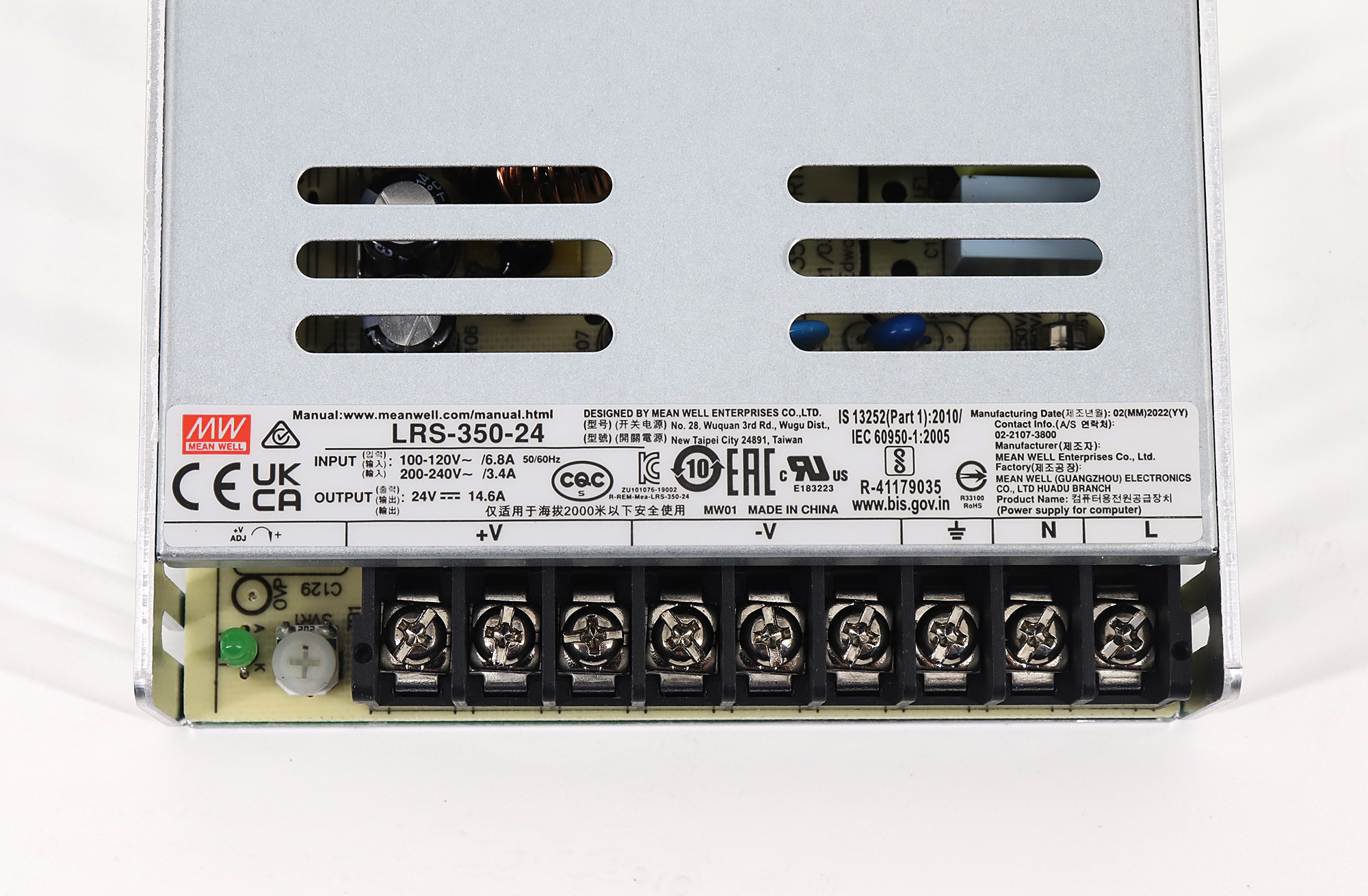
Pull an LED విద్యుత్ సరఫరా off a parts shelf—specifically the మీన్ వెల్ LRS-350-24 ఇంకా మీన్ వెల్ LRS-350-5—and they look like twins at arm’s length. Both share a 215 x 115 x 30 mm (8.46 x 4.53 x 1.18 in) stamped aluminum grille housing, the exact same 9-screw terminal block, and the exact same recessed 115 V / 230 V switch on the flank. Look at the output sticker before picking up a screwdriver, though, because they feed totally different hardware.
01. Where the Mean Well LRS-350-24 belongs
మా మీన్ వెల్ LRS-350-24 puts out 24 V DC at up to 14.6 A (350.4 W), with a tiny trim pot (SVR1) letting you dial voltage between roughly 21.6 V and 28.8 V DC. You’ll normally run into it in three places around a sign shop:
- 24 V channel letters, lightboxes, and facade strip signs: Long perimeter runs stick with 24 V DC instead of 5 V DC because moving 300 W at 24 V only pulls 12.5 A instead of 60 A—cutting I2R copper losses dramatically over 10 to 30 m (32.8 to 98.4 ft) runs.
- Cabinet exhaust blowers, motorized kiosks, and contactor coils: Heavy outdoor pylons often park one LRS-350-24 in the service bay strictly to run 24 V cooling fans, louvers, and relay control loops.
- High-voltage curtain walls with local DC-DC converters: Certain architectural mesh screens push 24 V DC up the structural frame and step down locally inside each bar.
02. Why standard HUB75 LED display modules require 5V 40A or 5V 60A supplies
Matrix video tiles are a different animal altogether. Almost every full-color HUB75 display module—from fine-pitch P1.25 indoor conference boards to P10 outdoor billboards—plus every LED స్వీకరించే కార్డ్ inside the box expects X VX DC (or 4.2 V to 4.5 V DC on common-cathode energy-saving boards). That’s why LED power supply sizing for cabinet screens revolves around parallel 5 V 40 A (200 W) or 5 V 60 A (300 W) feeds, with each brick driving four to eight modules cleanly.
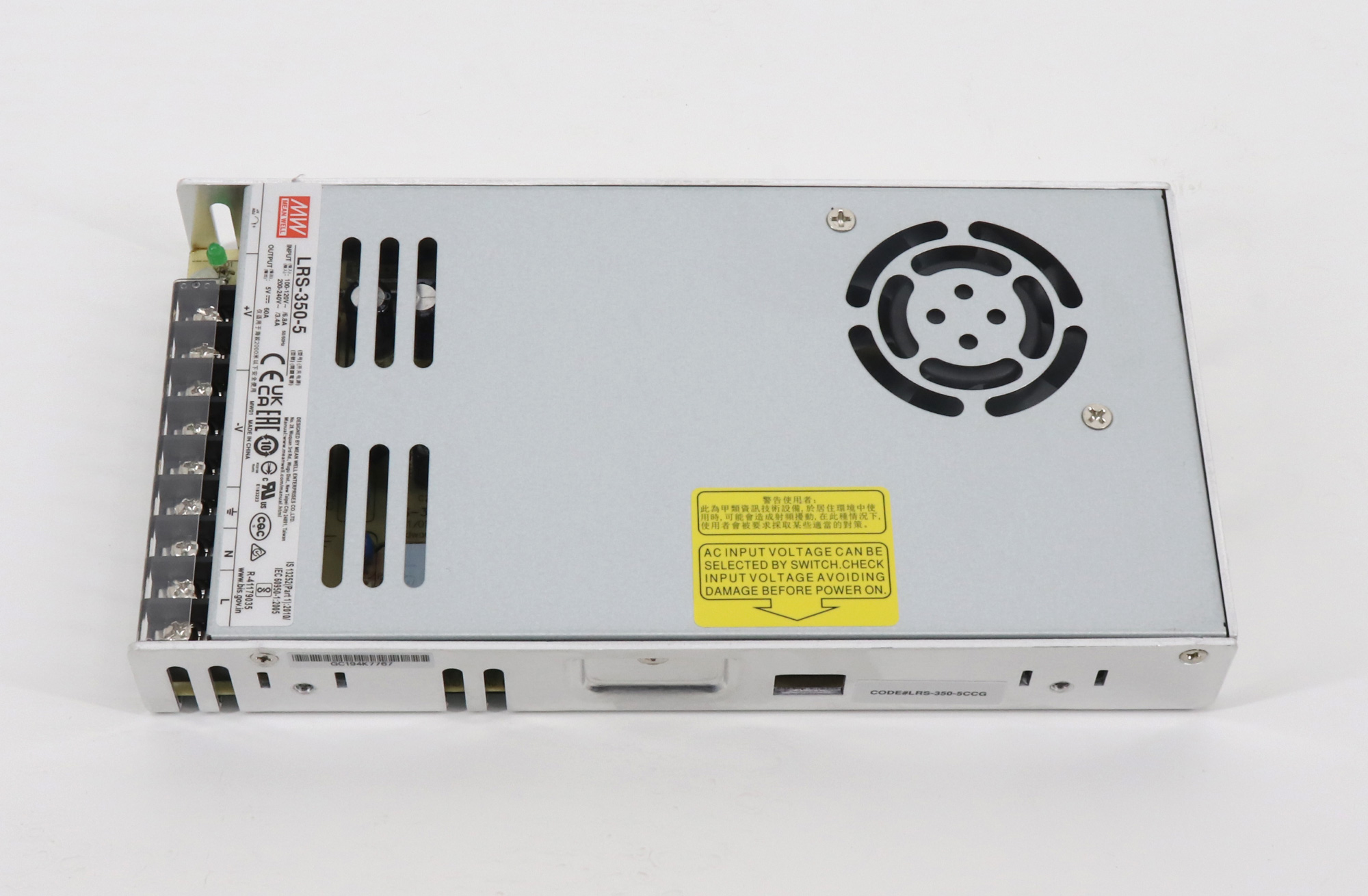
Don’t get fooled by the shared “350” model prefix either. While the 24 V LRS-350-24 hits X WX at around 88% efficiency, the 5 V LRS-350-5 caps at X WX (5 V x 60 A) at ~83.5% efficiency because shoving 60 amps through output rectifiers creates way more internal heat. Treating an LRS-350-5 as a “350-watt supply” during LED power supply sizing is an easy way to shortchange yourself by 50 W per brick.
2. Side-by-side comparison of Mean Well, CZCL, Rong-Electricమరియు G-Energy యూనిట్లు
Electrical ratings are only half the puzzle when replacing a dead unit inside an existing frame. Mounting hole spacing, total depth, terminal orientation, and whether the room tolerates fan noise all decide what physically fits. You can also compare series families in our Mean Well power supply guide మరియు మా LED display power supply overview.
Here’s how eight popular supplies stocked on ledcontrollercard.com compare when you’re doing LED power supply sizing or hunting a drop-in spare.
| మోడల్ | DC Output (V / A / W) | AC Input Method | Cooling & Form Factor | కొలతలు (L x W x H) | మీరు ఎక్కడ చూస్తారు |
|---|---|---|---|---|---|
| మీన్ వెల్ LRS-350-24 | 24 V / 14.6 A / 350.4 W | 115 V / 230 V manual switch | Built-in DC fan (on/off control), 1U chassis | 215 115 30 mm (8.46 4.53 XXNUM) | 24 V strip signage, channel letters, cabinet blowers |
| మీన్ వెల్ LRS-350-5 | 5 V / 60 A / 300 W | 115 V / 230 V manual switch | Built-in DC fan, 1U perforated chassis | 215 115 30 mm (8.46 4.53 XXNUM) | High-brightness outdoor 960 x 960 mm cabinets |
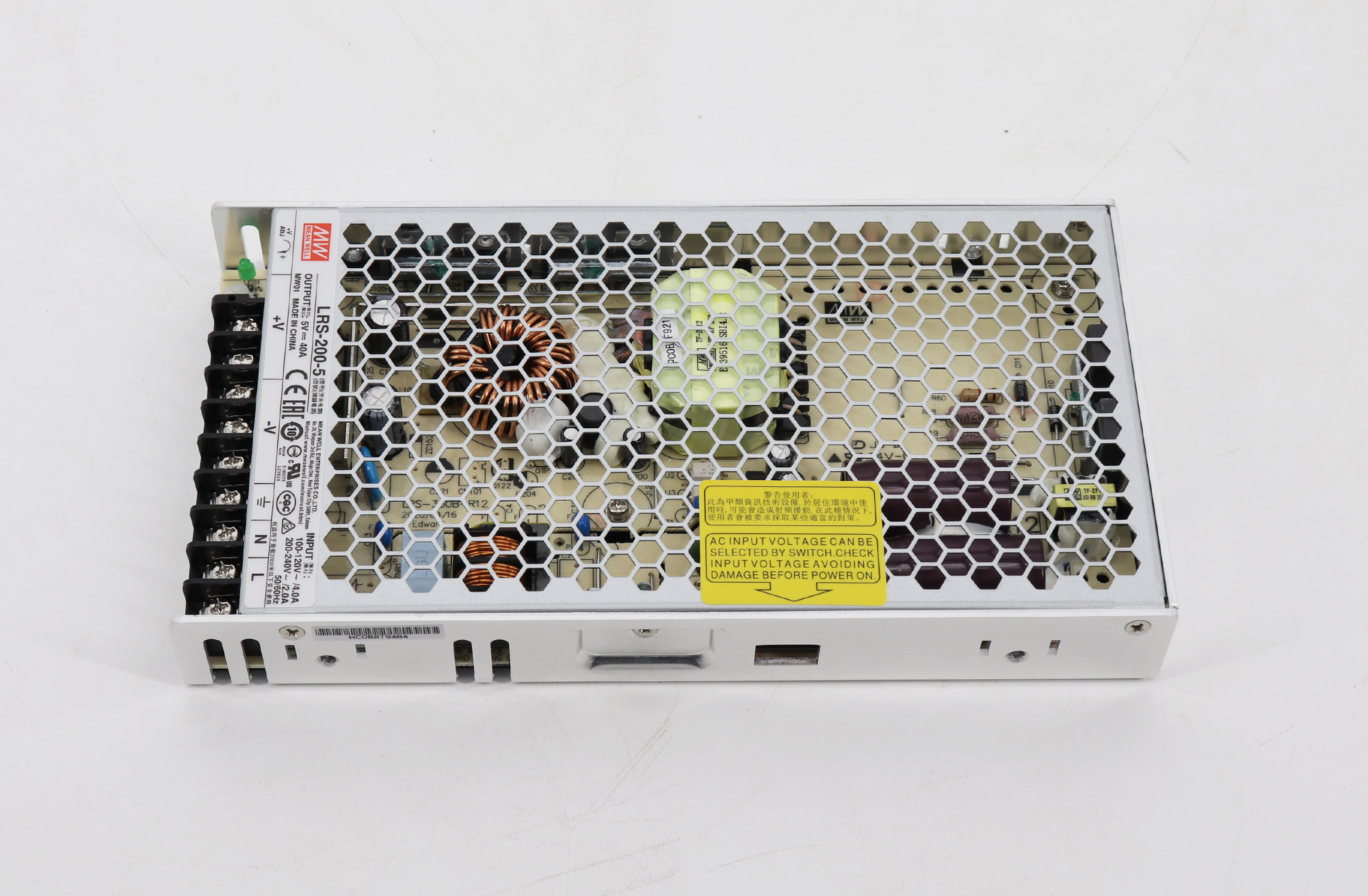
| మీన్ వెల్ LRS-200-5 | 5 V / 40 A / 200 W | 115 V / 230 V manual switch | Fanless free-air convection, 1U chassis | 215 115 30 mm (8.46 4.53 XXNUM) | Quiet indoor walls & moderate commercial frames |
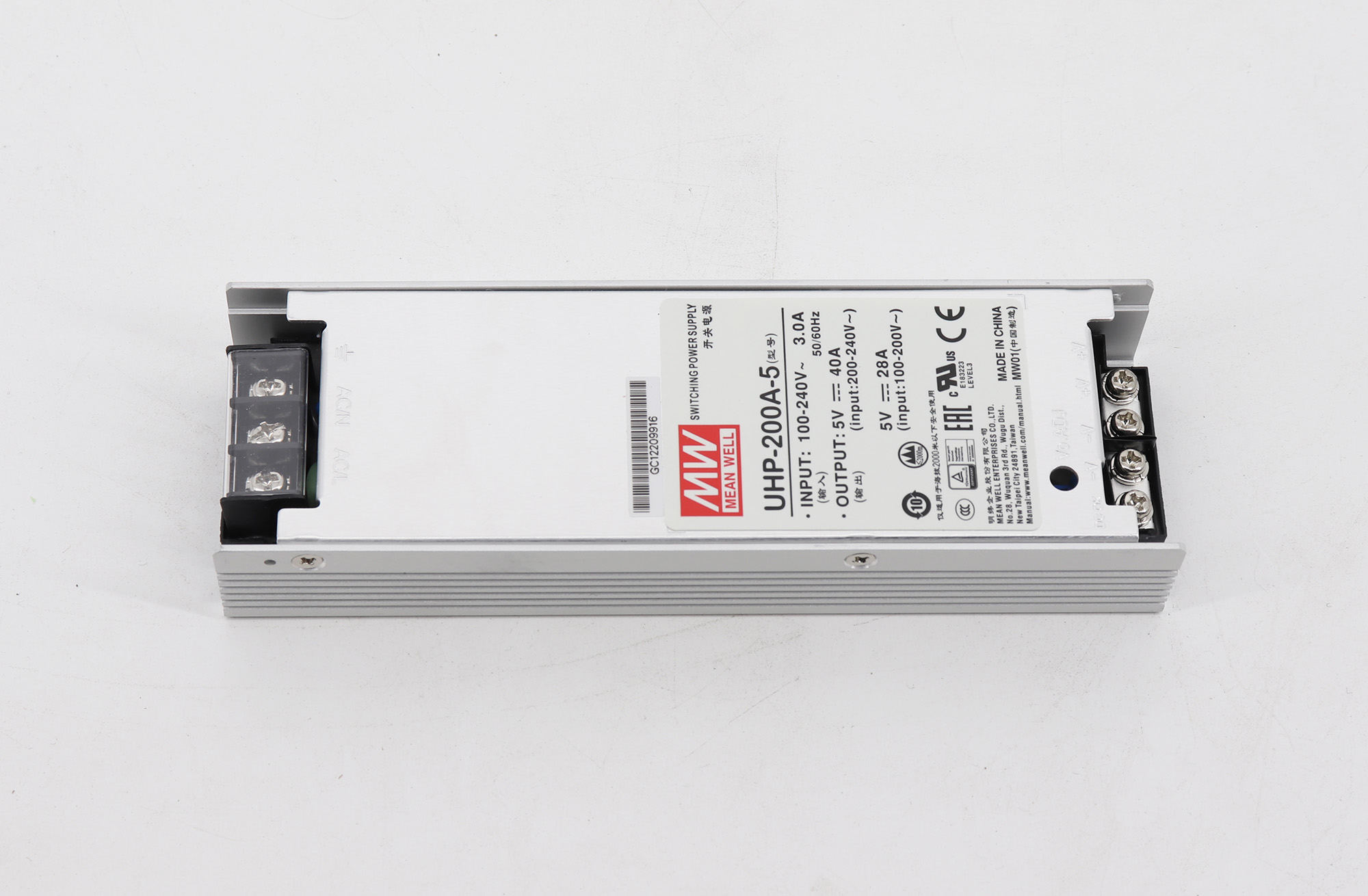
| Mean Well UHP-200-5 | 5 V / 40 A / 200 W | Universal 90–264 V AC + active PFC | Fanless conduction/convection, ultra-slim 26 mm | 194 55 26 mm (7.64 2.17 XXNUM) | Whisper-quiet conference walls & die-cast rental panels |
| CZCL ఎ-200డబ్ల్యూ-5 | 5 V / 40 A / 200 W | 200–240 V AC (or model-specific range) | Fanless convection, compact LED cabinet housing | 190 82 30 mm (7.48 3.23 XXNUM) | Narrow-bracket indoor & outdoor LED cabinets |
| CZCL A-350AK-5 / ఎ-300ఫే-5 | 5 V / 60 A / 300 W | Switchable 110 V / 220 V AC (A-350AK-5) | Low-profile LED cabinet chassis | ~212 x 81.5 x 30 mm (8.35 x 3.21 x 1.18 in) | Outdoor billboards needing 110 V / 220 V compatibility |
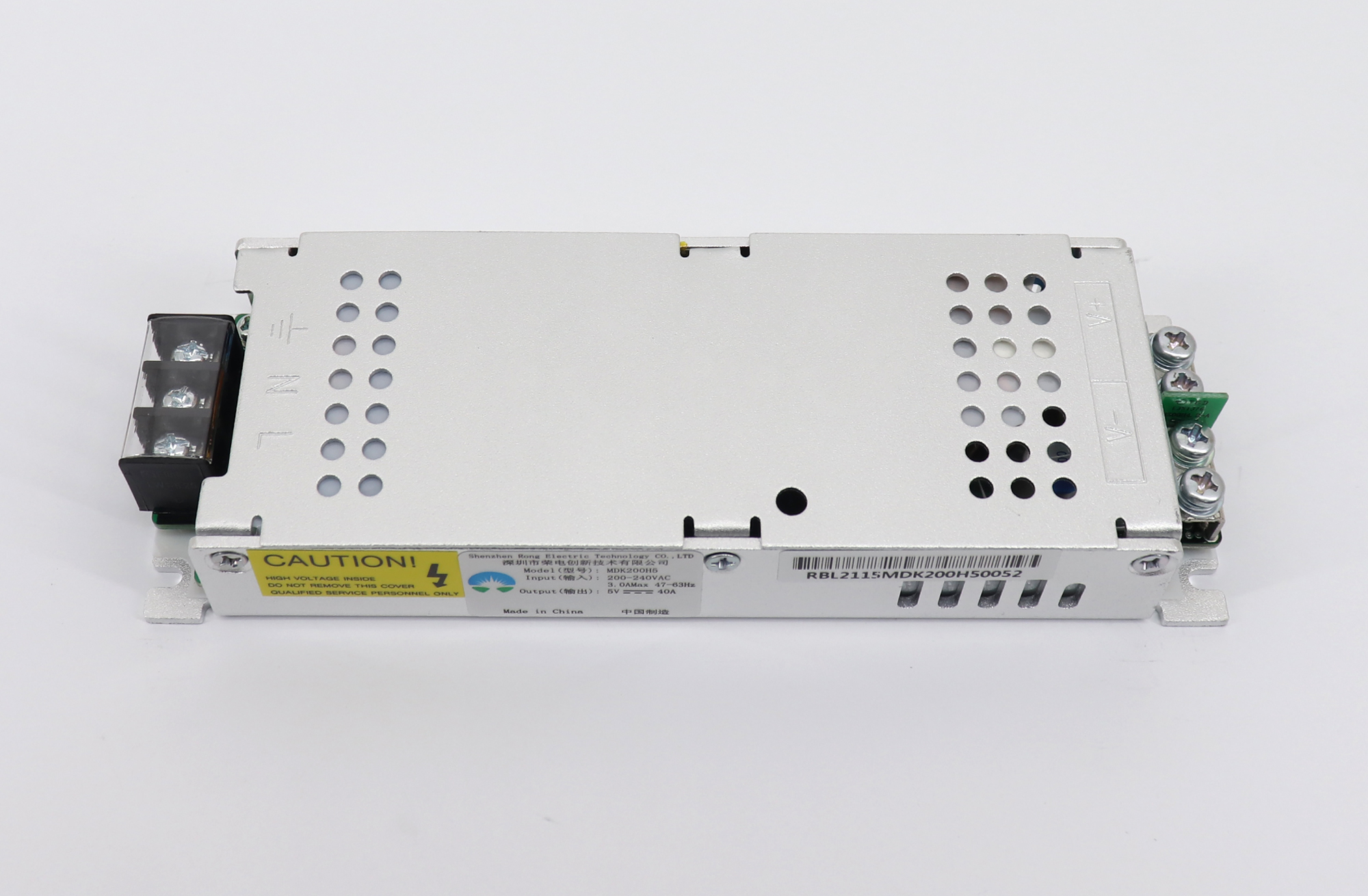
| Rong-Electric MDK200H5 | 5 V / 40 A / 200 W | విస్తృత శ్రేణి AC ఇన్పుట్ | Slim pass-through terminal layout (both ends) | Slim cabinet-mount strip profile | Die-cast rental & front-service indoor frames |
| G-Energy JPS300V / JPS200V5-A | 5 V / 60 A (300 W) or 40 A (200 W) | AC cabinet harness input | Low-profile vented metal cover | Standard LED display mounting pattern | OEM cabinet swaps on commercial signs |
01. Fanless 200W vs fan-cooled 300W supplies: noise and dust trade-offs
Put thirty fan-cooled 300 W bricks behind a boardroom wall and every presenter starts asking what’s humming behind the screen. Worse yet, small 60 mm PSU fans suck chalk dust, lobby fuzz, and outdoor pollen straight across primary heatsinks until bearings seize two years in. That’s why indoor LED power supply sizing leans heavily on fanless 200 W (5 V 40 A) supplies like the మీన్ వెల్ LRS-200-5.
Inside tight die-cast rental panels with less than 65 mm (2.56 in) of cavity depth, the 55 mm (2.17 in) wide Mean Well UHP-200-5 bolts flat to the aluminum backplate to shed heat by conduction. Better yet, its universal 90–264 V AC auto-ranging input and active PFC (> 0.95) mean a touring tech won’t blow up a rack by leaving a voltage slide switch on 115 V at a European venue.
02. Narrow cabinet footprints: CZCL, Rong-Electricమరియు G-Energy
Plenty of factory cabinets skip wide 115 mm boxes completely and punch screw standoffs for narrow 55 to 82 mm (2.17 to 3.23 in) LED bricks. Checking mounting holes before checking out keeps you from drilling metal ribs ten feet up a scissor lift during an LED power supply sizing భర్తీ.
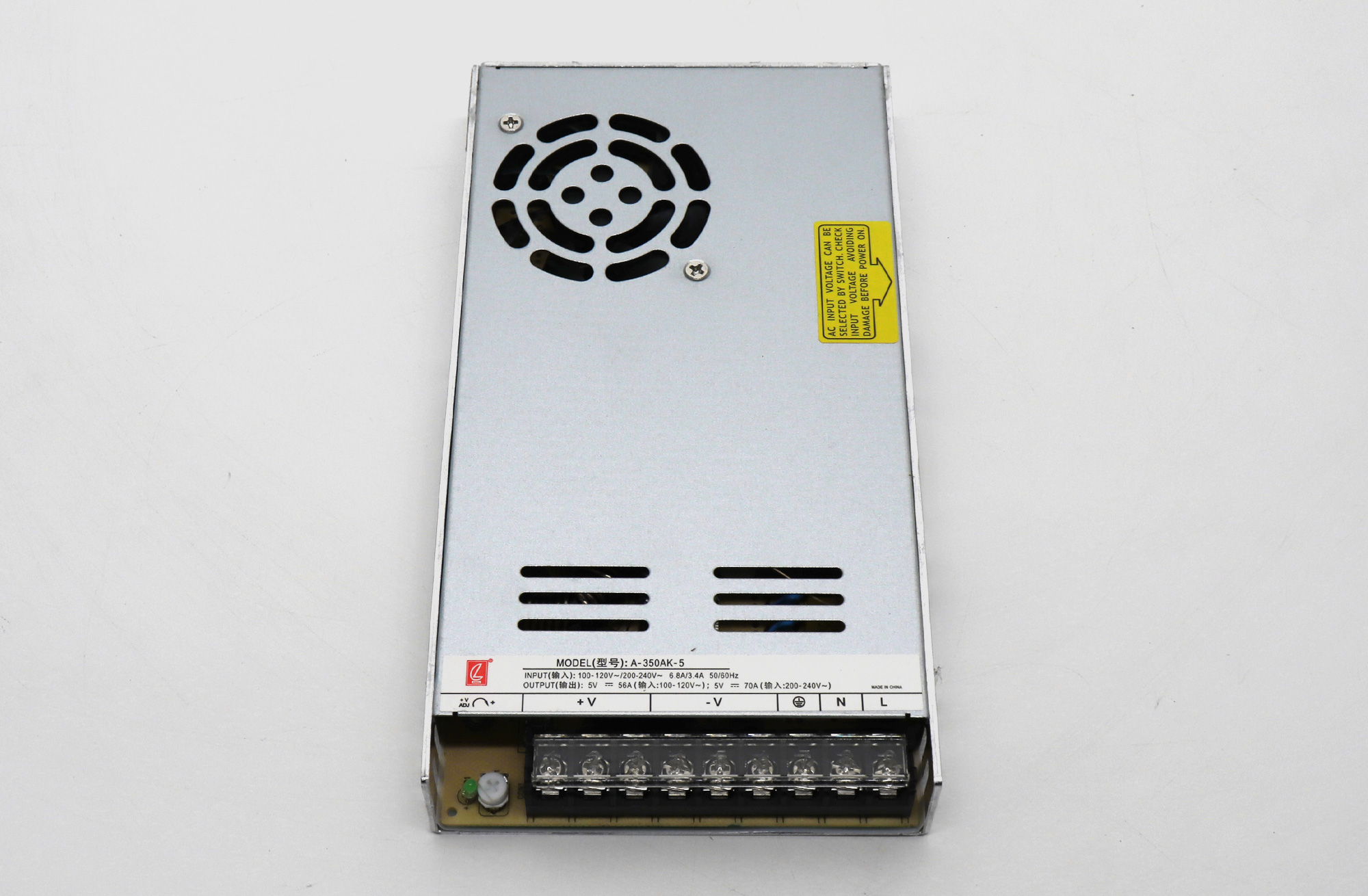
వంటి యూనిట్లు CZCL A-350AK-5 (300 W) and CZCL ఎ-200డబ్ల్యూ-5 (200 W) fit narrow OEM rails cleanly, whereas the Rong-Electric MDK200H5 puts AC input on one short end and 5 V DC output on the far end—a classic layout in front-service magnetic panels.
3. Step-by-step LED power supply sizing math and the 80% derating rule
Never load a switching brick to 100% on a video wall. Flashing from a dark title card straight into a bright white background slams peak current into every LED diode at once, while air inside a closed sun-lit cabinet easily sits 15 to 25 °C (27 to 45 °F) hotter than outside shade. Real-world LED power supply sizing always stops at an 80% continuous ceiling (75% inside sealed outdoor frames in hot states):
- 200 W (5 V 40 A) safe continuous cap: 200 W x 0.80 = X WX (32 A continuous at 5 V).
- 300 W (5 V 60 A) safe continuous cap: 300 W x 0.80 = X WX (48 A continuous at 5 V).
- 350.4 W (24 V LRS-350-24) safe continuous cap: 350.4 W x 0.80 = X WX (11.68 A continuous at 24 V).
01. Worked math: how many 320 x 160 mm modules per power supply?
Always run LED power supply sizing off each module’s maximum full-white wattage, never the “typical/average” wattage quoted on sales brochures. Video averages 30% to 45% of peak power, which lulls buyers into under-sizing—right up until a client puts a bright white slide deck or Excel sheet on screen and trips Over-Load Protection (OLP) across half the display. Also hold 5 W in reserve on the cabinet’s main PSU for the LED స్వీకరించే కార్డ్ (about 1 A at 5 V).
| Screen Build | Assumed Peak Module Draw | Target PSU & 80% Budget | Safe Modules per PSU | Cabinet Example & Total Bricks |
|---|---|---|---|---|
| Indoor P2.5 (600 nits) | ~22 W (4.4 A @ 5 V) per 320 x 160 mm tile | 200 W (5 V 40 A) → X WX సురక్షితంగా | X మాడ్యూల్స్ (6 x 22 W + 5 W card = 137 W) | 640 x 480 mm frame (6 modules) → 1 x 200 W PSU |
| Outdoor P4 (5,500 nits) | ~38 W (7.6 A @ 5 V) per 320 x 160 mm tile | 200 W (5 V 40 A) → X WX సురక్షితంగా | X మాడ్యూల్స్ (4 x 38 W = 152 W) | 960 x 960 mm frame (18 modules) → 5 x 200 W PSUs (or 4 x 300 W) |
| Outdoor P6 / P8 (6,500 nits) | ~42 W (8.4 A @ 5 V) per 320 x 160 mm tile | 300 W (5 V 60 A) → X WX సురక్షితంగా | X మాడ్యూల్స్ (5 x 42 W = 210 W) | 960 x 960 mm frame (18 modules) → 4 x 300 W PSUs |
| 24 V architectural strip sign | 14.4 W/m (4.4 W/ft) @ 24 V DC | LRS-350-24 (350.4 W) → X WX సురక్షితంగా | 19 మీ (62.3 అడుగులు) వరకు total strip per PSU | Tap power every 5 m (16.4 ft) in parallel to stop tail dimming |
02. Sizing primary AC breakers & handling startup inrush
Electricians sizing feeder cables can’t just divide DC watts by 120 V or 230 V—you have to factor in both PSU conversion efficiency (roughly 0.83 to 0.89) and power factor (around 0.55–0.65 on non-PFC supplies like LRS-350, versus ~0.95 on active-PFC supplies like UHP-200-5):
IAC = PDC / (Efficiency x VAC x PF)
Don’t ignore cold-start inrush either. A single Mean Well LRS-350 draws up to 60 A at 230 V AC (or 30 A at 115 V AC) for a few milliseconds while its input caps charge. Snap forty bricks onto one breaker simultaneously through a single contactor and a sensitive B-curve breaker will slam right back off. Spec C-curve or D-curve breakers and stagger cabinet banks across 2 to 4 delayed relay stages (1–2 seconds apart).
4. North American 115V vs European 230V AC derating and thermal design
One detail that ruins international LED power supply sizing plans faster than anything else is ignoring how line voltage and cabinet heat shave off usable output wattage on the manufacturer’s derating chart:
- Check that 115 V / 230 V switch every single time: వంటి యూనిట్లు LRS-350-24, LRS-350-5, LRS-200-5మరియు CZCL A-350AK-5 carry a side toggle for 115 V AC (90–132 V) vs 230 V AC (180–264 V). Feed 230 V Europe mains or 208 V US two-pole power into a switch left on 115 V and you’ll detonate the input capacitors instantaneously. Leave it on 230 V in a 115 V shop and the wall drops into brownout resets whenever graphics turn white.
- Rural sag below 100 V AC: Even in 115 V position, sagging farm-road lines under 100 V AC trim LRS output curves down toward 80% of rated current.
- Sun-baked cabinets above 45–50 °C (113–122 °F): Mean Well LRS-350 units hold 100% power up to 50 ° C (122 ° F) (45 °C / 113 °F on certain fanless 5 V bricks), then drop linearly down to half output by 70 ° C (158 ° F). Dark outdoor boxes facing west sunlight easily clear 55 °C (131 °F) without exhaust louvers, making your 80% derating buffer a lifesaver.
5. DC wiring, voltage drop, and preventing 24V-to-5V board damage
పర్ఫెక్ట్ LED power supply sizing math still leaves you chasing flickering rows if sloppy DC terminations overheat inside the cabinet. Stick to four shop habits on every repair:
- Share load evenly across all three V+ / V- pairs: Every 60 A brick like the LRS-350-5 or G-Energy JPS300V has three V+ and three V- (COM) screws because each M3.5/M4 screw caps around 20 to 25 A. Spread module leads cleanly across all three pairs using crimped fork lugs on 14 to 16 AWG (1.5 to 2.5 mm²) copper leads—never cram 60 amps onto one terminal post.
- Never tie V+ rails of two PSUs together: Non-redundant LED bricks don’t share current cleanly; tying two V+ rails together makes whichever unit sits 0.05 V higher carry the whole wall until it trips. Share common DC ground (V-) cleanly, but keep each supply’s V+ islands isolated to its assigned modules.
- Verify Vadj / SVR1 with a multimeter before plugging modules in: Dial unloaded terminal output right around 4.95 V to 5.05 V DC before snapping VH4 plugs onto modules or LED రిసీవింగ్ కార్డులు. Pushing 5.3 V+ bakes red diodes early; dropping under 4.6 V makes whites look muddy pink and resets cards mid-video.
- Keep 24 V LRS-350-24 harnesses miles away from 5 V connectors: If one cabinet houses both a 24 V supply for fans and 5 V supplies for tiles, wrap bright warning tape or use keyed plugs so nobody jams 24 V into a 5 V receiving board at 2:00 AM.
తరచుగా అడుగు ప్రశ్నలు
Can I use a Mean Well LRS-350-24 to power standard P2.5, P3.91, or P10 LED display modules?
No. Standard full-color HUB75 modules and receiving cards run on X VX DC (or 4.2 V–4.5 V DC on common-cathode energy-saving tiles). The మీన్ వెల్ LRS-350-24 outputs 24 V DC and will fry 5 V driver chips immediately. Order a 5 V 60 A LRS-350-5 or 5 V 40 A LRS-200-5 బదులుగా.
How many 5V LED modules can one 200W (5V 40A) or 300W (5V 60A) power supply run?
Using the 80% continuous rule (160 W safe on 200 W; 240 W safe on 300 W), one 200 W brick usually covers 4 to 6 indoor tiles (at ~20–25 W peak each) or 3 to 4 bright outdoor tiles (~35–42 W peak each). One 300 W brick typically handles 5 to 6 outdoor tiles. Always divide safe derated watts by each module’s full-white peak draw.
Why does my LED cabinet shut off or blink only during bright white video scenes?
Full white puts every red, green, and blue diode at 100% duty simultaneously. If your LED power supply sizing used typical video watts instead of full-white peak wattage—or cabinet air cleared 50 °C (122 °F)—the unit trips Over-Load Protection (OLP) or Over-Temperature Protection (OTP) and hiccups off until the bright scene passes.
What happens if the 115V / 230V switch on an LRS-350 power supply is set wrong?
Leave the toggle on 115 V and plug it into 220–240 V mains (or 208 V phase-to-phase) and the primary doubler pops its fuse and main capacitors immediately. Leave it on 230 V in a 115 V circuit and it drops voltage under moderate load. Flip the switch carefully before closing any breaker—or spec auto-ranging units like the Mean Well UHP-200-5 (90–264 V AC).
Can I swap a CZCL, G-Energyలేదా Rong-Electric 5V 40A supply with a Mean Well LRS-200-5?
Electrically yes, as long as voltage, amperage, and AC line range match. Mechanically though, check cabinet space first: the Mean Well LRS-200-5 measures 215 x 115 x 30 mm with single-end screw terminals, whereas narrow CZCL ఎ-200డబ్ల్యూ-5 or Rong-Electric MDK200H5 units use slimmer rails or double-ended terminals.
Electrical checklist before ordering replacement LED power supplies
Before submitting a parts PO after running your LED power supply sizing math, grab six quick facts off the open cabinet: exact DC output voltage (5 V vs 4.2 V/4.5 V vs 24 V), continuous amperage/watts (40 A / 200 W vs 60 A / 300 W vs 14.6 A / 350 W), site mains voltage (110–120 V vs 220–240 V or auto-ranging PFC), physical chassis dimensions and mounting hole spacing, terminal layout (single-end block vs opposite-end plugs), and whether silent rooms require fanless convection cooling.
Not sure whether an unfamiliar cabinet PSU drops straight into a Mean Well, CZCLలేదా Rong-Electric bracket? Snap a clear photo of the existing power supply sticker and send it through our contact page so our bench team can match the footprint and electrical rating before shipping. And if weather-damaged screens need brand-new pre-wired enclosures rather than individual spare bricks, you can browse full LED display cabinets over at EagerLED.