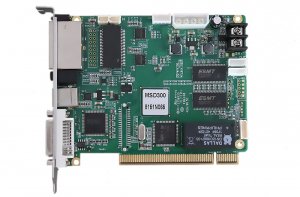
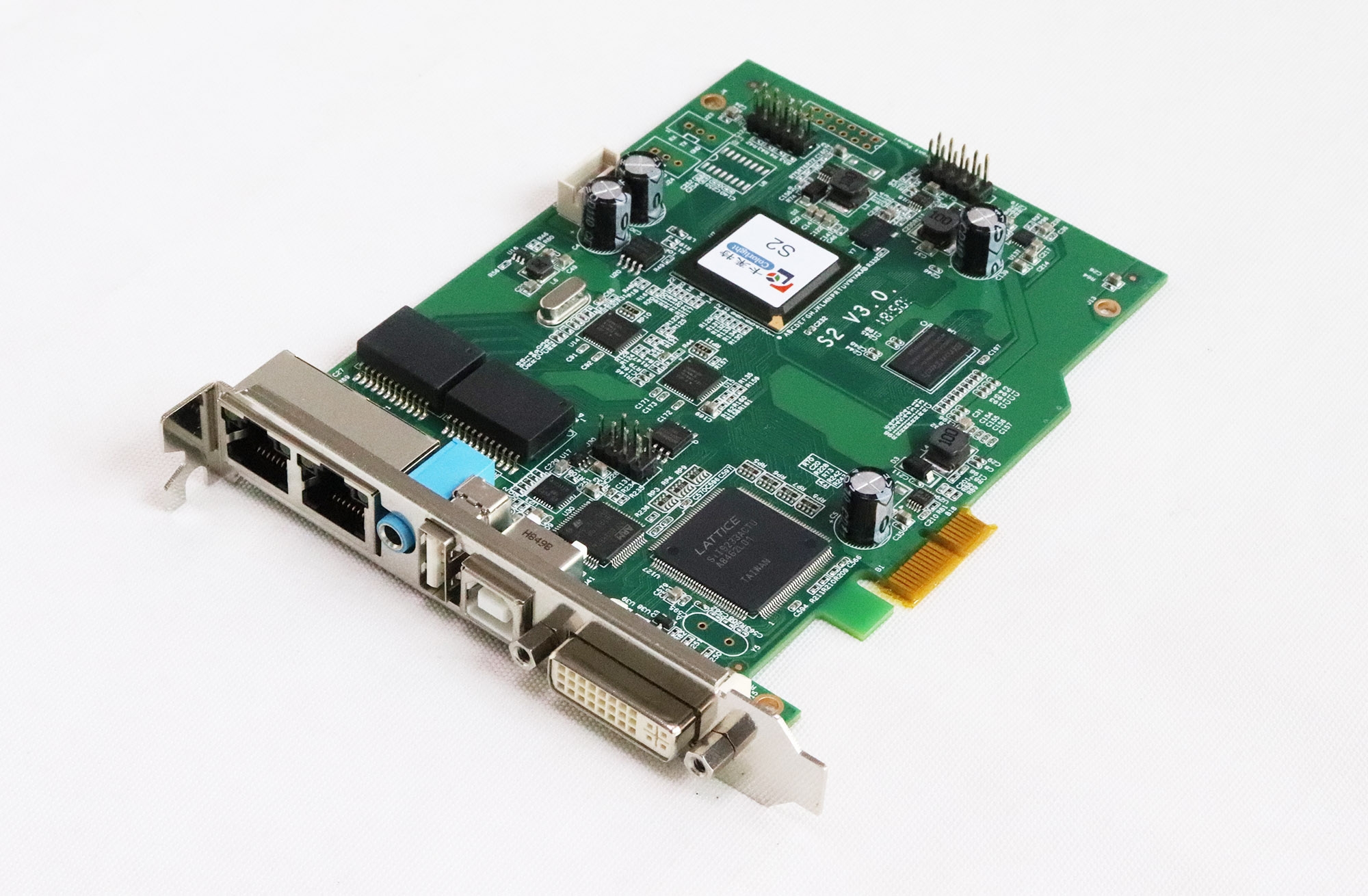
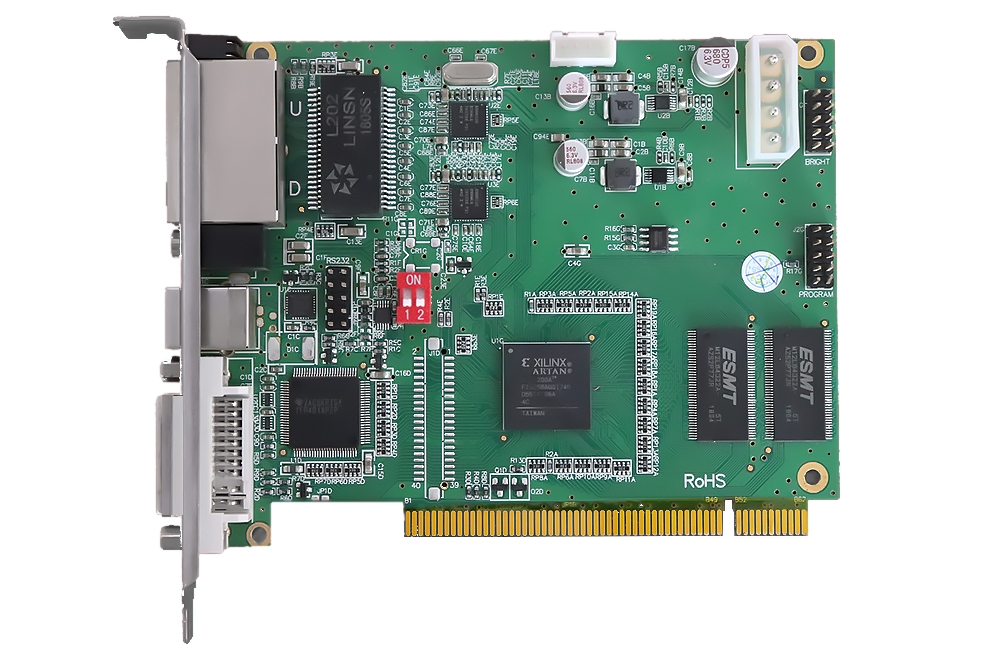
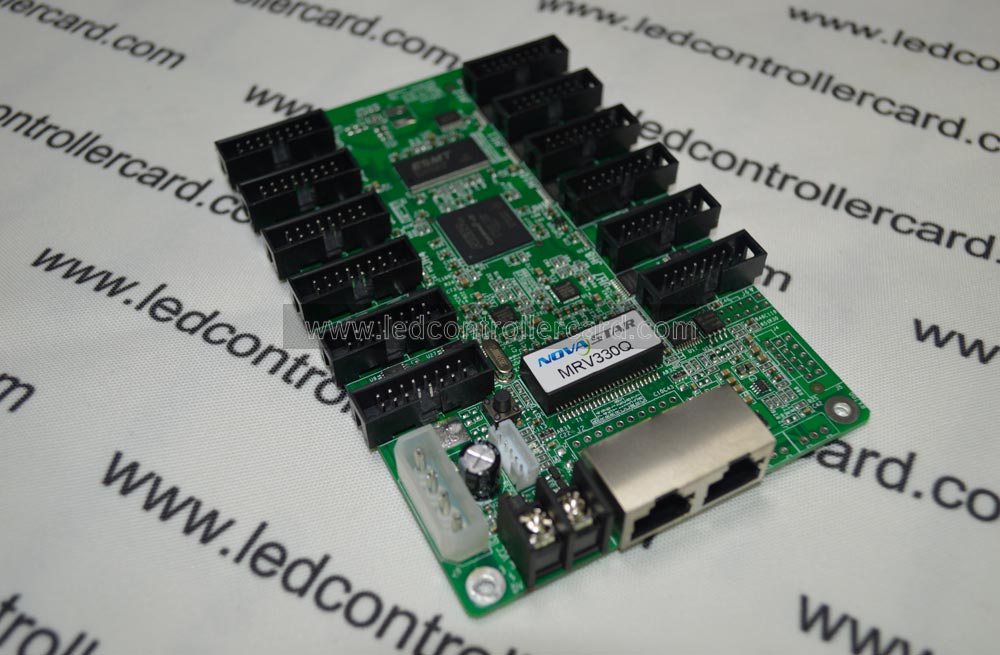
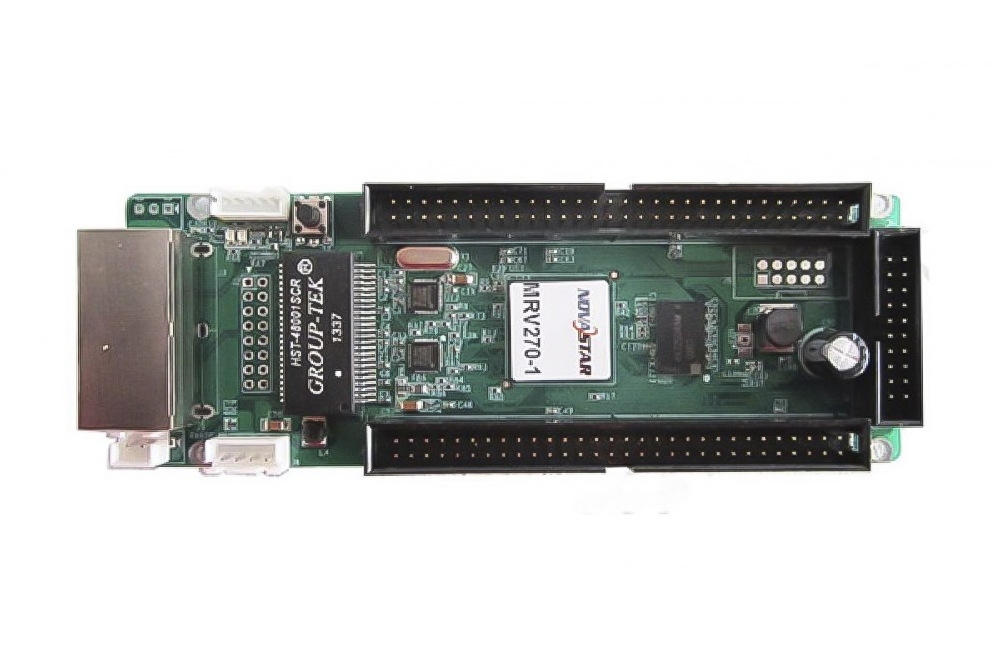
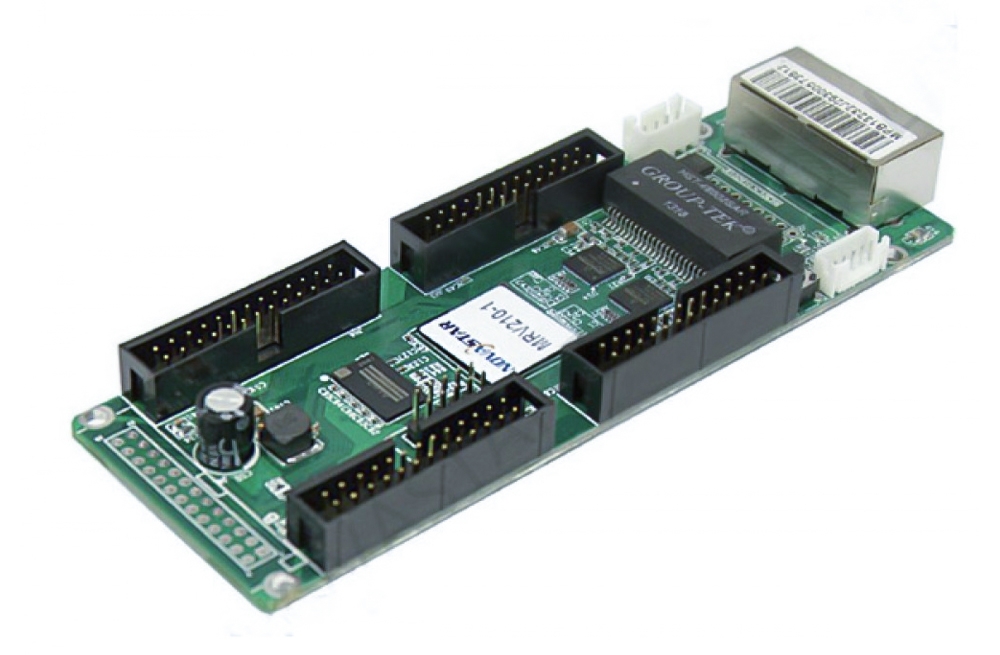
The Mooncell M-RA50 LED receiving card is listed with a 96K-pixel maximum card load and a 3.5–6 V supply range. Calibration, monitoring and recovery functions support LED display configuration and maintenance.
M-RA50 specifications
| Parameter | Specification |
|---|---|
| RGB output groups | 28/24, as written in the source; mode not specified |
| Maximum card load | 96K pixels |
| Per-data-group load | 8K pixels |
| Input voltage | 3.5–6 V |
| Calibration | Single-pixel calibration, listed without loading-area reduction |
| Driver support | PWM, point-detection and conventional ICs |
| Network function | Dual cable backup |
| Maintenance functions | Saved settings, card/environment monitoring and recovery |
| Compliance stated | RoHS and CE-EMC |
Confirm the RGB output arrangement
The source uses the notation 28/24 for RGB groups without explaining the operating mode. Match the actual hardware revision, connector pinout and module data layout before installation. Keep the existing receiving-card settings available when replacing a board.
Frequently Asked Questions
Does the M-RA50 have 28 or 24 RGB groups?
The original listing gives “28/24” without defining the mode or revision. Confirm the actual output arrangement and pinout before choosing the card; neither figure should be assumed for every board.
What is the M-RA50 maximum pixel load?
The listed whole-card maximum is 96K pixels, with 8K pixels per data group. The total card limit remains applicable to the configured outputs.
What input voltage is specified?
The stated range is 3.5–6 V. Check the board label, polarity and power wiring before installation.
Does the card support calibration and driver IC options?
Single-pixel calibration is listed without reducing loading area. PWM, point-detection and conventional driver ICs are listed; confirm the specific module driver and configuration.
Will the backup features guarantee a screen never goes black?
No. Cable backup and the mentioned intelligent power-supply arrangement require compatible equipment and configuration. They should not be presented as a guarantee against every display fault.