Outdoor fixed LED screens are a core part of modern stadium perimeter design because they combine live information, sponsor content, safety messaging, and fan entertainment in one durable visual system. Installed around the pitch, stands, concourses, or exterior facade, they give venue operators a flexible communication surface that remains visible in bright outdoor conditions.
The value is not simply a larger picture. A well-planned stadium perimeter LED system connects display hardware, control equipment, content workflows, structural engineering, and event operations. The result is a better spectator experience and a digital asset that can support revenue throughout the season.
What Is an Outdoor Fixed LED Screen?
An outdoor fixed LED screen is a permanently installed direct-view display built for long-term outdoor operation. Weather-resistant cabinets, high-brightness LED modules, serviceable power and receiving systems, and a dedicated video controller allow the screen to operate reliably across changing light and weather conditions.
A stadium perimeter LED screen describes the location and use of the display: it is positioned around the edge of the playing area or another venue boundary. Perimeter displays may be fixed or temporary. Fixed systems are usually the better choice when the venue needs a consistent layout, frequent use, integrated cabling, and predictable maintenance access.
Why Stadiums Use Outdoor Fixed LED Screens
| Design objective | How the LED perimeter supports it | Operational value |
|---|---|---|
| Fan engagement | Live video, replays, statistics, prompts, and crowd moments | Creates a more immersive event |
| Advertising | Scheduled, animated, and event-specific sponsor content | Creates more sellable inventory than static signage |
| Communication | Scores, schedules, wayfinding, and service updates | Keeps spectators informed in real time |
| Safety | Highly visible emergency and operational messages | Supports coordinated venue response |
| Venue identity | Team colors, branded motion graphics, and themed content | Builds a consistent visual atmosphere |
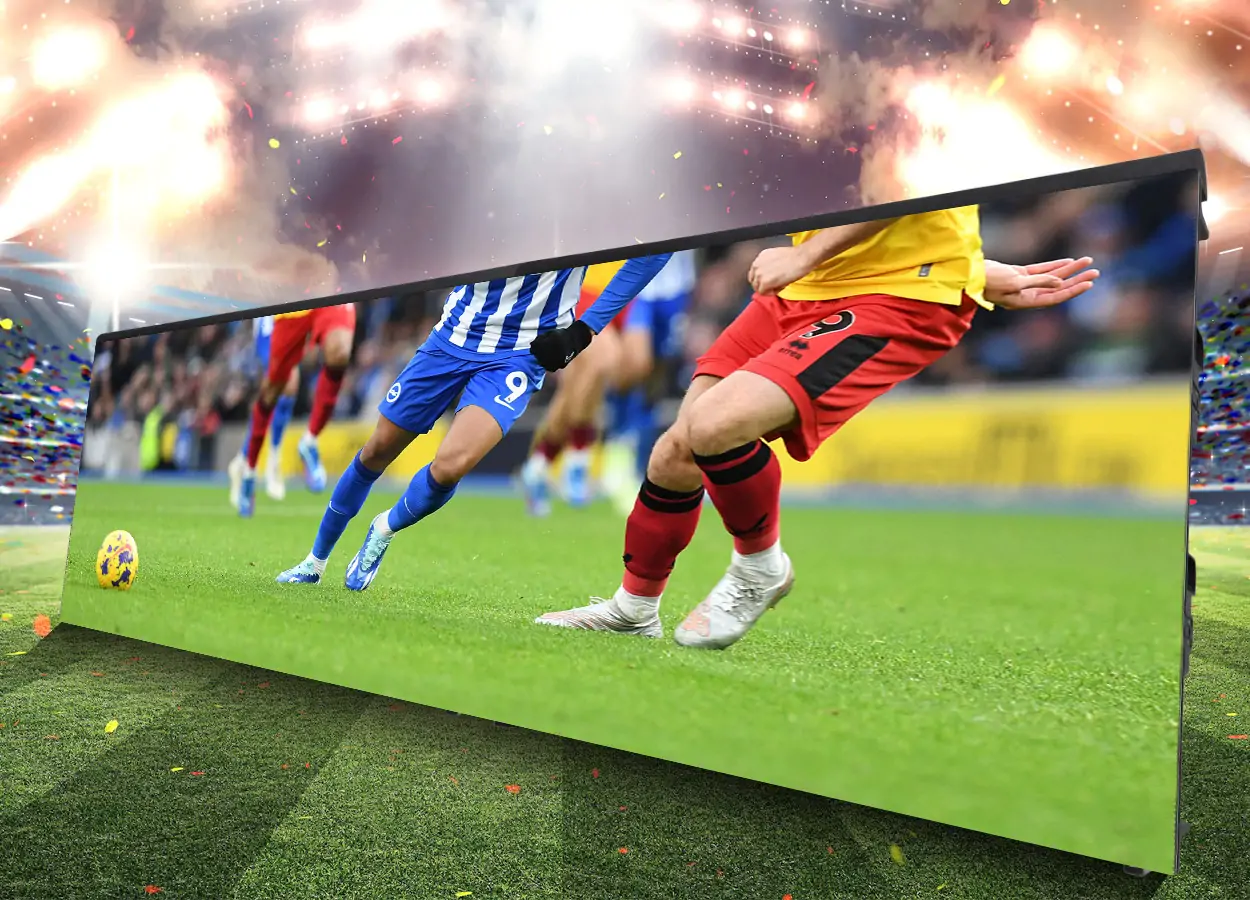
1. How Outdoor Fixed LED Screens Improve Fan Engagement
Perimeter LED displays keep important content within the spectator’s natural field of view. They can show live action, replay cues, player introductions, match statistics, countdowns, and audience prompts without relying on a single central scoreboard.
How Outdoor Fixed LED Screens Serve Different Seating Zones
Viewing distance changes throughout a stadium. The display therefore needs the right pixel pitch, character size, contrast, and content pace for its closest and farthest viewers. Short messages, bold graphics, and high-contrast layouts are easier to read than dense copy.
Real-Time Content on Outdoor Fixed LED Screens
A connected control system lets operators switch between game data, sponsor loops, celebration graphics, and public information. This responsiveness makes the display part of the live production rather than a passive sign. Social posts and crowd-camera content can also be moderated before they appear on screen.
2. Create Flexible Advertising and Sponsorship Inventory
Static boards can carry only one message at a time. Stadium perimeter LED screens can rotate multiple campaigns, change creative by event, and align sponsor content with specific moments such as team entrances, timeouts, or half-time.
This flexibility gives commercial teams more inventory to package. The same physical screen can support league partners, local sponsors, concessions, upcoming events, and venue branding. Content logs and playback schedules also make campaign delivery easier to document.
Design advertising for spectators and cameras
Pitch-side content is often seen by both the in-venue audience and broadcast cameras. Motion speed, exposure, refresh rate, scan settings, and color calibration should be tested under actual camera conditions. A message that looks bright to the eye can still band, flicker, or overexpose on video if the system is not configured correctly.
3. Strengthen Venue Communication and Safety
During normal operations, fixed LED screens can display scores, schedules, transport updates, gate information, concession messages, and wayfinding. During a delay or emergency, the same network can distribute short, consistent instructions across the venue.
The screen is one part of a wider safety system, not a replacement for public-address announcements, trained staff, or emergency procedures. Operators should prepare approved message templates, define who can trigger them, and test failover behavior before opening day.
4. Support a Consistent Stadium Brand
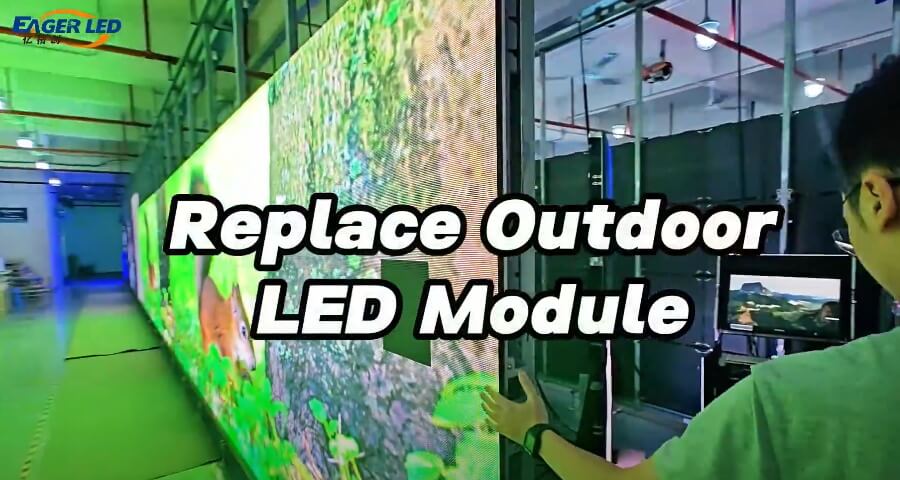
LED content can extend team colors, typography, sponsor treatments, and event themes around the entire bowl. Coordinated graphics make player entrances, scoring moments, ceremonies, and concerts feel intentional rather than assembled from separate screens.
Permanent installation also helps architects integrate the display into fascia, railing, facade, or seating geometry. Cabinet dimensions, sightlines, ventilation, access panels, cable routes, and structural loads should be resolved early so the screen appears built into the venue.
5. How to Specify Outdoor Fixed LED Screens for Stadiums
No single specification fits every stadium. The correct design depends on viewing distance, ambient light, camera use, local climate, screen position, content type, and maintenance strategy. The following criteria are a practical starting point.
| Selection factor | What to evaluate | Why it matters |
|---|---|---|
| Pixel pitch | Closest viewing distance, camera framing, and content detail | Balances image clarity and budget |
| Brightness | Direct sun, screen orientation, shade, and night operation | Maintains visibility without excessive glare |
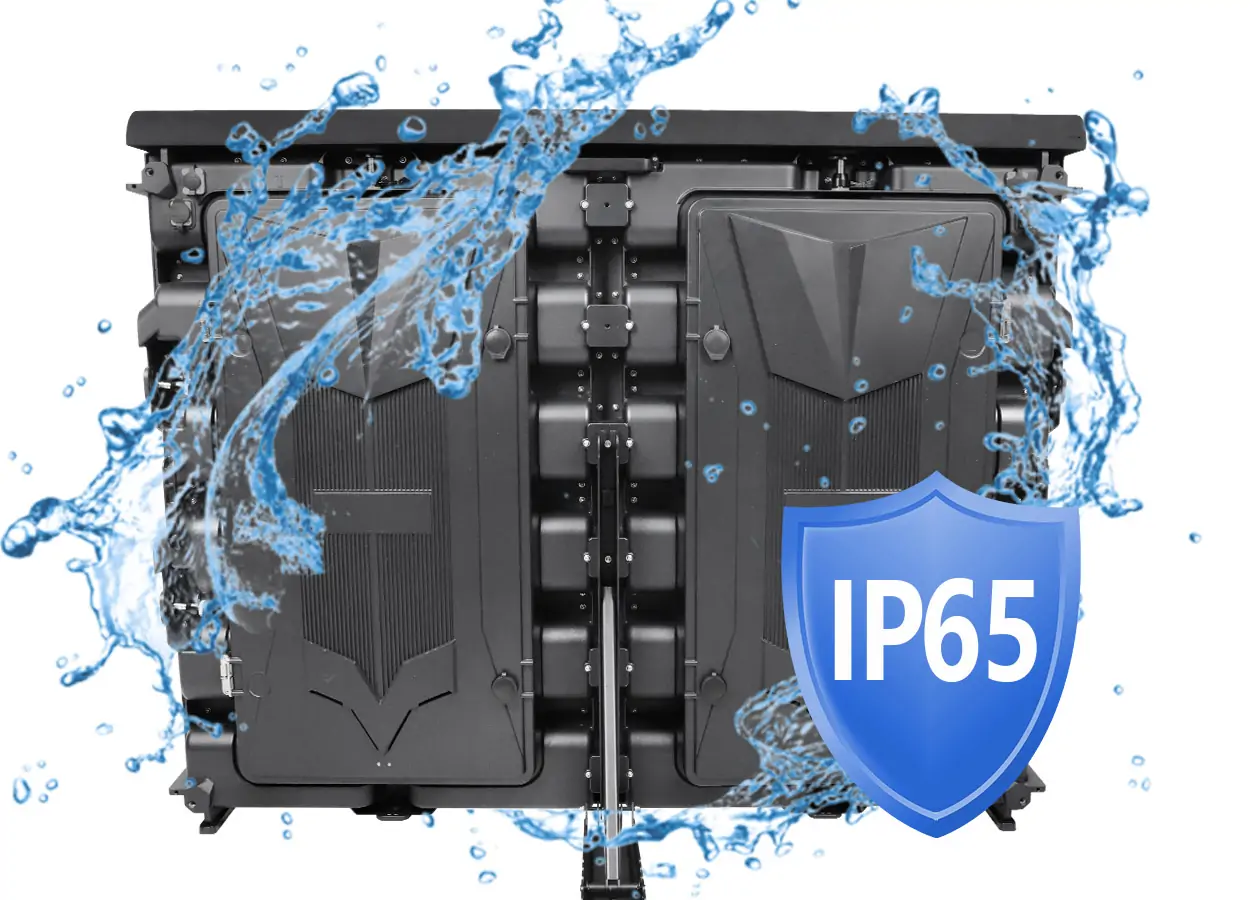
| Ingress protection | Front and rear exposure to rain, dust, and washdown | Protects modules and electronics; verify the tested rating for the complete cabinet |
| Refresh and grayscale | Broadcast cameras, slow-motion capture, and low-brightness performance | Reduces visible flicker and preserves image detail |
| Mechanical safety | Wind load, impact risk, grounding, barriers, and emergency access | Protects players, staff, spectators, and equipment |
| Service access | Front or rear maintenance, spare modules, power supplies, and receiving cards | Shortens downtime and routine service |
| Control redundancy | Signal backup, power distribution, monitoring, and fallback content | Keeps critical messaging available |
As a general design practice, daylight-facing outdoor screens often require high brightness, while evening events require controlled dimming. Broadcast venues commonly prioritize high refresh rates and careful camera testing. Final targets should be validated with the display supplier, structural engineer, broadcaster, and local authority rather than selected from a generic specification alone.
6. Outdoor Fixed LED Screens: Weather and Maintenance
Outdoor fixed LED screens must tolerate rain, dust, solar heat, temperature change, vibration, and wind. Cabinet sealing is important, but drainage, ventilation, corrosion resistance, cable entry, power protection, and heat management are equally important.
A maintainable design includes safe access, labeled cabling, modular replacement, remote monitoring, and an on-site spare-parts plan. Preventive inspections should cover cabinet seals, connectors, cooling paths, fasteners, grounding, brightness uniformity, and failed pixels. These measures protect image quality and reduce unplanned downtime over the system’s service life.
7. Integrating Outdoor Fixed LED Screens with Control Systems
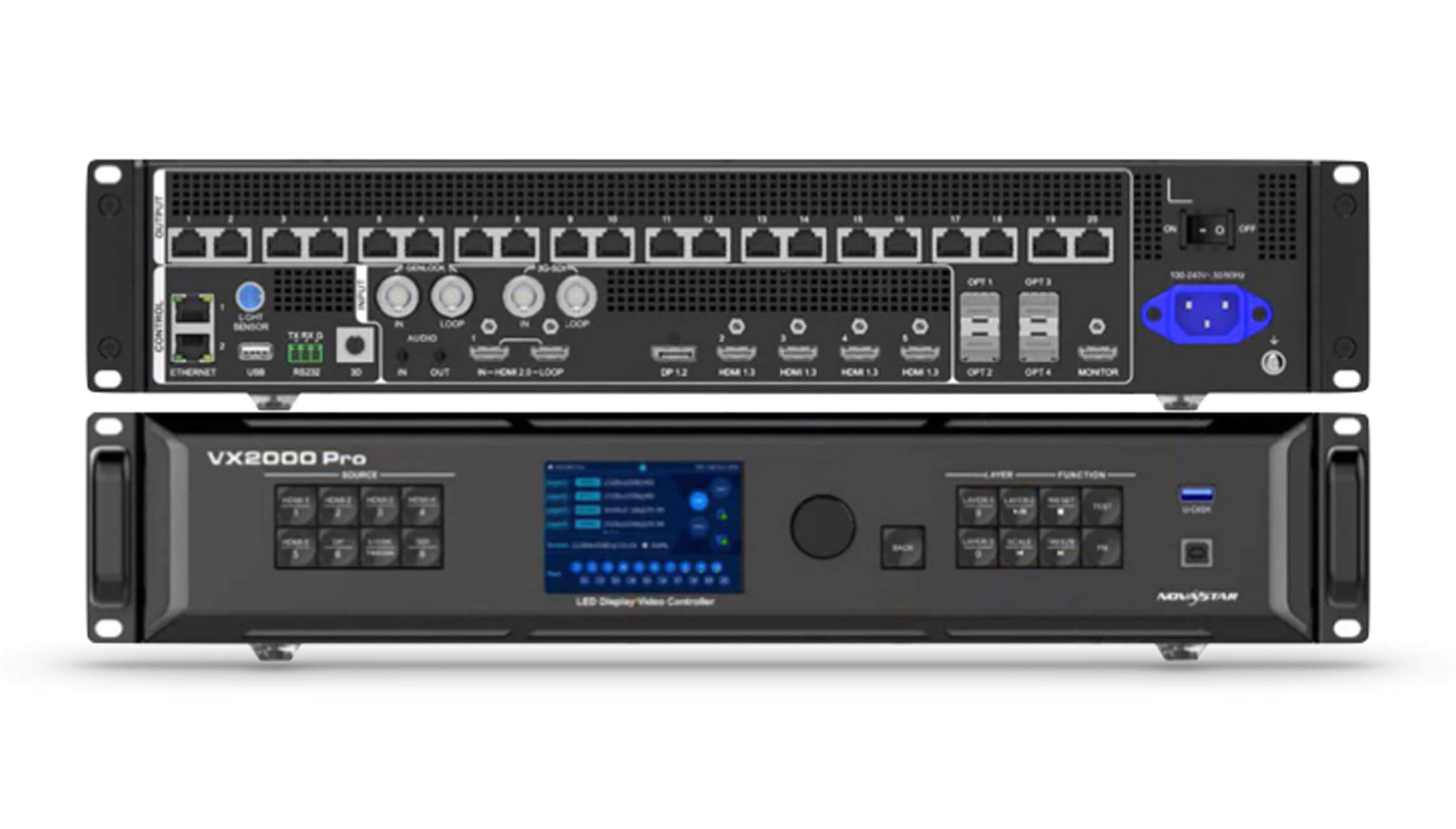
The LED display is only as useful as the system driving it. A typical signal path can include source devices, a production switcher, an LED display controller, sending hardware, receiving cards, and cabinet-level power distribution.
Choose a controller that supports the required pixel load, input formats, scaling, backup strategy, calibration workflow, and monitoring tools. Content management should also define operator roles, approval rules, emergency overrides, and network security.
8. Use a Practical Stadium Perimeter Planning Checklist
- Map every viewing zone. Record minimum and maximum viewing distances, screen angles, obstructions, and camera positions.
- Define content before hardware. List the live feeds, data, sponsor formats, safety messages, and resolutions the system must support.
- Survey the site. Confirm structure, wind loading, power, grounding, data routes, drainage, ventilation, and maintenance access.
- Set measurable acceptance criteria. Include brightness uniformity, color consistency, camera performance, redundancy, and failover behavior.
- Test under real conditions. Commission the display in daylight and at night, with production cameras and representative content.
- Prepare operations and maintenance. Train staff, document procedures, stock critical spares, and schedule inspections.
When Is Another LED Format a Better Choice?
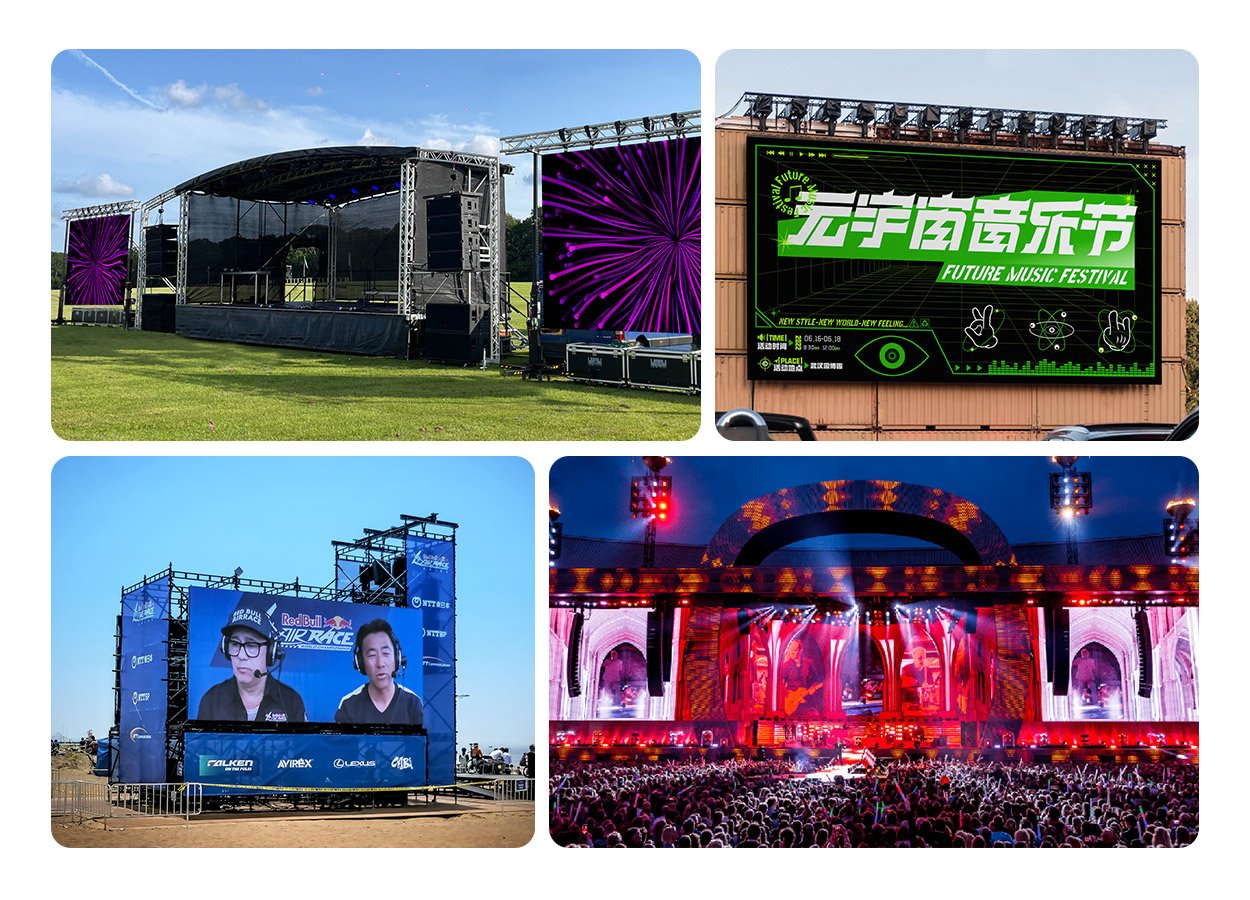
A fixed installation is not always the best option. A rental or dual-purpose perimeter LED board may be more suitable when the layout changes between events, the venue hosts temporary tournaments, or the equipment must move frequently. A central scoreboard may be better for detailed game data viewed from all sides, while ribbon displays are useful for continuous fascia content.
Many venues combine these formats. The decision should follow the event calendar, commercial plan, sightlines, safety requirements, and total cost of ownership.
Frequently Asked Questions
What is the main purpose of a stadium perimeter LED screen?
Its main purpose is to deliver visible, changeable content around a stadium boundary. Common uses include sponsor advertising, scores, event information, safety messages, and fan entertainment.
Are outdoor fixed LED screens suitable for live broadcast?
Yes, when refresh rate, grayscale, scan settings, brightness, color calibration, and synchronization are selected and tested for the broadcaster’s cameras. On-camera trials should be part of commissioning.
How do you choose pixel pitch for a stadium perimeter display?
Start with the closest viewing distance and the amount of detail the content requires. Then account for camera shots, screen dimensions, and budget. A supplier should confirm the choice with a viewing-distance study or on-site sample test.
What weather protection does an outdoor LED screen need?
The required protection depends on exposure. Designers should verify the tested ingress rating of the complete cabinet, along with drainage, corrosion resistance, thermal management, cable sealing, grounding, and local electrical requirements.
How can a stadium reduce LED screen downtime?
Use redundant signal paths where appropriate, monitor cabinet health, keep critical spare modules and power components on site, design safe service access, and follow a preventive maintenance schedule.
Conclusion
Outdoor fixed LED screens improve stadium perimeter design by combining engagement, advertising, operations, safety communication, and venue branding in one permanent platform. The best results come from treating the screen as an integrated stadium system, not a standalone display.
Start with sightlines and content goals, then validate the display, structure, control, power, camera, and maintenance requirements together. Explore outdoor LED display modules and outdoor LED display screen solutions when planning the next stage of a stadium project.