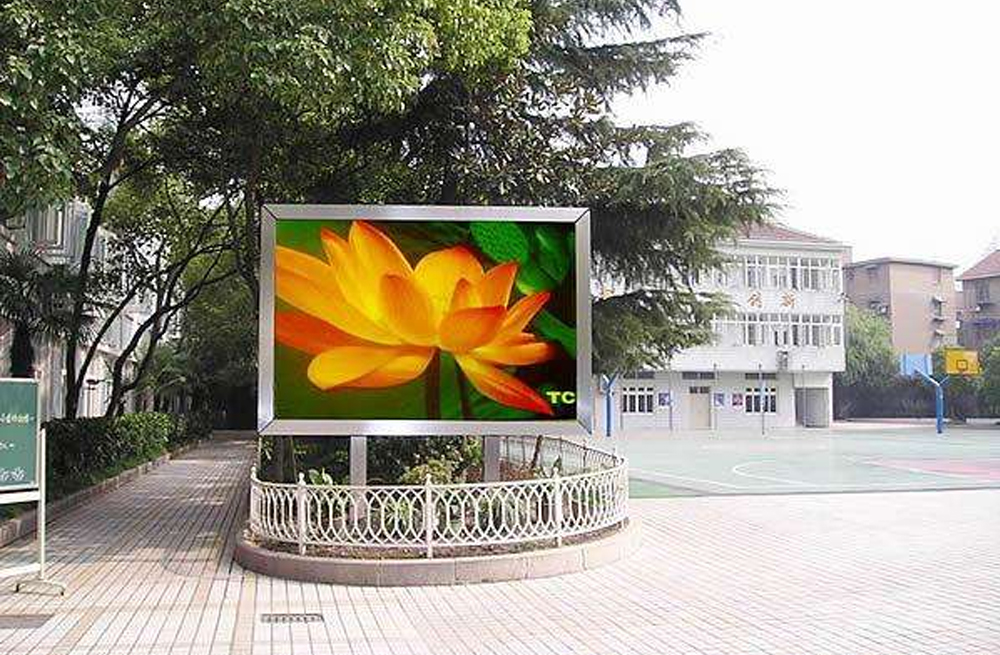
Short answer: Outdoor LED display modules are the replaceable building blocks of large outdoor LED screens. Their high brightness, weather-ready construction, scalable size, remote content control and serviceable design make them a strong long-term platform for advertising, transport information, sports, events and public communication.
The technology is not automatically the best choice for every project. A successful display still depends on the correct pixel pitch, brightness, ingress protection, control system, power design, installation structure and maintenance plan. This guide explains where outdoor LED modules create value, how the complete system works and what buyers should verify before choosing a solution.
What Are Outdoor LED Display Modules?
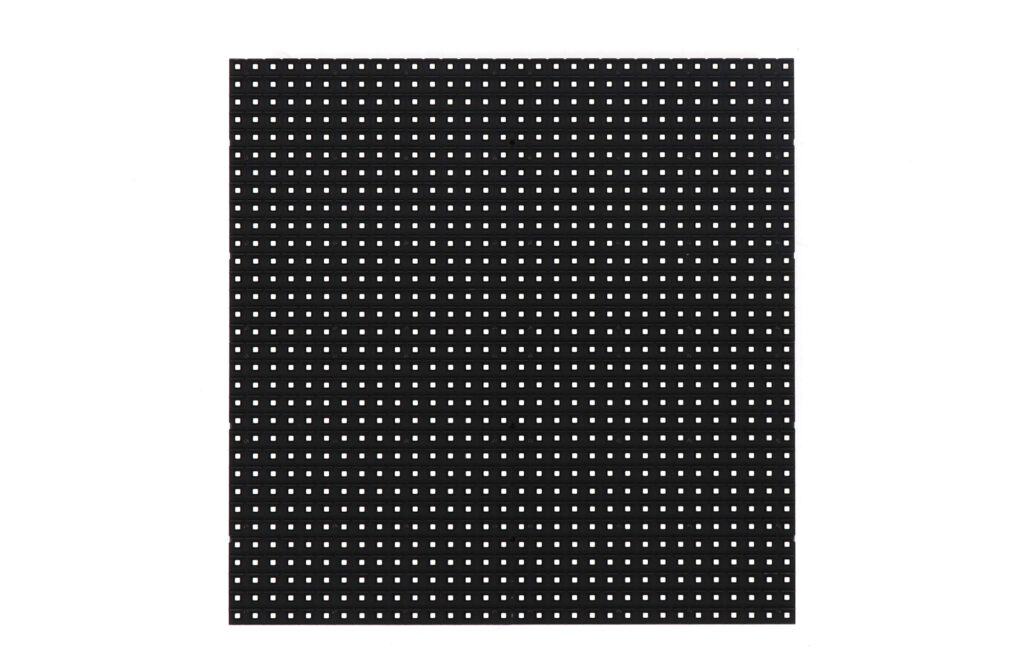
An outdoor LED display module is a compact panel that contains LED pixels, a printed circuit board, driver components and electrical connections. Multiple modules are mounted inside a cabinet, and multiple cabinets are joined to create a complete screen. In other words, a module is a serviceable component of the display, not the entire display itself.
A typical outdoor LED display system includes:
- LED modules that produce the image.
- Cabinets and mounting structures that align and protect the modules.
- Power supplies and distribution sized for safe operation.
- Sending devices, processors and LED receiving cards that distribute video and control data.
- Content management and monitoring software for scheduling, diagnostics and remote operation.
Why Outdoor LED Display Modules Suit Public-Space Communication
Daylight readability and controlled brightness
Outdoor screens must remain legible in changing ambient light. LED modules can deliver the high luminance needed for daylight viewing, while a properly configured light sensor and brightness schedule can reduce output after sunset. Brightness should be specified in nits for the actual site; direct-sun locations need a different design from shaded facades or nighttime venues. More brightness is not always better because excessive output can create glare, waste energy and conflict with local rules.
Modular maintenance and better uptime
A modular screen can be serviced in sections. If a power supply, receiving card or LED module fails, technicians can usually replace the affected part without removing the complete display. Front-service and rear-service designs support different installation conditions. This repair model can reduce downtime, but only when spare parts, module calibration data and safe access are included in the maintenance plan.
Weather resistance for exposed installations
Outdoor LED display modules are designed for dust, rain, temperature changes and continuous UV exposure. Buyers should verify the documented IP rating for both the front and rear of the assembled product, not rely on the word “waterproof.” The cabinet, seals, connectors, ventilation, drainage and installation method all affect real-world protection. An IP rating also does not mean a screen is suitable for submersion or every climate.
Scalable formats and creative layouts
Because modules repeat in a grid, a display can be engineered for many dimensions and aspect ratios. Flat billboards are common, but corner screens, curved facades, stadium ribbons and custom architectural formats are also possible when the cabinet and mounting system are designed for the geometry. The final resolution is determined by the display dimensions and pixel pitch, not by marketing labels alone.
Fast, flexible content delivery
A networked control system can schedule video, images, live data and alerts from a central location. Operators can change campaigns by time, location or event without replacing printed material. For public information, the display can connect to approved data feeds, but mission-critical messages still require reliable upstream systems, permissions, redundancy and operating procedures.
System-level energy management
Modern LED drivers, efficient power supplies, automatic dimming and thoughtful content design can reduce consumption. Compare both maximum and typical power figures, because a full-white test image and normal mixed content draw different amounts of power. Energy performance should be assessed for the complete screen, including cooling and control equipment, rather than for the LED module alone.
How Outdoor LED Display Modules Work in a Complete Screen
The signal path is straightforward:
- A media player or video source provides the content.
- A video processor or sending controller formats the signal for the display.
- Receiving cards distribute data to the correct cabinets and modules.
- Driver components on each module control the brightness and color of individual pixels.
- Power supplies deliver regulated DC power while monitoring and protection systems support stable operation.
Pixel pitch and total resolution
Pixel pitch is the center-to-center distance between adjacent pixels, usually stated in millimeters. A smaller pitch places more pixels in the same area and can support closer viewing, but it also increases pixel count, data load and cost. As a simple estimate, divide the display width and height in millimeters by the pixel pitch. A 4,000 mm by 2,000 mm P10 screen has approximately 400 by 200 pixels, or 80,000 pixels. Exact dimensions must match the selected module and cabinet geometry.
Refresh rate, grayscale and camera performance
Refresh rate and grayscale processing affect smooth motion, low-brightness detail and on-camera appearance. A screen used as a broadcast background may need stricter performance than a roadside sign viewed only by the eye. Ask for test footage at the intended camera shutter settings and brightness level instead of relying on a single headline specification.
Where Outdoor LED Display Modules Create Value
Outdoor LED displays are most useful when content changes frequently, needs to be seen from a distance or must serve a large audience.
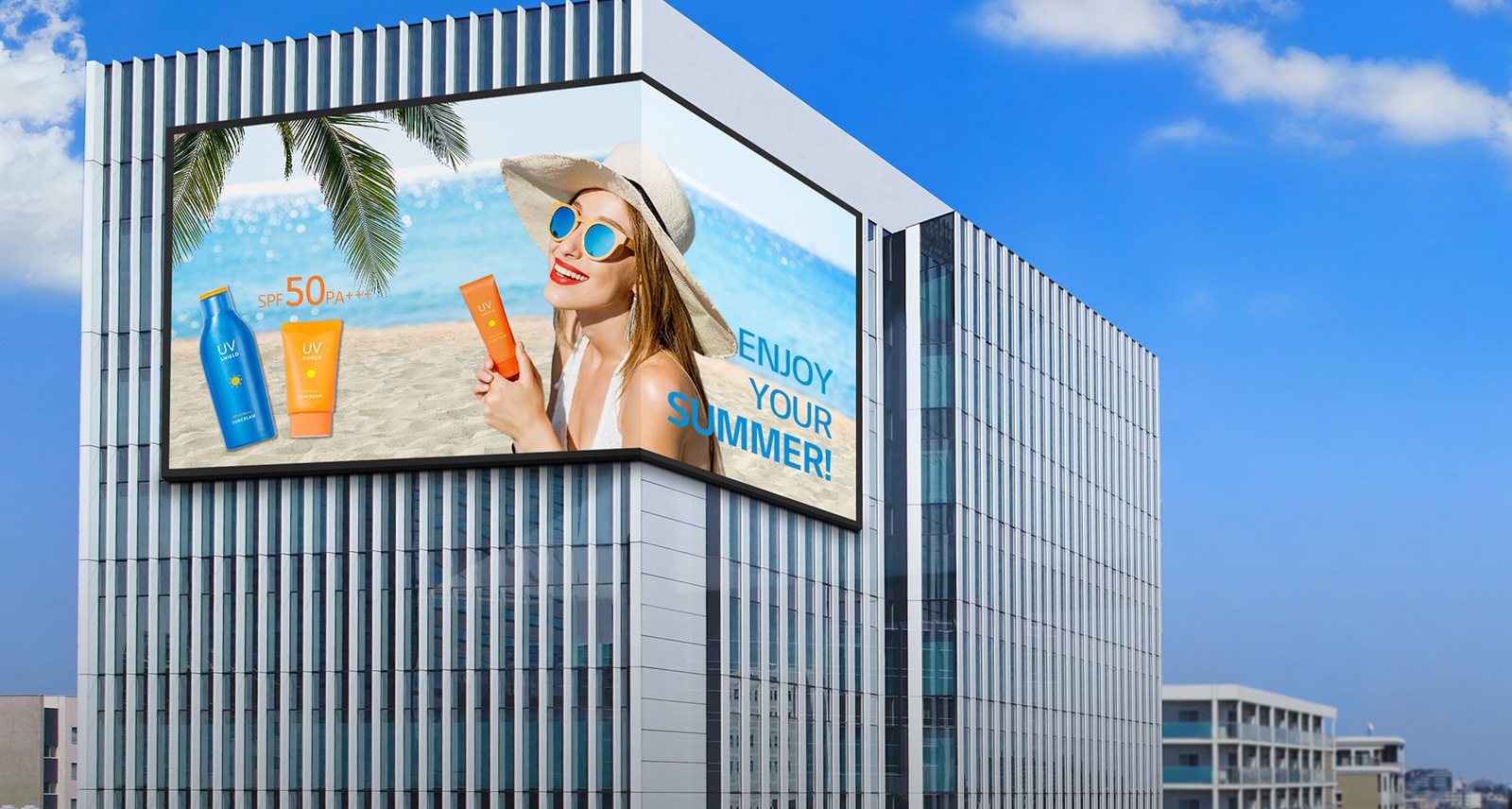
Digital out-of-home advertising
Brands and media operators can schedule multiple campaigns on one location, update creative remotely and adapt content to approved time or event triggers. The value comes from operational flexibility and visibility; responsible deployment also requires brightness limits, content review and compliance with local sign regulations.
Sports and live events
Scoreboards, replay screens, perimeter displays and stage backdrops help large audiences follow action and sponsor content. These projects prioritize viewing angle, camera performance, fast content switching, structural safety and reliable backup paths.
Transport and wayfinding
Airports, stations, roads and parking facilities use outdoor LED screens for schedules, directions and service updates. Legibility, data accuracy and redundancy are more important than decorative effects. Emergency use should be part of a wider approved communication system rather than treated as a function of the screen alone.
Smart-city and public information
Municipal displays can present event notices, environmental data and public guidance. Clear governance matters: authorities should define who may publish, which sources are trusted, how information is logged and what happens when a network connection fails.
Retail, campuses and venues
Shopping centers, corporate campuses, museums and attractions use LED displays for promotion, maps and visitor information. A modular system is especially useful when the same visual platform must support routine messaging and high-impact event content.
How to Choose Outdoor LED Display Modules
| Decision factor | Why it matters | What to verify |
|---|---|---|
| Pixel pitch | Controls pixel density and practical viewing distance | Nearest viewer, content detail, display dimensions and native resolution |
| Brightness | Determines readability in ambient light | Site survey, daytime target, dimming method and nighttime limit |
| Ingress protection | Reduces exposure to dust and water | Documented front/rear IP rating and protection of the complete assembly |
| Refresh rate and grayscale | Affect motion, low-level detail and camera results | Performance at the intended brightness and camera settings |
| Service access | Shapes installation depth and repair time | Front or rear maintenance, access clearance and module replacement process |
| Power and thermal design | Affect operating cost and component life | Maximum/typical load, distribution, ventilation, temperature range and protection |
| Control compatibility | Determines content and monitoring capabilities | Sending device, receiving card, processor, software and redundancy plan |
| Supplier support | Reduces long-term operational risk | Calibration files, spare modules, documentation, warranty and response process |
Start with the viewing environment and content requirements, then select the module and control system. Browse outdoor LED display modules and outdoor LED display screens, or contact the team with the screen size, viewing distance, installation location and signal requirements.
Outdoor LED Display Modules Compared With Other Options
| Display option | Best fit | Main strength | Main limitation |
|---|---|---|---|
| Outdoor LED modules | Large, bright, frequently updated displays | Scalable, serviceable and visible at distance | Requires engineered power, structure and maintenance |
| High-brightness LCD | Smaller, close-view kiosks and enclosures | Fine detail at short distance | Limited size and more visible seams in video walls |
| Projection | Temporary nighttime events | Large image without a permanent screen surface | Ambient light reduces contrast |
| Printed signage | Static messages with rare updates | Low technical complexity | No motion, live data or remote content changes |
Limitations and Planning Trade-Offs
Outdoor LED technology has clear advantages, but a credible specification should also address its constraints:
- Upfront engineering cost: the screen needs a supporting structure, electrical design, control equipment and installation labor.
- Power demand: consumption varies with brightness and content, so electrical capacity and operating cost must be calculated for the site.
- Content operations: a display is only useful when ownership, scheduling, approvals and emergency procedures are clear.
- Visual impact: brightness, motion and placement may be regulated to protect drivers, residents and the surrounding environment.
- Long-term consistency: spare modules should be calibrated to match the original screen, because LED batches can differ in color and brightness.
What Is Next for Outdoor LED Display Technology?
The future is likely to come from steady system-level improvement rather than one single breakthrough.
More efficient modules and smarter power control
Improved LED packages, driver designs, power supplies and brightness management can lower energy use for a given visual target. Procurement teams will increasingly compare measured system performance and lifetime operating cost, not only peak brightness.
Remote diagnostics and preventive maintenance
Monitoring platforms can track temperature, power status, communication faults and cabinet health. Better diagnostics help technicians identify the likely failure point before arriving on site and can support planned maintenance instead of purely reactive repair.
AI-assisted content and operations
AI tools can help resize creative, generate layout variations, translate approved messages and flag playback or hardware anomalies. Human review remains necessary for accuracy, brand control, privacy and public-safety content. Personalization should use lawful, transparent data practices and should not depend on unnecessary biometric profiling.
Finer pitch and more flexible architecture
As packaging and manufacturing improve, outdoor products can support finer pixel pitches, lighter cabinets and more adaptable shapes. The useful advance is not simply “more pixels”; it is achieving the required image quality while preserving weather protection, heat management and serviceability.
Frequently Asked Questions About Outdoor LED Display Modules
What is the difference between an LED module, cabinet and screen?
The module is the replaceable pixel panel. Modules mount inside a cabinet with power and receiving hardware. Multiple cabinets form the complete LED screen.
Are outdoor LED display modules waterproof?
They are weather-resistant to a documented IP level, but “waterproof” is too broad. Verify the front and rear ratings, cabinet seals, connectors, drainage and installation method. An outdoor rating does not make equipment suitable for submersion.
Which pixel pitch is best for an outdoor LED screen?
There is no universal best pitch. Choose it from the nearest viewing distance, screen size, content detail, native resolution, budget and cabinet geometry. Smaller pitch increases pixel density and cost.
Can an outdoor LED module operate by itself?
No. It needs compatible power, receiving hardware, a sending controller or media player, data cabling and mechanical support. Compatibility must be checked across the complete system.
How long do outdoor LED display modules last?
Service life depends on operating temperature, brightness, duty cycle, power quality, moisture protection, cleaning and component quality. Ask suppliers for test conditions, warranty terms and spare-part availability instead of treating a single lifetime figure as a guarantee.
What information is needed for an accurate quotation?
Provide the installation location, screen width and height, nearest and typical viewing distance, mounting method, service access, content source, electrical standard and any camera-performance or redundancy requirements.
Final Takeaway
Outdoor LED display modules are a durable foundation for visual communication because they combine high visibility, modular service, flexible sizing and real-time content control. Their future value will come from better efficiency, monitoring, image quality and integration with responsible content workflows. The best result begins with a site-specific specification and a complete-system plan, not with pixel pitch or brightness alone.