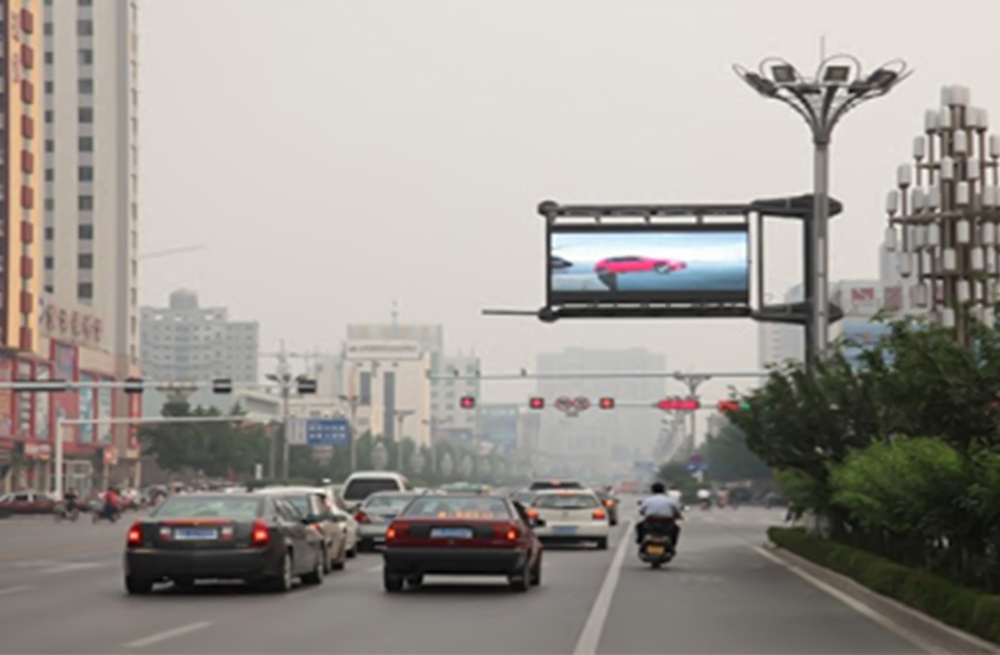
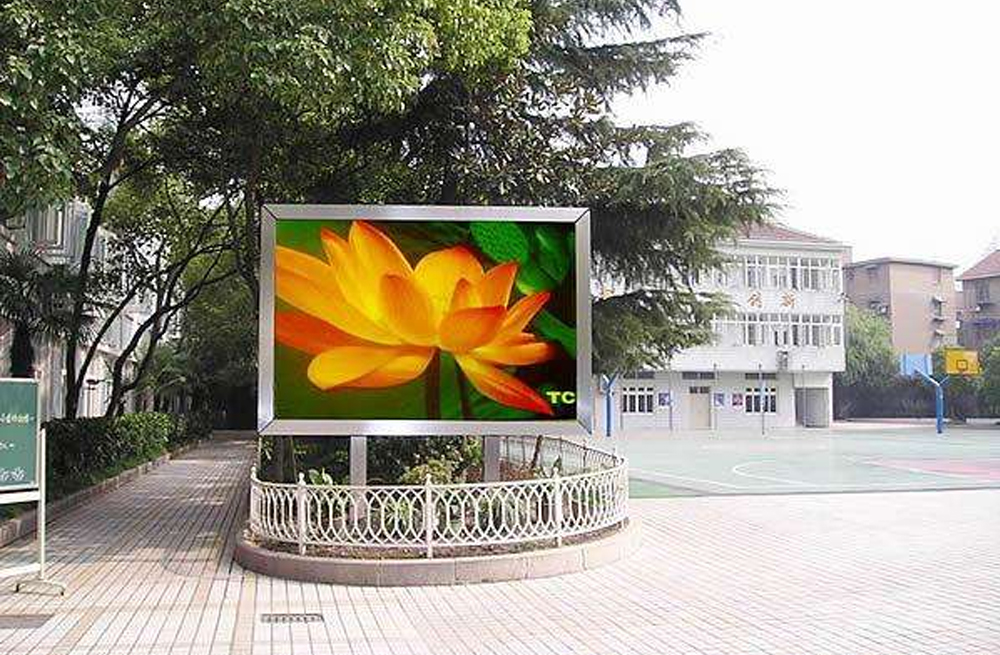
Direct view LED displays for airports are modular, high-brightness screens used for flight information, wayfinding, emergency communication, passenger entertainment and advertising. Unlike a conventional LCD video wall, a direct view LED screen can be built in a wide range of sizes and shapes without visible panel bezels, making it suitable for large terminals, baggage halls, check-in areas and outdoor transport zones.
What Are Direct View LED Displays for Airports?
A direct view LED display creates an image with individual light-emitting diodes mounted on modular cabinets. The modules join together to form one continuous display surface. Airports use this technology when they need a screen that is large, bright, flexible in shape and readable from a planned viewing distance.
An airport LED display is not limited to advertising. Connected to the appropriate content management, video processing and airport information systems, it can show flight status, gate directions, security notices, emergency instructions, live video, branded campaigns or a scheduled mix of content. The final system design should match the operational importance of each message.
Where Are LED Screens Used in Airports?
| Airport location | Typical content | Design priority |
|---|---|---|
| Check-in hall | Airline branding, counter zones, queue guidance and flight information | Long sightlines, clear text and flexible layouts |
| Security and immigration queues | Instructions, wait-time guidance, prohibited-item reminders and destination content | Legibility, calm pacing and multilingual messaging |
| Departure concourse and gates | Gate changes, boarding calls, wayfinding, retail promotions and news | Fast updates and high information accuracy |
| Baggage claim | Belt assignments, passenger notices, local transport and hospitality advertising | Wide viewing angles and continuous operation |
| Arrivals hall | Welcome messages, ground transport, hotel information and brand campaigns | High visual impact without obstructing circulation |
| Outdoor curbside or car park | Traffic directions, pickup zones, safety alerts and large-format advertising | Weather protection, brightness control and structural engineering |
Benefits of Airport LED Displays
1. Clear information at a distance
Large-format LED screens help passengers see essential messages before they reach a decision point. Text size, contrast and viewing distance matter more than visual effects. When the content hierarchy is well planned, passengers can identify the flight, gate, direction or action they need within seconds.
2. One screen for multiple communication needs
A single airport LED screen can switch between operational notices, wayfinding, emergency messages and commercial campaigns according to a schedule or system trigger. This gives airport teams more flexibility than fixed signs while reducing the need to replace printed material.
3. Better use of high-traffic spaces
Check-in halls, security queues and baggage claim areas naturally hold passenger attention. Relevant destination information, news and branded content can make waiting areas more useful, while well-timed advertising creates a commercial opportunity for the airport and its media partners.
4. Flexible size and shape
Modular LED cabinets can form wide ribbons, columns, curved surfaces and large architectural displays. This allows integrators to fit the display to the building rather than forcing the building design around a fixed television format.
5. Centralized, fast content updates
With a suitable control platform, authorized teams can update content across one screen or a network of displays. For operational use, define approval roles, content priorities and an emergency override process before the system goes live.
Direct View LED vs. LCD Video Walls in Airports
| Consideration | Direct view LED | LCD video wall |
|---|---|---|
| Display seams | No visible bezel grid across the image | Panel bezels remain visible |
| Size and shape | Highly scalable and available in custom aspect ratios | Based on fixed panel dimensions |
| Best viewing range | Depends on pixel pitch; well suited to medium and long viewing distances | Often suitable for close viewing and text-heavy small formats |
| Brightness | Broad range for indoor, window-facing and outdoor locations | Typically suited to controlled indoor lighting |
| Maintenance | Individual modules and components can be serviced | A failed panel may require panel-level replacement and color matching |
| Initial planning | Requires careful selection of pixel pitch, cabinet, controller and service access | Requires bezel, mount, signal distribution and panel alignment planning |
The better choice depends on viewing distance, content detail, ambient light, available space, maintenance access and budget. A close-range gate information screen and a large arrivals-hall media wall may require different technologies.
How to Choose an Airport LED Display
Start with viewing distance and content
Pixel pitch is the center-to-center distance between adjacent pixels. A finer pitch supports detailed text and closer viewing but generally increases system cost and power density. Define the closest normal viewing position, the smallest required text and the content resolution before selecting a pitch.
Match brightness to the environment
An indoor screen away from windows needs different brightness than a sunlit atrium or outdoor curbside display. Excessive brightness can be uncomfortable and waste energy, so specify automatic brightness adjustment where lighting changes throughout the day.
Plan for reliability and redundancy
Airport communication can be operationally important. Ask how the design handles a failed power supply, receiving card, signal path or control computer. Critical applications may need redundant power, backup signal routes and monitoring that alerts staff before a small fault becomes a visible outage.
Choose the correct service method
Front-service access is useful when the display is mounted against a wall. Rear-service cabinets may be appropriate when a dedicated maintenance corridor is available. Confirm how technicians will safely reach modules, power supplies, cables and control hardware without disrupting passenger flow.
Specify the complete signal chain
The display is only one part of the system. Confirm the source resolution, number of inputs, image scaling, switching, synchronization and distance between the control room and screen. The correct LED video processor, sending device and receiving cards help deliver stable, correctly mapped content.
Account for indoor and outdoor conditions
For outdoor or semi-outdoor installations, evaluate enclosure protection, temperature range, ventilation, corrosion resistance and structural wind loading. Browse the site’s outdoor LED display screens as a starting point, then confirm the specification for the exact airport environment.
Verify safety and local requirements
Airport projects may be subject to electrical, fire, structural, electromagnetic compatibility and accessibility requirements. The airport, consultant and local authority should define the applicable standards. Product certification alone does not replace project-level approval.
Airport LED Screen Content and Placement Best Practices
- Prioritize essential information. Keep flight, gate, direction and emergency messages visually separate from advertising.
- Design for real viewing conditions. Test text size, contrast and dwell time from the passenger’s actual position, including from a moving walkway or queue.
- Use concise multilingual messages. Prefer familiar symbols and short phrases, and have translations reviewed by fluent speakers.
- Avoid visual overload. Fast animation and dense layouts can compete with navigation signs and reduce comprehension.
- Protect emergency communication. Define who can trigger an override, what content is shown and how normal programming resumes.
- Measure performance. For advertising, track campaign delivery and screen uptime. For wayfinding, review passenger questions, missed turns and congestion around decision points.
Airport LED Display Buyer Checklist
Before requesting a quotation, prepare the following information:
- Installation location and whether it is indoor, semi-outdoor or outdoor
- Available width, height, depth and structural mounting points
- Closest and typical viewing distances
- Required content, aspect ratio and input resolution
- Ambient light conditions and operating hours
- Front or rear maintenance access
- Required redundancy, monitoring and spare parts
- Connection distance between sources, controller and display
- Applicable safety, electrical and construction standards
- Installation schedule, commissioning plan and operator training needs
Providing these details helps a supplier recommend a suitable cabinet, pixel pitch, brightness level and control system instead of quoting only by screen area.
Frequently Asked Questions
What is a direct view LED display?
A direct view LED display forms the image directly from LED pixels on modular panels. It does not use a separate LCD layer or projector. Multiple modules combine to create a large display in a chosen size and aspect ratio.
What is the best pixel pitch for an airport LED screen?
There is no single best pitch. The correct choice depends on the nearest viewing distance, smallest text, screen size and budget. Close-range passenger information generally needs a finer pitch than a large advertising screen viewed across a terminal.
Can an airport LED display show flight information and advertising?
Yes. The content system can divide the screen into zones or schedule different content. Operational information should have defined priority, accurate data integration and an emergency override process.
Can LED screens be used outdoors at airports?
Yes, when the display and structure are designed for the site. Outdoor airport screens require suitable weather protection, brightness management, thermal design, corrosion resistance and structural calculations.
How long does an airport LED display last?
Service life depends on component quality, operating hours, brightness settings, temperature, ventilation, maintenance and power quality. Compare warranties and service support, but also ask how modules, power supplies and control parts will be replaced over the project’s life.
What information does a supplier need to quote an airport LED screen?
A supplier typically needs screen dimensions, installation location, viewing distance, content type, ambient light, service access, operating hours, input sources, control-room distance and any redundancy or compliance requirements.
Plan Your Airport LED Display Project
A successful airport LED display balances visual impact with operational clarity, reliability and maintainability. Begin with the passenger task and viewing conditions, then select the screen and control architecture around those requirements.
LedControllerCard.com supplies LED display components and systems, including video processors, LED sending boxes and display solutions. Contact our team with your dimensions, viewing distance, installation environment and content requirements for a project-specific recommendation.