Quick answer: SMD LED displays combine red, green, and blue diodes in one compact package. This design supports fine pixel pitches, wide viewing angles, smooth color blending, lightweight modules, and flexible indoor or outdoor installation. For most close-to-medium viewing applications, SMD offers an effective balance of image quality, cost, and serviceability.
What Is an SMD LED Display?
SMD stands for surface-mounted device. In an SMD LED display, the red, green, and blue LED chips are packaged together and mounted directly onto the printed circuit board. Each package acts as one full-color pixel, while the control system adjusts the intensity of the three colors to create the final image.
This compact construction is why SMD technology is widely used for indoor LED displays, retail video walls, meeting-room screens, rental stages, broadcast backgrounds, transportation displays, and many modern outdoor signs.
11 Key Advantages of SMD LED Displays
1. Fine Pixel Pitch for Close Viewing
The small LED package allows manufacturers to place pixels closer together. A finer pixel pitch produces more image detail at a short viewing distance, making SMD a strong choice for showrooms, control rooms, conference spaces, shopping malls, and other locations where people stand near the screen.
2. Wide Viewing Angles
SMD packages distribute light broadly across the front of the module. Viewers can therefore see consistent content from wider horizontal and vertical angles. This matters in airports, railway stations, stores, and event venues where the audience is not always directly in front of the display.
3. Smooth Color Mixing
Because the three primary colors sit in one compact package, SMD pixels blend colors smoothly. With correct calibration, the screen can reproduce natural gradients, accurate brand colors, readable graphics, and detailed video without obvious separation between red, green, and blue points.
4. High Image Uniformity
A well-manufactured and calibrated SMD screen can maintain consistent brightness and color across modules. Uniformity is especially important for large video walls, where visible lines or color differences between cabinets would distract from the content.
5. Good Brightness Control
SMD LED displays support adjustable brightness through the controller and receiving-card system. Operators can lower brightness for comfortable indoor viewing or increase it for brighter environments. Automatic brightness sensors can also help a display respond to changing ambient light.
6. Lightweight, Slim Modules
Compact components enable thinner and lighter display modules than many older display designs. Lower weight can simplify wall mounting, rental handling, transportation, and structural planning. The exact weight still depends on cabinet material, power supplies, protection level, and screen size.
7. Flexible Screen Sizes and Shapes
SMD modules can be assembled into many cabinet sizes and aspect ratios. They are suitable for standard 16:9 video walls, long information banners, stage backdrops, columns, and some curved installations. A modular design also makes it easier to expand or reconfigure a system.
8. Energy-Efficient Light Production
LEDs produce light efficiently and allow individual pixel-level control. Actual power consumption depends on brightness, content, pixel pitch, driver IC, power supply efficiency, and operating schedule. For background on LED efficiency, see the U.S. Department of Energy’s LED lighting overview.
9. Fast Refresh for Video and Cameras
When paired with suitable driver ICs and controller settings, SMD displays can provide high refresh rates and smooth motion. This reduces visible scan lines or flicker in camera footage, which is important for broadcast studios, livestreams, concerts, and corporate events.
10. Straightforward Module-Level Maintenance
Most LED cabinets use replaceable modules, receiving cards, power supplies, and cables. A technician can often service the affected section instead of replacing the entire display. Front-service cabinets are useful where rear access is limited, while rear-service designs may be preferable for permanent structures with maintenance space.
11. Broad Indoor and Outdoor Availability
SMD is not limited to indoor screens. Outdoor SMD products use higher brightness and weather-resistant cabinet designs for advertising, sports, building facades, and public information. Outdoor suitability depends on the complete product specification, including ingress protection, cooling, brightness, and operating temperature, not on the LED package alone.
SMD vs. DIP vs. COB LED Displays
| Technology | Typical Strength | Best-Fit Applications | Important Consideration |
|---|---|---|---|
| SMD | Fine pitch, wide viewing angle, balanced cost and image quality | Indoor video walls, rental stages, retail, control rooms, many outdoor signs | Choose the correct brightness and protection level for the environment |
| DIP | High outdoor brightness and robust individual lamps | Long-distance outdoor signage and some stadium applications | Larger lamp structure generally limits very fine pixel pitches |
| COB | Very fine pitch and strong surface protection | Premium close-view displays and high-end meeting rooms | Module replacement method, repair process, and price differ from SMD |
No technology is automatically best for every project. Viewing distance, ambient light, camera use, maintenance access, installation environment, budget, and content type should drive the decision.
Where SMD LED Screens Work Best
- Retail and shopping malls: product campaigns, promotions, wayfinding, and brand storytelling.
- Corporate and conference spaces: presentations, dashboards, hybrid meetings, and reception walls.
- Control rooms: detailed data, maps, status feeds, and multi-source monitoring.
- Transportation hubs: schedules, directions, safety messages, and advertising.
- Events and rental stages: video backdrops, live camera feeds, and sponsor content.
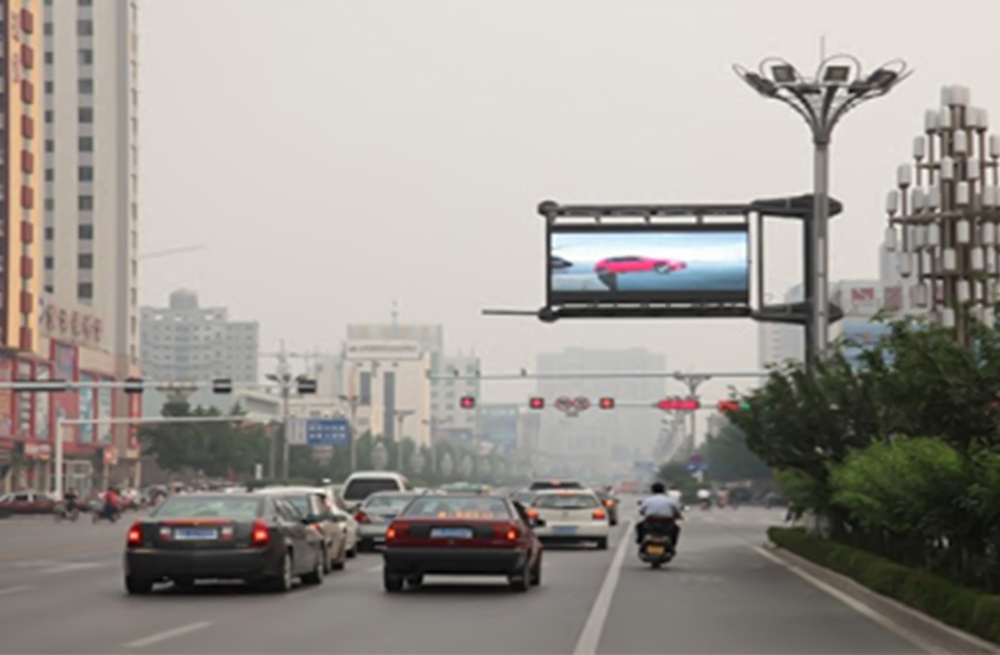
- Outdoor advertising: large-format campaigns where brightness and weather protection are correctly specified.
- Sports venues: scoreboards, replay screens, ribbon displays, and stadium perimeter LED displays.
How to Choose the Right SMD LED Display
- Start with viewing distance. A closer audience generally needs a finer pixel pitch. Do not choose pitch from screen size alone.
- Measure ambient light. An indoor lobby, a shop window, and an outdoor facade require very different brightness levels.
- Confirm indoor or outdoor protection. For outdoor use, review the complete cabinet’s ingress rating, corrosion resistance, heat management, and operating range.
- Check refresh rate and grayscale. Camera-facing applications need suitable driver hardware and configuration, not just a high headline specification.
- Plan maintenance access. Decide between front and rear service before finalizing the mounting structure.
- Match the control system. Resolution, input sources, redundancy, scaling, and remote management determine which LED video processor and receiving cards are appropriate.
- Evaluate total cost. Include cabinets, controllers, power distribution, spare modules, structure, installation, calibration, training, shipping, and long-term service.
Limitations to Consider
SMD displays also involve tradeoffs. Very fine-pitch products can cost more and require careful handling. Outdoor performance depends on the cabinet and protective design, so an indoor module should never be assumed to be waterproof. Image quality can vary between production batches, making spare-module planning and factory calibration important. Power use and heat also rise with brightness, screen area, and high-average-picture-level content.
Ask suppliers for project-specific specifications and test conditions. Terms such as “high brightness,” “high refresh,” or “wide color gamut” are only useful when supported by measurable values for the proposed configuration.
Frequently Asked Questions
Is an SMD LED display suitable for outdoor use?
Yes, if the complete display is designed and rated for outdoor installation. Confirm brightness, cabinet sealing, drainage, corrosion protection, cooling, and operating temperature. The SMD package by itself does not make a screen weatherproof.
What is the main benefit of SMD compared with DIP?
SMD generally supports finer pixel pitches, wider viewing angles, and smoother color blending. DIP remains useful for some high-brightness, long-distance outdoor applications.
How long does an SMD LED display last?
Service life depends on component quality, brightness settings, temperature, ventilation, power quality, operating hours, and maintenance. Compare suppliers using the same test conditions and ask about warranty coverage, spare parts, and repair support rather than relying on one lifetime figure.
Does a smaller pixel pitch always mean a better screen?
No. A smaller pitch increases pixel density, but it may add cost and power density without a visible benefit at a long viewing distance. The best pitch is the one that meets the real viewing distance and content requirements.
Can an SMD LED display be repaired?
Yes. Modular systems normally allow technicians to replace an LED module or service a receiving card, power supply, hub board, or cable. Repair procedures vary, so confirm front or rear access and the availability of matching spare modules.
Final Recommendation
SMD LED displays are a versatile choice when a project needs detailed images, wide viewing angles, flexible sizing, and serviceable modules. The best result comes from matching pixel pitch, brightness, refresh rate, protection, control hardware, and maintenance design to the actual site rather than selecting a screen by price or pitch alone.
EagerLED supplies LED display solutions and compatible control equipment for indoor, outdoor, rental, and fixed-installation projects. Contact our team with your screen dimensions, viewing distance, installation environment, input sources, and maintenance requirements for a configuration recommendation.