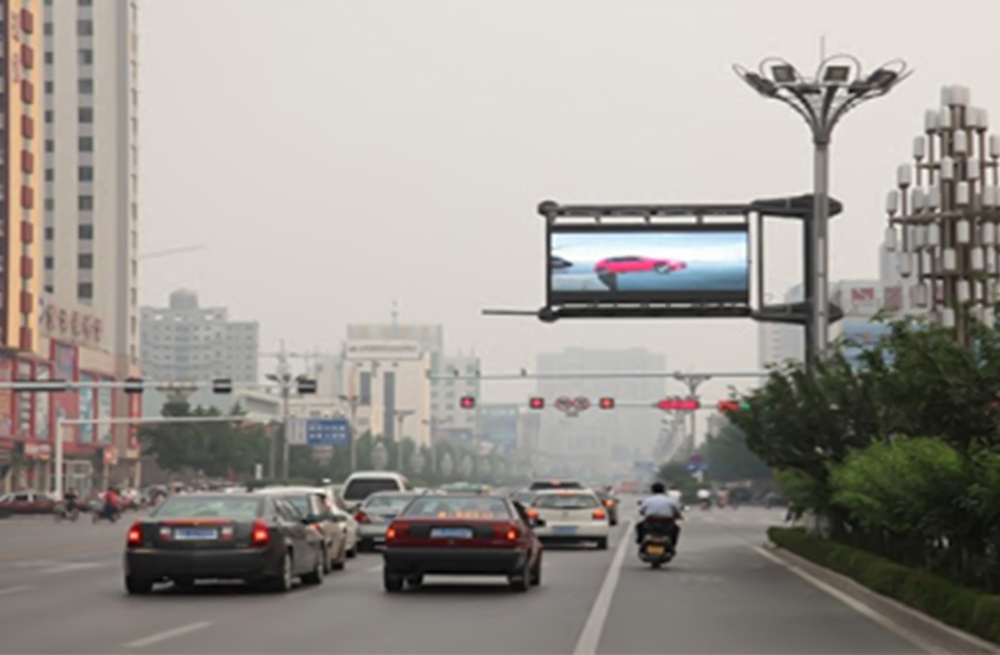
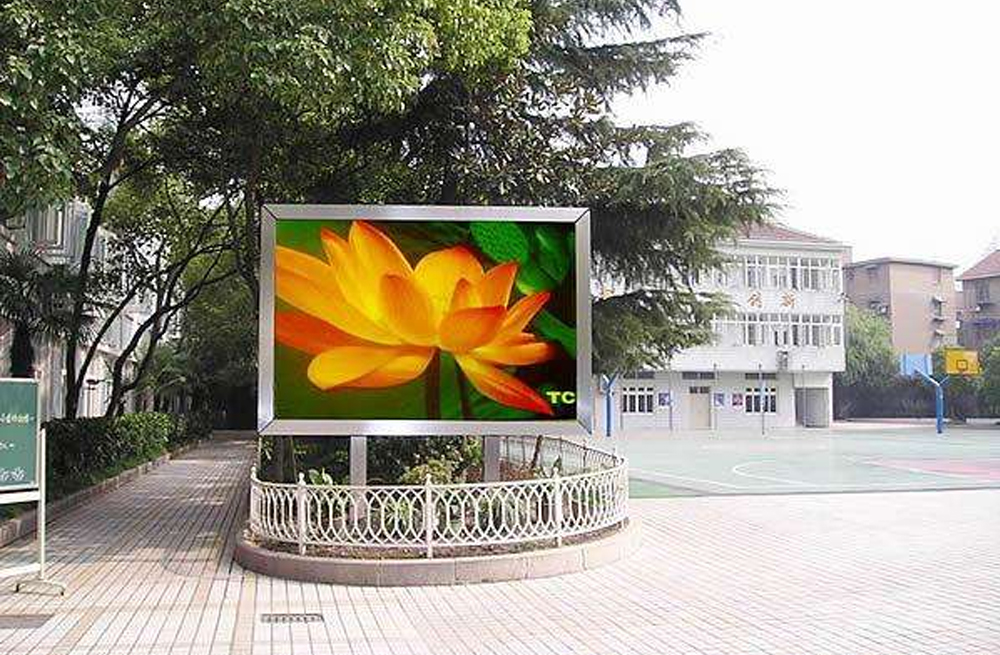
Quick answer: An LED display for advertising is a modular digital screen that shows scheduled or live promotional content in indoor or outdoor locations. Compared with printed signs, it lets a business change campaigns without replacing the physical display. The right system depends on viewing distance, pixel pitch, brightness, weather protection, screen size, content control, installation conditions, and long-term service access.
LED advertising display at a glance
- Best for: high-visibility campaigns, retail promotions, events, transport hubs, building facades, roadside media, and information displays.
- Main advantage: one screen can run multiple messages, video, animation, pricing, directions, or emergency information.
- Key buying factors: indoor or outdoor use, viewing distance, pixel pitch, brightness, resolution, refresh rate, protection rating, controller, power, and maintenance method.
- Total cost: includes the LED screen, control system, structure, installation, power distribution, content production, connectivity, and maintenance.
What is an LED display for advertising?
An LED advertising display uses light-emitting diode modules to create a large digital image. Cabinets or panels are assembled into the required size, while a controller and media player send images, video, text, or live data to the screen. Because the display is modular, it can be configured for storefronts, stages, shopping centers, stadiums, transport facilities, and outdoor billboards.
The term is often used alongside digital billboard, LED video wall, digital signage, and digital out-of-home advertising. These terms overlap, but the installation environment matters: an outdoor advertising screen normally needs higher brightness, stronger weather protection, and a structure designed for wind and local building requirements.
Why businesses use LED displays for advertising
1. High visibility in bright and busy environments
LED screens produce self-emitting light, so content can remain visible across a large area and in conditions where a passive printed sign may be easier to overlook. Motion, color, contrast, and scheduled creative can help a message stand out, provided the content is simple enough to understand at the expected viewing speed.
2. Fast campaign updates
A networked screen can be updated from a control computer or cloud-connected media player. A retailer can change prices, a venue can switch sponsors between sessions, and an operator can schedule different messages by time or location. Remote control reduces the need to print, transport, and install new artwork for every campaign.
3. Reusable media space
The same display can present several campaigns in sequence. This makes the screen a reusable communication asset rather than a single-message sign. The financial benefit depends on utilization, content quality, energy use, maintenance, and how much value the location delivers.
4. Flexible size and shape
Modular LED cabinets can form many standard and custom layouts. A wide roadside board, a tall retail column, a curved stage background, and a compact storefront display have different engineering needs, but they can use the same basic LED display architecture.
5. Useful beyond paid advertising
The screen can also show wayfinding, opening hours, public information, event schedules, safety messages, social media content, and live data. This flexibility is especially useful for venues that need both commercial and operational communication.
Common applications
- Roadside and building advertising: large-format campaigns designed for long viewing distances and short exposure times.
- Retail stores and shopping centers: product launches, promotions, branded video, menus, and directional content.
- Events and exhibitions: sponsor messages, stage backgrounds, schedules, live video, and audience information.
- Transport hubs: advertising combined with arrival, departure, gate, or service information.
- Sports venues: perimeter displays, scoreboards, replays, sponsor rotations, and crowd prompts.
- Corporate and public spaces: welcome screens, announcements, dashboards, and community information.
How to choose the right LED advertising screen
Indoor or outdoor installation
Start with the environment. Outdoor displays need suitable weather protection, brightness, cooling, and structural engineering. Indoor displays usually operate at lower brightness and may use a finer pixel pitch because viewers stand closer. Semi-outdoor locations such as windows or covered entrances still require careful assessment of sunlight, temperature, moisture, and reflections.
Viewing distance and pixel pitch
Pixel pitch is the center-to-center distance between adjacent pixels, measured in millimeters. A smaller pitch can produce a finer image at close range, while a larger pitch may be appropriate when the audience is farther away. Choose the pitch from the real viewing distance and content type, not from resolution alone. Text-heavy retail content generally needs finer detail than a large logo viewed from across a road.
Brightness and automatic adjustment
Brightness must match ambient light. A screen facing direct sunlight needs a different specification from a screen inside a controlled retail space. Excessive brightness can waste energy and make night viewing uncomfortable. A light sensor and automatic brightness schedule can improve readability while reducing unnecessary output.
Screen dimensions, resolution, and aspect ratio
Define the available area and the content format together. A 16:9 screen is convenient for standard video, but a storefront banner or building facade may require a custom ratio. Confirm the final pixel resolution before producing content so that text and graphics render without stretching or avoidable scaling.
Control system and connectivity
The control system determines how content reaches the display. A synchronous system is commonly used for live video and event production, while an asynchronous player can store and schedule content for unattended signage. Match the controller to the screen resolution, input sources, backup needs, remote access policy, and network availability. Browse our asynchronous LED control cards and LED video processors when planning the signal path.
Service access and spare parts
Ask whether modules, power supplies, receiving cards, and cables can be serviced from the front or rear. Confirm access space, replacement procedure, spare-part availability, and response time. A display that is difficult to reach can cost more to maintain even if its initial price is lower.
Safety, structure, and local rules
A qualified installer should evaluate mounting strength, wind load, grounding, power distribution, ventilation, fire safety, waterproofing, and safe access. Outdoor advertising may also require permits or limits on brightness, animation, operating hours, or placement. Requirements vary by location, so the owner and installer should verify the applicable rules before ordering.
LED advertising display cost: what should the budget include?
There is no reliable single price per screen because two displays with the same dimensions can have different pixel pitches, brightness levels, cabinet materials, controllers, and installation requirements. A useful quotation should separate the major cost elements:
- LED modules, cabinets, power supplies, receiving cards, and sending equipment
- Video processor or media player
- Mounting structure, waterproofing, cabling, and power distribution
- Freight, installation, testing, and commissioning
- Content design, software, connectivity, and remote management
- Energy consumption, routine inspection, cleaning, and replacement parts
Compare the total cost of ownership rather than the screen price alone. Warranty coverage, serviceability, spare modules, power efficiency, and supplier support can materially affect the long-term result.
Content tips for better advertising performance
- Design for viewing time. A driver or passerby may have only a few seconds, so lead with one message and one clear action.
- Use large, legible text. Keep copy short, maintain strong contrast, and test it at the intended distance.
- Match content to the screen ratio. Build artwork at the display’s native resolution to avoid distortion and unreadable details.
- Create a schedule. Change messages by time, location, inventory, event, or audience context when that information is available and appropriate.
- Measure business outcomes. Use campaign-specific landing pages, QR codes where safe to scan, offer codes, footfall data, or sales records to evaluate performance.
- Maintain visual comfort. Avoid rapid flashing, excessive motion, and brightness that is unsuitable for the environment.
LED display vs. LCD, projector, and printed signage
| Option | Best suited to | Main consideration |
|---|---|---|
| LED display | Large, bright, scalable indoor or outdoor installations | Requires correct pitch, brightness, structure, control, and maintenance planning |
| LCD video wall | Close-view indoor environments | Panel seams and limited outdoor suitability may affect the application |
| Projector | Controlled-light venues and temporary presentations | Ambient light and projection distance influence image visibility |
| Printed sign | Static messages and low-complexity installations | Every content change requires new physical artwork |
Frequently asked questions
Is an LED display good for advertising?
Yes, when the location, screen specification, and content match the audience. LED is especially effective where high visibility, frequent message changes, large scale, or scheduled content is valuable. It is less suitable when a simple static sign already meets the communication goal.
What pixel pitch is best for an advertising LED screen?
The best pixel pitch depends mainly on the closest normal viewing distance, screen size, and required detail. Close-view indoor advertising generally needs a finer pitch than a large outdoor screen viewed from far away. Ask the supplier to demonstrate the proposed pitch at the real viewing distance before purchase.
Can an outdoor LED display work in direct sunlight?
Yes, if it is designed with suitable brightness, contrast, heat management, weather protection, and automatic brightness control. The exact specification should be based on screen orientation and local daylight conditions.
Can advertising content be updated remotely?
Yes. A compatible media player or control system can publish and schedule content over a wired, Wi-Fi, or cellular connection. Remote access should be protected with strong credentials, limited user permissions, and a documented approval process.
How long does an LED advertising display last?
Service life varies with component quality, operating hours, brightness, temperature, ventilation, maintenance, and environment. Instead of relying only on a headline lifetime figure, compare warranty terms, expected brightness maintenance, spare-part availability, and the replacement process.
What information is needed for an accurate quotation?
Provide the installation location, indoor or outdoor environment, screen dimensions, viewing distance, desired content, mounting method, front or rear service access, power supply, signal source, and project schedule. Photos or drawings of the site make the recommendation more reliable.
Plan your LED display for advertising
A successful project begins with the audience and location, then works backward to pixel pitch, brightness, size, control, structure, and service access. Review our outdoor LED display screens, or contact EagerLED with your viewing distance, screen dimensions, environment, and content requirements for a project-specific recommendation.