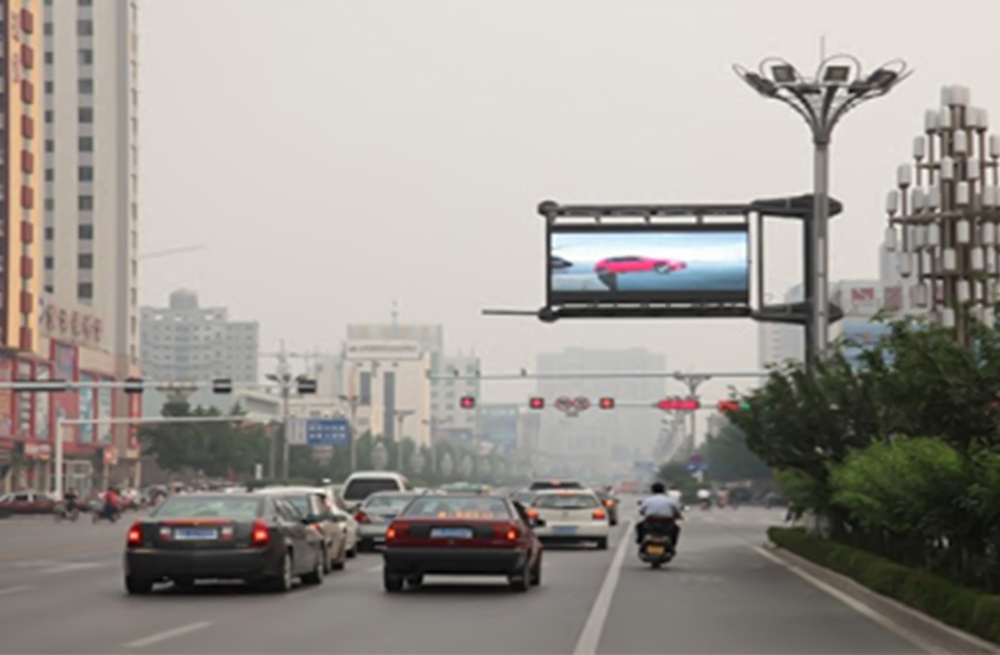
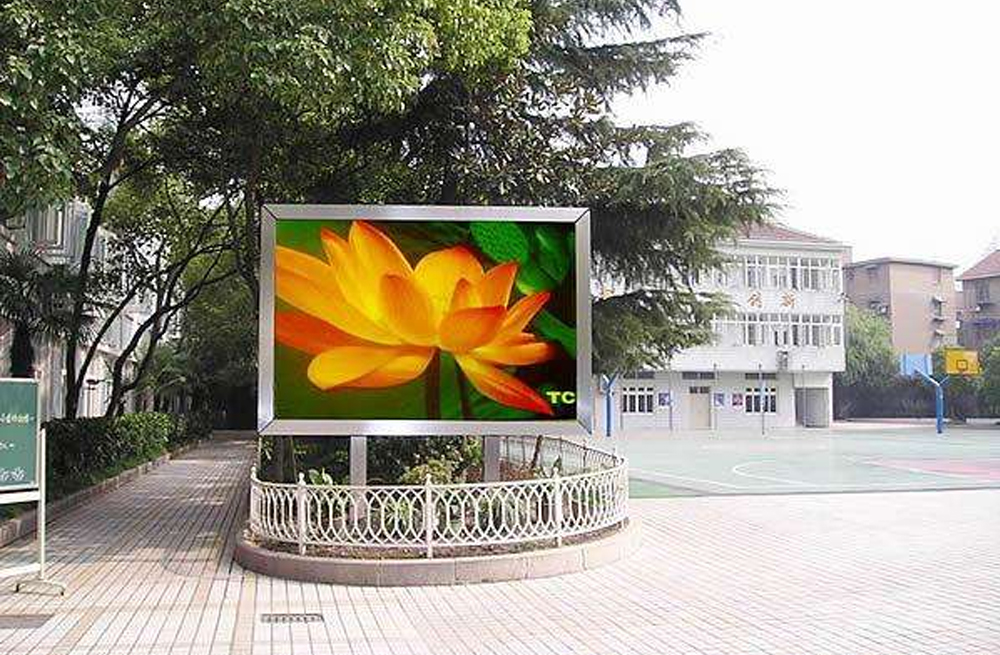
An outdoor LED advertising screen is a weather-resistant digital display built to present video, images, promotions, and public information in open-air locations. The right screen is not simply the brightest or the largest. It must match the viewing distance, ambient light, installation structure, service access, content system, and operating budget.
This guide explains how to compare an outdoor LED advertising screen, which specifications matter, and what to confirm before requesting a quotation.
Outdoor LED advertising screen: quick selection guide
| Decision factor | What to evaluate | Why it matters |
|---|---|---|
| Viewing distance | Closest and typical audience distance | Determines a practical pixel-pitch range and image detail |
| Ambient light | Direct sun, shade, operating hours, and screen direction | Controls the brightness and contrast required for readable content |
| Weather exposure | Rain, dust, humidity, heat, cold, salt air, and wind | Influences the enclosure rating, cooling, coating, and structure |
| Content type | Large text, product images, live video, or detailed graphics | Affects resolution, refresh rate, processing, and media-player needs |
| Maintenance access | Front service, rear service, or both | Changes cabinet choice, wall clearance, and long-term labor cost |
| Installation | Wall, pole, rooftop, billboard, facade, or freestanding structure | Determines cabinet weight, mounting design, permits, and wind-load review |
What is an outdoor LED display for advertising?
An outdoor advertising LED display uses modular LED cabinets to create a scalable video wall. Each cabinet contains LED modules, power supplies, receiving cards, wiring, and structural hardware. A sending device or media player delivers content to the screen, while a video processor can scale and switch sources.
Unlike a printed billboard, an LED display can schedule multiple campaigns, update messages remotely, play motion content, and adapt creative material by time of day. Typical applications include retail storefronts, shopping centers, roadside billboards, stadiums, transport hubs, event venues, and public-information displays.
How to choose the best outdoor LED advertising screen
1. Start with viewing distance and pixel pitch
Pixel pitch is the center-to-center distance between neighboring pixels, measured in millimeters. A smaller pitch can show finer detail at close range, but it normally increases the number of LEDs and the project cost. A larger pitch is often sufficient when viewers are farther away.
- P4 to P6: often considered for closer-view retail facades and street-level signs.
- P6 to P8: commonly used for medium-distance commercial displays.
- P8 to P10: often suitable for long-distance roadside and large-format advertising.
These are starting points, not fixed rules. Screen dimensions, content detail, audience speed, and the closest viewing position should all be reviewed before choosing a pitch.
2. Specify brightness for the actual location
Outdoor screens must remain legible against daylight. Many daylight-facing projects begin around 5,000 nits or above, while shaded sites may need less. More brightness is not always better: excessive output wastes energy and can reduce nighttime viewing comfort. Ask for automatic brightness control so the display can respond to changing light conditions.
3. Match weather protection to the environment
Confirm the protection rating for both the front and rear of the cabinet rather than relying on the word “outdoor.” Many projects specify an IP65-class front enclosure, but the correct rating depends on exposure and local codes. Also review corrosion resistance, drainage, ventilation, operating-temperature limits, conformal coating, and protection against humidity or salt air where applicable.
4. Check refresh rate, grayscale, and image processing
Refresh rate is especially important when the screen will be photographed, filmed, or used for live events. Grayscale performance and calibration affect smooth gradients and consistent color across modules. For camera-facing applications, request a camera test using the intended frame rates rather than comparing a single headline specification.
5. Plan front or rear maintenance
Front-service cabinets allow modules and key components to be accessed from the display face, which is useful when the screen is mounted directly to a wall. Rear-service cabinets can simplify work where a protected service corridor is available. Decide this before structural design, because access space and cabinet depth affect the complete installation.
6. Design the control and power system as one solution
Screen stability depends on compatible components. The solution may include an LED video processor, LED receiving cards, asynchronous LED control card, LED power supplies, and an LED sending box.
Ask the supplier to document signal redundancy, power distribution, grounding, surge protection, network requirements, maximum cable runs, and spare-parts recommendations. These details matter as much as the LED modules themselves.
Indoor vs. outdoor LED advertising screens
| Feature | Indoor display | Outdoor display |
|---|---|---|
| Brightness | Designed for controlled interior lighting | Designed for daylight and changing ambient light |
| Protection | Limited exposure to water and dust | Weather-resistant cabinets and protected connections |
| Pixel pitch | Often smaller for close viewing | Selected for distance, screen size, and site conditions |
| Structure | Usually lighter-duty mounting | Requires wind-load, drainage, access, and environmental planning |
| Power and cooling | Stable indoor environment | Must account for solar heat, temperature swings, and weather |
What determines outdoor LED advertising screen cost?
The display price is only one part of the project. A realistic budget should include:
- Pixel pitch, total screen area, cabinet material, and LED configuration
- Control system, video processor, media player, sensors, and redundancy
- Mounting structure, engineering review, labor, lifting equipment, and permits
- Power distribution, data cabling, surge protection, and network connectivity
- Shipping, customs, commissioning, calibration, training, and spare modules
- Ongoing electricity, cleaning, preventive maintenance, and replacement parts
Compare quotations using the same screen size, pitch, brightness, cabinet type, control system, warranty terms, and included services. A lower hardware price can become more expensive if engineering, spares, commissioning, or maintenance access is excluded.
Questions to ask an outdoor LED screen supplier
- Which pixel pitch is recommended for our closest and typical viewing distance?
- What calibrated brightness can the complete screen sustain?
- What are the front and rear IP ratings?
- What are the maximum and average power consumption figures?
- How will the screen be serviced after installation?
- Which controller, receiving card, processor, and media player are included?
- Are spare modules, power supplies, receiving cards, and cables included?
- How are wind load, ventilation, drainage, grounding, and surge protection handled?
- What calibration, commissioning, training, and remote support are provided?
- Which warranty exclusions and response times apply to this project?
Why source the screen and control parts together?
Coordinating the LED display and its control hardware reduces compatibility risks and makes troubleshooting clearer. LEDControllerCard supplies outdoor display solutions as well as major system components, including controllers, receiving cards, processors, sending boxes, power supplies, modules, and related parts. Project requirements still vary, so the configuration should be confirmed against the site survey and content plan.
For a tailored recommendation, send the screen width and height, installation location, viewing distance, photos or drawings of the site, preferred service method, content sources, and expected operating hours through the contact page.
Frequently asked questions
What is the best outdoor LED screen for advertising?
The best screen is the one matched to the site. Choose pixel pitch from viewing distance and content detail, brightness from ambient light, weather protection from exposure, and cabinet access from the maintenance plan. There is no single model that is best for every location.
How bright should an outdoor advertising LED display be?
A daylight-facing display often starts around 5,000 nits or more, but shade, screen direction, climate, local regulations, and operating hours can change the requirement. Automatic brightness adjustment is recommended for visibility, energy control, and nighttime comfort.
What pixel pitch should I choose?
Use the closest viewing distance as the first filter, then consider screen size, content detail, and budget. Smaller pitches support closer viewing; larger pitches can be cost-effective for distant audiences. Confirm the final choice with a pixel-pitch simulation or sample viewing test.
Can an outdoor LED advertising screen run all day?
Many systems are designed for extended operation, but reliability depends on thermal design, power quality, scheduled brightness, environmental protection, and preventive maintenance. Define the expected daily operating hours before the system is specified.
What information is needed for an accurate quotation?
Provide the screen dimensions, installation type, location, viewing distance, screen direction, expected content, input sources, daily operating hours, access constraints, and photos or drawings. The supplier can then recommend a pitch, cabinet design, controller, power plan, and spare-parts package.
Next step
Browse the available outdoor LED display screens for advertising or contact LEDControllerCard with your project details for a configuration and quotation.