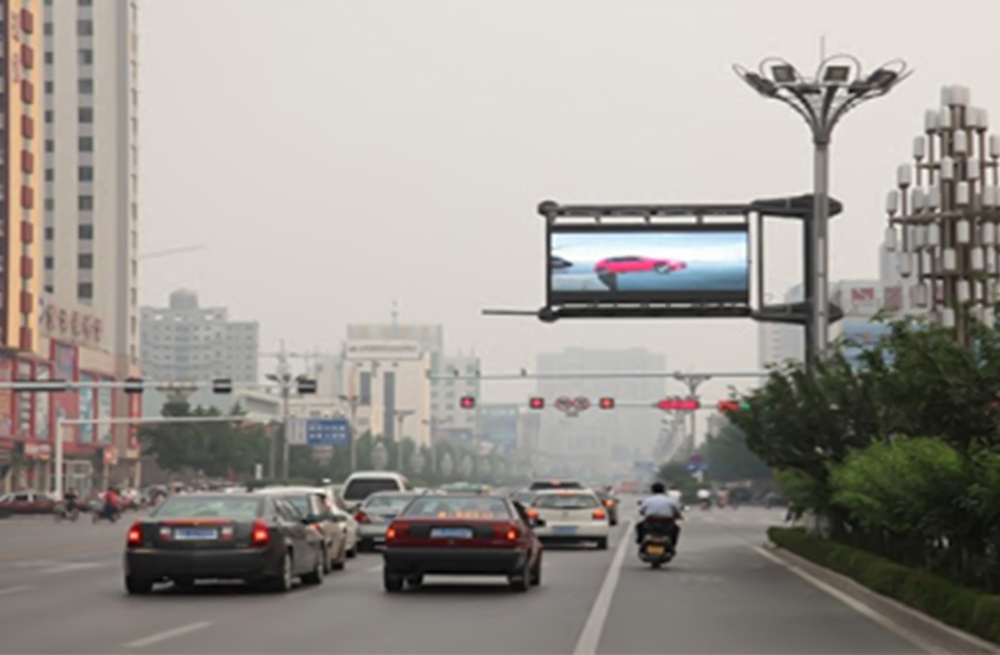
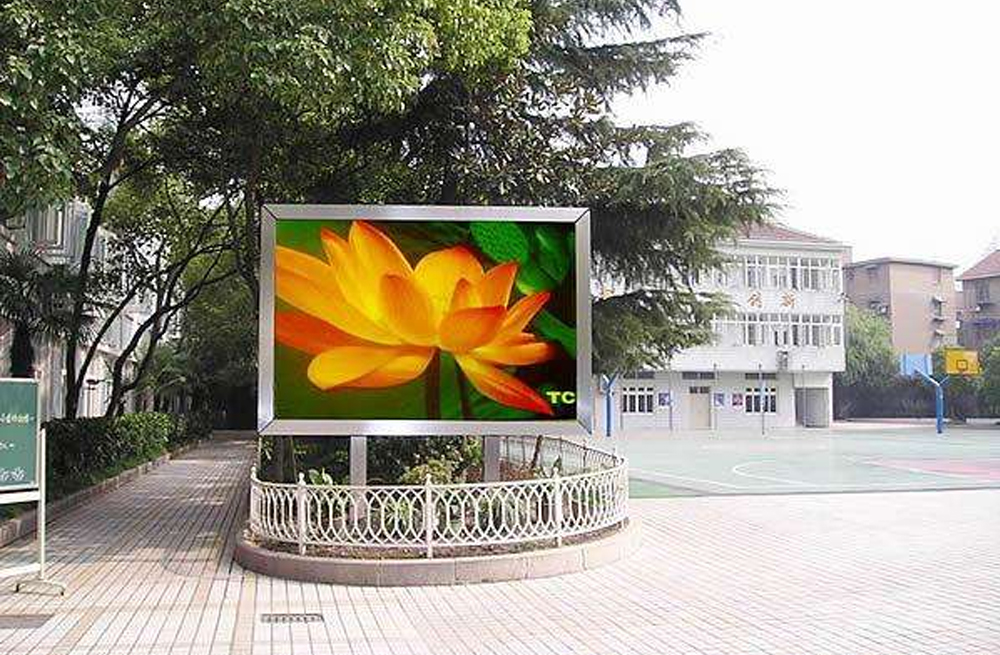
LED displays are mainly used to present bright, scalable, real-time visual information to large audiences. The most common LED display uses include digital advertising, stadium scoreboards, transportation information, live events, retail promotions, control rooms, corporate venues, education, houses of worship, and public wayfinding.
Unlike a conventional TV, a modular LED display can be built to many sizes and shapes. It can remain visible from a long distance, operate indoors or outdoors, and show text, images, live video, alerts, schedules, or data feeds. Those qualities make LED technology useful wherever information must be seen quickly and clearly. In practice, the best LED display uses are defined by audience size, viewing distance, ambient light, and the type of content shown.
What Is an Electronic LED Display?
An electronic LED display is a direct-view screen made from light-emitting diodes. Full-color models combine red, green, and blue LEDs to create images and video. The LEDs are mounted on modules, and multiple modules are assembled into cabinets or panels to form the complete screen.
Most modern displays use SMD or related LED packaging. Indoor screens typically prioritize a fine pixel pitch and close viewing, while outdoor LED display screens prioritize high brightness, weather protection, and long-distance visibility. The content is managed by a control system that may include a video processor, sending device, and receiving cards.
LED Display Uses: 9 Common Applications
| Application | Typical locations | Main priorities |
|---|---|---|
| Advertising and digital signage | Roadside billboards, building facades, shopping districts | Brightness, remote updates, viewing distance |
| Sports and entertainment | Stadiums, arenas, fan zones | Live video, score data, wide viewing angles |
| Transportation information | Airports, railway stations, bus terminals | Readability, reliability, real-time data |
| Traffic management | Highways, tunnels, parking facilities | Fast alerts, outdoor durability, legibility |
| Live events | Concerts, exhibitions, rental stages | Fast setup, camera compatibility, flexible sizing |
| Retail and hospitality | Stores, malls, hotels, restaurants | Fine pitch, color quality, scheduled content |
| Control rooms | Security centers, utilities, broadcast facilities | Continuous operation, detail, signal redundancy |
| Corporate and education | Auditoriums, meeting rooms, lecture halls | Close viewing, text clarity, simple operation |
| Public communication | Government buildings, schools, community spaces | Notices, emergency messages, accessibility |
1. Advertising and Digital Signage
Among commercial LED display uses, advertising is one of the best known. Large outdoor screens can deliver campaigns, promotions, public announcements, and branded video in locations where ordinary printed signs have limited impact. Because content can be scheduled and updated remotely, one screen can run different messages by time of day, audience, or event.
Indoor digital signage serves a similar purpose in shopping malls, retail stores, showrooms, hotels, and entertainment venues. Fine-pitch displays are often preferred when viewers stand close to the screen.
2. Stadiums and Sports Venues
Sports venues use LED displays for scores, game time, player information, instant replays, live camera feeds, sponsor messages, and crowd prompts. A stadium may combine a main video board with ribbon displays around seating areas and smaller information screens at entrances or concourses.
The important requirements are high brightness, wide viewing angles, smooth video, reliable data integration, and enough pixel resolution for the expected viewing distance.
3. Airports, Railway Stations, and Bus Terminals
Transportation hubs use LED screens in flight information display systems, departure boards, gate displays, platform signs, baggage areas, and passenger guidance systems. These screens may show arrival and departure times, delays, gate changes, safety notices, and emergency instructions.
In this application, readability and reliability matter more than visual effects. Information must remain clear from different angles and update immediately when operational data changes.
4. Road Traffic and Parking Guidance
For outdoor LED display uses, traffic communication is especially demanding. Road authorities use LED technology for variable message signs, speed warnings, lane-control signals, tunnel notices, travel-time information, and parking availability. These systems support intelligent transportation by communicating changing conditions to drivers. The U.S. Department of Transportation provides additional information about intelligent transportation systems.
Traffic displays require high contrast, controlled brightness, weather protection, and dependable operation. The letter height, pixel spacing, and sign location must be selected for the road speed and viewing distance.
5. Concerts, Conferences, and Rental Stages
Rental LED displays act as large visual canvases for concerts, trade shows, conferences, product launches, and festivals. They show camera feeds, presentation content, motion graphics, and sponsor branding. Modular cabinets allow production teams to build flat, curved, or creative screen layouts for each event.
For rental work, cabinet weight, fast-lock hardware, front or rear service access, refresh rate, and compatibility with cameras are key purchasing factors.
6. Retail, Hospitality, and Brand Experiences
Retailers use LED video walls for window displays, product launches, menu boards, seasonal promotions, and immersive brand environments. Hotels and restaurants use them for event schedules, welcome messages, menus, and entertainment.
A close-viewing installation generally needs a finer pixel pitch than an outdoor billboard. Brightness should also match the environment: excessive brightness indoors can reduce comfort and waste power.
7. Command, Security, and Control Rooms
Control rooms display maps, camera feeds, alarms, production data, and system dashboards. Direct-view LED walls are useful because they can form a large, nearly seamless canvas without the thick bezels found on tiled LCD walls.
These projects should consider 24/7 operation, calibration, redundancy, heat management, service access, and the ability of the LED video processor to handle all required sources and resolutions.
8. Corporate, Education, and Houses of Worship
Auditoriums, boardrooms, lecture halls, and worship spaces use LED displays for presentations, remote speakers, lyrics, announcements, and live video. The screen must render small text clearly and should integrate with the room’s cameras, audio-visual system, and content sources.
Pixel pitch should be chosen from the closest normal viewing position, not only from the room’s total size.
9. Public Information and Emergency Messaging
Schools, government facilities, hospitals, factories, and community venues use LED message boards for schedules, safety instructions, queue information, wayfinding, and emergency alerts. The screen can switch from routine content to urgent messaging when conditions change.
Why Choose an LED Display?
- Scalable size: Modules and cabinets can form screens much larger than standard televisions.
- High visibility: Outdoor systems can deliver enough brightness for daylight viewing.
- Flexible format: LED screens can be flat, curved, corner-mounted, transparent, or shaped for a specific installation.
- Real-time content: Control systems can receive video, schedules, sensor data, scores, and alerts.
- Serviceable design: Individual modules, power supplies, and control components can be replaced without discarding the entire display.
How to Choose the Right LED Display for an Application
Choosing among LED display uses requires a clear project brief. The best LED display is not simply the model with the smallest pixel pitch or highest brightness. It is the display that matches the environment, content, viewing distance, operating schedule, and maintenance plan.
| Selection factor | What to evaluate |
|---|---|
| Indoor or outdoor use | Ambient light, weather exposure, operating temperature, and required IP protection |
| Viewing distance | Closest and farthest viewers, text size, and desired image detail |
| Pixel pitch | Smaller pitch for close viewing; larger pitch may be economical for distant viewing |
| Brightness | Enough output for the environment without uncomfortable glare |
| Content and sources | Text, graphics, live video, cameras, data feeds, and required resolutions |
| Refresh rate | Camera use, live production, and visual smoothness |
| Installation and service | Wall structure, ventilation, cable access, and front or rear maintenance |
| Control and redundancy | Signal paths, backup power, spare parts, and remote monitoring |
What Components Make an LED Display Work?
A complete LED display system normally includes LED modules, cabinets or a supporting structure, power supplies, data cables, and a controller. Synchronous systems often use sending equipment and LED receiving cards to distribute image data across the screen. Standalone signs may use an asynchronous LED control card to store and play scheduled content without a permanently connected computer.
Power and signal design directly affect stability. Select an appropriate LED power supply, controller capacity, receiving-card load, and video processor for the screen’s total pixel count and operating conditions.
Frequently Asked Questions
What Are the Main LED Display Uses?
The main use of an LED display is to communicate visual information at a size and brightness that many people can see. The most valuable LED display uses are those matched to a clear audience and information need. Depending on the installation, that information may be advertising, live video, scores, transportation data, safety alerts, presentations, or entertainment.
Can LED displays be used both indoors and outdoors?
Yes. Indoor and outdoor LED displays use the same basic display principle, but their designs differ. Outdoor screens generally need higher brightness, weather protection, temperature tolerance, and robust cabinets. Indoor screens often use a finer pixel pitch for closer viewing.
What content can an LED display show?
An LED display can show text, images, animation, prerecorded video, live camera feeds, presentation sources, clocks, scores, dashboards, and real-time data. The available formats depend on the controller and media system.
What pixel pitch is best?
There is no single best pixel pitch. The correct choice depends mainly on the closest viewing distance, screen size, content detail, and budget. A finer pitch improves close-range detail but usually increases system cost and processing load.
Is an LED display better than an LCD video wall or projector?
It depends on the application. LED is often better for very large screens, bright environments, flexible shapes, and long viewing distances. LCD may be economical for smaller close-viewing walls, while projection can suit controlled-light spaces where a lightweight image surface is needed.
Summary
Across these LED display uses, the common purpose is clear communication. Electronic LED displays are used wherever people need clear, timely visual communication on a large or adaptable screen. Advertising, sports, transportation, events, retail, control rooms, corporate venues, and public information are the leading applications. The right system is determined by viewing distance, pixel pitch, brightness, environment, content sources, control capacity, and service access.
LedControllerCard.com supplies LED display parts and control equipment, including receiving cards, asynchronous controllers, video processors, sending devices, power supplies, and related accessories. Match every component to the display’s pixel count, signal requirements, and operating environment before installation.