The best LED wall for advertising is the one matched to its viewing distance, environment, content and operating schedule – not simply the largest screen or the model with the smallest pixel pitch. Start with where the audience will stand, then choose pixel pitch, screen dimensions, brightness and protection. Finally, confirm that the controller, content source and service plan fit the project.
This guide gives buyers, integrators and venue operators a practical specification process for indoor and outdoor advertising LED displays.
Advertising LED wall selection at a glance
| Application | Typical viewing distance | Starting pixel-pitch range | Key priority |
|---|---|---|---|
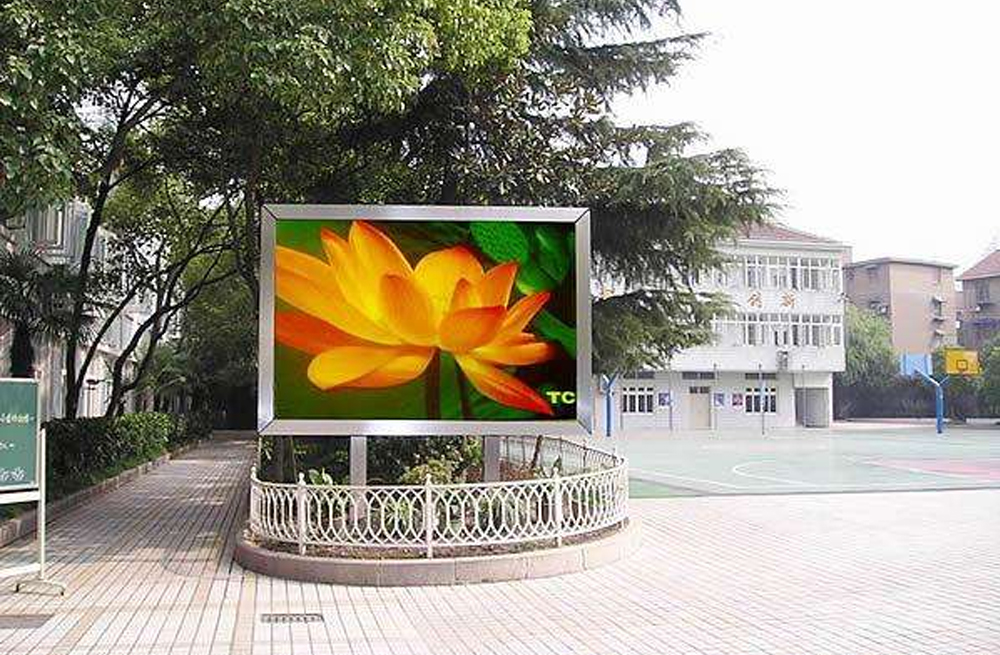
| Indoor retail or showroom | 1.5-5 m | P1.5-P2.5 | Fine detail, color accuracy and quiet operation |
| Shop window | 3-10 m | P2.5-P4 | Brightness that can overcome daylight and reflected glass |
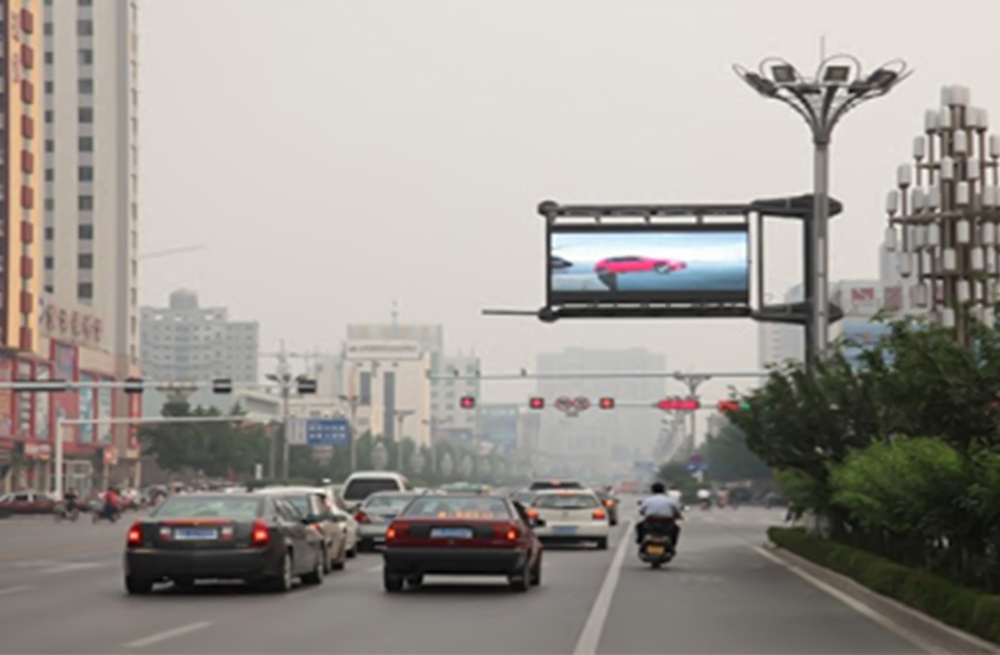
| Outdoor building or roadside advertising | 8-30 m | P4-P8 | Weather protection, high brightness and front access |
| Long-distance billboard or venue display | 20 m and beyond | P8-P10 or larger | Legibility, structural design and operating cost |
These ranges are starting points, not universal rules. A site survey and a sample-module viewing test should confirm the final specification.
1. Define the advertising goal and content
Before comparing LED cabinets, define what the display must achieve. A roadside billboard usually needs short messages, bold graphics and long-distance visibility. A retail screen may need fine product detail, accurate color and frequent content changes. A live-event screen may prioritize camera performance, portability and fast installation.
Write down these five inputs:
- Audience: pedestrians, drivers, shoppers, event visitors or employees.
- Closest and typical viewing distance: measured in meters, not estimated from a floor plan alone.
- Content: text, product images, video, live camera feeds or data dashboards.
- Operating schedule: hours per day and days per year.
- Installation: wall mounted, freestanding, suspended, mobile or integrated into a facade.
These answers determine the useful pixel pitch, aspect ratio, brightness, controller capacity and maintenance method.
2. Decide between an indoor and outdoor LED display
Indoor and outdoor LED walls are engineered for different conditions. An indoor product should not be placed outside simply because it can reach the required size. Outdoor screens need weather-resistant cabinets, sealed connections, thermal management and brightness appropriate for direct or indirect sunlight.
| Specification | Indoor advertising LED wall | Outdoor advertising LED wall |
|---|---|---|
| Typical brightness | About 600-1,500 nits, depending on ambient light | Often 4,500-8,000 nits, depending on orientation and sunlight |
| Weather protection | Usually not designed for rain exposure | Look for a suitable IP rating, commonly IP65 on the exposed face |
| Pixel pitch | Usually finer for close viewing | Often wider because the audience is farther away |
| Maintenance | Front or rear access based on wall depth | Front access is valuable where rear service space is limited |
For exposed installations, compare purpose-built outdoor LED display screens and verify wind load, drainage, corrosion resistance, operating temperature and local electrical requirements with qualified professionals.
3. Match pixel pitch to viewing distance
Pixel pitch is the center-to-center distance between adjacent LED pixels, measured in millimeters. A smaller pitch produces a denser image at close range, but usually increases purchase cost, power density and processing load.
A practical starting rule is that the pitch in millimeters is close to the minimum comfortable viewing distance in meters. For example, a P4 display is commonly evaluated from about 4 meters or farther. Content type can change the result: small text and detailed product images may justify a finer pitch, while large graphics viewed from a road may not.
Do not buy the finest pitch available without testing it at the real viewing distance. Ask the supplier to show the proposed module using your actual artwork, text size and video content.
4. Calculate physical size and native pixel resolution
For an LED wall, physical size and pixel pitch create the native resolution. A label such as Full HD or 4K is not automatically the correct starting point.
Native pixels across = screen width in millimeters / pixel pitch in millimeters. A 6-meter-wide P5 wall, for example, has approximately 1,200 pixels across. The content canvas and video processor should then be configured to the wall’s actual pixel dimensions.
Choose the physical size by checking:
- How much of the viewer’s field of view the display should occupy.
- The distance and speed of the audience.
- The minimum readable text size.
- The intended 16:9, panoramic, portrait or custom aspect ratio.
- Cabinet and module dimensions, so the final size uses complete units.
5. Specify brightness, contrast and image quality
Brightness must be high enough for the environment but controllable throughout the day. A screen that looks good at noon can become uncomfortable at night if it cannot dim smoothly. Request automatic brightness control with a light sensor for outdoor projects and set sensible day and night limits during commissioning.
Also compare:
- Contrast and black level: especially important for indoor retail and shaded locations.
- Color temperature and calibration: modules and replacement parts should match across the wall.
- Viewing angle: verify both horizontal and vertical visibility for off-axis audiences.
- Grayscale at low brightness: the image should retain shadow detail when dimmed.
Do not select a display by peak brightness alone. Uniformity, calibration, power consumption and the ability to maintain good color at the required brightness are equally important.
6. Check refresh rate, controller and content workflow
A high refresh rate reduces visible scan lines and flicker when the display is filmed. For broadcast, virtual production, live events or social-media recording, a 3,840 Hz or higher specification is a useful starting point, but the scan mode, camera shutter, driver IC and controller configuration also affect the result. Ask for an on-camera test rather than relying only on a data sheet.
The LED controller must support the wall’s total pixel load, input formats, scaling, redundancy and remote monitoring requirements. Confirm how staff will schedule and update content, whether the system needs synchronous live video or asynchronous playback, and how network access will be secured. The right LED video processor should match the native canvas instead of forcing unsuitable source resolutions.
7. Compare lifetime cost, reliability and serviceability
The lowest purchase price is rarely the lowest total cost. Compare the complete system over its expected service life:
- Display cabinets, controller, processor, structure, cabling and installation.
- Maximum and typical power consumption.
- Access equipment and labor required for maintenance.
- Spare LED modules, receiving cards, power supplies and calibrated replacement stock.
- Warranty terms, response time, remote diagnostics and local technical support.
- Expected module availability and color matching several years after installation.
Front-service cabinets can reduce maintenance space and labor for wall-mounted projects. Redundant power, signal paths and controller backups may be justified for revenue-critical or safety-related displays.
Buyer checklist before requesting a quotation
- Installation address and indoor/outdoor classification.
- Available screen width, height and service depth.
- Closest, typical and farthest viewing distances.
- Orientation toward sunlight and expected ambient brightness.
- Required operating hours and local power supply.
- Content examples, input sources and update method.
- Mounting structure, wind-load and permit responsibilities.
- Pixel pitch, native resolution, refresh rate and brightness-control range.
- IP rating, operating-temperature range and maintenance access.
- Spare-parts package, warranty and after-sales support.
Frequently asked questions
What is the best LED wall for advertising?
The best option is a commercial LED wall whose pixel pitch matches the viewing distance, whose brightness and IP protection match the environment, and whose controller supports the native resolution and content workflow. There is no single model that is best for every site.
What pixel pitch should an advertising LED display use?
As a starting point, use the pitch in millimeters as an approximate minimum viewing distance in meters: P2.5 from about 2.5 meters, P4 from about 4 meters and P8 from about 8 meters. Confirm the choice with your content and a real viewing test.
How bright should an outdoor advertising LED wall be?
Many outdoor projects fall roughly between 4,500 and 8,000 nits, but the correct value depends on screen direction, direct sunlight, shade and viewing time. Automatic day/night brightness control is more useful than an unnecessarily high peak value.
Does an advertising LED wall need 4K resolution?
Not necessarily. LED wall resolution is determined by physical dimensions divided by pixel pitch. Match the content canvas and video processor to that native resolution. A larger viewing distance can make a lower pixel density fully effective.
Final recommendation
To choose the best LED wall for advertising, begin with a site survey and audience viewing distance, then specify pixel pitch, physical size, brightness, protection, refresh rate and controller capacity. Compare proposals on the same requirements and request a sample test with real content before approving production.
EagerLED supplies indoor, outdoor, rental, stadium, mobile and curved LED display solutions. Contact our team with your installation size, viewing distance and site photos for a project-specific recommendation.