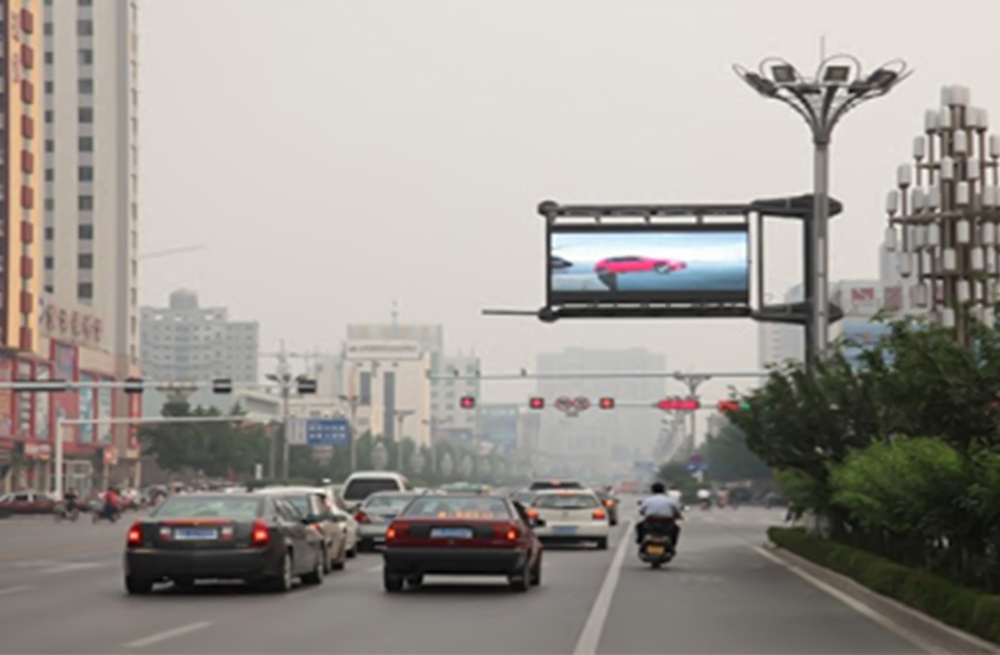
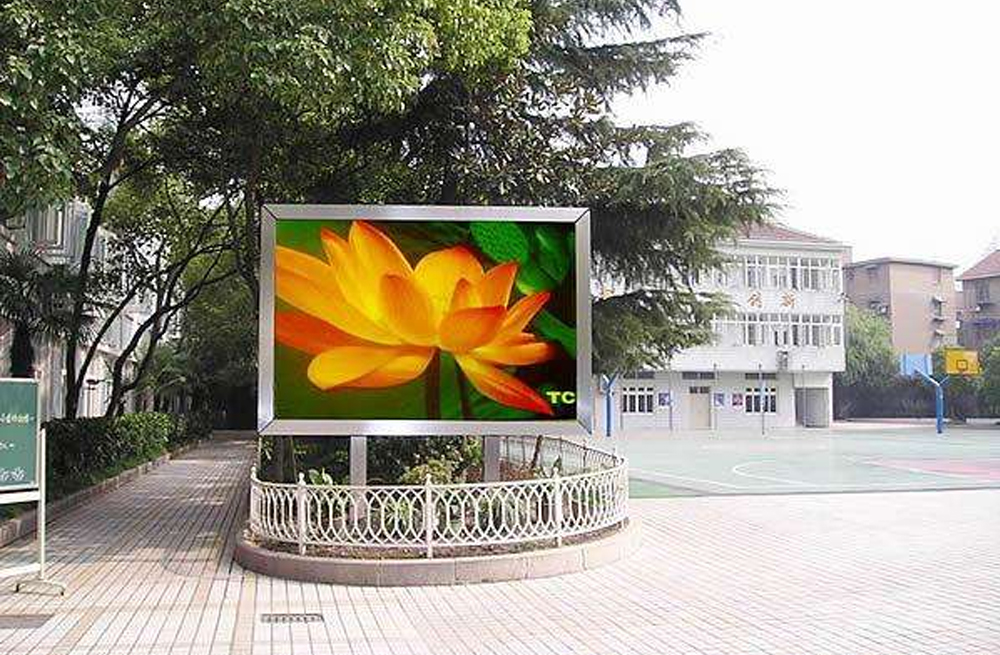
Outdoor LED screen installation requires more than mounting cabinets to a frame. A reliable project combines a site-specific foundation, an engineered steel structure, wind-load verification, lightning protection, waterproofing, ventilation, safe power distribution, and access for future maintenance. Each item must be checked against the screen manufacturer’s requirements and the building, electrical, and structural codes that apply at the installation site.
This guide explains the complete scope of work for a fixed outdoor LED display, from the first site survey to final commissioning. It is intended as a planning reference for owners, integrators, contractors, and project managers. Final structural and electrical designs should be approved by qualified local professionals.
Outdoor LED Screen Installation at a Glance
| Work area | Primary requirement | Main risk controlled |
|---|---|---|
| Site survey | Confirm dimensions, access, utilities, drainage, viewing distance, and maintenance space | Layout conflicts and service problems |
| Civil foundation | Design for dead load, wind load, soil conditions, and overturning resistance | Settlement, sliding, and overturning |
| Steel structure | Use engineered members, connections, bracing, and corrosion protection | Frame deformation and fatigue |
| Lightning and grounding | Provide a coordinated grounding and surge-protection system | Equipment damage and electric shock |
| Weather protection | Seal water paths while preserving drainage and airflow | Water ingress, condensation, and overheating |
| Power and data | Size circuits, cables, protection devices, and signal paths for the actual load | Voltage drop, nuisance trips, and signal loss |
| Commissioning | Inspect, test, calibrate, and document the complete system | Hidden defects and difficult maintenance |
1. Complete a Site Survey Before Design
The survey establishes the real conditions that the structure, screen, and electrical system must handle. Record the mounting height, screen orientation, nearby buildings, prevailing wind exposure, sunlight, ambient temperature range, salt or industrial pollution, and any restrictions on lifting equipment. Check the route for cabinets, steel members, cranes, and service personnel.
- Measure the installation area: verify the available width, height, depth, and clearance behind or in front of the display.
- Check the supporting surface: identify the wall, roof, column, or soil conditions and confirm whether the existing structure can accept new loads.
- Plan viewing geometry: select screen dimensions and pixel pitch based on typical viewing distance, traffic direction, and content type.
- Confirm power and data routes: keep high-voltage power, low-voltage data, and grounding paths organized and serviceable.
- Identify environmental exposure: account for wind, rain, dust, heat, snow or ice, salt spray, and direct solar gain where applicable.
- Provide maintenance access: decide between front and rear service before the frame is designed.
2. Design the Civil Foundation for the Actual Loads
The civil foundation transfers the weight of the LED display and supporting steelwork safely into the ground or existing building. It must also resist wind-induced shear, uplift, and overturning. Screen weight alone is not enough for design: a large outdoor display acts as a broad surface exposed to wind, and local wind conditions may govern the foundation size.
A typical freestanding installation may include reinforced concrete footings, anchor assemblies, embedded steel plates, support columns, and compacted backfill. The engineer should determine the foundation dimensions and reinforcement after reviewing the geotechnical conditions, screen geometry, mounting height, wind zone, and applicable safety factors. Drainage around the foundation should prevent standing water and long-term corrosion.
Before concrete placement, confirm the anchor-bolt template, cable conduits, grounding conductors, and embedded parts. After curing, verify bolt positions, levels, concrete condition, and any specified test results before erecting the steel structure.
3. Meet Outdoor LED Screen Steel Structure Requirements
An outdoor LED screen structure must carry the display cabinets, power and control equipment, cladding, maintenance platforms, and all environmental loads without excessive movement. The structural design should define the steel grade, member sizes, wall thicknesses, bracing pattern, welds, bolts, anchors, allowable deflection, and corrosion-protection system. These values cannot be selected from screen size alone.
Main parts of the steel frame
- Primary supports: columns, wall brackets, roof supports, or other members that transfer loads to the foundation or building.
- Main screen frame: horizontal and vertical members that create a flat, square mounting plane for the LED cabinets.
- Bracing: diagonal or moment-resisting elements that limit sway and twisting.
- Connection system: engineered welds, high-strength bolts, embedded plates, or approved anchors.
- Maintenance structure: platforms, ladders, guardrails, walkways, and service clearances where required.
- Cladding supports: secondary framing for decorative and weather-resistant exterior panels.
Material and fabrication checks
Steel must be traceable to the project specification and protected for the local environment. Fabrication drawings should show every member and connection. Inspect weld quality, bolt grade and tightening method, member straightness, hole positions, and protective coating before installation. Galvanizing or a specified coating system is commonly used outdoors; cut edges, field welds, and damaged coating areas require approved repair treatment.
The cabinet mounting surface must remain flat and aligned. Excessive frame movement can create visible seams, stress cabinet locks, disturb module alignment, and contribute to water ingress. Coordinate allowable deflection with the LED screen supplier as well as the structural engineer.
Anchors and connections to existing concrete
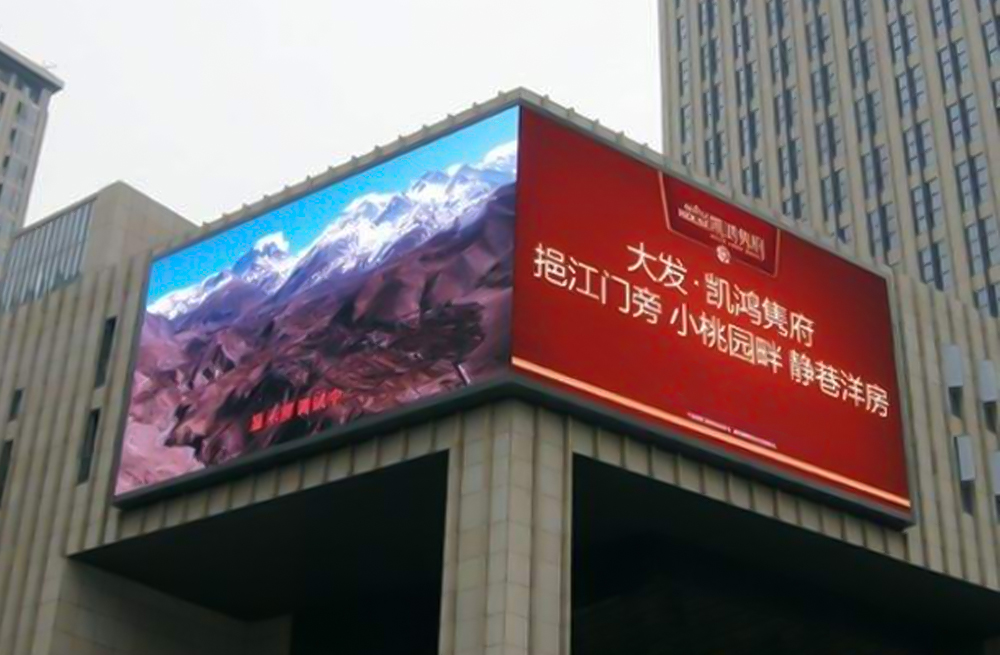
Where embedded plates were not installed, a structural engineer may specify post-installed mechanical or chemical anchors. The anchor type, diameter, embedment depth, edge distance, spacing, hole-cleaning method, curing time, and concrete strength all affect capacity. Installers should follow the approved design and the anchor manufacturer’s instructions. Proof testing may be required by the project specification or local authority.
4. Coordinate Lightning Protection and Grounding
Outdoor LED screens contain extensive metalwork and sensitive electronics, so grounding and surge protection must be designed as one coordinated system. Bond the steel structure, LED cabinets, electrical enclosures, power-distribution equipment, and protective earth conductors as required. Install surge protective devices at appropriate power and data entry points, and maintain separation from lightning down conductors where the design requires it.
There is no single grounding-resistance value that is correct for every project. The acceptance target must come from local electrical and lightning-protection codes, the site design, and equipment requirements. Measure and record continuity and earth resistance with calibrated instruments before energizing the display.
5. Prevent Water Ingress, Condensation, and Overheating
Weather protection is a system, not simply a bead of sealant. Use outdoor-rated LED cabinets, connectors, junction boxes, cable glands, and power equipment suitable for the actual exposure. Seal penetrations and top edges, provide drip paths, and keep drainage openings clear. Avoid creating pockets where water can collect behind cladding.
Ventilation and waterproofing must be planned together. Estimate heat from LED modules, power supplies, controllers, and solar gain. Provide natural ventilation or mechanical cooling as required, while preventing rain and dust from entering air paths. In humid climates, temperature changes can create condensation even when direct rain is excluded. Sensors, controlled ventilation, heaters, or dehumidification may be appropriate for enclosed rear-service spaces.
6. Plan Exterior Cladding Without Blocking Service Access
Exterior decoration improves appearance and protects the structure, but it must not obstruct cabinet removal, ventilation, drainage, access doors, or emergency isolation. Common materials include stainless-steel sheet, aluminum panels, and aluminum composite panels. Material thickness, fixing method, panel joints, and coating should suit the panel size, wind exposure, and local fire requirements.
Use compatible weather sealants and allow for thermal movement. Do not rely on decorative cladding to carry screen loads unless it is explicitly included in the engineered structural design.
7. Size Power Distribution and Signal Systems Correctly
Calculate electrical demand from the manufacturer’s maximum and typical power figures, cabinet count, operating voltage, and permitted diversity. The design should cover feeder capacity, branch circuits, cable size, voltage drop, isolation, overcurrent protection, residual-current protection where required, phase balancing, and access to distribution boards. Label every circuit and keep a current single-line diagram on site.
For data, document the controller, sending device, receiving-card layout, cable type, maximum link distance, redundancy path, and network protection. Route signal cables away from sources of electrical interference and use fiber where distance, lightning exposure, or isolation makes copper unsuitable. A compatible LED video processor and properly sized control system should match the screen’s total pixel load and input requirements.
8. Follow a Controlled Installation Sequence
- Approve structural, electrical, and shop drawings before fabrication.
- Set out and construct the foundation or verify the existing support structure.
- Inspect embedded parts, anchors, conduits, and grounding provisions.
- Erect, align, brace, and inspect the primary steel structure.
- Install maintenance platforms, safety systems, and secondary framing.
- Mount LED cabinets from a controlled reference line and verify alignment continuously.
- Complete power, grounding, data, cooling, drainage, and weather sealing.
- Install cladding without restricting ventilation or maintenance access.
- Energize circuits in stages, configure the control system, and calibrate the display.
- Complete final inspections, test records, training, and handover documentation.
9. Commissioning and Acceptance Checklist
- Structural members, welds, bolts, anchors, and protective coatings match the approved drawings.
- The screen face is level, plumb, flat, and free of unacceptable cabinet gaps.
- Ground bonding, protective devices, insulation, polarity, phase loading, and earth measurements are documented.
- All cable entries, cabinet joints, roof edges, drainage paths, and service doors are weather-protected.
- Ventilation or cooling operates correctly at the expected thermal load.
- Power-up, redundancy, emergency isolation, data links, brightness control, and scheduled operation are tested.
- Modules display uniform color and brightness after calibration; dead pixels and cabinet faults are corrected.
- Labels, drawings, configuration backups, spare parts, warranties, and maintenance procedures are handed over.
Frequently Asked Questions
What is the most important factor in outdoor LED screen installation?
The most important factor is coordinated engineering. The foundation, steel frame, wind resistance, electrical system, grounding, waterproofing, cooling, and maintenance access must work as one system. A strong component cannot compensate for an unsafe overall design.
How is an outdoor LED screen fixed to a building?
Depending on the approved design, the screen may connect to embedded plates, structural steel, engineered wall brackets, mechanical anchors, or chemical anchors. The building’s capacity and every connection should be verified by a qualified structural professional.
What steel structure is required for an outdoor LED display?
The required structure depends on screen size, weight, mounting height, wind and seismic conditions, support type, cladding, and maintenance loads. Project drawings should specify member sizes, steel grade, bracing, connections, deflection limits, and corrosion protection.
How do you waterproof an outdoor LED screen?
Use outdoor-rated cabinets and connectors, protect cable entries, seal vulnerable joints, provide drainage and drip paths, and maintain controlled ventilation. The complete installation should be inspected for water paths before handover and during routine maintenance.
How much maintenance space should be left behind the screen?
There is no universal dimension. Rear-service clearance must allow safe access to modules, power supplies, receiving cards, fans, cables, and fasteners. If adequate rear access is impossible, choose a front-service screen and design the structure around that maintenance method.
Final Recommendation
Treat an outdoor fixed LED screen as a permanent building and electrical installation, not as standalone display equipment. Obtain site-specific structural and electrical designs, coordinate every trade before fabrication, and keep complete inspection and commissioning records. This approach reduces installation risk, improves image alignment and weather resistance, and makes the display easier to maintain throughout its service life.