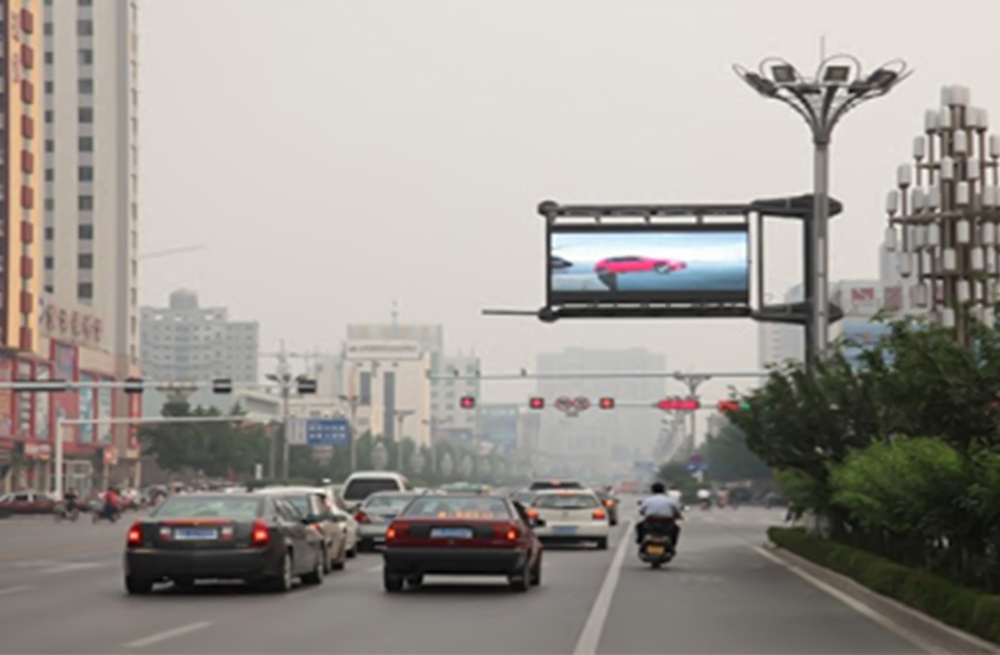
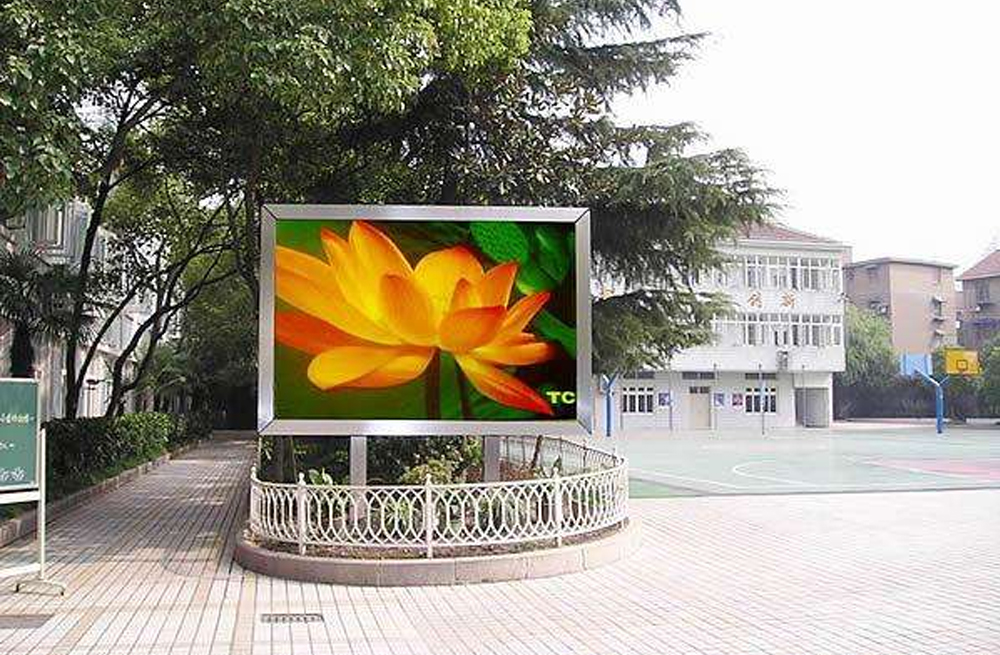
A P2.5 LED display is a fine-pitch LED screen with 2.5 mm between neighboring pixels. It delivers sharp text, detailed images, and smooth video at the short viewing distances common in retail stores, showrooms, shopping malls, control rooms, conference spaces, and other indoor advertising environments. For advertisers who need a bright, seamless screen that can update content in real time, P2.5 is often the best balance of image quality, viewing distance, and cost.
This guide explains the benefits, typical specifications, use cases, and buying factors for a P2.5 LED advertising display. It also answers the questions buyers most often ask before selecting an indoor or outdoor P2.5 LED module.
What Is a P2.5 LED Display?
The “P” in P2.5 means pixel pitch, while 2.5 means the center-to-center distance between pixels is 2.5 millimeters. A smaller pitch places more pixels in the same area and produces a finer image. A P2.5 screen has a theoretical pixel density of approximately 160,000 pixels per square meter, although the final resolution depends on the screen dimensions and module configuration.
P2.5 is primarily used indoors because it remains clear at relatively short distances. Outdoor P2.5 LED modules are also available, but they require higher brightness, weather protection, and suitable cabinet design. When comparing products, confirm whether the module and cabinet are rated for the intended environment.
Why Choose a P2.5 LED Display for Advertising?
1. Clear images at close viewing distances
Customers in stores and malls often stand only a few meters from a display. The fine 2.5 mm pitch keeps text, prices, logos, and product details legible without the coarse pixel structure visible on larger-pitch screens. A practical starting point for comfortable viewing is about 2.5 meters or farther, although content design and eyesight also affect perceived clarity.
2. Seamless large-format presentation
LED modules and cabinets join together without the thick bezels found on tiled LCD video walls. The result is one continuous canvas that can be built to fit a wall, column, stage, shop window, or custom architectural space. This makes P2.5 useful when the screen must look like part of the environment rather than a collection of separate monitors.
3. Bright, high-impact advertising
Unlike a projector, an LED display generates its own light. Indoor models can remain vivid under retail and exhibition lighting, while correctly specified outdoor systems use much higher brightness to compete with daylight. Brightness should be matched to the location; excessive indoor brightness can be uncomfortable and waste energy.
4. Flexible multimedia content
A P2.5 LED advertising screen can present video, animation, images, text, prices, schedules, social content, and live data. A compatible LED control system can switch campaigns quickly, schedule playlists, divide the screen into zones, and manage one or multiple displays.
5. Fast content updates and scheduling
Digital signage eliminates the printing and installation cycle required by static posters. Teams can change promotions by time of day, update prices, launch a campaign across several locations, or remove outdated material in minutes. Asynchronous players are suitable for scheduled content, while synchronous controllers are commonly used for live video and real-time sources.
6. Strong visibility and audience engagement
Motion, color, and timely messages attract attention in busy commercial spaces. The display can also support multilingual campaigns, countdowns, wayfinding, event information, and context-specific offers. The technology is most effective when the message remains concise and the creative is designed for the actual viewing distance.
Typical P2.5 LED Display Specifications
The following values are common planning references, not universal product specifications. Always verify the module, cabinet, receiving card, power supply, and controller data sheets before ordering.
| Specification | Typical P2.5 value or recommendation | Why it matters |
|---|---|---|
| Pixel pitch | 2.5 mm | Determines pixel spacing and close-range image detail |
| Pixel density | About 160,000 pixels/m² | Helps estimate screen resolution |
| Recommended viewing distance | About 2.5 m and beyond | Guides screen placement and pitch selection |
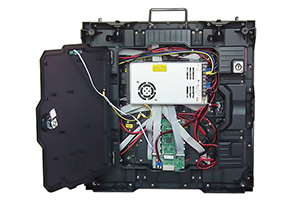
| Common module size | 320 × 160 mm is widely used; other sizes exist | Affects cabinet layout and serviceability |
| Indoor brightness | Often 800-1,500 nits | Should suit ambient lighting without glare |
| Outdoor brightness | Often 4,500-6,500 nits | Supports visibility in daylight |
| Refresh rate | 3,840 Hz or higher recommended for camera use | Reduces scan lines and flicker in photos or video |
| Viewing angle | Commonly 140° or wider | Maintains visibility for people approaching from the side |
| Ingress protection | Depends on indoor or outdoor design | Outdoor screens need suitable protection against water and dust |
Indoor vs. Outdoor P2.5 LED Modules
An indoor P2.5 LED module is designed for controlled environments. It normally prioritizes fine image quality, quiet operation, lower brightness, and convenient front or rear service. Common applications include retail advertising, reception video walls, meeting rooms, studios, museums, and command centers.
An outdoor P2.5 LED module needs higher brightness, weather-resistant components, heat management, and an appropriately rated cabinet. Its finer pitch can be useful for outdoor screens viewed from close range, but it generally costs more than larger-pitch outdoor alternatives. For longer viewing distances, P3.9, P4, P5, or another larger pitch may provide a better economic choice.
Best Advertising Applications for P2.5
- Retail stores: product launches, prices, promotions, and branded video near shoppers.
- Shopping malls: tenant advertising, event information, directories, and large-format campaigns.
- Showrooms: detailed product demonstrations and premium brand presentations.
- Corporate spaces: reception walls, announcements, dashboards, and event content.
- Exhibitions and stages: presentation backgrounds, sponsor media, and live camera feeds.
- Transport and public venues: wayfinding, schedules, safety messages, and commercial advertising.
- Broadcast and studios: camera-friendly backgrounds when the refresh rate and scan design are suitable.
How to Choose the Right P2.5 LED Display
Confirm the viewing distance and screen size
Start with the closest expected viewer position. P2.5 is well suited to close indoor viewing, but a larger pitch may be more cost-effective when the audience is much farther away. Calculate the final resolution from the physical screen dimensions and 2.5 mm pitch to confirm that your content will fit.
Match brightness to the installation environment
Ask whether the screen faces windows, receives direct sunlight, or operates only in controlled indoor light. Choose enough brightness for visibility, then use automatic or scheduled brightness adjustment where possible. This improves comfort and can reduce power consumption.
Check refresh rate, grayscale, and camera performance
If people will photograph or film the display, request a high-refresh configuration and test it with the cameras and shutter speeds used at the venue. Refresh rate alone does not guarantee perfect on-camera performance; driver ICs, scan mode, grayscale processing, and controller settings also matter.
Select the correct control method
Choose synchronous control for live video, presentations, broadcasts, or processor-fed content. Choose asynchronous control for scheduled signage that should continue playing without a connected computer. Confirm total pixel-load capacity, input interfaces, scaling requirements, remote management, and redundancy before selecting an LED controller card.
Plan maintenance and spare parts
Decide whether front or rear access is practical. Confirm module replacement method, cabinet alignment, power and data redundancy, spare module quantity, and availability of matching LEDs and calibration data. Service access is especially important for wall-mounted and embedded displays.
Evaluate total cost, not only module price
A complete P2.5 LED display includes modules, cabinets or structure, receiving cards, sending equipment, power supplies, cables, installation, calibration, control software, cooling, and maintenance. Compare warranties, testing procedures, spare-parts support, and long-term compatibility alongside the purchase price.
P2.5 LED Display Content Tips
- Use large, high-contrast text and keep each message brief.
- Design to the screen’s actual pixel resolution instead of stretching low-resolution files.
- Keep important text and logos away from cabinet edges.
- Use smooth motion and avoid unnecessarily rapid flashing.
- Schedule relevant creative for different audiences and times of day.
- Preview content from the closest and typical viewing positions before launch.
Frequently Asked Questions
What does P2.5 mean on an LED display?
P2.5 means adjacent LED pixels are spaced 2.5 mm apart from center to center. This fine pixel pitch provides more detail than larger pitches such as P4 or P5 at the same screen size.
What is the recommended viewing distance for a P2.5 LED screen?
About 2.5 meters is a practical minimum starting point for many installations. The ideal distance also depends on screen resolution, content, brightness, and the viewer’s expectations.
Is P2.5 suitable for outdoor advertising?
Yes, if the module and cabinet are specifically designed for outdoor use with sufficient brightness, weather protection, cooling, and structural engineering. An indoor P2.5 module should not be installed outdoors.
What resolution does a P2.5 LED display have?
Resolution depends on physical size. Divide each screen dimension in millimeters by 2.5 to estimate pixel width and height. For example, a 3,200 × 1,600 mm P2.5 screen is approximately 1,280 × 640 pixels.
Is P2.5 better than P3 or P4?
P2.5 provides finer detail at close range, but it is not automatically the best value for every project. P3 or P4 may be more economical when the viewing distance is longer. The right choice balances distance, dimensions, content, brightness, environment, and budget.
Which controller is needed for a P2.5 LED display?
The controller must support the screen’s total pixel count, receiving-card layout, input sources, color depth, refresh target, and redundancy requirements. Select the controller only after the final screen resolution and cabinet wiring plan are confirmed.
Conclusion
A P2.5 LED display is a strong choice for advertising when viewers are close to the screen and image detail matters. Its seamless format, vivid multimedia playback, scheduling flexibility, and high pixel density make it especially effective for indoor retail, commercial, corporate, and event environments. For a reliable result, match the brightness and protection level to the location, calculate the correct resolution, choose a compatible control system, and plan service access before purchase.
Explore available P2.5 LED display modules and related control components, or contact our team with your screen dimensions, installation environment, viewing distance, and input-source requirements for configuration support.