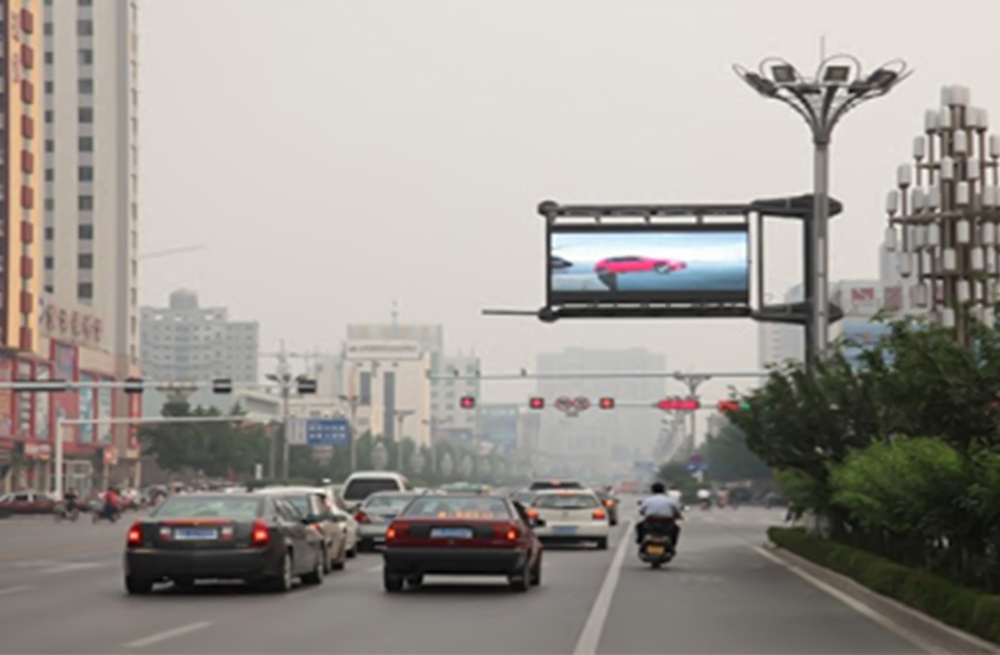
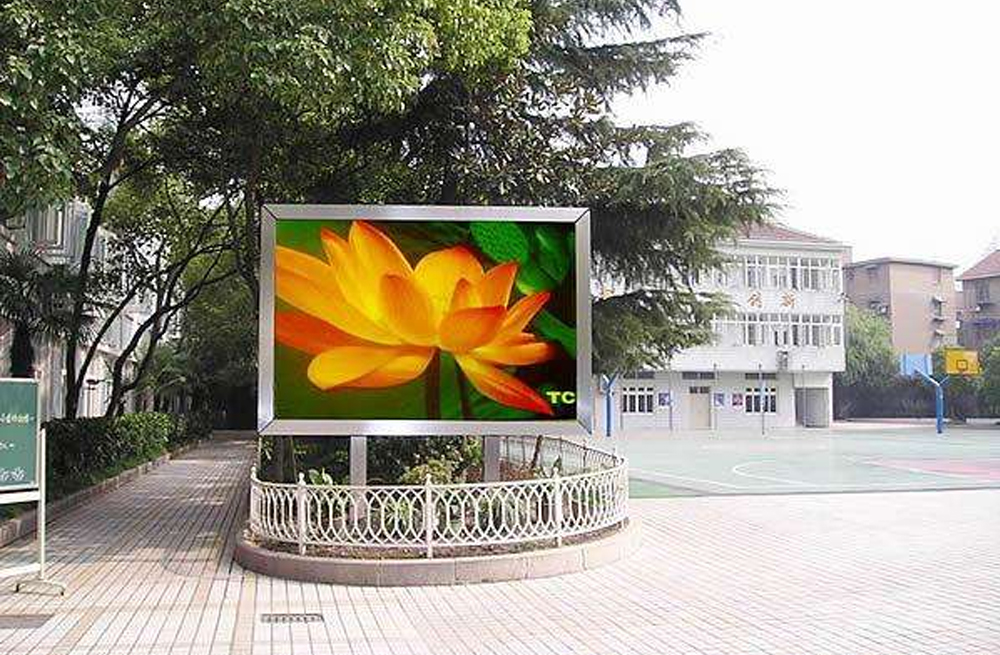
LED video wall advertising uses a large, bright, modular digital display to deliver videos, animations, promotions, and real-time messages to people in a specific location. Compared with printed signage, an LED wall can change campaigns in minutes, remain visible at long distances, and schedule different content by time, audience, or event.
The best results do not come from buying the largest screen. They come from matching the display type, pixel pitch, brightness, controller, installation, and content plan to the viewing environment. This guide explains each decision so you can plan an effective indoor or outdoor LED advertising screen.
What Is LED Video Wall Advertising?
An LED video wall is built from multiple LED modules or cabinets that work together as one seamless display. A sending device and receiving cards distribute the video signal across the screen, while a video processor scales and switches content sources. The result can be a small retail display, a stage backdrop, a roadside billboard, or a building-size media facade.
Unlike an LCD video wall, an LED wall does not have visible panel bezels. It can also be built in custom dimensions and aspect ratios. Outdoor LED screens are engineered for higher ambient light and weather exposure, while indoor screens prioritize close viewing and finer pixel pitch.
Why Use an LED Video Wall for Advertising?
- High visibility: Bright, moving content attracts attention in busy retail, transport, event, and outdoor environments.
- Flexible campaigns: Operators can replace or schedule creative without printing and installing new physical signage.
- Large-format impact: Modular construction supports wide, tall, curved, and custom-size displays.
- Multiple content sources: A screen can show promotional videos, live feeds, menus, social content, alerts, and event information.
- Dayparting: Different messages can run during morning, lunchtime, evening, or special events.
- Measurable operation: Playback logs, QR codes, promotional codes, footfall data, and sales data can help evaluate performance.
An LED wall is most valuable when a location has enough traffic, the screen is visible for a meaningful amount of time, and content is refreshed regularly. A static message on a premium digital screen rarely uses the hardware’s full potential.
Indoor vs. Outdoor LED Advertising Screens
| Decision | Indoor LED wall | Outdoor LED screen |
|---|---|---|
| Typical environment | Stores, malls, showrooms, lobbies, conference rooms, stages | Roadside signs, building facades, stadiums, plazas, transport hubs |
| Viewing distance | Often closer, so a finer pixel pitch may be needed | Usually farther away, so a larger pitch may be acceptable |
| Brightness priority | Comfortable viewing under controlled lighting | Visibility in daylight and changing weather |
| Protection | Dust control, ventilation, and safe mounting | Weather resistance, drainage, wind-load planning, and corrosion protection |
| Maintenance | Front or rear access depending on wall depth | Service access must suit the structure and site conditions |
As a general reference, many indoor projects operate in a lower brightness range than outdoor projects. The correct setting should be based on measured ambient light, not simply the maximum specification. Excess brightness indoors can be uncomfortable, while insufficient brightness outdoors can make content appear washed out.
How to Choose an LED Advertising Screen
1. Start With Viewing Distance and Pixel Pitch
Pixel pitch is the center-to-center distance between adjacent LED pixels, measured in millimeters. A smaller pitch produces a finer image at close range but normally increases system cost and processing requirements.
A practical starting point is that the pixel pitch in millimeters is roughly similar to the minimum comfortable viewing distance in meters. For example, a P2.5 display is commonly considered for viewers starting around 2.5 meters away. This is only a planning rule: content detail, screen size, visual acuity, and budget also matter.
2. Match Brightness to the Location
Indoor displays often need approximately 800 to 1,500 nits depending on windows and lighting. Outdoor advertising screens may require roughly 4,500 to 7,000 nits for daytime visibility. Confirm the actual installation direction, direct sunlight exposure, local restrictions, and automatic brightness control before specifying a value.
3. Calculate Screen Size, Resolution, and Aspect Ratio
Choose the physical size from the available wall area and expected viewing distance. Then calculate pixel resolution from cabinet dimensions and pixel pitch. If standard 16:9 video will be used frequently, a 16:9 canvas reduces cropping and unused space. Custom aspect ratios can work well, but creative must be produced for the exact pixel dimensions.
4. Select the Control and Processing System
The control system is the operational core of an LED wall. It must support the screen’s total pixel load, input formats, color depth, refresh rate, redundancy needs, and control method. A suitable LED video processor can scale content to the canvas, switch sources, create layouts, and improve signal management.
For unattended advertising networks, an asynchronous media player may be appropriate because content can be scheduled and updated without a permanently connected computer. Live events and production environments often require real-time processing, multiple inputs, and backup signal paths.
5. Plan Maintenance Before Installation
Confirm whether modules, power supplies, receiving cards, and cables will be serviced from the front or rear. Front-service cabinets can reduce required wall depth, while rear-service designs need a safe access channel. Spare modules should come from the same batch when possible to reduce visible color differences after replacement.
6. Check Specifications That Affect Image Quality
- Refresh rate appropriate for cameras if the display will be filmed
- Grayscale and color processing for smooth gradients
- Calibration capability for uniform brightness and color
- Viewing angle suited to pedestrian or vehicle traffic
- Ingress protection and operating temperature for outdoor use
- Power design, heat dissipation, and electrical safety
- Signal and power redundancy where downtime would be costly
LED Video Wall Advertising Cost Factors
There is no reliable single price per square meter for every LED wall. A useful quotation must define the complete system and site conditions. The main cost drivers are:
- Pixel pitch and LED package: Finer pitches contain more pixels per area and generally cost more.
- Total screen area: Larger walls need more cabinets, power capacity, structure, and control hardware.
- Indoor or outdoor construction: Outdoor systems require weather protection and often higher brightness.
- Cabinet material and shape: Fixed, rental, curved, transparent, and custom cabinets have different engineering needs.
- Controller and processor: Pixel capacity, inputs, switching, scaling, monitoring, and redundancy affect the configuration.
- Structure and installation: Wall strength, steelwork, lifting equipment, permits, labor, and access can be major project costs.
- Shipping, tax, and spare parts: These should be included when comparing complete project budgets.
- Operating cost: Electricity, content production, connectivity, maintenance, and expected component replacement affect total ownership cost.
Ask suppliers to quote the LED cabinets, control system, processor, power distribution, structure, cables, spare parts, commissioning, training, warranty, and shipping as separate line items. This makes offers easier to compare.
How to Create Effective LED Advertising Content
Good LED content is designed for the location, not adapted at the last minute from a web banner. People may see a roadside screen for only a few seconds, while shoppers in a queue may have time to read more detail.
- Define one objective. Decide whether the campaign should build awareness, announce an offer, direct visitors, generate enquiries, or drive an immediate purchase.
- Use one main message per scene. A short headline, a clear product visual, and one call to action are easier to understand than a crowded layout.
- Design for the exact canvas. Export creative at the LED wall’s pixel dimensions and aspect ratio to avoid distortion.
- Prioritize contrast and legibility. Use large type, simple backgrounds, and colors that remain clear at the real viewing distance.
- Keep motion purposeful. Animation should guide attention to the message rather than make it difficult to read.
- Make the call to action realistic. Use a short URL, memorable offer, QR code for pedestrian locations, or simple directional message.
- Test on the installed screen. Review brightness, color, timing, text size, and safe areas from the audience’s position.
Build several creative versions and schedule them by time or audience context. For example, a restaurant can promote breakfast in the morning and dinner offers later. A retail screen can alternate product benefits, social proof, and a specific promotion without changing the hardware.
Installation and Safety Checklist
- Have a qualified engineer verify the mounting structure, anchors, wind load, and service access.
- Confirm local sign, brightness, operating-hour, and planning regulations before installation.
- Use correctly rated electrical protection, grounding, distribution, and emergency isolation.
- Provide ventilation or cooling based on expected heat load and climate.
- Protect outdoor connections from water ingress and plan drainage paths.
- Label signal and power cables and keep a documented cabinet map.
- Configure monitoring for temperature, power, signal, and playback where supported.
- Store compatible spare modules, receiving cards, power supplies, and cables on site.
Installation should be completed by qualified professionals. The manufacturer specifications and local electrical, structural, and fire-safety requirements take priority over general guidance.
How to Measure Advertising Performance
Choose metrics that match the campaign goal before content goes live. Useful options include:
- Footfall or vehicle impressions estimated for the location
- Dwell time and audience counts from permitted analytics systems
- QR scans, short-link visits, calls, enquiries, or coupon redemptions
- Store visits or sales compared with a relevant baseline period
- Playback logs that confirm which creative ran and when
- Screen uptime and the number of incidents affecting delivery
A simple campaign return calculation is: (incremental campaign profit – campaign cost) / campaign cost x 100. Separate media, content, hardware, and operating costs when possible. Avoid attributing every sale to the screen if other promotions ran at the same time.
Common Mistakes to Avoid
- Choosing pixel pitch before measuring viewing distance
- Buying maximum brightness without considering viewer comfort or local limits
- Using too much text for the available viewing time
- Sending standard video to a nonstandard canvas without adapting the layout
- Ignoring service access, spare parts, and calibration
- Underestimating structural, electrical, cooling, or permit costs
- Running the same creative for months without testing alternatives
- Using a controller that cannot support the required pixel load or future expansion
Frequently Asked Questions
Is LED video wall advertising effective?
It can be effective when the screen has strong visibility, suitable brightness, concise creative, and a clear campaign objective. Location quality and content relevance usually matter more than screen size alone.
What pixel pitch is best for an advertising LED wall?
The best pitch depends mainly on the closest viewing distance and required detail. Finer pitches suit close indoor viewing, while wider pitches can be cost-effective at longer outdoor distances. Evaluate sample content at the real distance before ordering.
How bright should an advertising LED screen be?
Brightness must overcome ambient light without causing discomfort or violating local rules. Indoor projects often use lower brightness than outdoor daylight displays. Automatic brightness adjustment is valuable where light changes throughout the day.
Can an LED advertising screen run without a computer?
Yes. An asynchronous LED media player can store and schedule content, then operate without a continuously connected computer. The exact player must support the display resolution, media formats, network method, and required scheduling features.
How often should LED advertising content change?
There is no universal interval. Update content when an offer, audience, season, or business priority changes, and test alternative creative regularly. Playback schedules can rotate multiple messages without replacing the display.
How long does an LED video wall last?
Service life depends on component quality, operating hours, brightness, temperature, ventilation, power quality, maintenance, and environment. Ask for rated component life, warranty terms, spare-part availability, and maintenance requirements rather than relying on a single lifespan claim.
Plan Your LED Advertising Project
Begin with the audience, location, viewing distance, ambient light, screen dimensions, content sources, and service access. These inputs determine the pixel pitch, cabinet type, brightness, resolution, controller, processor, and installation design.
For outdoor projects, explore our outdoor LED display screens. For help matching a screen, controller, and processor to your application, contact the EagerLED team with your installation photos, target dimensions, viewing distance, and content requirements.