Short answer: LED video walls can be a smart investment when a venue needs a large, bright, seamless display that will be used frequently and measured against a clear business goal. The strongest returns usually come from advertising, retail, events, control rooms, corporate spaces, houses of worship, and public information systems. The decision should be based on total cost of ownership, content quality, expected utilization, serviceability, and measurable results, not screen size alone.
This guide explains how LED video walls work, what drives their cost, where they create value, how they compare with LCD video walls and projectors, and how to estimate return on investment before you buy.
What Is an LED Video Wall?
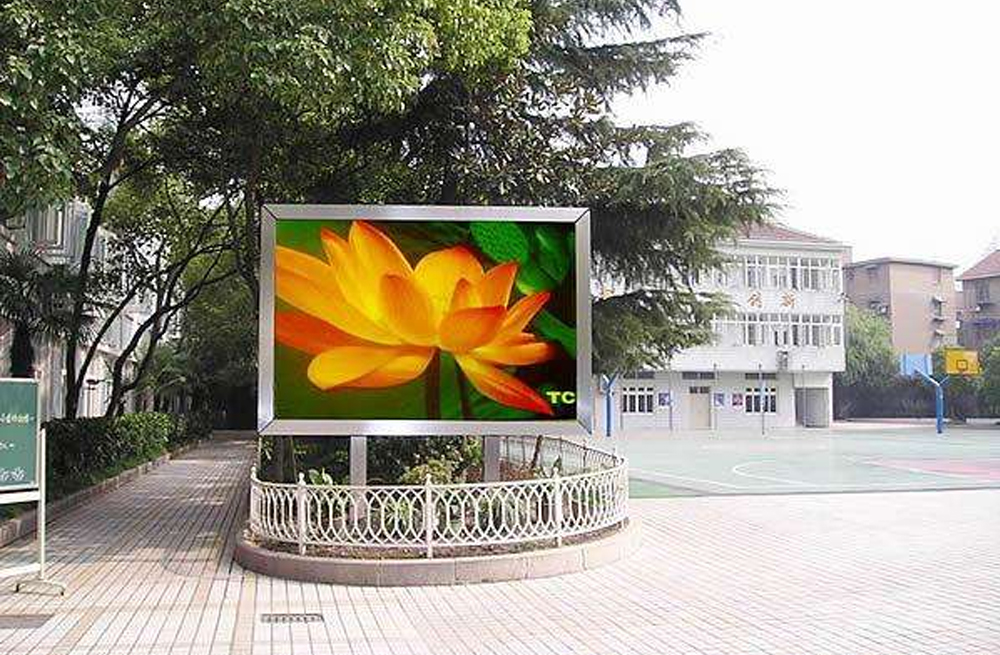
An LED video wall is a large-format display assembled from modular LED cabinets or panels. The modules work together as one canvas, while a controller or video processor maps incoming content to the correct pixels. Unlike an LCD video wall, a direct-view LED wall has no visible bezel between panels. Its modular design also allows many aspect ratios, curved layouts, and very large screen sizes.
Image quality depends on the complete system: pixel pitch, viewing distance, resolution, brightness, contrast, refresh rate, calibration, processing, content quality, and installation accuracy. A larger wall does not automatically create a sharper image. The correct pixel pitch and source resolution must match how and where people will view it.
When Are LED Video Walls a Smart Investment?
An LED wall is most likely to deliver value when it solves a recurring communication problem. It should help a business attract attention, present information more clearly, replace recurring physical media, support paid content, improve decision-making, or create an experience that smaller displays cannot provide.
| Investment driver | Business value | What to measure |
|---|---|---|
| High visibility | More attention in bright or high-traffic environments | Footfall, dwell time, campaign reach |
| Flexible content | Messages can change by time, audience, or event | Update time, campaigns per month, labor saved |
| Large seamless canvas | Clearer brand experiences, presentations, and data views | Audience engagement, event bookings, operator efficiency |
| Revenue opportunities | Advertising, sponsorship, premium events, or promotions | Attributed gross profit, media revenue, conversion rate |
| Long-term reuse | One platform can support many campaigns and use cases | Utilization rate, cost per operating hour |
Retail and Shopping Centers
Retailers can schedule product launches, promotions, wayfinding, social content, and brand campaigns on the same display. A video wall is easier to justify when content changes frequently and the business can connect exposure to store visits, enquiries, or sales.
Events, Stages, and Houses of Worship
LED walls remain visible at scale and can be configured for the venue. Rental and staging teams also benefit from modular cabinets that can be rearranged for different productions. Here, fast setup, robust connectors, spare modules, and reliable processing are as important as picture quality.
Corporate, Education, and Control Rooms
For meeting spaces and operations centers, the value is often better collaboration and faster access to information rather than advertising revenue. Fine-pitch indoor LED can provide a large, bezel-free canvas, but buyers should verify close-viewing comfort, redundancy, color consistency, and front service access.
Outdoor Advertising and Public Information
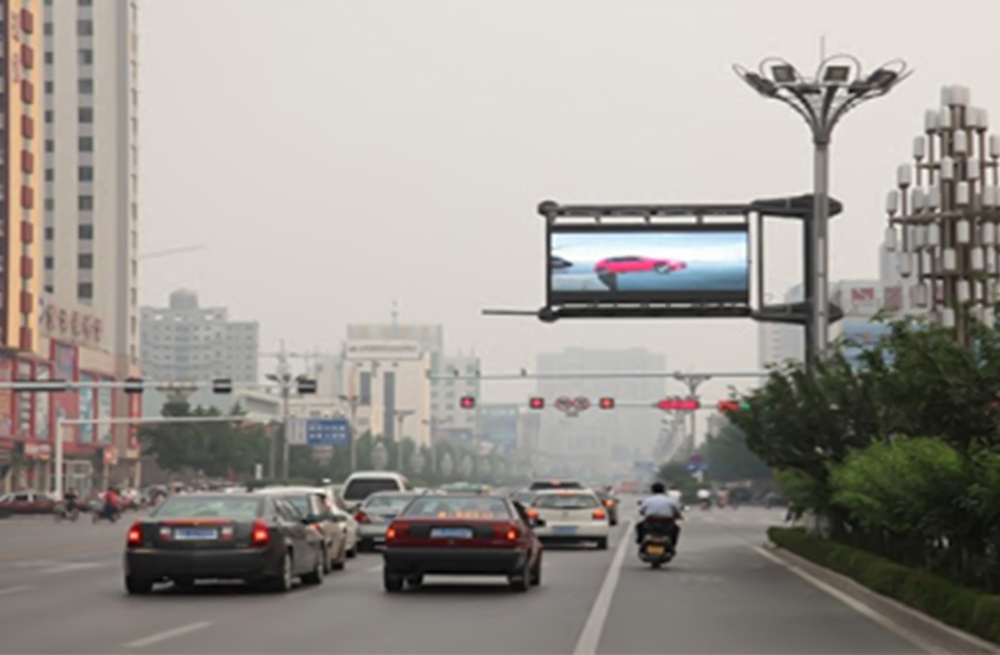
Outdoor systems can reach large audiences and support time-sensitive messaging. They require suitable brightness, weather protection, thermal management, structural engineering, electrical protection, and local approvals. Explore our outdoor LED display screens when the project must operate in exposed environments.
Seven Benefits That Can Improve ROI
- Seamless scalability: Modules form a continuous canvas without LCD bezels, making the format suitable for wide, tall, curved, or custom-shaped installations.
- Visibility in ambient light: Properly specified LED displays can remain readable in bright indoor spaces and outdoor locations where projection may appear washed out.
- Reusable digital inventory: A single wall can show promotions, live video, dashboards, wayfinding, event content, and emergency messages.
- Centralized content control: A content management system can schedule and update campaigns without replacing printed graphics.
- Serviceable modular design: Individual modules, power supplies, and receiving cards can often be serviced without replacing the entire display.
- Multiple revenue models: Owners may use the screen for advertising, sponsorship, premium venue packages, or cross-promotion.
- Long operating potential: Commercial LED systems are designed for extended use, although actual performance depends on temperature, brightness settings, maintenance, component quality, and duty cycle.
How Much Do LED Video Walls Cost?
There is no useful universal price per wall. A credible quote must define the application, dimensions, environment, viewing distance, performance target, control system, installation, and support. The main cost factors are:
- Pixel pitch and resolution: Smaller pixel pitch places more LEDs in the same area and is generally more expensive. Choose it from the closest normal viewing distance and the content detail required.
- Screen area and shape: Total cabinet count, corners, curves, and custom structures affect hardware and labor.
- Indoor or outdoor construction: Outdoor displays need weather resistance, higher brightness, thermal management, and suitable structural protection.
- Controller and processing: Input formats, scaling, color depth, refresh rate, redundancy, multi-window layouts, and total pixel capacity determine the required LED video processor and sending system.
- Structure and electrical work: Mounting, load calculations, power distribution, grounding, ventilation, and cable routes should be included in the project scope.
- Installation and calibration: Accurate alignment and color calibration are essential to a uniform image.
- Support and spare parts: Budget for spare modules, power supplies, LED receiving cards, technician access, and warranty response.
- Content production: A large canvas only performs well when graphics and video are designed for its true pixel dimensions and viewing context.
Total Cost of Ownership: What to Include
Purchase price is only the first line in the calculation. For a realistic comparison, estimate costs over the intended ownership period:
- Display modules, controllers, processors, mounting structure, cabling, and accessories
- Freight, installation, commissioning, permits, and structural or electrical work
- Electricity based on average content and brightness, not maximum power alone
- Content creation, software, connectivity, and staff time
- Preventive maintenance, cleaning, calibration, spare parts, and access equipment
- Expected downtime and the service response needed for the application
- Removal, relocation, expansion, or end-of-life costs
Ask suppliers to separate one-time costs from recurring costs and to state what is excluded. This makes competing proposals easier to compare.
LED Video Walls vs. LCD Video Walls vs. Projectors
| Factor | Direct-view LED wall | LCD video wall | Projector |
|---|---|---|---|
| Image seams | No visible panel bezels | Bezels remain between displays | No panel seams |
| Ambient light | Strong when brightness is correctly specified | Good indoors | Best with controlled light |
| Scale and shape | Highly modular and customizable | Built around fixed panel sizes | Depends on throw distance and surface |
| Close viewing | Requires an appropriate fine pixel pitch | Often sharp at close range | Depends on resolution and projection setup |
| Service model | Module and component replacement | Panel replacement | Lamp or laser engine, filters, alignment |
| Best fit | Large, bright, long-use, or custom displays | Cost-sensitive indoor control and signage | Dark rooms and occasional presentations |
LED is not automatically the best option. An LCD wall may be sufficient for a smaller indoor application, and a projector can be economical in a controlled, dark room. LED becomes compelling when brightness, scale, seamless presentation, layout flexibility, or frequent operation creates measurable value.
How to Calculate ROI for LED Video Walls
Start with a defined measurement period and use attributable gross profit rather than revenue alone.
ROI (%) = (attributable gross profit + avoided costs – total ownership cost) / total ownership cost x 100
Also calculate simple payback:
Payback period = initial investment / annual net benefit
Illustrative example: A venue invests $50,000 in an installed system. The wall generates $18,000 in annual attributable gross profit and avoids $7,000 in printing and setup costs. If annual operating and maintenance costs are $5,000, the annual net benefit is $20,000 and the simple payback period is 2.5 years. These figures are an example, not a price quote or performance promise.
Build conservative, expected, and optimistic scenarios. Track a baseline before installation, then measure the same indicators after launch. Useful metrics include campaign conversion, advertising occupancy, event revenue, printing costs avoided, content update time, downtime, and operating hours.
Buying Checklist for LED Video Walls
- Define the job: State the audience, content, operating hours, environment, and business outcome.
- Measure viewing conditions: Record the closest and typical viewing distances, ambient light, sight lines, and available space.
- Specify the canvas: Confirm physical dimensions, aspect ratio, native pixel resolution, and required content inputs.
- Verify image performance: Compare pixel pitch, brightness, contrast, refresh rate, grayscale, color calibration, and camera compatibility when relevant.
- Plan the control path: Check input sources, processor capacity, signal distance, remote management, and redundancy.
- Review installation constraints: Confirm structure, power, ventilation, access, weight, noise, weather protection, and permits.
- Demand service detail: Ask about warranty scope, response time, spare parts, training, front or rear access, and module availability.
- Test with real content: Review your own videos, text sizes, colors, and camera feeds before final acceptance.
- Compare total ownership cost: Evaluate all proposals over the same period and assumptions.
LED Video Walls: Frequently Asked Questions
Are LED video walls worth the investment?
Yes, when the wall is used often, solves a clear communication need, and produces measurable revenue, savings, or operational value. It may not be worthwhile for occasional use in a small, light-controlled room.
How much does an LED video wall cost?
Cost depends on screen area, pixel pitch, indoor or outdoor construction, brightness, processing, structure, installation, electrical work, service access, and support. A supplier needs the application and site requirements before providing a meaningful quote.
How long does an LED video wall last?
Manufacturers commonly specify LED life in operating hours to a defined brightness threshold, but real-world life varies. Operating temperature, brightness level, ventilation, power quality, maintenance, and component design all affect useful life. Compare the stated test conditions and warranty, not only the headline hour rating.
What pixel pitch should I choose?
Choose pixel pitch from the closest normal viewing distance and the detail in the content. Fine pitch supports closer viewing and higher pixel density, while a larger pitch can be cost-effective when viewers are farther away. A site survey and content test are more reliable than a single rule of thumb.
What maintenance does an LED wall need?
Typical work includes visual inspection, cleaning, ventilation checks, connection checks, calibration, software or configuration backups, and replacement of failed modules or components. Keep an agreed spare-parts kit and make sure technicians can reach service points safely.
Final Decision
An LED video wall is a smart investment when specification follows the business case. Define the outcome first, select the display and control system for the real viewing environment, calculate total ownership cost, and measure results after installation. Do not choose by lowest hardware price or smallest pixel pitch alone.
EagerLED supplies LED display screens, controllers, processors, receiving cards, power supplies, and related parts. Contact us with your screen size, viewing distance, indoor or outdoor location, content sources, operating schedule, and installation photos for a project-specific recommendation.