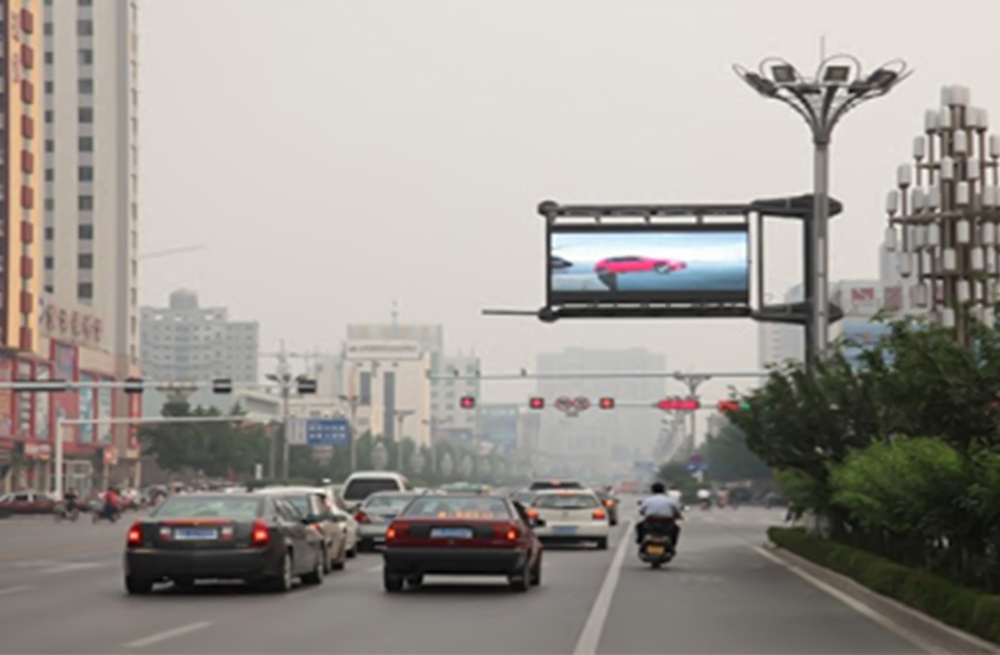
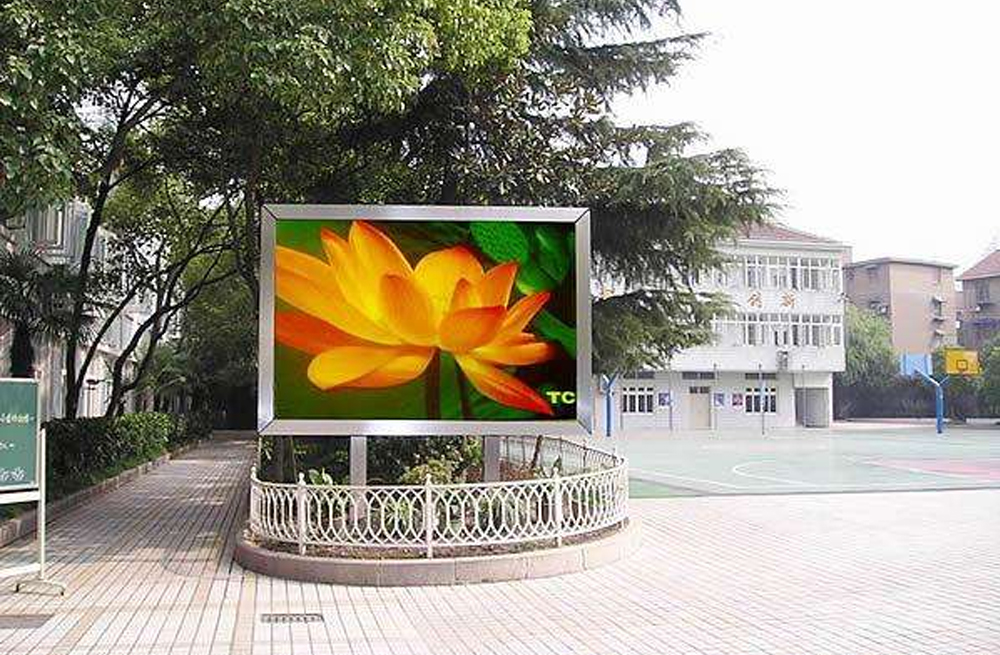
Outdoor LED displays give businesses, venues, and public organizations a bright, flexible way to communicate with large audiences in almost any weather. Their main advantages are high visibility, remote content control, long operating life, scalable size, and the ability to show timely video, text, pricing, alerts, and event information.
Quick answer: The biggest benefits of an outdoor LED display are daylight visibility, reusable digital content, precise scheduling, strong audience reach, flexible screen sizes, durable construction, and measurable long-term value. The right screen depends on viewing distance, ambient light, pixel pitch, weather exposure, installation method, and total operating cost.
What Is an Outdoor LED Display?
An outdoor LED display is a modular digital screen designed for exterior installation. Thousands of light-emitting diodes create images and video that remain visible from a distance and under bright ambient light. Cabinets or panels join together to form the required screen size, while a sending device, receiving cards, power supplies, and control software deliver the content.
Unlike a consumer television or indoor sign, an outdoor LED display screen is engineered for higher brightness, weather resistance, heat management, and continuous commercial use. Permanent billboards, stadium scoreboards, roadside message signs, storefront screens, and rental event walls are all common examples.
12 Key Benefits of Outdoor LED Displays
1. High Visibility in Daylight
Outdoor LED displays produce much more light than typical indoor screens. This helps text, images, and video remain readable in daylight and from longer viewing distances. A well-specified display can attract attention in busy retail areas, transport hubs, stadiums, and roadside locations where printed signs may be easier to overlook.
2. Dynamic Content That Can Be Updated Quickly
Digital content can be changed without printing, shipping, or physically replacing a sign. Authorized staff can update promotions, prices, schedules, announcements, and safety messages from the control system. This is especially valuable when information changes daily or when several campaigns must run on the same screen.
3. Better Message Timing and Relevance
Content can be scheduled by time, day, event, season, or audience context. A restaurant can promote breakfast in the morning and dinner later; a venue can switch from sponsor content to wayfinding or emergency information; a retailer can align campaigns with local events. Timely content makes the screen more useful to viewers and more productive for the owner.
4. One Screen Can Support Many Campaigns
An outdoor LED display board can rotate multiple messages instead of dedicating one physical surface to a single creative. Businesses can test different calls to action, highlight several products, support multiple sponsors, and replace underperforming content without rebuilding the display.
5. Flexible Size, Shape, and Resolution
Modular LED panels can form small storefront signs, wide-format billboards, large video walls, and custom aspect ratios. The pixel pitch can also be matched to viewing distance. Fine-pitch outdoor modules support closer viewing, while larger pitches such as P6, P8, or P10 can be practical for long-distance viewing and large installations.
6. Durable Performance in Outdoor Conditions
Outdoor cabinets are designed to resist rain, dust, sunlight, temperature changes, and wind when the product and installation are correctly specified. Weather protection is commonly expressed with an IP rating. Buyers should confirm the rating for both the front and rear of the cabinet, because service access and exposure differ by installation.
7. Strong Visual Impact for Branding
Motion, color, contrast, and large-scale visuals can make a brand easier to notice and remember. The screen can maintain consistent logos and brand colors while adapting creative for different campaigns. For venues and events, the display also becomes part of the audience experience rather than only an advertising surface.
8. Useful for Information, Wayfinding, and Safety
Outdoor LED screens are not limited to advertising. They can display arrival information, queue guidance, scores, event schedules, traffic instructions, weather notices, and emergency alerts. Large text and symbols help communicate quickly when an audience is moving or viewing from a distance.
9. Remote Monitoring and Centralized Control
A connected control system can manage one screen or a network of displays. Operators may publish content, monitor device status, schedule brightness changes, and respond to faults from a central location. The exact features depend on the LED controller, player, sensors, software, and network configuration.
10. Energy and Brightness Can Be Managed
Modern systems can adjust brightness according to time of day or an ambient light sensor. This reduces unnecessary power use, limits glare at night, and helps the display meet local rules. Energy performance should be evaluated using average power consumption, not only the maximum rating on a specification sheet.
11. Long-Term Reuse Can Lower Campaign Costs
The initial hardware and installation cost is higher than a single printed banner, but the same LED display can support many campaigns over several years. Organizations that update content frequently may avoid repeated printing, transport, installation, and disposal costs. The financial result depends on usage, electricity, maintenance, content production, and any advertising revenue.
12. Suitable for Permanent and Rental Applications
Fixed outdoor displays are built for long-term installation on buildings, poles, or dedicated structures. Rental LED displays use lighter cabinets, fast locks, and service-friendly connections for concerts, festivals, sports, exhibitions, and temporary promotions. Choosing the correct cabinet type improves setup speed, reliability, and maintenance access.
Outdoor LED Display vs. Static Billboard
| Factor | Outdoor LED Display | Static Billboard |
|---|---|---|
| Content | Video, animation, images, text, live information | One printed design |
| Updates | Remote and near-instant | Requires printing and physical replacement |
| Scheduling | Multiple messages by time or event | One message until replaced |
| Night visibility | Self-illuminated with adjustable brightness | Usually needs separate lighting |
| Initial cost | Higher hardware and installation investment | Usually lower for one campaign |
| Long-term use | Reusable across many campaigns | Recurring production and replacement costs |
Where Outdoor LED Screens Work Best
- Retail and shopping centers: promotions, opening hours, new products, and wayfinding.
- Roadside advertising: large-format campaigns designed for short viewing times.
- Sports venues: scores, replays, sponsor messages, and crowd information.
- Concerts and events: live video, stage backgrounds, schedules, and sponsor content.
- Transportation: departures, routes, platform information, and safety notices.
- Corporate and public spaces: announcements, campaigns, civic information, and emergency messaging.
- Hospitality: hotel events, resort activities, menus, and visitor directions.
How to Choose an Outdoor LED Display
- Start with viewing distance. Pixel pitch is the center-to-center distance between LEDs, measured in millimeters. Smaller pitches provide more detail at close range; larger pitches are often more economical for distant viewing.
- Measure ambient light. Required brightness depends on orientation, shade, direct sunlight, operating hours, and local regulations. Outdoor products are often specified in the several-thousand-nit range, but the correct target must be based on the site.
- Confirm weather protection. Review front and rear IP ratings, drainage, corrosion resistance, operating temperature, and cabinet sealing.
- Plan the structure. A qualified engineer should evaluate wind load, mounting, access, electrical distribution, grounding, and local permits.
- Choose front or rear service. Front-service cabinets suit wall-mounted screens with limited space behind them. Rear-service systems may be easier where a maintenance corridor is available.
- Review the control system. Confirm supported resolution, inputs, remote publishing, redundancy, brightness sensors, monitoring, and compatibility with the receiving cards.
- Compare total cost of ownership. Include the display, structure, controller, installation, freight, power, spare modules, routine maintenance, and content creation.
For current configurations, compare our outdoor LED display screens or ask the EagerLED team to match cabinet type, pixel pitch, brightness, and control equipment to your project.
Common Outdoor LED Pixel Pitches
| Pixel Pitch | Typical Use | Selection Note |
|---|---|---|
| P2.5-P3 | Close-view outdoor retail and premium signage | Higher detail; requires a larger budget and careful specification |
| P3.91-P4.81 | Rental stages, events, storefronts, and medium-distance viewing | Popular balance of image detail and cabinet flexibility |
| P6-P8 | Building signs, sports venues, and larger advertising screens | Designed for audiences viewing from farther away |
| P10 and above | Large roadside or long-distance displays | Lower pixel density can be economical at a large scale |
These are planning examples, not fixed rules. Final pitch should be chosen after checking the closest viewer, content detail, screen dimensions, camera use, and budget.
How to Estimate Cost and ROI
Outdoor LED display cost is influenced by screen area, pixel pitch, LED quality, cabinet material, brightness, protection level, controller, structure, installation, freight, and service requirements. A low hardware price can lead to a higher total cost if the screen consumes excessive power or is difficult to maintain.
For a practical ROI estimate, calculate the total installed and operating cost over the planned service period. Compare that figure with avoided print costs, improved campaign speed, sponsorship or advertising revenue, increased visitor engagement, and the operational value of real-time information. Use measurable goals such as inquiries, store visits, QR scans, ticket sales, or ad occupancy rather than relying only on visual impact.
Frequently Asked Questions
What are the main advantages of outdoor LED displays?
The main advantages are strong daylight visibility, fast content updates, video capability, precise scheduling, large scalable formats, outdoor durability, centralized control, and reuse across many campaigns. These features make outdoor LED displays effective for advertising, information, events, and public communication.
Are outdoor LED displays waterproof?
Outdoor LED displays are designed to resist weather, but protection varies by product and installation. Check the specified IP rating for the front and rear, along with cabinet sealing, drainage, ventilation, corrosion protection, and installation details. Weather resistance does not remove the need for correct mounting and maintenance.
How bright should an outdoor LED screen be?
Brightness should be selected for the site’s actual light conditions. A screen in direct sun generally needs more brightness than one under a canopy. Automatic brightness control is recommended so the display remains readable during the day without causing excessive glare or energy use at night.
What pixel pitch is best for an outdoor LED display?
The best pixel pitch depends mainly on the closest viewing distance, screen size, content detail, and budget. Smaller pitches provide finer detail for close viewers; larger pitches can be effective and economical when the audience is farther away. A site survey and content test are better than choosing by pitch alone.
How long does an outdoor LED display last?
Service life depends on component quality, brightness settings, climate, operating hours, ventilation, power stability, and maintenance. Manufacturers may publish LED lifetime figures, but real-world useful life also depends on color consistency, module failures, power supplies, and the availability of spare parts.
What maintenance does an outdoor LED screen need?
Routine work typically includes visual inspections, cleaning, checking seals and ventilation, tightening electrical and structural connections, reviewing fault logs, and replacing failed modules or power supplies. Keeping matching spare modules and documenting calibration settings can reduce downtime.
Conclusion
An outdoor LED display is most valuable when its brightness, pixel pitch, cabinet design, control system, and installation are matched to a specific audience and site. The technology offers far more than a bright picture: it gives organizations a reusable communication platform that can adapt content in real time.
Need help selecting an outdoor LED display board, LED modules, or control equipment? Contact EagerLED with your screen dimensions, viewing distance, installation location, and intended content for a project-specific recommendation.