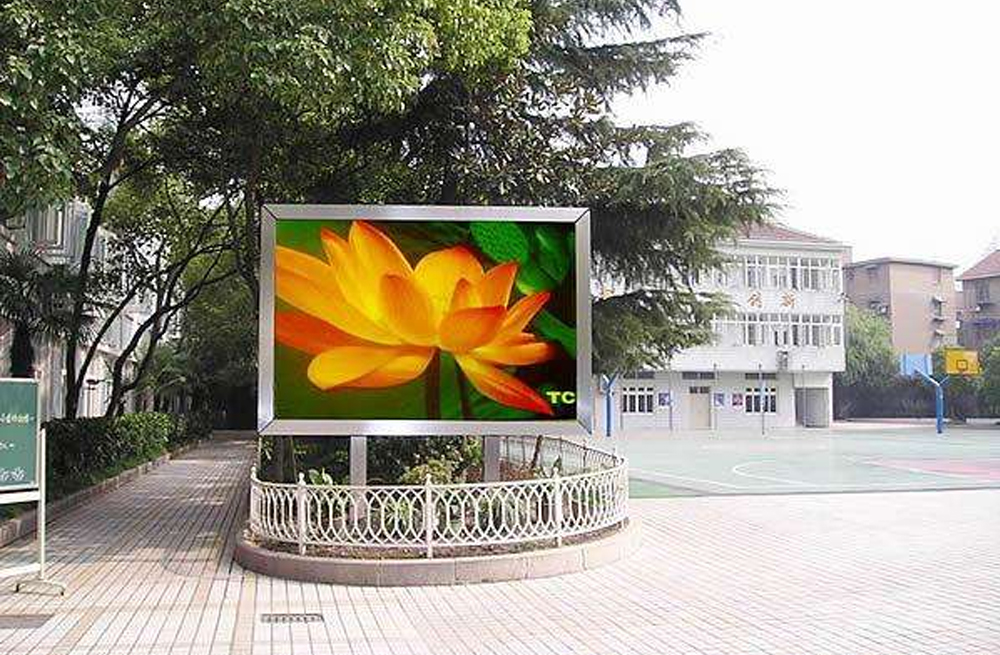
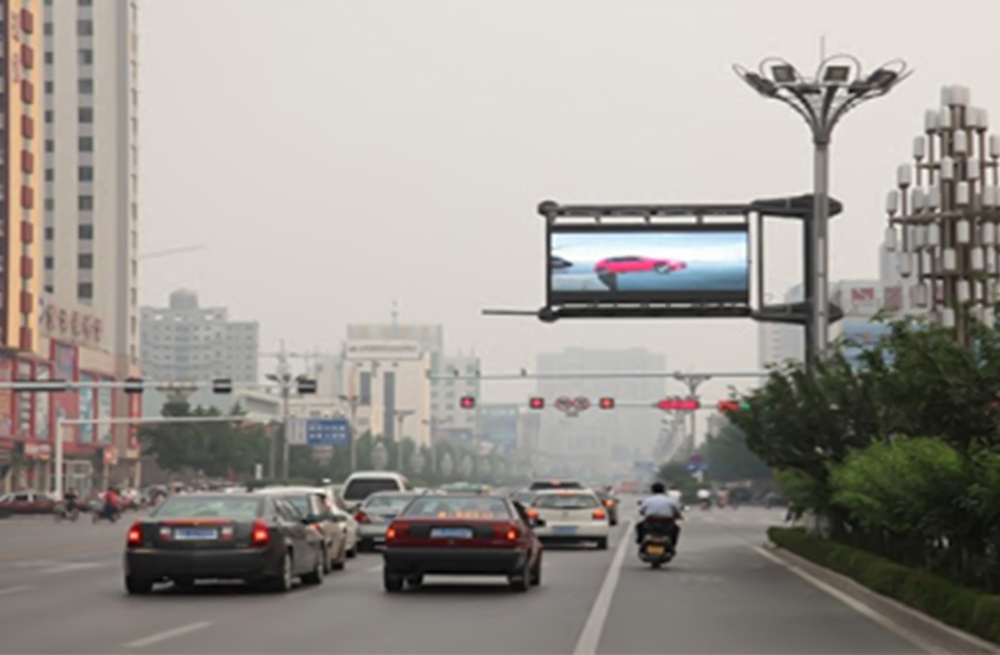
LED video walls combine multiple LED display cabinets into one seamless, large-format screen. Their main benefits are high brightness, scalable size, flexible aspect ratios, long viewing distances, and reliable 24/7 operation. These qualities make LED video walls valuable for advertising, live events, control rooms, retail spaces, transportation hubs, houses of worship, and corporate environments.
This guide explains how LED video walls work, why organizations use them, how they compare with LCD video walls and projectors, and which specifications matter when planning a system.
What Is an LED Video Wall?
An LED video wall is a modular display built from LED modules or cabinets that operate together as one canvas. Unlike an LCD video wall, a direct-view LED system does not require visible panel bezels. The result is a continuous image that can be expanded to fit a wall, stage, facade, or custom architectural space.
A complete system normally includes LED modules, cabinets, power supplies, sending and receiving hardware, signal distribution, mounting, and an LED video processor. The processor scales and switches source signals, manages layouts, and sends correctly formatted content to the display control system.
Key Benefits of LED Video Walls
1. High brightness and strong visibility
LED displays can remain clear in bright indoor venues and, when designed for outdoor use, in daylight. Brightness should be selected for the installation environment rather than set to the maximum at all times. Proper calibration improves visual comfort and can reduce power use.
2. Seamless, scalable display area
Because an LED wall is assembled from modular cabinets, it can be configured in many sizes and aspect ratios. There are no LCD bezels interrupting the image. This makes LED suitable for wide stages, command-center canvases, digital signage, and custom shapes.
3. Flexible viewing distance
Pixel pitch is the distance between adjacent LED pixels, measured in millimeters. A smaller pixel pitch supports closer viewing and finer detail, while a larger pitch is often more economical for audiences farther away. Choosing the pitch around the actual viewing distance is more important than simply selecting the smallest available number.
4. Reliable operation and serviceability
Commercial LED video walls are designed for long operating schedules. Modular construction allows technicians to replace individual modules, receiving cards, or power supplies instead of removing the entire screen. Front-service cabinets are especially useful where rear access is limited.
5. Dynamic content and real-time control
An LED wall can show live video, presentations, dashboards, advertising, social feeds, or multiple sources at once. A suitable video wall processor can provide scaling, source switching, picture-in-picture, multi-window layouts, and synchronized output.
6. Efficient use of space
Direct-view LED cabinets are relatively shallow and can be mounted on a wall, supported by a freestanding structure, or flown for events. The final structure, ventilation, cable access, and maintenance clearance must still be planned by qualified professionals.
Why Are LED Video Walls Significant?
The significance of an LED video wall is not only its size. It creates a shared visual focal point that can communicate information to many people at the same time. For businesses, this can improve brand visibility and campaign flexibility. For operations teams, it can make multiple data sources easier to monitor. For venues and events, it can help every viewer see the same content clearly.
- Retail and advertising: promote products, campaigns, and time-sensitive offers with content that can be updated remotely.
- Control rooms: present camera feeds, maps, alerts, and operational dashboards on one large canvas.
- Corporate spaces: support presentations, video conferencing, digital art, and internal communications.
- Transportation hubs: display schedules, wayfinding, safety messages, and commercial content.
- Events and entertainment: provide live camera feeds, graphics, scores, and stage backgrounds.
- Stadiums and houses of worship: improve visibility for large audiences and distant seating areas.
LED Video Wall vs. LCD Video Wall vs. Projector
| Factor | Direct-View LED | LCD Video Wall | Projector |
|---|---|---|---|
| Image seams | Seamless between modules when installed correctly | Visible panel bezels | No panel seams |
| Brightness | Suitable for bright indoor or outdoor environments, depending on model | Good for controlled indoor spaces | Best in controlled lighting |
| Scalability | Highly modular with flexible sizes and shapes | Limited by standard panel dimensions | Limited by throw distance, lens, and ambient light |
| Close viewing | Depends on pixel pitch | Sharp at close range | Depends on resolution and projection conditions |
| Maintenance | Module-level servicing is possible | Individual panels can be replaced | Lamp, laser, filter, and alignment requirements vary |
| Typical use | Large, bright, high-impact installations | Indoor monitoring and information walls | Meeting rooms, education, and controlled venues |
No technology is best for every project. LED is usually preferred when brightness, scale, seamless presentation, or unusual dimensions are priorities. LCD may suit close-viewing indoor applications with a limited budget, while projection can be practical when lighting and throw distance are controlled.
How to Choose an LED Video Wall
Start with the application rather than a single product specification. A useful project brief should include:
- Viewing distance and content: fine text and close audiences generally require a finer pixel pitch than large graphics viewed from far away.
- Indoor or outdoor conditions: outdoor systems need suitable weather protection, brightness, corrosion resistance, and thermal design.
- Screen dimensions and resolution: calculate the total pixel canvas from the cabinet layout and pixel pitch.
- Input sources: identify required HDMI, DisplayPort, SDI, IP, or other signal formats and the maximum input resolution.
- Content layout: determine whether the wall needs full-screen playback, picture-in-picture, multiple windows, or redundant sources.
- Refresh rate and camera use: broadcast, virtual production, and live events may require higher refresh rates and careful camera testing.
- Installation and maintenance access: confirm structural loading, power distribution, ventilation, front or rear service, and cable routes.
- Redundancy and support: mission-critical systems may need backup power, signal redundancy, spare modules, and a documented service plan.
What Does a Video Wall Processor Do?
A video wall processor receives one or more source signals and prepares them for the LED canvas. Depending on the model, it may scale content to the wall’s resolution, switch between sources, crop images, create multiple windows, synchronize outputs, or provide backup inputs. The processor must be matched to the screen’s total pixel load, input formats, output architecture, and required number of layers.
It is also important to distinguish a video processor from the LED sending and receiving system. The processor manages source presentation, while sending cards or controllers distribute LED display data to receiving cards inside the cabinets. Some modern devices combine several of these functions in one unit.
Frequently Asked Questions
What is the main advantage of an LED video wall?
The main advantage is a bright, seamless display that can be scaled to large or custom dimensions. Its modular design also supports component-level servicing and flexible installation.
Are LED video walls suitable for close viewing?
Yes, provided the pixel pitch and image resolution match the viewing distance. Fine-pitch LED displays are designed for closer indoor viewing, while larger pitches suit longer viewing distances.
Do LED video walls use less power than projectors?
Power consumption depends on screen size, brightness, content, and equipment efficiency. LED can be efficient for high-brightness, large-format applications, but buyers should compare measured typical and maximum power data for the complete system rather than rely on a general claim.
How long does an LED video wall last?
Service life varies with LED quality, operating temperature, brightness settings, ventilation, maintenance, and daily runtime. Manufacturers often publish rated lifetime figures, but real-world performance depends heavily on installation and operating conditions.
Can one processor control multiple screens?
Yes, if its output capacity, pixel load, connector types, and software support the required configuration. Complex projects may also need signal distribution, synchronized outputs, or redundant processing.
Conclusion
LED video walls are significant because they combine visual impact with modular engineering and flexible content control. The best results come from matching pixel pitch, brightness, resolution, processing capacity, structure, and service access to the actual application. Before purchasing, document the viewing conditions, sources, canvas size, operating schedule, and maintenance requirements, then verify that every component in the signal and power chain is compatible.
Explore our LED video processors or contact our team for help matching a processor and control system to your LED video wall.