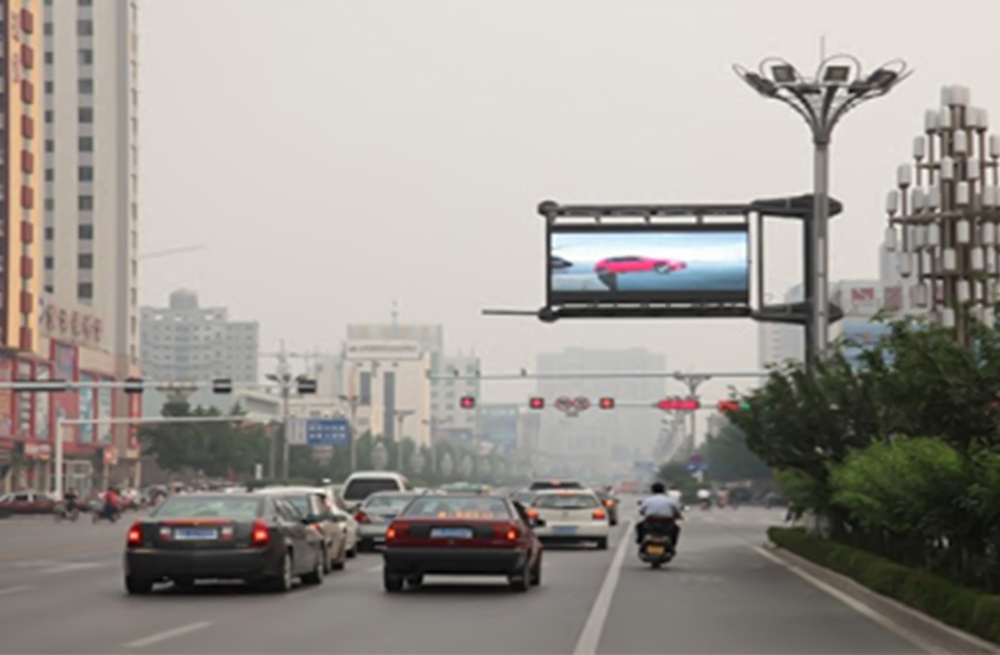
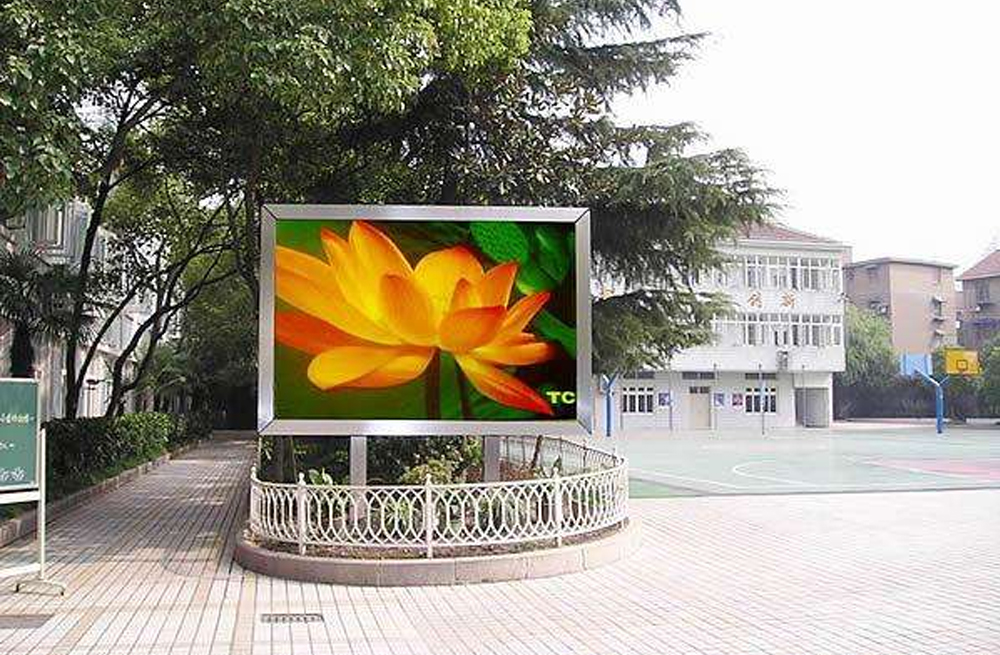
Outdoor LED display boards are large, high-brightness digital screens designed to present video, images, text, and live information in open-air environments. Their main advantages are long-distance visibility, flexible content, fast updates, and reliable operation in changing weather. They are widely used for advertising, transport information, public communication, sports, retail, and live events.
This guide explains the benefits and uses of outdoor LED display boards, the main screen types, the specifications that matter, and the questions to ask before buying or renting one.
What Is an Outdoor LED Display Board?
An outdoor LED display board is a modular electronic display built from LED modules, cabinets, power supplies, receiving cards, and a control system. Unlike a printed billboard, it can show changing content. Unlike a conventional LCD, it uses light-emitting diodes to produce a bright image that can remain visible across a long viewing distance.
Outdoor models are engineered differently from indoor screens. They normally require higher brightness, weather-resistant cabinets, protected electrical connections, effective heat management, and a structure designed for wind load and local installation conditions.
Key Benefits of Outdoor LED Display Boards
- High visibility: Bright output and large display areas help messages remain readable in daylight and from a distance.
- Dynamic content: One screen can rotate promotions, video, schedules, alerts, prices, and branded messages without replacing printed material.
- Fast remote updates: Networked control systems let operators schedule or change content from a computer or cloud platform.
- Flexible screen size: Modular cabinets can be combined to create many aspect ratios and dimensions.
- Strong visual impact: Motion, color, and real-time information attract attention more effectively than a static sign in many high-traffic locations.
- Multiple revenue opportunities: Media owners can divide screen time among advertisers and update campaigns by time, audience, or event.
- Long-term reuse: The display hardware can present thousands of campaigns, reducing the need to print and physically install new graphics.
- Centralized communication: Organizations can manage content across one or several screens and publish urgent information quickly.
Common Uses of Outdoor LED Display Boards
1. Digital Out-of-Home Advertising
Roadside billboards, building facades, shopping districts, and commercial centers use outdoor LED screens to run time-based advertising and brand campaigns. Content can be changed for different promotions without replacing the physical display.
2. Retail and Shopping Centers
Retailers use LED boards for new-product launches, store directions, seasonal offers, opening hours, and event notices. A screen near an entrance can combine promotional content with practical visitor information.
3. Transport and Traffic Information
Airports, railway stations, bus terminals, parking facilities, and road operators use displays for schedules, wayfinding, lane information, safety messages, and service updates. For critical information, the control system and backup plan are as important as image quality.
4. Sports Venues
Stadium and arena displays can show scores, replays, sponsor messages, player information, and audience prompts. Perimeter LED systems are also used around playing fields where viewing angle, refresh rate, impact protection, and camera performance require special attention.
5. Concerts, Festivals, and Outdoor Events
Rental LED displays give audiences a clear view of live video and event content. Rental cabinets are designed for repeated assembly, fast locking, transport, and flexible configurations. Rigging and wind safety must be assessed for every venue.
6. Government and Public Communication
Municipal authorities, campuses, hospitals, and community facilities use outdoor display boards for public notices, emergency guidance, event information, and awareness campaigns. Messages should be concise, legible, and scheduled with clear operational responsibility.
7. Banks and Corporate Buildings
Financial institutions and corporate sites use facade-mounted screens for brand communication, market information, announcements, and community messages. The existing image in this article shows this type of building installation.
Main Types of Outdoor LED Display
| Type | Best suited to | Main consideration |
|---|---|---|
| Fixed installation | Building facades, roadside advertising, retail centers | Structural design, access, weather protection, and service method |
| Rental LED screen | Concerts, festivals, exhibitions, temporary events | Fast assembly, cabinet weight, rigging, and transport durability |
| Mobile LED display | Roadshows, promotions, temporary public communication | Vehicle or trailer compliance, setup area, and power supply |
| Sports and perimeter display | Stadiums, arenas, field-side advertising | Refresh rate, viewing angle, protection, and broadcast performance |
How to Choose an Outdoor LED Display Board
1. Match Pixel Pitch to Viewing Distance
Pixel pitch is the center-to-center distance between adjacent pixels, measured in millimeters. A smaller pitch produces higher pixel density and is generally better for close viewing, but it also increases cost and processing requirements. As a rough starting point, the pitch number in millimeters is often similar to the minimum comfortable viewing distance in meters. The final choice should be checked with the actual content, screen size, and site layout.
For example, a P10 outdoor LED screen is commonly considered for longer viewing distances, while a smaller pitch may be more appropriate for pedestrians viewing a screen at close range.
2. Specify Brightness for the Site
Brightness is measured in nits. Many outdoor installations are specified in the approximate 5,000-10,000-nit range, but the right level depends on screen orientation, local sunlight, viewing time, and contrast. More brightness is not always better: automatic brightness control can improve night-time comfort and reduce unnecessary power use.
3. Check Weather Protection and Cabinet Design
Ask for the ingress protection rating of both the front and rear of the cabinet. An IP65-rated exposed face is a common target for outdoor products, but the required rating depends on the installation. Also review drainage, corrosion resistance, sealing, operating temperature, ventilation, and how cables enter the cabinet. An IP rating does not replace correct structural and electrical installation.
4. Choose the Right Control Method
A synchronous system is suitable when the screen must follow a live video source in real time. An asynchronous system stores and plays scheduled content without a permanently connected video source. Remote publishing, monitoring, user permissions, connectivity, and failover requirements should be defined before selecting the asynchronous LED control card or video control equipment.
5. Review Refresh Rate, Color, and Camera Use
If the display will appear on camera, ask the supplier to demonstrate the screen with the intended camera and frame rate. A higher refresh rate, often 3,840 Hz or above for broadcast-oriented applications, can reduce visible scan lines and flicker. Grayscale performance at low brightness is also important for night operation.
6. Plan Power, Structure, and Maintenance
Total power demand varies with brightness, content, screen area, and product efficiency. Request both maximum and typical power figures, then include distribution, grounding, surge protection, and backup requirements in the electrical plan. Decide whether front or rear service access is needed and keep enough spare modules, power supplies, and receiving cards for maintenance.
Outdoor LED Display Selection Checklist
| Factor | What to confirm |
|---|---|
| Viewing conditions | Minimum and typical distance, viewing angle, traffic speed, and screen height |
| Pixel pitch | Readable detail at the actual viewing distance |
| Brightness | Daylight visibility plus automatic dimming for evening use |
| Weather resistance | Front and rear IP ratings, sealing, drainage, corrosion protection, and temperature range |
| Screen size | Physical dimensions, resolution, aspect ratio, and content format |
| Control system | Live or scheduled playback, inputs, remote access, monitoring, and redundancy |
| Installation | Wind load, structural calculations, permits, grounding, and safe access |
| Serviceability | Front or rear access, spare parts, warranty, technical support, and module compatibility |
Installation and Maintenance Best Practices
- Survey the site: Record dimensions, viewing angles, sun direction, power availability, network access, drainage, and service clearances.
- Use qualified engineering: The supporting structure, fasteners, and foundation must be designed for the screen weight, wind load, and applicable local rules.
- Protect the electrical system: Provide correct grounding, surge protection, cable routing, circuit protection, and weatherproof connections.
- Calibrate the display: Match module brightness and color, set an appropriate day/night brightness schedule, and test content at the real viewing distance.
- Inspect regularly: Check seals, fans, vents, cables, fasteners, modules, power supplies, and error logs. Clean the display using the manufacturer’s approved method.
- Maintain spare parts: Store compatible LED modules and key electronics in a dry, controlled environment so faults can be repaired quickly.
Frequently Asked Questions
What are the main benefits of outdoor LED display boards?
The main benefits are high daylight visibility, reusable hardware, flexible screen size, dynamic multimedia content, rapid remote updates, and the ability to schedule different messages for different times or audiences.
Are outdoor LED display boards waterproof?
They are weather-resistant when designed and installed correctly, but “outdoor” does not make every surface or connection fully waterproof. Check the documented IP rating for the front and rear, then confirm cabinet sealing, cable entry, drainage, and installation details for the site.
What pixel pitch is best for an outdoor LED screen?
There is no single best pitch. Choose it from the closest viewing distance, required detail, screen dimensions, and budget. Smaller pixel pitches suit closer viewers; larger pitches can be economical for large screens viewed from farther away.
Can an outdoor LED display run all day?
Yes, many systems are designed for continuous schedules, provided that power distribution, cooling, brightness control, monitoring, and maintenance are properly planned. The operating schedule and environmental limits should be confirmed with the manufacturer.
How is content updated on an outdoor LED board?
Content can be sent from a live video source or uploaded through an asynchronous player using a local network, Wi-Fi, 4G/5G, or cloud platform. The best method depends on whether the screen shows live events, scheduled advertising, or public information.
What is the difference between an outdoor LED board and a digital billboard?
An outdoor LED board describes the display technology. A digital billboard describes an advertising use of that technology. The same type of LED screen can also be used for transport, sports, public information, retail, or events.
Final Takeaway
Outdoor LED display boards are most effective when the screen specification, content plan, installation structure, and maintenance strategy are designed together. Start with the viewing distance and environment, then select the pixel pitch, brightness, cabinet protection, control system, and service method. Buyers can explore outdoor LED display screens or contact the EagerLED team to discuss a project-specific configuration.