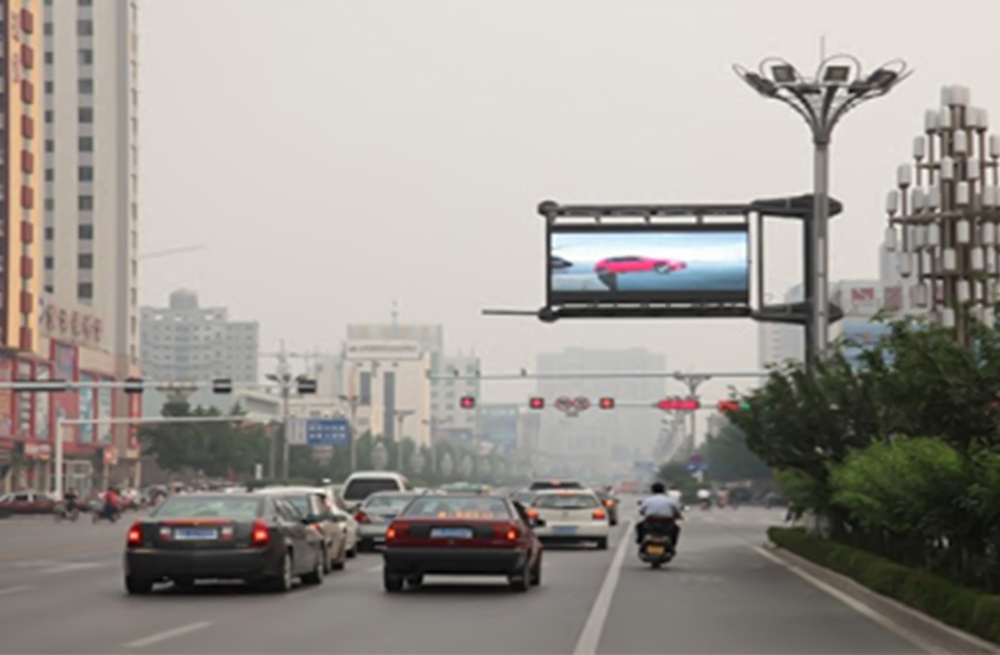
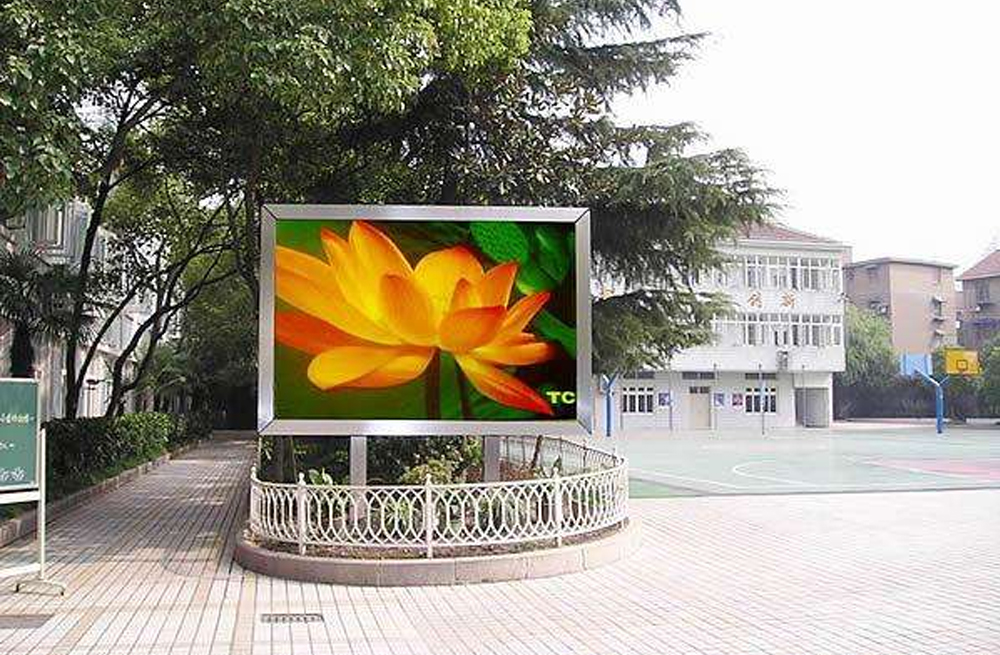
Outdoor LED advertising screens are weather-resistant digital displays that help brands deliver bright, changeable messages in high-traffic locations. Unlike a printed billboard, one screen can run multiple campaigns, update content in minutes, and schedule messages for different audiences throughout the day.
This guide explains the benefits, applications, technical specifications, and ROI factors buyers should review before investing in an outdoor LED screen.
What Is an Outdoor LED Advertising Screen?
An outdoor LED advertising screen is a modular digital display designed for public-facing use in daylight and changing weather. It combines LED display modules, cabinets, power supplies, receiving cards, a controller or media player, and content management software.
Businesses use these displays for roadside advertising, storefront promotions, event information, public announcements, and venue signage. Explore our outdoor LED display screens or read the broader outdoor LED display selection guide for more installation options.
Why Use Outdoor LED Advertising Screens?
1. High visibility in daylight
Outdoor LED displays use high-brightness LEDs so content remains visible in direct or strong ambient light. Automatic brightness control can reduce output after sunset, improving viewing comfort and avoiding unnecessary power use.
2. Fast content updates
Digital creative can be replaced without printing or installing a new poster. Networked control also allows operators to update one screen or a group of screens from a central location.
3. Flexible scheduling
A single display can show breakfast offers in the morning, event notices in the afternoon, and brand campaigns in the evening. This daypart scheduling makes the available screen time more useful.
4. Multiple messages on one display
Advertisers can rotate several campaigns in the same location. That flexibility can support different products, sponsors, languages, or calls to action without changing the physical display.
5. Durable, serviceable construction
Outdoor cabinets are designed to resist dust, rain, temperature changes, and long operating hours. Modular construction also allows trained technicians to replace individual outdoor LED modules, power supplies, or control components instead of replacing the entire screen.
Outdoor LED Advertising Screens vs. Static Billboards
| Factor | Outdoor LED advertising screen | Static billboard |
|---|---|---|
| Content changes | Remote or scheduled updates | Requires printing and installation |
| Number of messages | Multiple campaigns can rotate | Usually one campaign at a time |
| Night visibility | Self-illuminated with adjustable brightness | Needs external lighting |
| Motion | Supports video and animation where local rules allow | Static image |
| Upfront cost | Higher equipment and installation cost | Usually lower initial production cost |
| Ongoing work | Content, electricity, and technical maintenance | Reprinting and physical replacement |
Where Are Outdoor LED Advertising Screens Used?
- Retail stores and shopping centers: promotions, launches, seasonal offers, and wayfinding.
- Roadside and urban media: short brand messages designed for drivers and pedestrians.
- Sports and entertainment venues: schedules, sponsor content, scores, and audience information.
- Hotels and restaurants: event notices, menus, special offers, and opening hours.
- Transportation hubs: service information, directions, safety messages, and commercial campaigns.
- Government and public spaces: emergency notices, community information, and public-service campaigns.
- Outdoor events: live video, stage backgrounds, sponsor loops, and real-time announcements.
How to Choose an Outdoor LED Advertising Screen
Pixel pitch and viewing distance
Pixel pitch is the center-to-center distance between adjacent pixels, measured in millimeters. A smaller pitch provides finer detail at a shorter viewing distance but generally increases cost. Choose pitch according to the nearest important viewer, content detail, and screen size rather than selecting the smallest number by default.
Brightness and automatic dimming
Many outdoor installations use roughly 5,000 to 8,000 nits, but the correct level depends on screen direction, local sunlight, shade, and operating hours. Specify a light sensor and automatic dimming so brightness can adapt to daytime and nighttime conditions.
Weather protection
Check the protection rating for both the front and rear of the cabinet. An IP65-rated front is common for outdoor screens, while the rear requirement depends on whether the installation is exposed or sheltered. The IEC explanation of IP ratings helps clarify what the first and second digits mean.
Refresh rate and camera use
A higher refresh rate is important when the display will be recorded by broadcast or mobile cameras. Confirm camera requirements with the supplier and test representative content before final approval.
Cabinet access and maintenance
Choose front or rear service access according to the structure and available maintenance space. Also plan safe access to modules, fans, power supplies, receiving cards, and data connections.
Control system and connectivity
Decide whether the screen needs synchronous live-video control or an asynchronous media player for scheduled playback. Confirm input sources, remote publishing, monitoring, backup strategy, and compatibility with the required LED video processor or asynchronous LED control card.
Total cost of ownership
Compare more than the purchase price. Include the steel structure, installation, permits, power distribution, data connection, electricity, spare parts, content production, maintenance access, and expected service life.
How to Estimate Advertising ROI
A useful screen does not create ROI by itself. Performance depends on location, audience volume, message clarity, campaign scheduling, and the value of the action generated.
- Define one measurable goal, such as store visits, coupon redemptions, calls, QR scans, or booked appointments.
- Record a baseline before the campaign starts.
- Use a unique offer, landing page, phone number, or QR code where viewing distance and dwell time make it practical.
- Calculate ROI as
(incremental gross profit - campaign cost) / campaign cost x 100. - Compare results by creative, time slot, and location, then adjust the schedule.
For a shared advertising screen, operators can also track occupancy rate, revenue per time slot, and the time required to recover the initial investment.
Content Tips for Better Outdoor Advertising
- Communicate one main idea per creative.
- Use large type and strong contrast that can be understood quickly.
- Keep logos and calls to action visually clear.
- Avoid dense paragraphs, thin fonts, and low-contrast color combinations.
- Preview content at the real viewing distance before publishing.
- Match message length to audience speed and dwell time.
- Follow local rules for brightness, animation, operating hours, and roadside signage.
Frequently Asked Questions
Are outdoor LED advertising screens effective?
They can be effective in locations with a relevant audience and clear sightlines. Their main advantages are visibility, rapid content changes, scheduling, and the ability to test multiple messages. Results should be measured against a defined business goal.
What pixel pitch is best for an outdoor advertising screen?
There is no single best pitch. The right choice depends primarily on minimum viewing distance, screen dimensions, content detail, and budget. A supplier should recommend options after reviewing the installation drawings and viewing conditions.
How bright should an outdoor LED display be?
Outdoor screens commonly operate within a broad 5,000 to 8,000-nit range during bright conditions, but orientation and sunlight exposure matter. Automatic brightness adjustment is preferable to running at maximum output all day.
Can an outdoor LED screen operate in rain?
Yes, when the cabinets, connectors, power distribution, structure, and installation are designed for the local environment. Verify front and rear IP ratings, drainage, ventilation, grounding, and maintenance procedures before commissioning.
What components are needed for an outdoor LED display?
A complete system normally includes LED modules and cabinets, receiving cards, power supplies, a controller or media player, video processing where required, network connections, mounting structure, power distribution, and content software.
Plan Your Outdoor LED Advertising Project
Start with the location, minimum viewing distance, screen size, content type, service access, and local approval requirements. These details determine the right pixel pitch, brightness, cabinet design, and control system.
Review our outdoor LED advertising screen options or contact EagerLED with your installation dimensions and viewing conditions for a project-specific recommendation.