A nano-polymeric magnetic LED screen cabinet is a lightweight, front-service LED display enclosure that attaches to an iron or steel frame with strong neodymium magnets. The magnetic mounting system reduces the number of screws needed during installation and makes individual cabinets easier to remove for maintenance. For the referenced P2.5 480 x 480 mm model, the assembled cabinet weighs 4.2 kg and has a maximum depth of 60 mm after the LED modules are installed.
This guide explains the cabinet’s construction, main benefits, available sizes, suitable applications, and the difference between a magnetic cabinet, a conventional iron-sheet cabinet, and a rental LED display cabinet.
Key Specifications at a Glance
| Item | Details |
|---|---|
| Cabinet type | Nano-polymeric magnetic LED screen cabinet |
| Service method | Front service; the cabinet can be removed from the front |
| Mounting method | Strong neodymium magnets attached to an iron or steel support frame |
| Reference cabinet weight | 4.2 kg for the assembled P2.5 480 x 480 mm model |
| Maximum cabinet depth | 60 mm after LED modules are installed |
| Referenced wall clearance | Approximately 95 mm for the described installation |
| Available options | P2.5 480 x 480 mm, P3 576 x 576 mm, and P4 512 x 512 mm |
| Typical use | Indoor fixed installations, shallow wall-mounted displays, and creative-shaped LED screens |
Project note: Dimensions, weight, clearances, and performance figures apply to the models and installation method described here. Confirm the final cabinet, module, power, structural, and fire-safety requirements before ordering.
What Is a Nano-Polymeric Magnetic LED Screen Cabinet?
The cabinet is the structural enclosure that holds the LED modules, receiving card, power supply, cables, and related components. Instead of relying mainly on screws to attach each enclosure to the support structure, this design uses neodymium magnets to secure the cabinet to a ferromagnetic iron or steel frame.
The nano-polymeric body combines low weight with electrical insulation, corrosion resistance, oxidation resistance, strength, and flame-retardant characteristics. A standardized cabinet design also helps control flatness and alignment, reducing visible gaps or deformation between adjacent LED modules.
Benefits of the Magnetic LED Cabinet
1. Faster Installation on an Iron Frame
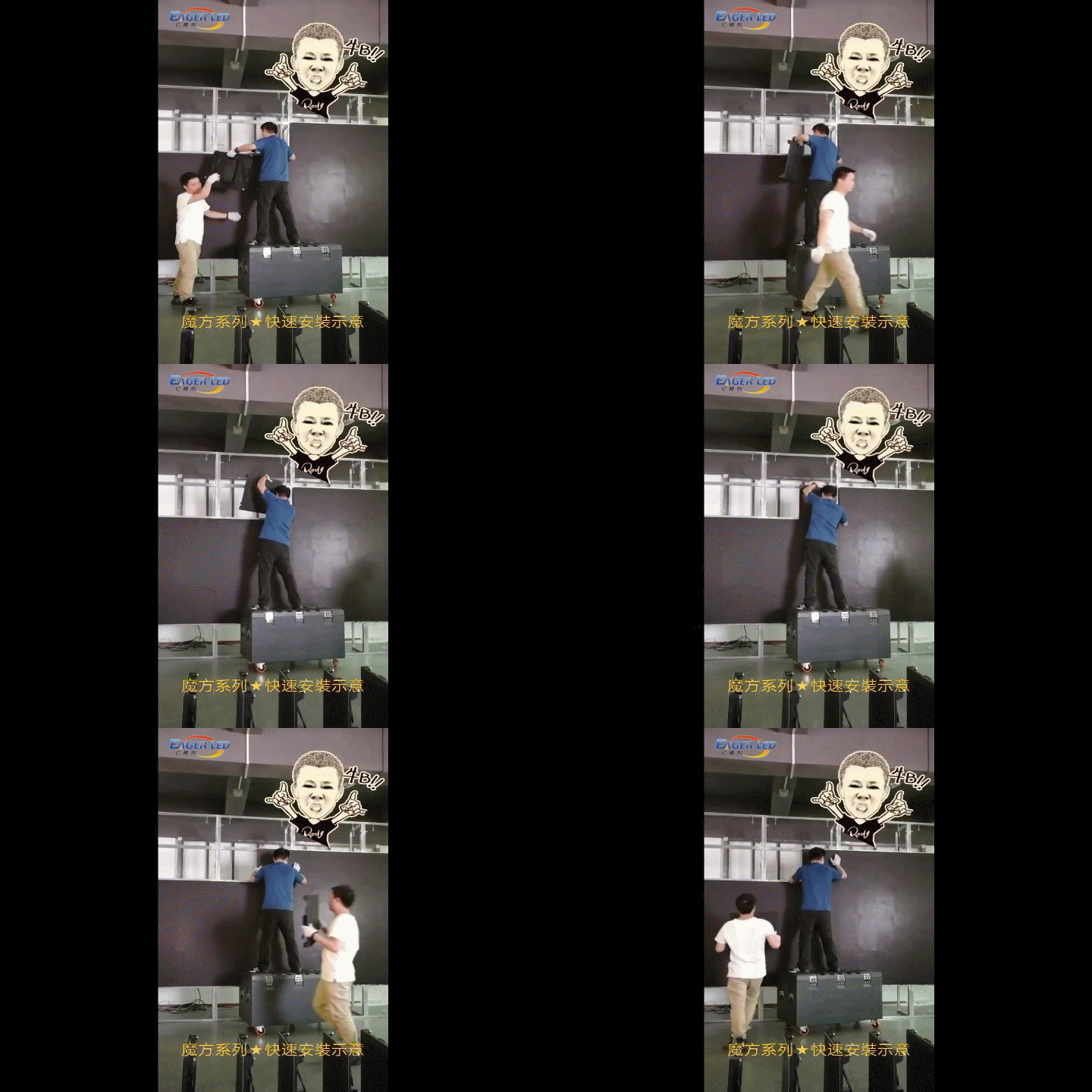
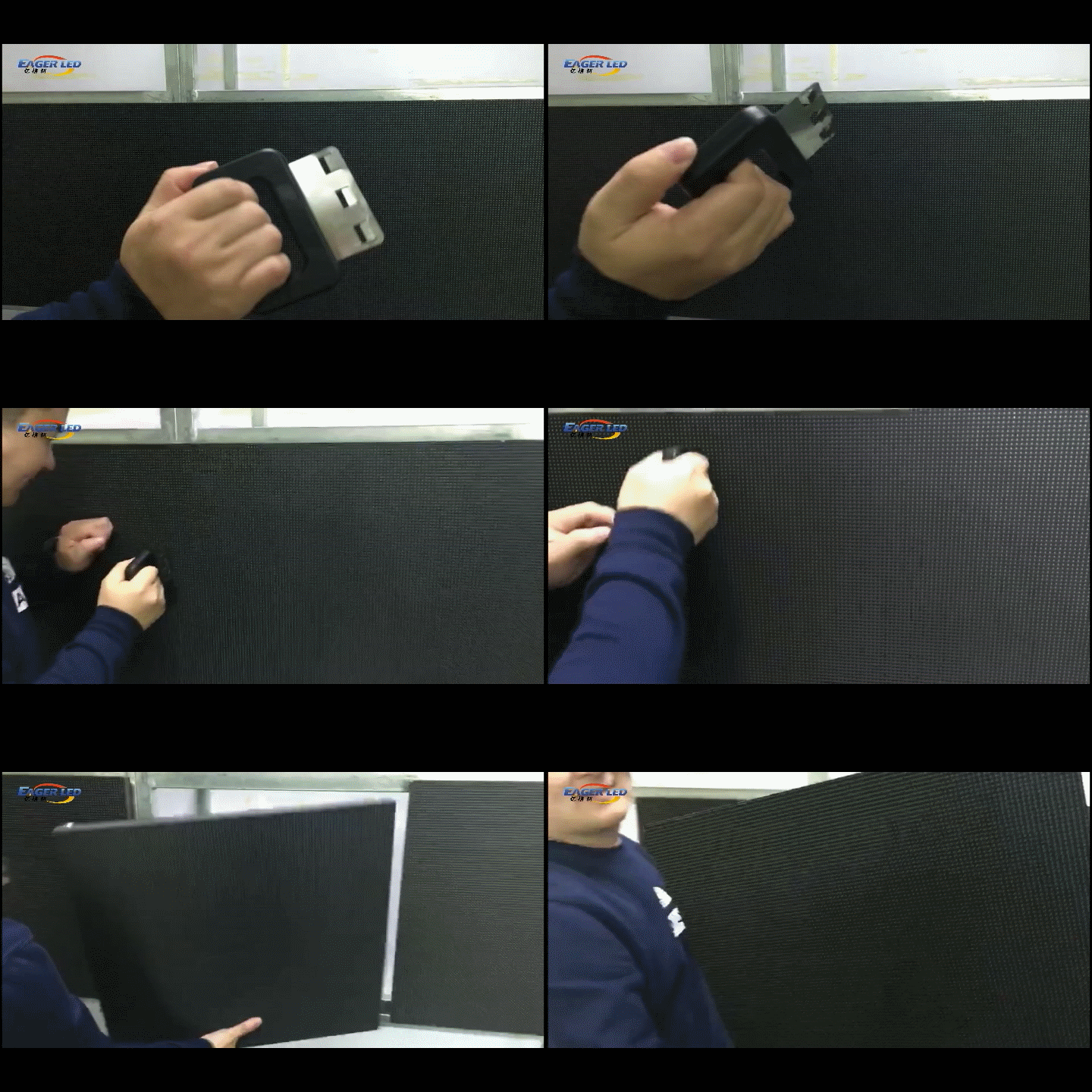
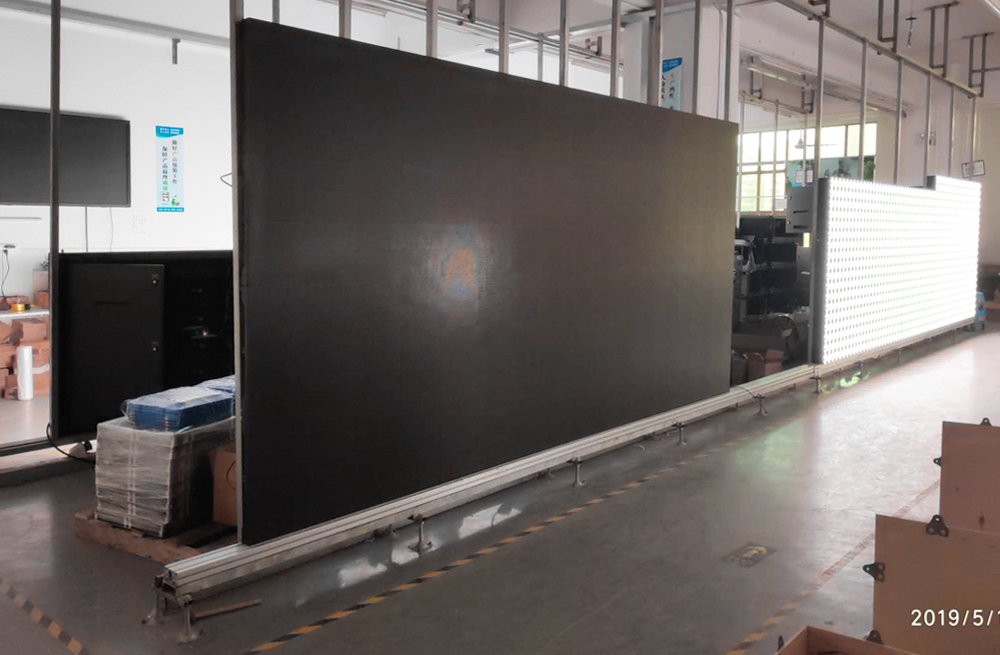
The magnetic fixing method lets installers position the cabinet directly on a prepared iron or steel frame. Compared with the traditional screw-fixed method described for this product, installation can be up to 50% faster. Actual installation time depends on the screen size, frame accuracy, cabling, access, and site conditions.
2. Lightweight Cabinet Construction
The assembled P2.5 480 x 480 mm magnetic front-service LED cabinet weighs approximately 4.2 kg. The low cabinet weight can reduce handling effort and structural load compared with heavier conventional enclosures, although the complete display weight must also include modules, power supplies, cables, frame, and mounting hardware.
3. Ultra-Thin 60 mm Profile
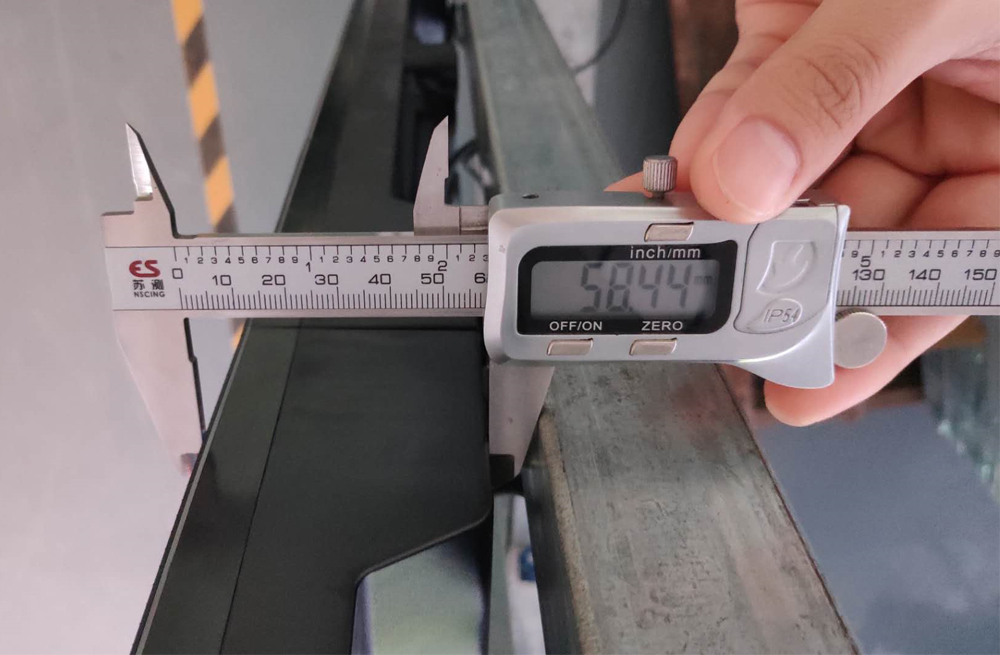
After the LED modules are installed, the maximum cabinet depth is approximately 60 mm. This shallow construction is useful where the display must stay close to the wall or where rear maintenance space is limited.
4. Front-Service Maintenance
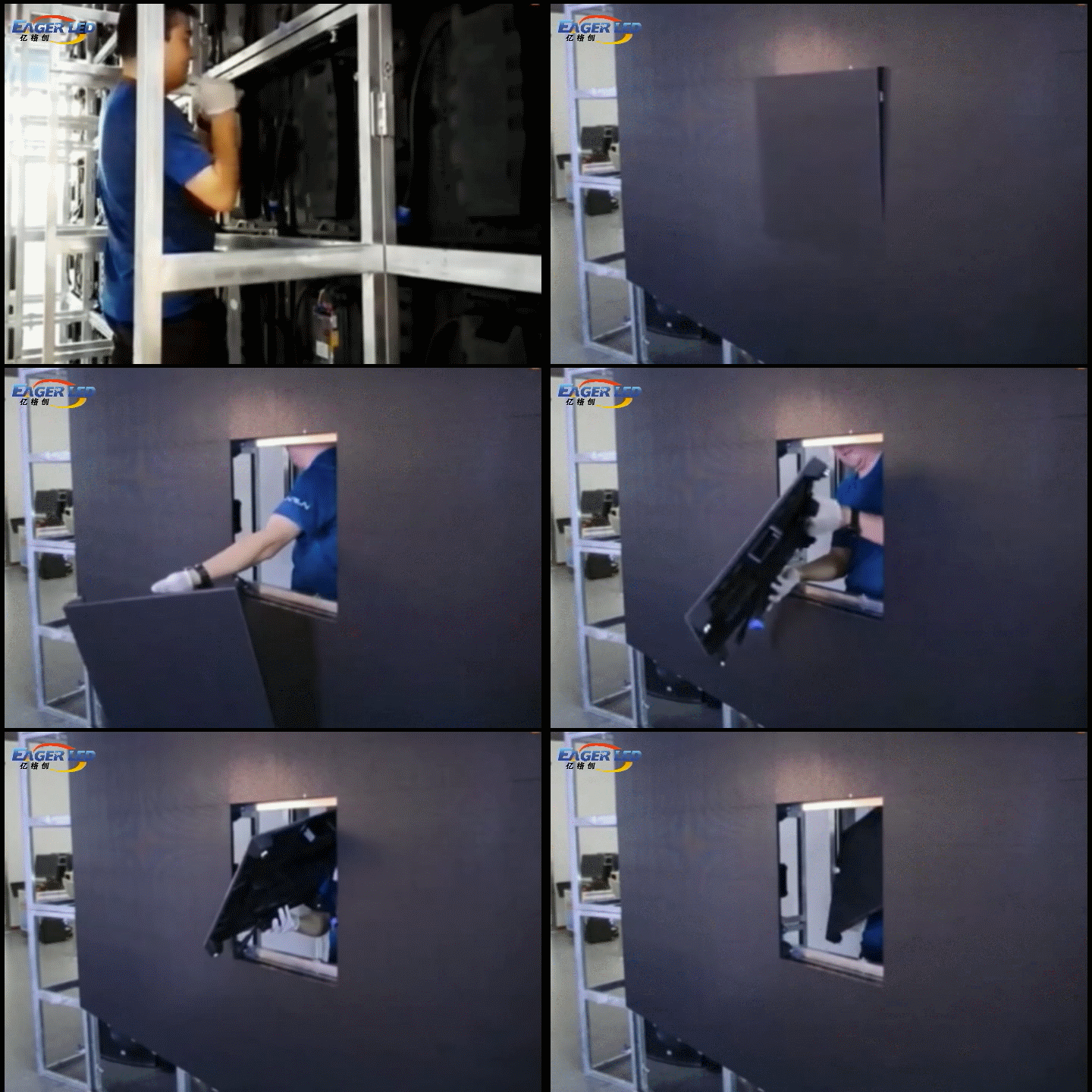
When a cabinet or internal component needs attention, technicians can remove the magnetic cabinet from the front without releasing multiple rear screws. This makes the system suitable for wall-mounted indoor LED displays where rear access is restricted. Power must be isolated and the cabinet supported before removal.
5. Heat Dissipation and Wall Clearance
The cabinet design supports heat dissipation in a shallow installation. The referenced installation allows the completed display to sit approximately 95 mm from the wall. Required clearance can vary with the LED module, power supply, ambient temperature, ventilation, and local electrical rules, so the final thermal design should be checked for each project.
6. Flat, Modular Appearance
Precision manufacturing and a standardized unit-body design help maintain a clean surface and consistent cabinet alignment. This addresses common installation problems such as module compression, bending, and visible seams between units.
7. Efficient Loading and Unloading
With the customized quick-install support structure described for this system, loading and unloading efficiency can be up to 80% higher than with the compared conventional product. This figure is installation-specific and should be validated against the cabinet and frame selected for the project.
Magnetic vs. Conventional and Rental LED Cabinets
| Cabinet type | Typical connection | Best suited to | Important consideration |
|---|---|---|---|
| Nano-polymeric magnetic cabinet | Magnets on an iron or steel frame | Lightweight, shallow, front-service indoor installations | Requires a flat, accurately built ferromagnetic support frame |
| Conventional iron-sheet cabinet | Screws or bolts | Permanent installations with standard access and structure | Installation and service can require more fasteners and working space |
| Rental LED display cabinet | Quick locks and alignment pins | Frequent assembly, touring, events, and temporary stages | Designed for repeated transport; it is not the same product category as a magnetic wall-mounted cabinet |
A magnetic cabinet can make installation and front maintenance faster, but it should not automatically be treated as a rental LED cabinet. Choose a rental system when the screen will be repeatedly transported and assembled. Choose a nano-polymeric magnetic cabinet when low weight, shallow depth, front access, and mounting to an iron frame are the main priorities.
Applications
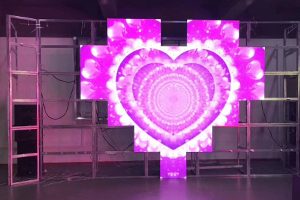
The modular cabinet can be arranged as a standard rectangular LED screen or used for creative layouts such as letters, numbers, hearts, and other shapes. Suitable applications may include:
- Indoor retail and commercial LED video walls
- Corporate reception and showroom displays
- Stage or event backdrops with a properly engineered support structure
- Creative-shaped LED displays combined with lighting effects
- Wall-mounted displays where rear maintenance access is limited
Available Pixel Pitches and Cabinet Sizes
- P2.5, 480 x 480 mm: a fine-pitch indoor option for closer viewing distances. See the P2.5 magnetic front-service cabinet.
- P3, 576 x 576 mm: a balanced option for indoor displays viewed from a moderate distance.
- P4, 512 x 512 mm: suitable where the viewing distance is longer and a larger pixel pitch is acceptable.
Pixel pitch alone does not determine the right cabinet. Screen dimensions, viewing distance, brightness, refresh rate, control system, electrical load, frame design, ventilation, and service access should be confirmed as one complete solution.
Selection Checklist
- Confirm that the support frame is iron or steel and compatible with the magnetic mounting system.
- Verify cabinet and module dimensions before the frame is fabricated.
- Calculate the total installed weight, not only the empty or assembled cabinet weight.
- Check front-service access for modules, power supplies, receiving cards, and cables.
- Confirm ventilation and the required wall clearance for the actual operating environment.
- Select pixel pitch according to the closest viewing distance and content type.
- Check fire rating, electrical protection, grounding, and local installation requirements.
- Request a complete wiring and control-system plan for the final screen resolution.
Frequently Asked Questions
Does a magnetic LED screen cabinet require an iron frame?
Yes. Neodymium magnets need a compatible ferromagnetic surface, normally an accurately fabricated iron or steel frame. Aluminum framing alone will not provide the required magnetic attachment unless compatible steel mounting surfaces are added.
Is the cabinet front-serviceable?
Yes. The magnetic mounting method allows the cabinet to be removed from the front, which is useful when there is little or no rear maintenance space.
How much does the cabinet weigh?
The referenced assembled P2.5 480 x 480 mm cabinet weighs approximately 4.2 kg. Ask for the confirmed weight of the exact configuration because modules and internal components can change the total.
How thin is the magnetic LED cabinet?
The maximum stated cabinet depth is approximately 60 mm after the LED modules are installed. The complete wall build-up can be larger once the frame, alignment allowance, ventilation, and cable space are included.
Is a magnetic LED cabinet the same as a rental LED cabinet?
No. A rental LED cabinet is normally designed with quick locks, alignment hardware, and protective features for repeated transport and assembly. A magnetic cabinet is primarily optimized for lightweight, shallow, front-service installation on an iron or steel frame.
Can the cabinets form custom shapes?
Yes. The modular units can support creative layouts such as letters, numbers, hearts, and other shapes, provided the cabinet grid, frame, electrical system, and content resolution are engineered for that layout.
Conclusion
A nano-polymeric magnetic LED screen cabinet is a practical option for indoor projects that need low weight, a shallow profile, fast mounting, and front-service maintenance. The best result depends on accurate frame fabrication and a complete plan for structure, power, control, ventilation, and service access.
Review the P2.5 480 x 480 mm magnetic LED cabinet or contact EagerLED with your screen size, viewing distance, installation environment, and required pixel pitch for a project-specific recommendation.