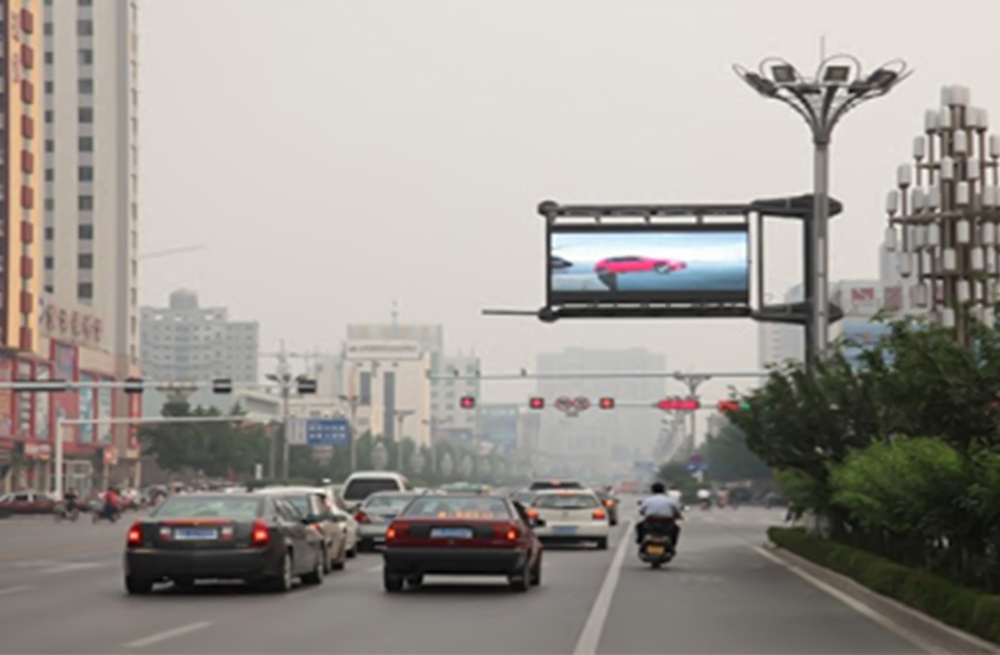
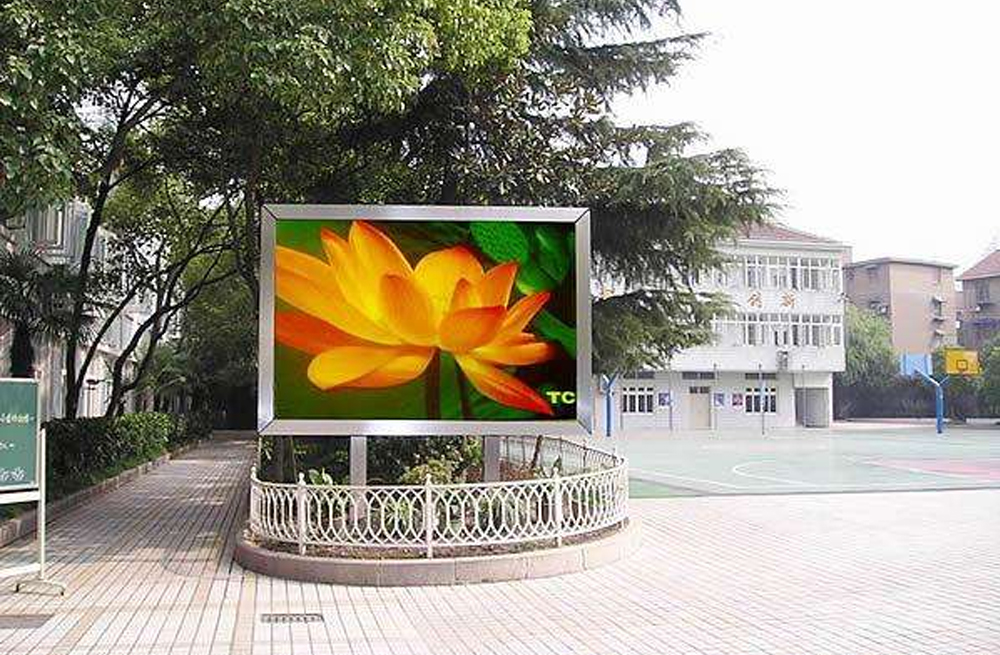
Large outdoor LED screens are modular, weather-resistant video displays built for daylight visibility at stadiums, building facades, roadside billboards, stages, public squares, and other large venues. The right product is not simply the biggest screen: it must match the viewing distance, ambient light, installation method, content source, local weather, and maintenance plan.
This guide explains how to compare large outdoor LED screen products, which specifications matter, and what information to give a supplier before requesting a quotation.
Quick answer: how to choose large outdoor LED screens
Start with five decisions: the screen dimensions, typical viewing distance, fixed or rental installation, required daytime brightness, and the way technicians will access the modules. These choices determine the pixel pitch, cabinet type, protection rating, control system, power design, and total project cost.
- Long viewing distance: a wider pixel pitch may provide sufficient image detail at a lower cost.
- Close viewing distance: choose a finer pitch so text, faces, and product details appear smoother.
- Direct sunlight: prioritize high usable brightness, contrast, and automatic brightness control.
- Permanent installation: use outdoor-rated cabinets and plan structural, electrical, and maintenance access early.
- Touring or temporary events: prioritize lightweight rental cabinets, fast locks, corner protection, and quick service.
What is a large outdoor LED display screen?
Large outdoor LED screens combine multiple LED modules and cabinets into one seamless digital canvas. A complete system normally includes LED modules, receiving cards, power supplies, cabinet frames, data and power cabling, a sender or video processor, control software, and a mounting structure. Because the display is modular, its size and aspect ratio can be configured for the site rather than limited to a standard television format.
Common applications include digital billboards, sports scoreboards and perimeter displays, concert backdrops, retail facades, transportation information boards, church and campus screens, and municipal information displays. Each application places different demands on viewing angle, refresh rate, ingress protection, redundancy, and service access.
Key specifications for large outdoor LED screens
| Specification | Why it matters | What to confirm |
|---|---|---|
| Pixel pitch | Controls pixel density, minimum comfortable viewing distance, and price | Audience distance and the smallest text or detail to be shown |
| Brightness | Keeps content readable in daylight | Measured brightness, adjustment range, and sensor-based dimming |
| IP rating | Indicates resistance to dust and water | Front and rear ratings for the installed environment |
| Refresh rate | Affects camera performance and motion smoothness | Requirements for live broadcast, photography, or fast video |
| Cabinet material | Affects weight, cooling, installation speed, and corrosion resistance | Steel or aluminum construction and total load on the structure |
| Service access | Determines how quickly modules and electronics can be replaced | Front, rear, or dual maintenance access |
| Power consumption | Influences circuit design and operating cost | Maximum and typical consumption, voltage, and power distribution |
| Control system | Determines signal capacity, redundancy, calibration, and content workflow | Screen resolution, inputs, backups, and remote management needs |
Choose pixel pitch from viewing distance and content
Pixel pitch is the center-to-center distance between adjacent pixels, measured in millimeters. Smaller numbers create higher pixel density and smoother detail at close range, while larger pitches are often more economical for distant audiences.
There is no single correct pitch for every giant outdoor LED screen. A roadside display read from far away can use a wider pitch than a facade screen viewed by pedestrians. Use the closest realistic viewing position as the starting point, then test representative content at full scale whenever possible. Fine text, live camera feeds, and premium advertising usually need more detail than bold logos or traffic information.
Plan brightness for real outdoor conditions
Outdoor brightness should be selected for the screen orientation and site conditions, not from a headline number alone. A display facing direct afternoon sun has different needs from one installed under a canopy. Ask how brightness is measured, whether the display includes automatic light sensing, and how it performs after calibration.
Automatic brightness control is important because maximum daytime output may be uncomfortable or wasteful after sunset. Good contrast, an appropriate LED package, and a suitable mask design can improve perceived readability without operating the screen at maximum power all day.
Check weather protection, cooling, and structure
A large outdoor LED display must withstand rain, dust, temperature changes, wind load, and long operating hours. Confirm the IP rating for both the front and rear, especially when the back of the display is exposed. The cabinet, connectors, seals, drainage path, coating, and cable entries all contribute to real-world protection.
Structural design should be completed by qualified local professionals. They should account for the finished screen weight, wind pressure, access platforms, ventilation, grounding, lightning protection, and applicable permits. The display supplier should provide accurate cabinet dimensions, weights, mounting points, and power data for that work.
Understand the complete LED display system
The screen panels are only one part of the project. Reliable performance depends on correctly matched control and power components:
- LED receiving cards distribute image data to the modules inside each cabinet. Compare compatible options in the LED receiving card category.
- Video processors and senders scale sources, switch inputs, and transmit data to the screen. See available LED video processors.
- Power supplies must match the module voltage, load, cooling plan, and redundancy requirements. Browse LED power supplies.
- Cables and distribution should be sized for the cabinet layout, circuit limits, grounding plan, and required backups.
- Software and calibration control mapping, color consistency, brightness schedules, monitoring, and content playback.
Ask the supplier for a system diagram and bill of materials. This makes it easier to verify compatibility, estimate spare parts, and troubleshoot the display throughout its service life.
Fixed installation or rental LED screen?
| Project type | Best fit | Key priorities |
|---|---|---|
| Fixed outdoor installation | Billboards, facades, stadiums, transport hubs | Weather resistance, structural integration, energy use, remote monitoring, long-term service access |
| Rental or mobile installation | Concerts, festivals, launches, temporary events | Low cabinet weight, fast locks, rapid cabling, corner protection, repeatable assembly |
A fixed screen is designed around one site and long-term operation. A rental system is assembled and dismantled repeatedly, so handling speed and mechanical durability become more important. Do not select a rental cabinet only because the event is short; confirm that the mounting, wind rating, ballast, and weather protection are appropriate for the temporary site.
What determines large outdoor LED screen cost?
Price depends on more than area. The main cost drivers are pixel pitch, total resolution, LED and driver components, cabinet construction, brightness, refresh rate, protection level, control equipment, spare parts, structure, shipping, installation, power distribution, and commissioning.
Compare quotations using the same scope. A lower panel price can be misleading if the proposal excludes the controller, power and data cables, flight cases, spare modules, mounting hardware, on-site support, or freight. Also compare expected operating costs, warranty terms, spare-parts availability, and the response process for technical support.
Information to send when requesting a quotation
- Installation city and whether the screen is exposed to direct sun, rain, salt air, or extreme temperatures.
- Visible screen width and height, desired aspect ratio, and any structural constraints.
- Closest and typical viewing distances.
- Fixed, rental, wall-mounted, pole-mounted, rooftop, or freestanding installation.
- Front or rear maintenance access.
- Content sources, required inputs, live video needs, and target frame or refresh performance.
- Available power supply and local electrical standards.
- Required delivery date, spare-parts plan, and whether installation or commissioning support is needed.
With these details, a supplier can recommend an appropriate product instead of quoting an arbitrary screen configuration. View current outdoor LED display screen products or contact the team with your project requirements.
Frequently asked questions
What pixel pitch is best for a large outdoor LED screen?
The best pitch depends mainly on the closest viewing distance and content detail. Choose a finer pitch for nearby viewers and small text; choose a wider pitch when viewers are farther away and the content uses large graphics. A full-scale viewing test is the most reliable comparison.
How bright should an outdoor LED display be?
Brightness should match the screen orientation, direct-sun exposure, and operating schedule. The goal is readable content with good contrast, plus automatic dimming for cloudy conditions and nighttime use. Ask for measured performance rather than relying only on a maximum specification.
What IP rating does an outdoor LED screen need?
The required rating depends on how the cabinet is installed and which sides are exposed. Verify separate front and rear protection ratings, and review cabinet seals, connectors, ventilation, drainage, and cable entries with the supplier.
Can a large outdoor LED screen be serviced from the front?
Yes. Front-service designs allow modules and, on some products, power and control components to be removed from the viewing side. This is useful when there is no rear access, but the exact service method should be confirmed before the structure is designed.
What components are included in a complete outdoor LED screen system?
A complete system typically includes LED modules and cabinets, receiving cards, power supplies, data and power cables, sending or processing equipment, control software, mounting hardware, and spare parts. The steel structure, distribution cabinet, installation, freight, and commissioning may be quoted separately.
Final recommendation
Choose large outdoor LED screens as engineered systems, not as collections of panels. Match the pixel pitch to the audience, confirm daylight and weather performance, design safe power and structure, and document every control component and spare. A clear specification makes supplier comparisons more accurate and reduces installation and maintenance risk.