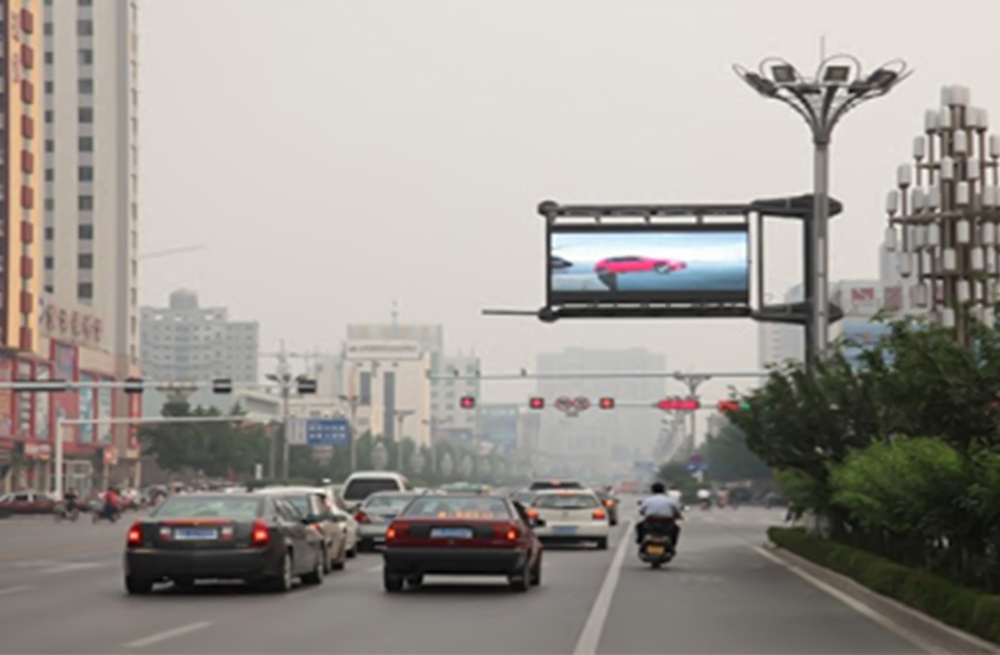
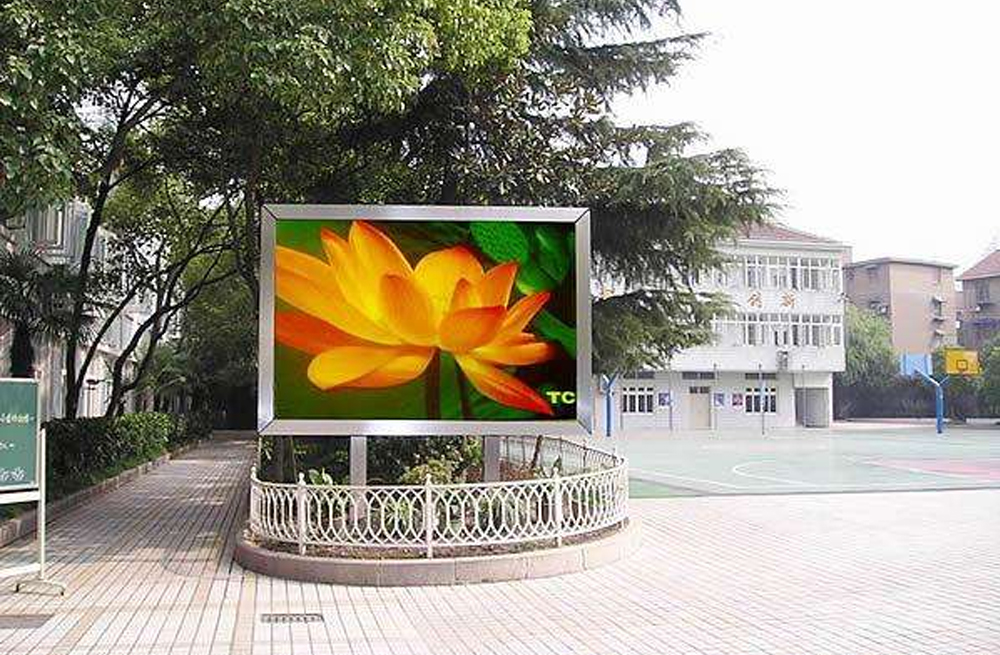
Outdoor LED displays are evolving from simple advertising boards into intelligent, connected visual systems. For buyers planning an outdoor LED display, the most important changes are not only higher resolution. AI-assisted content, energy management, remote monitoring, modular maintenance and better weather protection are changing how an outdoor LED screen is specified and operated.
Quick answer: The leading outdoor LED display trends for 2026 and beyond are context-aware content, finer pixel pitches, smarter brightness control, improved energy efficiency, stronger environmental protection, remote diagnostics, front-service modular cabinets, advanced image processing and more sustainable product lifecycles. Buyers should prioritize measurable performance and total cost of ownership over headline specifications.
What Is an Outdoor LED Display?
An outdoor LED display is a high-brightness digital screen built to present video, images and real-time information in exterior environments. Typical applications include roadside advertising, retail facades, stadiums, transport hubs, public-information systems and live events. Unlike an indoor display, an outdoor LED display screen must remain readable in sunlight and withstand rain, dust, temperature changes, wind and continuous operation.
9 Outdoor LED Display Trends Shaping 2026 and Beyond
1. AI-Assisted and Context-Aware Content
Outdoor digital signage is moving toward content that responds to real conditions. A connected system can use approved data sources such as time, weather, inventory or event schedules to select the most relevant message. For example, a retail screen may promote rainwear during wet weather and cold drinks during a heatwave.
AI can help operators create variants, schedule campaigns and analyze performance, but it should not run without controls. Brand rules, human approval and data privacy remain essential. The practical trend is assisted automation: software makes content operations faster while people retain editorial responsibility.
2. Finer Pixel Pitch for Closer Viewing
As outdoor LED packaging, heat control and manufacturing consistency improve, finer-pitch products are becoming practical for more close-view applications. A P2.5 outdoor LED screen may suit a storefront or pedestrian area, while P5, P8 or P10 can be more economical where viewers are farther away.
Pixel pitch should never be selected by specification alone. Viewing distance, screen dimensions, content type, structural load, budget and maintenance access all affect the right choice. A finer pitch increases pixel density, but it can also increase component count, power demand and project cost.
3. Smarter Brightness and Energy Management
High brightness is necessary in direct sunlight, but maximum brightness is not required at every hour. Ambient-light sensors and scheduled brightness profiles can reduce power use, limit unnecessary glare and extend component life. Better driver ICs, efficient power supplies and optimized LED packages also contribute to lower operating costs.
Buyers should compare power consumption under typical operating conditions, not only maximum or theoretical values. Automatic dimming, power-factor performance and thermal design deserve the same attention as the advertised nit rating.
4. Better Protection Against Weather and Heat
Reliability remains a decisive trend because outdoor screens face rain, airborne dust, humidity, salt exposure and wide temperature swings. Cabinet sealing, conformal coating, corrosion-resistant materials, drainage design and controlled ventilation all influence long-term performance.
IP ratings should be read carefully. The rating for the exposed front may differ from the rear of the cabinet, and the complete installation is only as strong as its cable entries, connectors and service doors. Ask the supplier for the applicable test method, configuration and environmental limits rather than relying on a badge alone.
5. Remote Monitoring and Predictive Maintenance
Modern control systems can report temperature, power-supply status, receiving-card communication and playback health from a remote dashboard. Alerts help operators identify a developing problem before it becomes a blank cabinet or a missed advertising campaign.
The next step is predictive maintenance. Historical operating data can reveal recurring heat, voltage or communication patterns, allowing service teams to replace vulnerable parts during planned visits. This is especially valuable for networks with screens across many locations.
6. Modular Cabinets and Faster Front Service
Outdoor LED display boards are becoming easier to maintain through modular cabinets, magnetic or tool-assisted modules and front-access designs. Technicians can replace a module, power supply or receiving card without dismantling a large section of the display.
Front service is particularly useful on walls and facades where rear access is limited. For every project, confirm which components are actually accessible from the front; the phrase “front service” does not always cover every internal part.
7. Advanced Image Processing, HDR and Calibration
Improved LED video processors and controllers support smoother scaling, higher refresh rates, better low-gray performance and more precise color management. On compatible systems, HDR workflows can preserve detail in bright and dark areas, although the result depends on the complete chain from content and processor to receiving cards, drivers and LED modules.
Calibration is becoming more important as displays run for longer periods. Module-level or pixel-level correction can reduce visible color and brightness differences after maintenance, helping a repaired section blend with the rest of the screen.
8. Cloud-Based Control and More Flexible Connectivity
Cloud-connected publishing lets authorized teams schedule and update multiple screens from one interface. Mobile networks, fiber and redundant signal paths make deployment more flexible, while secure user roles and audit logs help organizations control who can publish.
Connectivity also increases security responsibility. Buyers should ask about encrypted communication, password policies, software updates, offline fallback content and what happens if the network connection fails.
9. Longer Lifecycles and More Sustainable Design
Sustainability in outdoor LED displays is increasingly linked to service life rather than a single efficiency claim. Replaceable modules, standardized spare parts, repairable power and control components, recyclable cabinet materials and responsible end-of-life handling can reduce waste.
A display that uses slightly less power but requires early replacement may not be the better environmental choice. Evaluate energy consumption, expected service life, repair options and spare-parts availability together.
How These Trends Affect Buyers
| Trend | Practical benefit | What to verify |
|---|---|---|
| Context-aware content | More timely campaigns | Data sources, approval rules and privacy controls |
| Fine pixel pitch | Sharper close-range viewing | Viewing distance, power, cost and serviceability |
| Smart brightness | Lower energy use and glare | Sensor behavior and typical power consumption |
| Remote monitoring | Faster fault detection | Supported sensors, alerts and dashboard access |
| Modular front service | Shorter maintenance time | Access to modules, power supplies and control cards |
| Improved protection | More reliable outdoor operation | Test standards, front/rear ratings and temperature range |
What Will Not Change: Engineering Comes First
New features cannot compensate for weak project design. An outdoor LED screen still needs a suitable structure, electrical distribution, grounding, surge protection, ventilation, safe access and a control system sized for the actual pixel load. Local planning rules, brightness limits and structural requirements must also be checked before installation.
Total cost of ownership is more useful than the purchase price alone. Include power, scheduled cleaning, spare modules, control-system support, access equipment and expected downtime. A serviceable, well-supported display can deliver better value than a cheaper screen with difficult maintenance or unavailable spare parts.
Outdoor LED Display Buying Checklist
- Viewing distance: Choose pixel pitch based on where the closest important viewers will stand.
- Brightness control: Confirm daylight visibility and automatic dimming for evenings or overcast conditions.
- Environmental protection: Verify applicable IP test details, corrosion protection and operating temperature range.
- Image quality: Review refresh rate, grayscale, color calibration and processor compatibility using real content.
- Power and heat: Compare typical consumption, maximum load, power distribution and cooling design.
- Maintenance: Check access to modules, receiving cards, hubs, fans and power supplies.
- Monitoring: Define which faults can be detected remotely and how alerts are delivered.
- Spare parts: Agree on spare quantities, module matching and future availability.
- Support: Confirm documentation, configuration files, warranty scope and response times.
For a deeper look at project applications, see our guide to large outdoor LED display screens in digital signage. You can also review available LED video processors when planning the signal and image-processing chain.
Frequently Asked Questions
What is the biggest outdoor LED display trend?
The biggest change is the shift from a standalone screen to a connected system. Content automation, sensor data, remote monitoring and centralized control now influence both campaign performance and maintenance.
Will outdoor LED screens use less energy in the future?
They can, through more efficient LEDs and power electronics, improved thermal design and brightness that adapts to ambient light. Actual savings depend on screen size, content, brightness settings, climate and daily operating hours.
Is a smaller pixel pitch always better?
No. A smaller pixel pitch improves detail at close range, but it also increases pixel density and may raise cost, power demand and maintenance complexity. The best pitch is the one that matches the viewing distance and content.
What IP rating should an outdoor LED display have?
The required rating depends on the installation and exposure. Many projects specify strong protection on the weather-facing side, but buyers should verify the tested front and rear ratings, cabinet configuration and local environmental risks. IP terminology follows IEC 60529.
How long does an outdoor LED display last?
There is no single service-life figure for every installation. LED quality, operating brightness, heat, moisture, power stability, maintenance and daily run time all affect useful life. Ask for component specifications and a maintenance plan, not only a headline lifetime claim.
Conclusion
The future of the outdoor LED display is intelligent, efficient and maintainable. AI-assisted content and cloud control will attract attention, but long-term results will still depend on correct pixel pitch, reliable protection, disciplined brightness management and accessible components. Buyers who evaluate the complete system and its operating costs will be better prepared for the next generation of outdoor digital signage.
Need help matching a screen, controller or processor to your project? Contact LED Controller Card with your screen dimensions, pixel pitch, viewing distance and installation environment.