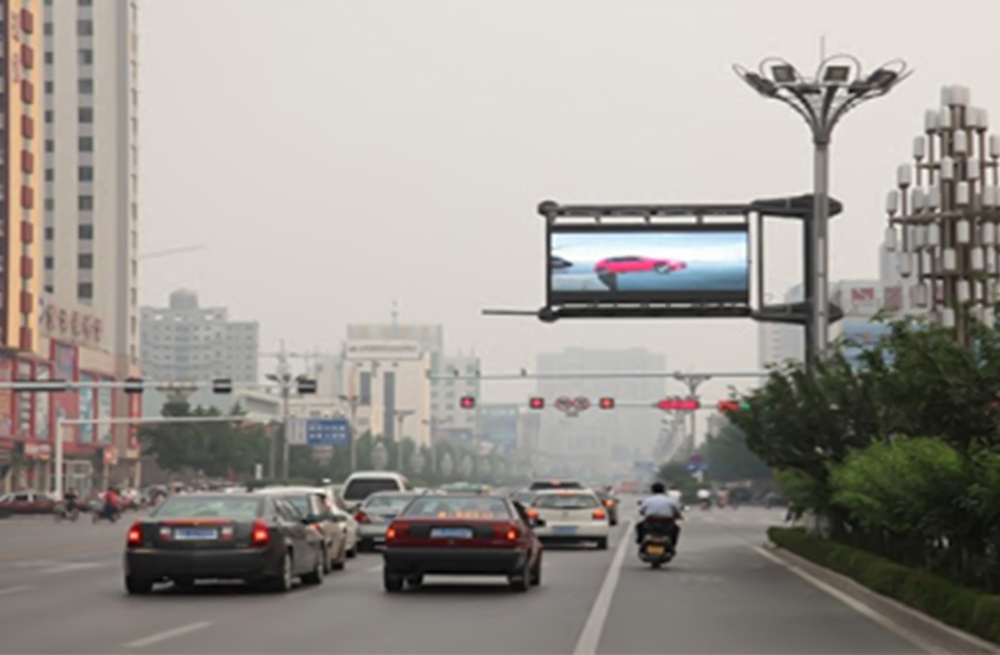
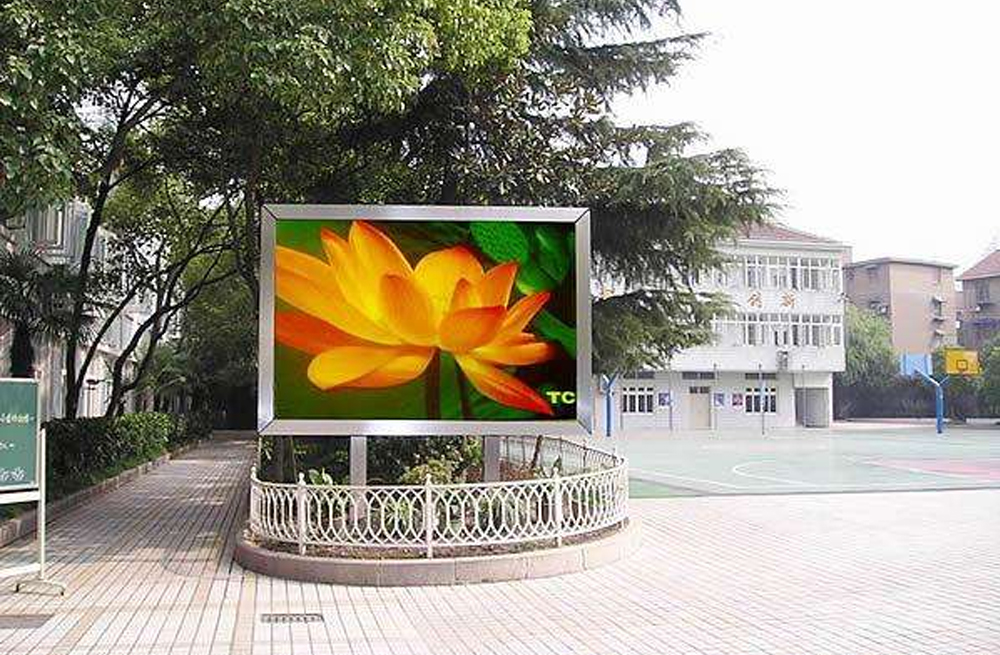
Quick answer: An outdoor LED display creates value by combining high daytime visibility, large-format impact, flexible content, broad reach, measurable engagement, scalable control, and durable operation. For advertisers and venue owners, the screen is most valuable when its location, pixel pitch, brightness, content plan, and total operating cost are matched to a clear business goal.
Outdoor LED screens are used for roadside advertising, shopping centers, stadiums, transport hubs, building facades, public information, and live events. Unlike printed signage, they can change messages in seconds and run multiple campaigns on one display.
What Is an Outdoor LED Display?
An outdoor LED display is a modular digital screen designed to remain readable in bright ambient light and operate in exposed environments. It uses LED modules, cabinets, power supplies, receiving cards, a video controller or media player, and control software to present video, images, text, and live data.
Outdoor models normally provide higher brightness and stronger weather protection than indoor screens. The exact specification depends on the installation environment, viewing distance, content type, local regulations, and whether the screen will be viewed directly or recorded by cameras.
7 Key Benefits of Outdoor LED Displays
1. High-impact visibility
A large, bright screen can attract attention from longer distances than a small static sign. Motion, color, contrast, and scheduled creative help a message remain noticeable in busy public spaces. Visibility still depends on correct brightness, screen size, viewing angle, and content design; maximum brightness alone does not guarantee a better result.
2. Premium value in high-traffic locations
Outdoor LED displays turn a fixed physical location into a reusable communication channel. A screen near a road, retail entrance, plaza, stadium, or transit route can repeatedly reach people who pass the same location. The commercial value comes from audience quality and dwell time, not traffic volume alone.
3. Fast, flexible content updates
Operators can replace a campaign without printing or physically installing a new graphic. Content can be scheduled by time, day, audience, inventory, weather, or event. A single screen can rotate brand campaigns, public notices, promotions, scores, and live feeds.
For practical creative guidance, see our guide on how to produce content for LED screens.
4. Wide reach and long viewing distance
Large screen area, wide viewing angles, strong contrast, and suitable pixel pitch make outdoor LED displays effective for shared viewing. P4, P4.81, P6, and P10 outdoor LED display configurations address different distance and budget requirements. A finer pitch supports closer viewing and more detail, while a coarser pitch is often more economical for large screens viewed from farther away.
5. Better campaign measurement
A screen does not measure results by itself, but digital content makes controlled testing easier. Operators can use unique QR codes, landing pages, offer codes, scheduled creative, footfall data, or sales lift to compare campaigns. Use one clear call to action per creative and measure the same conversion event over a defined period.
6. Centralized control and network scalability
With the right LED controller and network connection, one operator can schedule and monitor multiple screens. This is useful for retail networks, transport systems, campuses, and digital out-of-home advertising. Remote status monitoring, content approval, access control, and playback logs should be planned before deployment.
7. Long-term communication and revenue value
A well-specified display can support years of changing campaigns without replacing the full sign for every message. Owners may use it to promote their own products, sell advertising time, publish public information, or combine these models. The meaningful comparison is total cost of ownership, including structure, installation, electricity, maintenance, spare parts, connectivity, and content production.
Which Specifications Affect Outdoor LED Screen Performance?
| Specification | Why it matters | What to verify |
|---|---|---|
| Pixel pitch | Controls pixel density, detail, viewing distance, and cost | Choose from the closest important viewer, not screen width alone |
| Brightness | Maintains readability in daylight | Typical outdoor requirements often fall around 5,000 to 10,000 nits; direct sun and local conditions may require a different level |
| Ingress protection | Protects against dust and water | Confirm the IP rating for both front and rear surfaces and match it to the actual enclosure |
| Refresh rate and grayscale | Affect motion quality, low-brightness detail, and camera performance | For camera-facing applications, test the real content at the intended frame rate and shutter settings |
| Viewing angle | Determines how much of the audience sees consistent color and brightness | Check horizontal and vertical specifications at the planned mounting height |
| Power consumption | Influences electrical design and operating cost | Request both maximum and typical consumption per square meter |
| Service access | Changes maintenance time and structure depth | Select front or rear service access before the supporting structure is designed |
| Control system | Determines input capacity, scaling, scheduling, redundancy, and remote management | Confirm total pixels, input formats, backup strategy, and compatibility with receiving cards |
How to Choose Between P4, P4.81, P6, and P10
Pixel pitch is the center-to-center distance between adjacent pixels, measured in millimeters. A smaller number produces higher pixel density and usually a higher price per square meter. The following comparison is a starting point, not a substitute for a site survey.
| Outdoor pixel pitch | Typical use | Selection priority |
|---|---|---|
| P4 or P4.81 | Closer-view retail displays, event screens, and detailed advertising | Image detail and camera performance |
| P6 | Medium-distance commercial advertising and public information | Balance of detail, size, and budget |
| P10 | Large-format displays and longer-distance roadside viewing | Coverage and cost efficiency at scale |
A common planning rule is that the pixel-pitch number in millimeters provides an approximate minimum comfortable viewing distance in meters. Treat this only as an initial estimate. Text size, content contrast, viewing speed, camera use, and audience expectations can justify a finer pitch.
How Much Does an Outdoor LED Display Cost?
There is no reliable single price for an outdoor LED display panel because the final cost depends on screen area, pixel pitch, LED package, cabinet material, control equipment, supporting structure, installation, shipping, electrical work, spare modules, and local compliance requirements.
When comparing quotations, separate the panel price from the total installed cost. Ask each supplier to quote the same screen dimensions, brightness, refresh rate, IP rating, warranty, spare-parts allowance, controller, structure scope, and commissioning service. A lower panel price can become more expensive if it requires more power, difficult maintenance, or early component replacement.
How to Measure Outdoor LED Display ROI
Define the screen’s job before purchasing it. A retail screen may be measured by store visits and attributed sales; an advertising screen by occupancy, revenue, reach, and cost per thousand impressions; a venue screen by sponsorship value, audience engagement, and operational efficiency.
- Set one primary goal. Choose awareness, traffic, leads, sales, advertising revenue, or public communication.
- Record a baseline. Measure the same location or campaign before the screen is installed.
- Track exposure and action. Use schedules, traffic estimates, QR codes, unique URLs, coupons, or sales data.
- Include operating costs. Count power, connectivity, maintenance, content, labor, and financing.
- Review by campaign. Compare creative, timing, and call-to-action performance instead of judging the hardware alone.
Outdoor LED Display Buying Checklist
- Confirm the audience, closest viewing distance, traffic direction, and dwell time.
- Measure the installation area and check structural loading, wind load, ventilation, and service clearance.
- Verify daytime brightness, automatic brightness control, and nighttime limits.
- Choose pixel pitch from real viewing conditions and sample content.
- Confirm front and rear IP ratings, operating temperature, and corrosion protection.
- Request maximum and typical power data plus the electrical distribution plan.
- Test refresh rate, grayscale, color uniformity, and camera performance when relevant.
- Specify controller capacity, receiving cards, redundancy, network access, and content workflow.
- Compare warranty terms, spare parts, response time, training, and after-sales support.
- Check permits, brightness restrictions, content rules, and safety requirements with local authorities.
Frequently Asked Questions
Are outdoor LED screens worth it?
They can be worth it when the location has a relevant audience and the owner has a consistent content or advertising plan. ROI depends more on placement, utilization, content quality, and operating discipline than on screen size alone.
What is the main advantage of an outdoor LED display?
The main advantage is the ability to deliver bright, large-format, frequently updated content to many viewers at once. This combines the physical reach of outdoor media with the flexibility of a digital channel.
What brightness is best for an outdoor LED screen?
Many outdoor projects use roughly 5,000 to 10,000 nits, but the correct value depends on screen orientation, direct sunlight, climate, viewing time, and local limits. Automatic brightness control helps preserve image quality, reduce power use, and avoid excessive brightness at night.
Which outdoor LED pixel pitch should I choose?
Choose the pitch from the closest important viewing distance and the amount of image detail required. P4 and P4.81 suit closer viewing, P6 is a common middle ground, and P10 can be economical for large displays viewed from farther away.
What is the difference between indoor and outdoor LED displays?
Outdoor displays typically need higher brightness, weather protection, stronger cabinets, and environmental controls. Indoor displays prioritize closer viewing, finer pixel pitch, lower brightness, and integration with interior spaces.
Can an outdoor LED display show live content?
Yes. With a compatible video processor, controller, media player, and network connection, a screen can show scheduled media, live video, data feeds, scores, alerts, or event content. Input capacity and redundancy should be specified in advance.
Build a Reliable Outdoor LED Display System
The business value of an outdoor LED screen comes from the complete system: the display modules, cabinets, power supplies, receiving cards, controller, structure, network, content, and maintenance plan must work together. Start with the audience and use case, then select the hardware.
Explore our outdoor LED display screens, LED video processors, LED receiving cards, and LED power supplies. For help matching pixel pitch, controller capacity, and accessories to a project, contact our team.