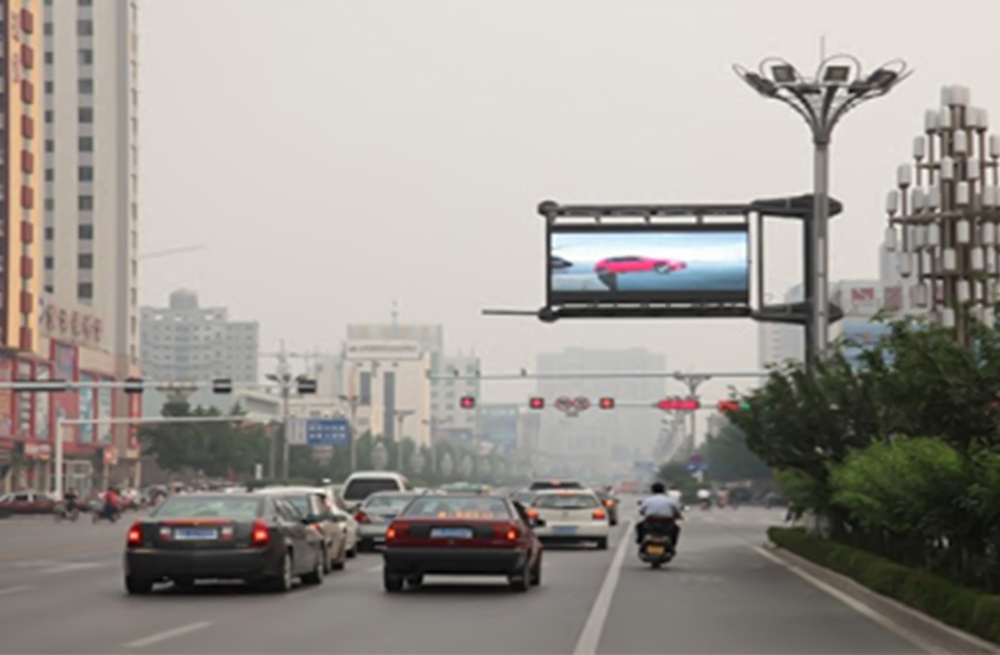
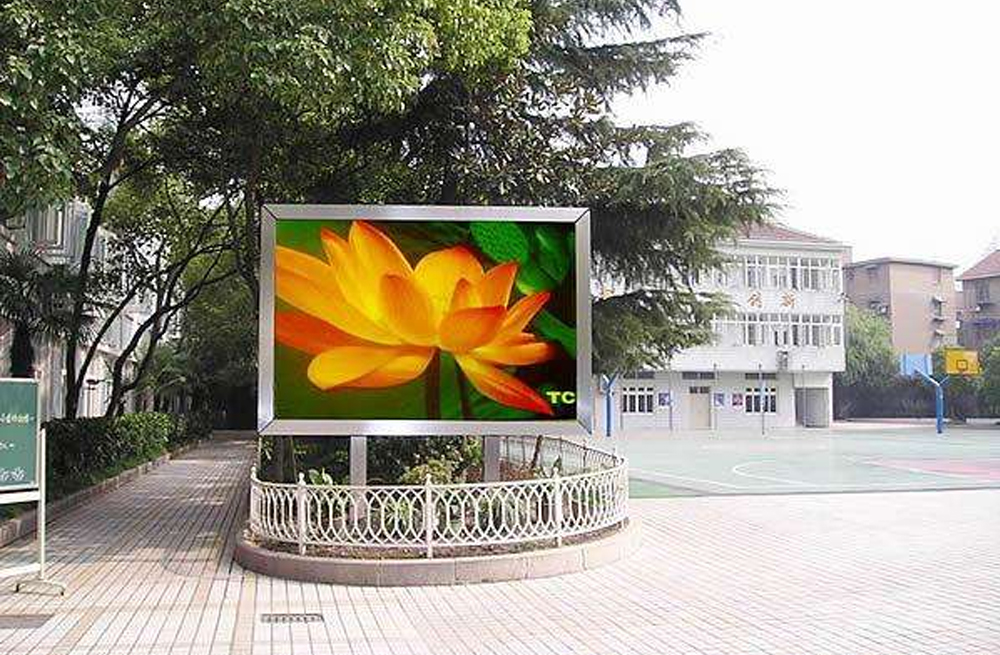
Quick answer: To choose an outdoor LED screen, start with the installation environment and viewing distance. For most permanent outdoor projects, prioritize sufficient brightness for the site, an appropriate pixel pitch, weather protection, safe structural engineering, practical maintenance access, and a reliable control system. The best option is the screen with the lowest lifetime cost that still meets your visibility and operating requirements – not simply the panel with the highest resolution or lowest price.
This guide explains the specifications that matter when comparing outdoor LED display panels for advertising, retail, sports, events, transportation, and public information projects.
Outdoor LED screen selection checklist
- Location: shaded, open daylight, or direct sun
- Viewing distance: the nearest and typical audience distance
- Pixel pitch: enough detail for the content without unnecessary cost
- Weather protection: suitable front and rear IP ratings
- Screen size and ratio: matched to content and installation space
- Maintenance: front or rear access with safe service clearance
- Image performance: brightness, refresh rate, grayscale, and color consistency
- Structure: wind load, cabinet weight, heat, drainage, and grounding
- Control and power: compatible processing, redundancy, and realistic power demand
- Supplier support: warranty, spare parts, calibration, and technical documentation
1. Match brightness to the installation environment
Brightness is measured in nits, or candelas per square meter (cd/m2). An outdoor display must be bright enough to remain readable in ambient light, but more brightness is not automatically better. Excessive brightness increases power consumption and heat and can be uncomfortable at night.
| Environment | Practical starting range | What to check |
|---|---|---|
| Shaded outdoor or mainly evening use | 2,500-4,000 nits | Reflections, night dimming, local limits |
| Typical daylight | 4,000-6,000 nits | Screen orientation and daily sun exposure |
| Strong or direct sunlight | 5,000-8,000+ nits | Peak brightness, thermal design, power budget |
These figures are starting points, not a substitute for a site survey. Ask whether quoted brightness is calibrated operating brightness or only a peak value. An automatic light sensor is valuable because it lowers brightness after sunset, improves comfort, and can reduce energy use.
2. Choose pixel pitch from viewing distance and content
Pixel pitch is the center-to-center distance between adjacent pixels, measured in millimeters. A smaller pitch produces more detail at close range but increases LED quantity, data load, purchase cost, and sometimes service complexity. The correct pitch is the one that makes the intended content clear at the audience’s real viewing distance.
| Common pixel pitch | Typical use distance | Common application |
|---|---|---|
| P2.5-P3.9 | About 3-8 m | Close-view retail, stages, premium outdoor signage |
| P4-P6 | About 5-15 m | Building signs, roadside advertising, event screens |
| P8-P10 | About 8-30 m | Large billboards, stadiums, long-distance viewing |
Use these ranges as a comparison guide. Text size, video detail, audience movement, and screen dimensions can change the best choice. Testing sample content at the actual distance is more reliable than choosing from resolution alone.
3. Check the IP rating and weather protection
Outdoor LED display panels need protection from rain, dust, humidity, and temperature changes. The IP code is defined by IEC 60529: the first digit refers to solid-particle protection and the second to water protection.
IP65 on the exposed front is a common baseline for permanent outdoor screens. Rear protection may differ according to whether the back is open, under a roof, or inside a sealed cabinet. Confirm the rating for both faces rather than accepting one general IP number.
Also verify drainage paths, sealed connectors, anti-corrosion treatment, operating temperature, humidity limits, UV-resistant materials, and lightning and surge protection. Coastal, desert, tropical, and cold-climate projects need different cabinet and component choices.
4. Define screen size, aspect ratio, and content before ordering
A large screen is not useful if the content is difficult to read. Start with the installation area, audience distance, required text size, and the format of the media you will display. A 16:9 ratio simplifies standard video playback, while custom ratios may suit building facades or ribbon displays but require purpose-made content.
Calculate the final pixel resolution from physical width, height, and pixel pitch. This tells you whether the screen can show the intended text, logos, video, or data without scaling problems. Leave room for the supporting structure, ventilation, cabling, and maintenance access.
5. Choose front or rear maintenance access
Front-service panels allow LED modules, power supplies, and receiving cards to be removed from the viewing side. They work well on walls or installations with little space behind the screen. Rear-service cabinets can be efficient when a safe service corridor is available and may be preferable for some large structures.
Ask which components are accessible, how quickly a module can be replaced, whether tools are required, and how technicians reach power and data connections. A low purchase price can be erased by difficult maintenance over the life of the display.
6. Compare image performance beyond resolution
- Refresh rate: Higher refresh rates reduce visible scan lines and flicker, especially when the screen is filmed.
- Grayscale performance: Good low-brightness grayscale keeps shadows and gradients smooth during evening operation.
- Color temperature and calibration: Cabinets and replacement modules should match across the full screen.
- Viewing angle: Check horizontal and vertical visibility for the actual audience position.
- Contrast: Dark masks, suitable LEDs, and surface treatment can improve perceived contrast in daylight.
If cameras will record the screen, request a camera test using the intended frame rates and shutter settings. A display can look acceptable to the eye but show bands or artifacts on video.
7. Engineer the cabinet and structure for the site
Outdoor screens are structural installations as well as electronic products. Cabinet material affects weight, corrosion resistance, heat transfer, and installation speed. Fixed steel cabinets are common for permanent projects, while lighter die-cast aluminum cabinets are useful for rental systems that are assembled frequently.
A qualified engineer should assess wind load, supporting structure, anchors, access platforms, local codes, grounding, and lightning protection. Do not select the structure from screen weight alone: wind pressure on the display area can be the governing load.
8. Plan power consumption and thermal management
Request both maximum and typical power consumption per square meter. Maximum power is important for circuit sizing; typical power gives a more realistic operating-cost estimate. Total demand also depends on content, brightness settings, climate, and operating hours.
Verify power distribution, cable size, protection devices, power-factor performance, ventilation or air conditioning, and how heat is removed from sealed sections. Efficient LEDs, automatic brightness control, and sensible content can reduce long-term energy cost.
9. Confirm the control system, connectivity, and redundancy
The controller, sending device, receiving cards, and video processor must support the screen’s total pixel load and input formats. Confirm the maximum resolution, output capacity, cable distances, scaling, switching, and remote monitoring requirements before finalizing the panel layout.
For critical displays, consider redundant power supplies, backup signal paths, dual controllers, and spare receiving cards. Browse compatible LED video processors and LED receiving cards when planning the complete system.
10. Compare suppliers by total cost of ownership
Compare more than the price per square meter. Request a complete bill of materials, LED and driver specifications, cabinet drawings, certifications, calibration records, burn-in and waterproof test information, warranty terms, lead times, spare-parts quantities, and technical support details.
Total cost of ownership includes the screen, structure, transport, installation, power distribution, control equipment, energy, maintenance labor, spare modules, and downtime. Buying panels from a consistent production batch and keeping calibrated spare modules can make future repairs less visible.
How to make the final decision
- Record the site conditions, operating hours, nearest viewing distance, and content type.
- Shortlist brightness, pitch, IP rating, service method, and cabinet type.
- Calculate final resolution, controller load, maximum power, and structural requirements.
- Compare samples or project references under similar daylight and viewing conditions.
- Evaluate the complete installed and lifetime cost, then document the agreed specifications in the purchase contract.
Frequently asked questions
What brightness is best for an outdoor LED screen?
Many outdoor projects fall between 4,000 and 8,000 nits. Shaded or evening-focused locations may need less, while a screen facing strong direct sun may need more. Screen orientation, local rules, heat, power, and automatic dimming should determine the final value.
Is a smaller pixel pitch always better?
No. A smaller pixel pitch improves close-range detail but costs more and increases system load. Choose the pitch that makes the intended content clear at the nearest realistic viewing distance.
Is IP65 enough for an outdoor LED display?
IP65 is a common front-face target, but it does not answer every installation question. Confirm front and rear ratings, connector sealing, drainage, corrosion resistance, temperature range, and the exposure conditions at the site.
Should I choose front-service or rear-service panels?
Choose front service when the screen is wall-mounted or has little rear clearance. Choose rear service when a safe, accessible corridor is available and the cabinet design supports efficient maintenance. Access to all replaceable components matters more than the label alone.
How long should an outdoor LED screen last?
Service life depends on LED quality, operating brightness, temperature, moisture control, power quality, maintenance, and daily operating hours. Compare warranties, expected brightness depreciation, spare-parts support, and real project references instead of relying on one headline lifetime figure.
Find the right outdoor LED display
LEDControllerCard supplies outdoor LED display modules, complete outdoor LED screens, controllers, receiving cards, processors, and related parts. Share your screen size, viewing distance, installation environment, content, and service-access requirements so the system can be matched to the project.