To choose the right LED display for an event or promotion, start with the viewing distance and venue, then match the pixel pitch, brightness, screen size, refresh rate, cabinet design, control system, and budget. Indoor audiences who stand close to the screen need a finer pixel pitch. Outdoor campaigns usually need higher brightness, weather protection, and a more robust structure.
Quick answer: For many indoor conferences, exhibitions, and retail promotions, P2.5 to P3.9 is a practical starting range. For outdoor stages and advertising viewed from farther away, P3.9 to P10 may be suitable. These are starting points, not fixed rules; the correct specification depends on the closest viewer, ambient light, content, camera use, and installation method.
LED Display Selection Factors at a Glance
| Factor | What to check | Why it matters |
|---|---|---|
| Venue | Indoor, outdoor, covered outdoor, day or night | Determines brightness, weather protection, and cabinet type |
| Viewing distance | Closest and typical viewer distance | Guides pixel pitch and image detail |
| Screen size | Width, height, aspect ratio, and audience size | Affects legibility, resolution, structure, and power |
| Content | Video, text, sponsor logos, live camera, or product images | Changes the required resolution and processing |
| Brightness | Ambient light and direct sunlight exposure | Keeps content readable without unnecessary glare |
| Refresh rate | On-camera use and production requirements | Reduces visible scan lines and flicker in recordings |
| Installation | Rental, fixed, flown, stacked, wall-mounted, or mobile | Determines cabinet weight, locks, access, and safety needs |
| Budget | Equipment, structure, labor, transport, power, and support | Reveals the total project cost, not only the panel price |
1. Define the Event, Audience, and Content
Begin with the job the screen must perform. A conference screen supports presentations and live video. A trade-show wall attracts visitors at short range. A concert screen must remain visible across a large venue and may appear on camera. A retail promotion may run detailed product videos for long hours.
Record the following before requesting a quotation:
- venue type and available installation area;
- closest, typical, and farthest viewing distances;
- audience size and traffic direction;
- event duration and daily operating hours;
- content resolution, frame rate, and aspect ratio;
- whether cameras will record or broadcast the display;
- installation, dismantling, transport, and maintenance requirements.
This brief prevents a supplier from recommending a screen based on pixel pitch alone.
2. Choose an Indoor or Outdoor LED Display
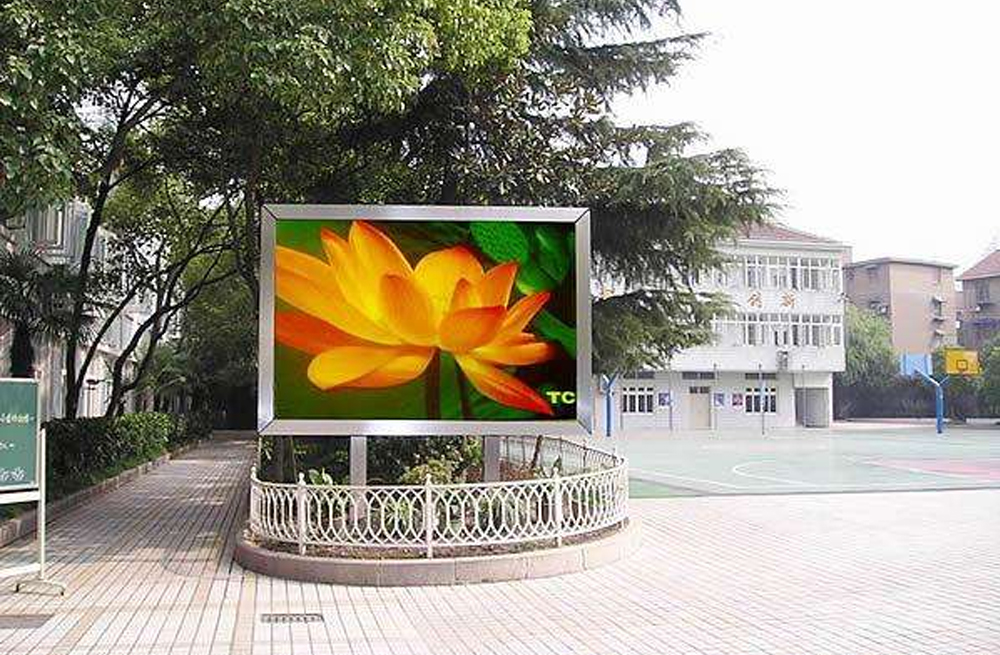
Indoor LED displays normally operate in controlled light and weather. They can use lower brightness and often offer finer pixel pitches for close viewing. For meetings, exhibitions, showrooms, and shopping centers, prioritize image detail, quiet operation, color consistency, and comfortable brightness.
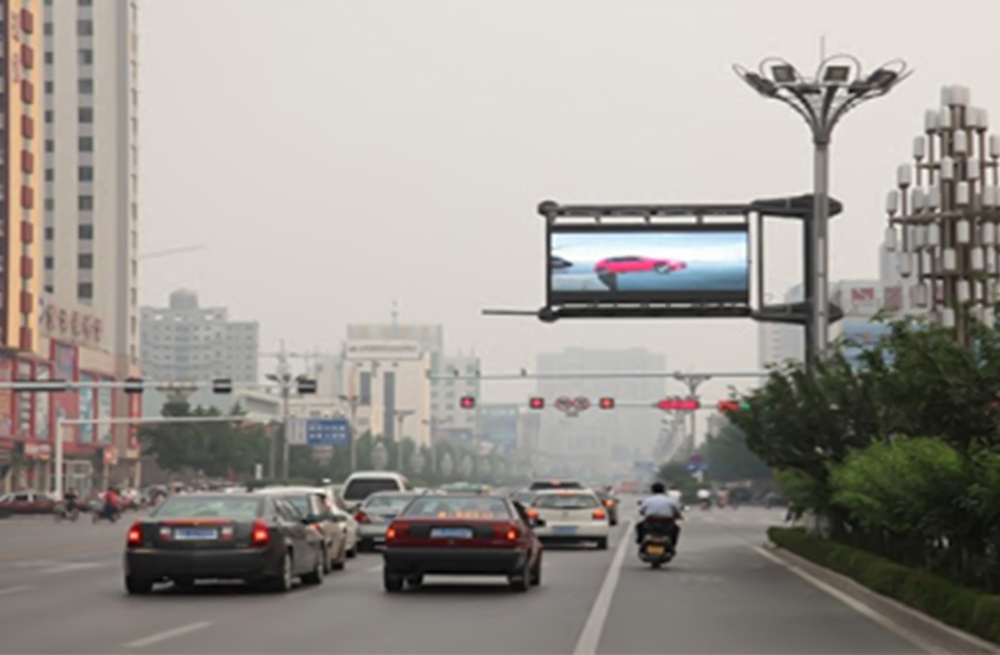
Outdoor LED displays must compete with daylight and tolerate environmental exposure. Check the cabinet’s ingress-protection rating, corrosion resistance, heat dissipation, operating temperature range, and wind-load requirements. An IP rating describes resistance to solids and water; the exact requirement depends on which sides of the cabinet are exposed. The IEC overview of IP ratings explains the code.
A covered stage is not automatically an indoor environment. Wind-driven rain, dust, humidity, and direct sunlight can still affect the screen.
3. Select Pixel Pitch from Viewing Distance
Pixel pitch is the center-to-center distance between adjacent LED pixels, measured in millimeters. A smaller number places pixels closer together and produces more detail at the same screen size, but it usually increases cost and processing load.
A useful planning shortcut is: minimum comfortable viewing distance in meters is approximately the pixel pitch in millimeters. For example, viewers can often watch a P3 display from about 3 meters or more. Content, eyesight, module quality, and acceptable image texture can change this result, so confirm the choice with a sample or full-size simulation.
| Typical closest viewing distance | Pixel-pitch range to evaluate | Common applications |
|---|---|---|
| About 2-3 m | P1.8-P2.5 | Executive events, studios, premium booths, detailed product content |
| About 3-5 m | P2.6-P3.9 | Conferences, exhibitions, indoor stages, retail promotions |
| About 5-10 m | P4-P6 | Medium stages, halls, entrances, outdoor event screens |
| About 10-20 m | P6-P10 | Large outdoor promotions, roadside or venue signage |
| Beyond 20 m | P10-P16 | Large-format displays designed for distant viewing |
If your project calls for a coarser outdoor pitch, compare products such as a P6 outdoor rental LED display or a P16 outdoor LED module. The pitch label alone does not confirm suitability; also compare brightness, module technology, cabinet design, and control requirements.
4. Match Brightness to Ambient Light
Brightness is measured in nits (cd/m2). The goal is readable content with enough adjustment range for changing conditions. Too little brightness makes an outdoor screen look washed out. Excessive brightness indoors can create glare, reduce viewing comfort, and waste power.
- Controlled indoor venues: often about 600-1,000 nits.
- Bright indoor spaces or window-facing installations: often about 1,000-2,500 nits.
- Outdoor shade or evening events: often about 3,500-5,000 nits.
- Direct-sunlight outdoor applications: often 5,000 nits or more.
These ranges are planning references. Ask for calibrated brightness, automatic or scheduled brightness control, and a demonstration under lighting similar to the venue.
5. Calculate Screen Size, Resolution, and Aspect Ratio
Choose the physical size from the audience area and the smallest text or product detail that must be readable. Then calculate the native resolution from the final screen dimensions and pixel pitch:
Horizontal pixels = screen width in millimeters / pixel pitch in millimeters.
Vertical pixels = screen height in millimeters / pixel pitch in millimeters.
For example, a 6 m x 3.375 m P3.9 screen is close to a 16:9 aspect ratio and provides roughly 1,538 x 865 pixels, subject to the exact module and cabinet dimensions. Build the final layout from complete cabinet increments rather than forcing an arbitrary size.
Match the native canvas to the source content. A 16:9 screen simplifies standard video and presentation workflows. A custom banner or column can work well for promotions, but the designer must create content at the exact canvas size.
6. Specify Refresh Rate and Camera Performance
For an audience-only screen, stable playback and good grayscale performance may be enough. For concerts, corporate broadcasts, virtual production, or social-media recording, request a camera test.
A high refresh rate, commonly 3,840 Hz or above for demanding on-camera work, helps reduce scan lines and flicker. However, refresh rate is not the only variable. Camera shutter speed, scan mode, driver IC, grayscale performance, frame rate, and controller settings also affect the recorded image. Test the proposed configuration with the production camera whenever possible.
7. Choose the Right Cabinet and Installation Method
Rental events benefit from lightweight cabinets, quick locks, alignment pins, corner protectors, and front-and-rear service access. Fixed installations may prioritize long-term reliability, efficient heat management, and simple module replacement.
Confirm how the display will be supported: ground-stacked, flown from a truss, wall-mounted, placed on a mobile trailer, or integrated into a custom structure. A qualified engineer should verify load capacity, ballast, wind exposure, rigging points, and local safety requirements. Do not treat the LED cabinets as the complete structural solution.
8. Plan the Control System, Signal Path, and Redundancy
The LED display needs more than panels. A complete system may include sending devices, receiving cards, a video processor, data distribution, power distribution, sensors, and backup signal paths. See the available LED video processors and LED receiving cards when planning the signal chain.
Check that the processor accepts every source used at the event, such as HDMI, DisplayPort, SDI, or network media. Confirm scaling, switching, multi-window layouts, color calibration, maximum load, and spare capacity. For a critical live event, consider redundant controllers, signal-loop backup, spare modules, spare power supplies, and an on-site technician.
9. Compare Total Cost, Not Only Panel Price
The lowest panel price does not always produce the lowest project cost. Include the controller, processor, structure, flight cases, cables, power distribution, installation labor, transport, content production, calibration, spares, and technical support.
Also ask about power consumption at typical and maximum brightness, warranty terms, replacement-module availability, batch color matching, and repair turnaround. A serviceable screen with compatible spare parts can be more valuable than a cheaper display that is difficult to maintain.
Recommended Starting Points by Event Type
| Event or promotion | Starting point to evaluate | Priority checks |
|---|---|---|
| Conference or seminar | Indoor P1.8-P3 | Text clarity, low noise, 16:9 canvas, camera performance |
| Trade-show booth | Indoor P1.8-P2.9 | Close viewing, fine product detail, front service |
| Indoor stage or concert | Rental P2.6-P3.9 | Fast assembly, refresh rate, processor, rigging |
| Outdoor event stage | Outdoor P3.9-P6 | Brightness, weather protection, wind, redundancy |
| Retail window promotion | P2.5-P4 high-brightness model | Sunlight exposure, heat, scheduled brightness |
| Large outdoor advertising | P6-P16 | Viewing distance, structural design, service access |
LED Display Buying Checklist
- What is the closest viewing distance?
- Will the screen face direct sunlight, rain, dust, or high humidity?
- What is the required physical size and aspect ratio?
- What is the resulting native pixel resolution?
- Will the screen appear on professional cameras?
- How will it be mounted, powered, cooled, and serviced?
- Which source connections and video-processing features are required?
- What redundancy and spare parts are available?
- Does the quotation include structure, control equipment, transport, labor, and support?
Frequently Asked Questions
What pixel pitch is best for an indoor event?
P2.5 to P3.9 is a common starting range for many indoor events. Use a finer pitch when viewers stand closer, the screen shows small text, or the application requires premium image detail.
What pixel pitch is best for an outdoor event?
P3.9 to P10 covers many outdoor event applications. The best choice depends mainly on the closest viewing distance, screen size, content, and budget. A distant-view advertising screen can use a coarser pitch than a stage screen beside the audience.
How bright should an event LED screen be?
Many controlled indoor venues need roughly 600-1,000 nits, while outdoor daylight applications often need 3,500-5,000 nits or more. Direct sunlight may require higher output. Always compare the screen under realistic venue lighting.
Is a smaller pixel pitch always better?
No. A smaller pitch improves detail at close range, but it increases pixel count, cost, power and processing requirements. Once the audience is far enough away, a finer pitch may deliver little visible benefit.
What information should I send an LED display supplier?
Send the venue type, installation location, screen dimensions, closest viewing distance, audience size, content format, camera requirements, event dates, operating hours, rigging method, power supply, and budget range. Photos or drawings of the site make the recommendation more reliable.
Final Recommendation
The best event LED display is not defined by one specification. It is the system that matches the audience distance, venue light, content, installation, production workflow, safety plan, and total budget. Start with viewing distance and pixel pitch, then validate brightness, resolution, refresh rate, cabinet design, processing, and support as one complete solution.
For help matching modules, controllers, and processors to your project, contact our LED display team with your venue details and target screen size.