Quick answer: An LED video wall is a large, seamless display built from modular direct-view LED panels. A controller receives the video signal, scales and maps it to the wall, and sending and receiving cards deliver the correct pixels to each module. The right system depends on viewing distance, pixel pitch, total resolution, brightness, refresh rate, installation environment, service access, and content requirements.
This guide explains how LED video walls work, the main types of LED walls, every essential system component, and the specifications to compare before you buy or install one.
What Is an LED Video Wall?
An LED video wall, also called a direct-view LED (DVLED) wall, combines multiple LED cabinets or modules into one continuous digital canvas. Each pixel contains light-emitting diodes that produce their own light, so the display does not need a separate backlight.
Unlike an LCD video wall, a DVLED wall has no visible panel bezel crossing the image. Its modular design also allows wide, tall, curved, corner, and other custom formats instead of limiting every installation to a standard 16:9 screen.
How Does a Video Wall Work?
A video wall system converts a source signal into a pixel map that thousands or millions of LEDs can display at the same time. The basic signal path is:
- Content source: A computer, media player, camera, signage player, or video switcher outputs the image.
- Video processor or controller: The controller scales, crops, switches, and maps the source to the LED wall’s exact pixel dimensions.
- Sending device: A sending card or integrated controller packages the image data and transmits it, normally through Ethernet cables or fiber converters.
- Receiving cards: A receiving card inside each cabinet distributes the correct portion of the image to the LED modules.
- LED modules: Driver ICs control the red, green, and blue LEDs, which combine at different intensities to create the final image.
Correct configuration is essential. If the cabinet map, resolution, scan mode, or receiving-card file is wrong, the wall may show duplicated, offset, flickering, or blank sections.
LED Video Wall System Components
| Component | What it does | What to check |
|---|---|---|
| LED modules | Create the image and determine pixel pitch | Pitch, LED package, scan mode, brightness, color consistency |
| Cabinets | Align and protect the modules | Dimensions, weight, flatness, locks, front or rear access |
| Power supplies | Convert AC input to regulated DC power | Voltage, efficiency, load margin, redundancy, certifications |
| Receiving cards | Decode data for each cabinet or module group | Load capacity, supported scan modes, calibration support |
| LED video wall controller | Processes, scales, switches, and maps video | Input formats, output capacity, layers, scaling, backup options |
| Sending cards or fiber converters | Transport display data to the wall | Maximum pixels, cable distance, port redundancy |
| Mounting structure | Keeps the display flat, stable, and serviceable | Load rating, tolerances, ventilation, maintenance clearance |
| Control software | Configures mapping, brightness, color, and monitoring | Compatibility, configuration backup, remote status functions |
Browse compatible LED video processors, LED receiving cards, and LED power supplies when planning a complete system.
Types of LED Walls
Indoor LED Video Walls
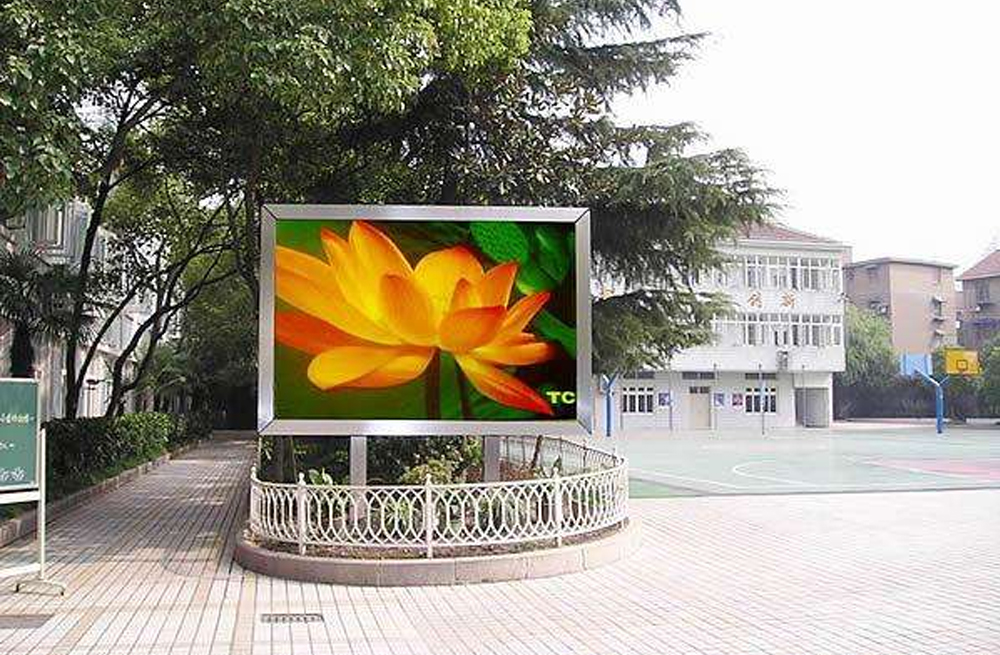
Indoor walls usually prioritize fine pixel pitch, accurate color, low-brightness performance, quiet operation, and front service. Common applications include control rooms, conference spaces, retail stores, studios, houses of worship, and stages. Explore indoor LED display screens.
Outdoor LED Video Walls
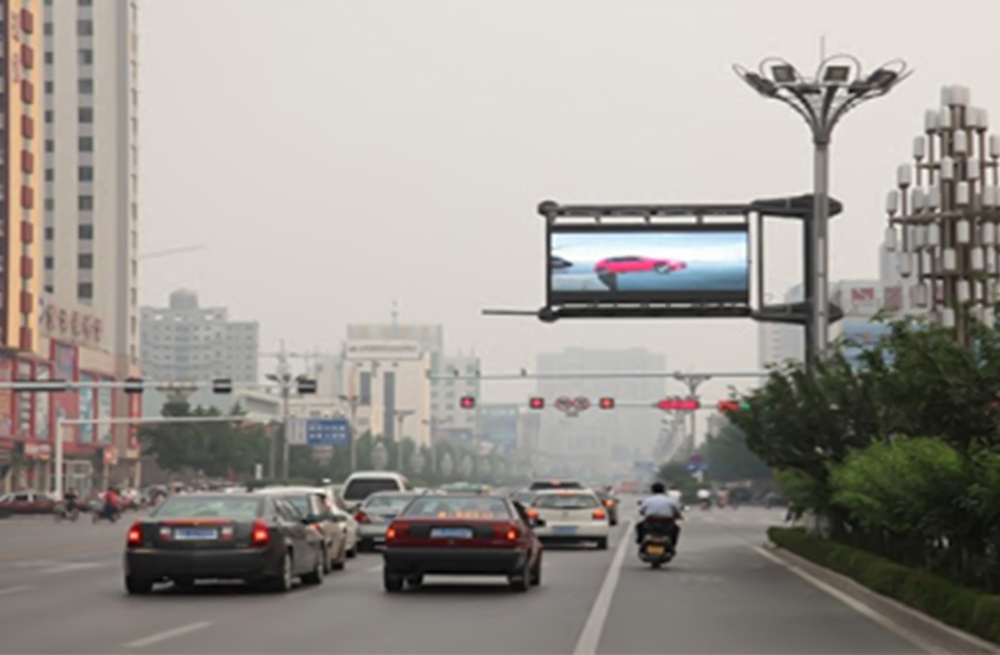
Outdoor displays require higher brightness, weather-resistant cabinets, protected connectors, drainage, corrosion control, and careful thermal design. The correct IP rating must apply to the exposed side of the cabinet, not just an individual module. See outdoor LED display screens.
Fixed-Installation LED Walls
Fixed walls are designed for permanent mounting. They favor structural stability, cable management, efficient power distribution, long-term service access, and cabinet uniformity.
Rental and Staging LED Walls
Rental cabinets use quick locks, alignment pins, integrated handles, corner protection, and lightweight frames for repeated setup. High refresh rate and camera-friendly performance are especially important for concerts, exhibitions, and broadcast events.
Fine-Pitch and COB LED Walls
Fine-pitch SMD and chip-on-board (COB) systems support close viewing in boardrooms, studios, and command centers. COB can add surface protection and improve black-level uniformity, while product quality and repair procedures vary by manufacturer.
Creative, Curved, and Transparent LED Walls
Flexible modules, beveled cabinets, corner panels, and transparent LED products enable columns, curves, cubes, and see-through installations. These designs require precise mechanical and content mapping plans.
LED Video Wall vs. LCD Video Wall
| Factor | DVLED video wall | LCD video wall |
|---|---|---|
| Image seams | Virtually seamless when cabinets are aligned | Visible bezel lines between panels |
| Brightness | Available for indoor and high-brightness outdoor use | Best suited to controlled indoor environments |
| Shape and size | Modular and highly configurable | Usually based on standard rectangular panels |
| Closest viewing | Depends on pixel pitch; fine-pitch models support closer viewing | High native pixel density at close range |
| Service | Modules, receiving cards, and power supplies can be replaced individually | A complete panel is often the main service unit |
| Best fit | Large, bright, seamless, or custom-format displays | Smaller indoor walls where close-view detail and budget favor LCD |
LED Video Wall Resolution Explained
Pixel pitch is the center-to-center distance between adjacent pixels, measured in millimeters. A smaller pitch places more pixels in the same area, increasing resolution and usually allowing a closer viewing distance.
Resolution formula:
- Horizontal pixels = wall width in millimeters / pixel pitch
- Vertical pixels = wall height in millimeters / pixel pitch
- Total pixels = horizontal pixels x vertical pixels
For example, a 6,000 mm x 3,375 mm P2.5 wall has a calculated resolution of 2,400 x 1,350 pixels, or 3.24 million pixels. Cabinet dimensions can change the final wall size, so calculate resolution from the actual module or cabinet layout before selecting a controller.
A practical starting point is that the pixel-pitch number in millimeters is close to the shortest comfortable viewing distance in meters. P2.5, for example, is often evaluated from about 2.5 meters or farther. This is a planning guide, not a fixed rule; content detail, eyesight, budget, and acceptable pixel visibility also matter.
Important Video Wall Specifications
| Specification | Why it matters | Planning guidance |
|---|---|---|
| Pixel pitch | Controls pixel density and viewing distance | Select from the closest real viewer position, not wall size alone |
| Brightness | Keeps content readable under ambient light | Indoor systems often use about 600-1,000 nits; outdoor requirements can be 4,000-7,000+ nits |
| Refresh rate | Affects flicker and camera performance | 3,840 Hz is commonly preferred for camera-facing applications |
| Grayscale and bit depth | Affect shadow detail and smooth gradients | Confirm performance at the actual operating brightness |
| Color temperature | Affects white balance and camera matching | Choose an adjustable system and calibrate the finished wall |
| Viewing angle | Determines image consistency off-axis | Check the LED package and cabinet mask against audience positions |
| IP rating | Indicates resistance to dust and water | Match front and rear ratings to actual exposure |
| Power consumption | Sets circuit, cooling, and operating requirements | Plan with maximum and typical values plus a safe electrical margin |
| Service method | Determines required maintenance space | Use front service where rear access is unavailable |
Specification ranges are application examples, not universal minimums. Always verify the datasheet, local electrical code, structural requirements, and environmental conditions for the selected product.
What Does an LED Video Wall Controller Do?
An LED video wall controller is important because it bridges standard video sources and the wall’s non-standard canvas. It can scale content, switch inputs, arrange multiple windows, synchronize outputs, rotate images, and map pixels across cabinets.
Controller capacity must exceed the wall’s total pixel count, but total pixels are not the only limit. Check the maximum width and height, pixels per output port, supported frame rate, color depth, number of layers, input resolution, and backup architecture. For critical installations, use redundant signal paths and store a verified copy of the final configuration file.
How to Choose an LED Video Wall
- Define the application. Identify whether the wall is for advertising, presentations, live video, broadcast, monitoring, sports, or entertainment.
- Measure the viewing environment. Record closest and farthest viewing distances, ambient light, viewing angles, and indoor or outdoor exposure.
- Choose pixel pitch. Compare several pitches using full-size content at the real viewing distance.
- Set the wall dimensions and aspect ratio. Match the physical cabinet grid to the content format whenever possible.
- Calculate native resolution. Use the actual cabinet layout, then select a controller with adequate headroom.
- Plan maintenance access. Decide between front and rear service before designing the support structure.
- Engineer structure, power, and cooling. Use qualified professionals and follow local codes.
- Confirm spares and support. Keep compatible modules, power supplies, receiving cards, cables, and configuration backups.
Installation and Commissioning Checklist
- Verify wall dimensions, load limits, mounting points, and cabinet alignment tolerances.
- Separate power and data routes where required and label every circuit and signal cable.
- Confirm grounding, surge protection, ventilation, and safe service access.
- Test each cabinet, receiving card, power supply, and data path before final closure.
- Map the cabinets in the controller using the wall’s real physical order.
- Set brightness limits and schedules for the environment.
- Calibrate color and luminance across all modules.
- Run representative still images, motion, low-gray patterns, and camera tests.
- Save the receiver-card file, screen connection file, processor preset, and final as-built diagram.
Benefits and Limitations of LED Video Walls
Key benefits
- Seamless large-format images without LCD bezel lines
- High brightness options for demanding indoor and outdoor locations
- Flexible dimensions, aspect ratios, curves, and creative shapes
- Wide viewing angles and strong motion performance
- Modular service because individual components can be replaced
Important limitations
- Fine-pitch systems can require a higher initial investment
- Poor mechanical alignment creates visible cabinet or module lines
- Incorrect controller capacity or mapping can limit performance
- Color consistency depends on binning, calibration, and replacement-module matching
- Power, heat, structure, and access must be engineered for the complete installation
LED Video Wall Maintenance
Keep air paths and cabinet interiors clean, inspect connectors and grounding, monitor temperature and power alarms, and replace failed components with matched spares. Back up all configuration files before software or hardware changes. For outdoor walls, regularly inspect seals, drainage paths, corrosion, cabinet doors, and weather-exposed cables.
A typical LED product may list a service-life target of 50,000 to 100,000 hours before brightness declines to a specified level. Actual life depends on operating brightness, heat, ventilation, power quality, environment, and maintenance, so it should not be treated as a guaranteed replacement date.
Frequently Asked Questions
What is the difference between an LED wall and a video wall?
An LED wall is one type of video wall. “Video wall” can describe tiled LCD panels, rear-projection cubes, or modular direct-view LED. An LED video wall specifically uses LED modules to form the image.
What are the main types of video walls?
The main display technologies are direct-view LED, tiled LCD, and rear projection. Within direct-view LED, common types include indoor, outdoor, fixed, rental, fine-pitch SMD, COB, transparent, flexible, and creative-shape systems.
Why is an LED video wall controller important?
The controller converts source video into the exact resolution and cabinet map required by the wall. It also handles scaling, switching, image layers, synchronization, and sometimes signal redundancy. A controller that lacks pixel capacity or output bandwidth cannot drive the full wall correctly.
How do I calculate LED video wall resolution?
Divide the physical width and height in millimeters by the pixel pitch in millimeters. A 5,000 mm x 3,000 mm P2.5 wall is 2,000 x 1,200 pixels, assuming the cabinet layout supports those exact dimensions.
Can an LED video wall be used outdoors?
Yes, when the complete system is designed for outdoor use. Check brightness, front and rear IP ratings, weatherproof connectors, corrosion resistance, drainage, cooling, wind load, structure, and local electrical requirements.
How much does an LED video wall cost?
Cost depends on total area, pixel pitch, LED package, cabinet construction, controller, mounting structure, installation, power distribution, calibration, spares, and service plan. Compare complete installed systems rather than panel price alone.
Plan the Complete System
The best LED video wall is not simply the model with the smallest pixel pitch or highest brightness. It is the system whose resolution, controller, structure, power, environment, content, and maintenance plan work together.
Shenzhen EagerLED Co., Ltd. supplies LED display components and complete display solutions. Contact our team with your wall dimensions, viewing distance, indoor or outdoor location, preferred inputs, and installation photos for a compatible system recommendation.