Quick answer: In an LED wall vs projector comparison, an LED wall is usually the better choice for bright venues, large audiences, long daily operating hours and installations that need a scalable screen. A projector is often the more practical option for a dark, controlled room, occasional use or a limited initial budget. The right choice depends on ambient light, viewing distance, content resolution, installation space and total cost of ownership.
If you are comparing an LED wall vs projector, do not judge the systems by screen size alone. Brightness, contrast, viewing angle, maintenance access and the room itself all affect what the audience actually sees. This guide explains the differences so you can choose the right display for a retail store, conference room, control room, house of worship, event stage or outdoor venue.
LED Wall vs Projector: At-a-Glance Comparison
| Factor | LED wall | Projector |
|---|---|---|
| Ambient light | Direct-view light output remains visible in bright indoor spaces and daylight-rated outdoor systems. | Best in controlled lighting; image contrast falls as ambient light reaches the screen. |
| Image contrast | Produces light at each pixel, supporting strong black-to-bright separation. | Black level depends on the projector, screen and how well the room blocks stray light. |
| Screen size | Modular cabinets can create wide, tall or custom-shaped displays. | A large image is possible from one device, but throw distance and screen size must match. |
| Resolution | Depends on total pixel count and pixel pitch; finer pitch is needed at short viewing distances. | Fixed by the projector’s native resolution. |
| Space | Requires mounting depth, power, data distribution and service access. | Requires a clear light path, suitable throw distance and a projection surface. |
| Maintenance | Modules, receiving cards and power supplies can often be serviced individually. | Lamps, laser light sources, filters or the complete projector may require service. |
| Initial cost | Usually higher, especially for fine-pitch or outdoor installations. | Often lower for a standard indoor presentation screen. |
What Is an LED Wall?
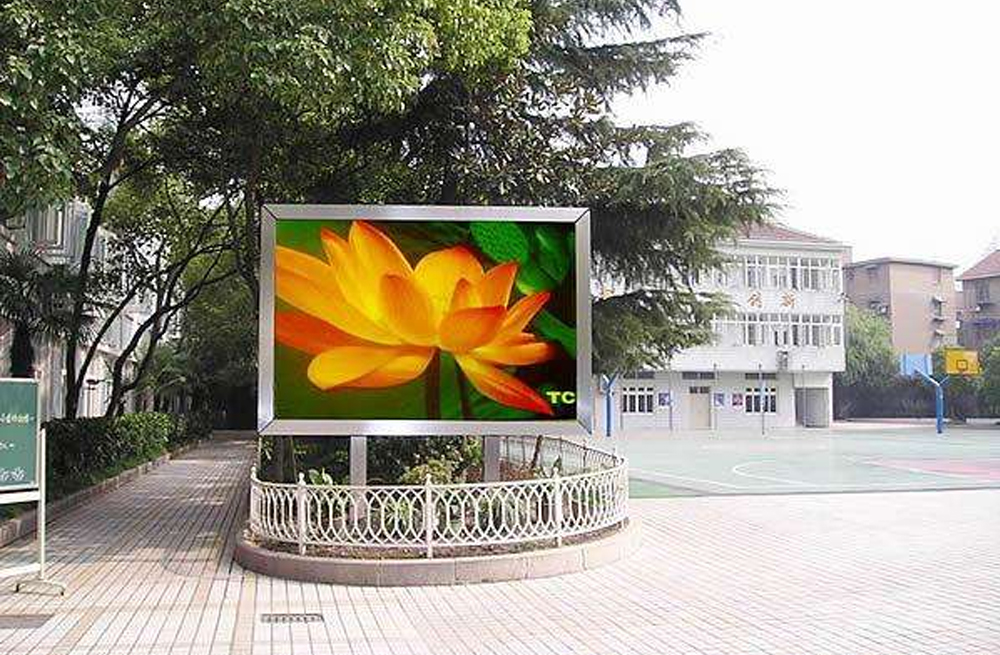
An LED wall is a direct-view display built from multiple LED modules or cabinets. Each pixel emits its own light. Cabinets connect mechanically and electronically to form one synchronized canvas, while receiving cards and a video controller distribute the image across the screen.
Because the system is modular, an LED wall can be sized for the available surface rather than being limited to one standard diagonal measurement. Indoor fine-pitch displays are designed for shorter viewing distances, while weather-rated outdoor LED display screens prioritize brightness, durability and long-distance visibility.
What Is a Projection Display?
A projection display uses a lamp or laser light source to cast an image onto a separate screen or wall. Its result depends on the projector, lens, throw distance, projection surface and room lighting working together. Front projection is common because it is simple to deploy, but people, fixtures or equipment can block the light path. Rear projection avoids shadows but needs substantial space behind the screen.
Projection remains useful for classrooms, meeting rooms, temporary presentations and dark venues where a large image is needed without constructing a modular display.
7 Key Differences Between LED Walls and Projectors
1. Brightness and Ambient-Light Performance
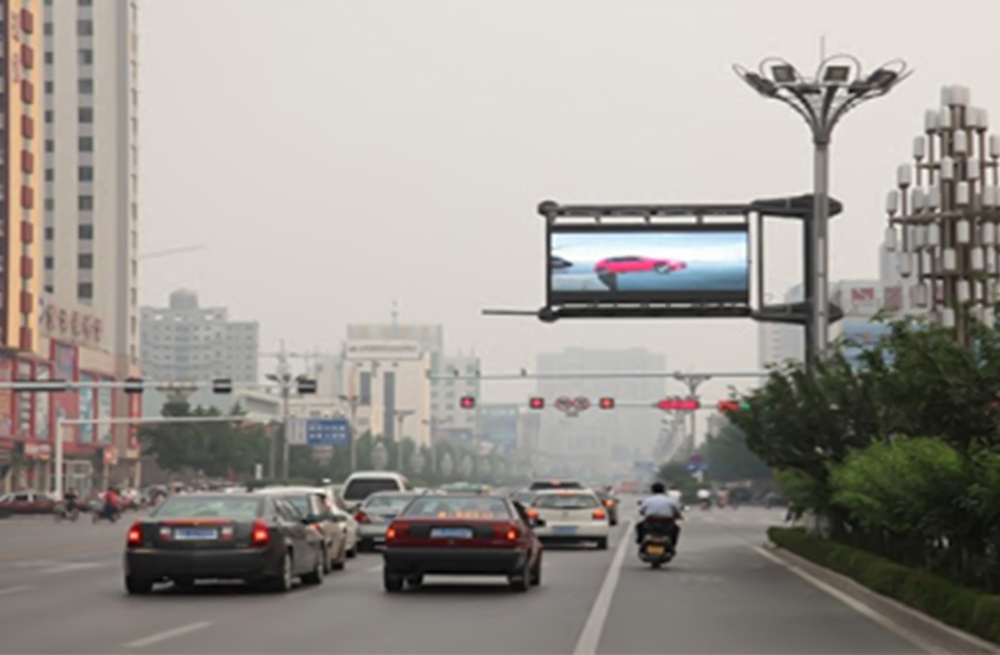
LED walls send light directly toward the audience, so they generally preserve color and contrast better in bright environments. This is why direct-view LED is widely used for storefronts, exhibition halls, stages and outdoor advertising.
Projectors are specified by luminous output, commonly in lumens, while LED displays are specified by surface luminance in nits. Lux may be used to describe the light arriving at a surface. These units measure different things and should not be converted one-for-one without considering screen area, gain and optical geometry. For a fair comparison, ask the supplier to evaluate the planned screen size and measured ambient light at the installation site.
2. Contrast, Color and Viewing Experience
Ambient light washes out a projected image because the screen reflects both projector light and light from the room. An LED wall does not rely on a reflective surface, so it can deliver stronger perceived contrast in the same environment. LED displays also offer a wide viewing angle when the correct LED package and cabinet design are selected.
A well-designed projector system can still produce excellent cinematic images in a dark room. If controlled lighting and film-style presentation matter more than daylight visibility, projection may be the better fit.
3. Image Size, Resolution and Viewing Distance
Both technologies can create a large image, but they scale differently. A projector enlarges one fixed-resolution image. As the image grows, the same pixels cover a larger area and brightness is spread across more of the screen.
An LED wall adds physical modules and pixels as it grows. Its sharpness depends mainly on pixel pitch, screen dimensions and viewing distance. A finer pitch provides more pixels in the same area, but it also increases cost and processing requirements. For close-viewed boardrooms or control rooms, an indoor LED video wall should be specified by both required resolution and the nearest viewer, not by width alone.
4. Installation Space and Visual Obstructions
Projection needs a clear path between the lens and screen. Ceiling height, lighting fixtures, structural columns and audience movement can introduce shadows or force an inconvenient projector position. Short-throw models reduce the required distance but do not remove every optical constraint.
An LED wall needs a secure support structure, power, signal cabling, heat management and front or rear service access. It does not need an open throw path, which makes room layouts more flexible. The display surface can also remain usable when presenters stand directly in front of it.
5. Reliability and Maintenance
A modular LED system can often be repaired at component level. A technician may replace an LED module, receiving card, power supply or cable without removing the entire display. Spare-module planning and consistent calibration are important because replacement parts should match the installed batch as closely as possible.
Projector maintenance varies by technology. Lamp-based units need periodic lamp replacement, while laser models reduce that task but still depend on cooling, optics and filters. If a single projector fails, the complete image may be unavailable until a replacement or repair is ready. Redundant projection can reduce this risk, but it adds cost and alignment work.
6. Layout and Creative Flexibility
LED cabinets can form ultra-wide canvases, columns, corners and selected curved or custom structures when the chosen hardware supports them. This makes LED useful for stage backdrops, immersive spaces, broadcast sets and architectural media installations. A suitable LED video processor can scale, switch and map source content to a non-standard canvas.
Projection mapping can also cover irregular surfaces and may be ideal for temporary creative events. It requires careful alignment and predictable lighting, and the projected surface affects color and uniformity.
7. Purchase Price and Total Cost of Ownership
A projector normally has the lower entry price for a conventional indoor screen. The complete projection budget should still include the lens, mount, signal extension, screen, calibration and any room-lighting changes.
An LED wall usually costs more initially because it includes many modules, cabinets, control components, structural hardware and installation labor. Over a long operating schedule, evaluate energy use at realistic brightness, expected maintenance, access costs, replacement parts and the business impact of downtime. The least expensive purchase is not always the least expensive system to operate.
When Should You Choose an LED Wall?
Choose an LED wall when several of these conditions apply:
- The venue has high ambient light or the display must operate outdoors.
- The content must remain visible from wide angles or long distances.
- You need a seamless-looking, very wide or custom-format canvas.
- The screen will run for long daily schedules in retail, transport, broadcast or control-room use.
- Component-level serviceability and future size expansion are priorities.
- There is no practical projection path or presenters will stand in front of the display.
When Is a Projector the Better Choice?
A projector may be the better choice when:
- The room can be kept dark or lighting can be tightly controlled.
- The display is used occasionally for meetings, lessons or film viewing.
- A large conventional 16:9 image is required on a limited initial budget.
- The installation is temporary and a projection screen is already available.
- Low wall depth is more important than keeping the light path clear.
How to Specify the Right Display
Before requesting a quotation, document the following requirements:
- Viewing distance: Record the nearest and farthest audience positions.
- Ambient light: Note direct sunlight, windows, stage lighting and planned operating hours.
- Content: Identify source resolution, frame rate, aspect ratio and whether small text must be legible.
- Screen dimensions: Define the usable width and height, not only a diagonal size.
- Installation constraints: Check structure, access, power, signal routes, ventilation and permissible weight.
- Service plan: Decide whether front or rear access is required and which spare parts will be stored on site.
- Budget horizon: Compare installation and operating costs over the expected service period.
For an LED wall, also confirm pixel pitch, cabinet dimensions, total pixel resolution, brightness range, refresh rate, color depth, control-system compatibility and calibration method. For a projector, confirm native resolution, light-source type, lens ratio, screen gain, mounting position and the measured illumination at the screen.
Frequently Asked Questions
Is an LED wall better than a projector?
An LED wall is better for bright spaces, high-impact signage, wide viewing angles and modular serviceability. A projector can be better for dark rooms, occasional presentations and projects with a lower initial budget. The venue and operating model determine the answer.
Can a projector compete with an LED wall in daylight?
A high-output projector and specialized screen can improve daylight performance, but uncontrolled ambient light still reduces projected contrast. A properly specified outdoor LED wall is normally the more dependable choice for direct sunlight and public signage.
Does an LED wall have a fixed resolution?
Yes. The total resolution is determined by the pixel count across all installed modules. Unlike a projector, however, the total pixel count can increase when more cabinets are added. Content still needs to be scaled or mapped to that exact canvas.
Which option is easier to maintain?
LED walls offer component-level replacement, which can limit downtime when spare modules and trained technicians are available. A projector is simpler as a single device, but a failure can affect the whole image. Ease of maintenance depends on physical access and the support plan designed before installation.
Can an LED wall be used in a conference room?
Yes. Fine-pitch LED walls are used in boardrooms and control rooms, especially where brightness, continuous operation and a large seamless canvas are important. The pixel pitch must be fine enough for the closest viewer and for detailed text.
Final Recommendation
For a bright, high-traffic or mission-critical venue, an LED wall usually provides the stronger viewing experience and a more serviceable modular platform. For a dark, controlled room with occasional use and a modest budget, projection remains a sensible solution. Compare both systems against the same screen dimensions, content, room conditions and service expectations before deciding.
EagerLED supplies LED display modules, receiving cards, sending solutions, video processors and related display components from Shenzhen, China. Contact our team with your screen size, viewing distance, installation environment and content resolution for a project-specific recommendation.