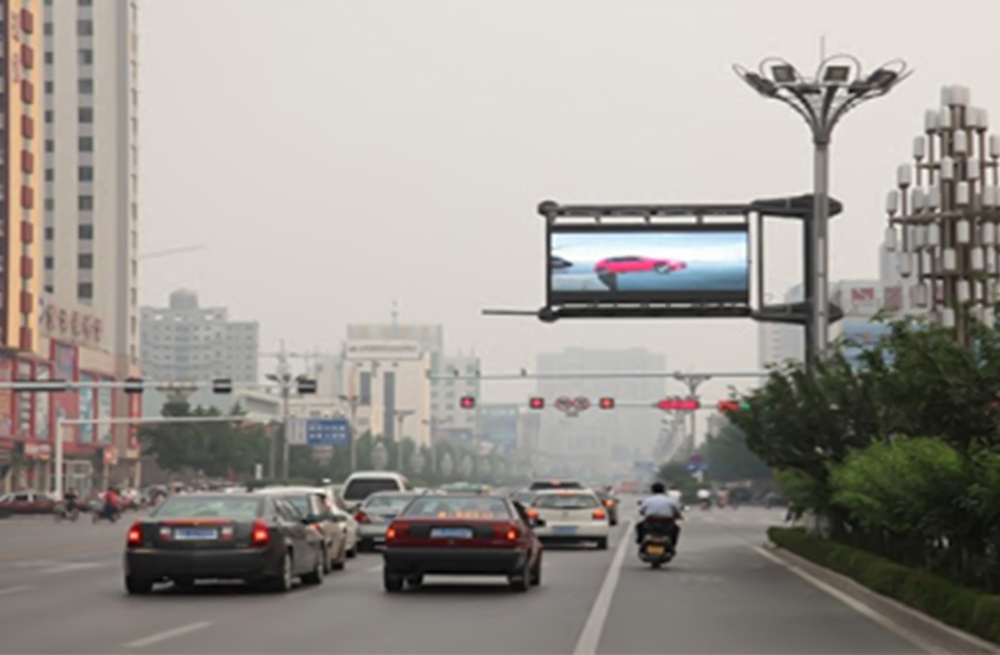
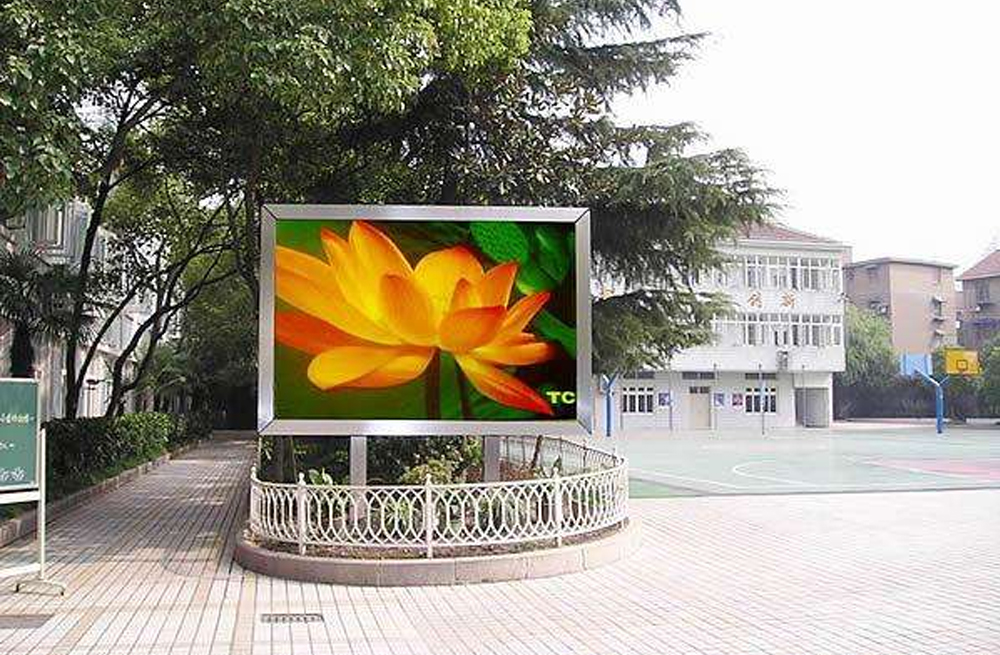
Outdoor LED displays help businesses promote products, events, and offers by placing bright, changeable messages where local audiences can see them. Unlike a printed sign, an LED screen can run multiple campaigns, update content quickly, and schedule messages for different times of day. The result is a flexible advertising asset that can support brand awareness, store visits, event promotion, and customer communication.
The business value does not come from brightness alone. A successful installation combines the right screen size and pixel pitch with a clear content plan, reliable control equipment, safe installation, and measurable campaign goals. This guide explains the benefits, components, cost factors, and best practices businesses should evaluate before buying an outdoor LED display.
What Is an Outdoor LED Display?
An outdoor LED display is a weather-resistant digital screen assembled from LED modules, cabinets, power supplies, receiving cards, a controller or media player, and content-management software. Individual outdoor LED display modules form the visible surface, while the control system receives and distributes image data to the screen.
The terms outdoor LED screen, LED advertising board, and outdoor LED display panel are often used for the complete display. An LED module is only one component of that system. Weather resistance, cooling, structural strength, electrical protection, and service access must be evaluated for the complete installation, not just the module.
- Best for: storefronts, shopping centers, hotels, restaurants, banks, stadiums, transport hubs, roadside advertising, and outdoor events.
- Main advantage: content can be changed and scheduled without replacing a physical sign.
- Main buying decision: match pixel pitch, brightness control, screen size, viewing distance, and serviceability to the site.

7 Ways Outdoor LED Screens Promote a Business
1. Capture attention in busy outdoor locations
Moving images, strong contrast, and large-format creative can make an outdoor LED advertising screen easier to notice than a static poster. This is useful when a business must communicate with drivers or pedestrians who have only a few seconds to view the message.
2. Update offers without printing new signage
Businesses can replace prices, products, dates, and calls to action from the content system. A restaurant can promote breakfast in the morning and dinner later; a retailer can switch from a new-product message to a limited-time offer; an event venue can update schedules as needed.
3. Schedule messages for different audiences
Content scheduling helps match each message to the people most likely to see it. Commuter-focused content can run during travel periods, while weekend promotions can appear when leisure traffic is higher. The schedule should reflect local traffic patterns and the campaign goal.
4. Support both branding and direct response
An outdoor LED screen can carry a simple brand message, a product launch, directions, a price promotion, or an event reminder. A short URL, memorable offer code, or location-specific call to action can connect the screen with a measurable response.
5. Reuse one display across many campaigns
The same screen can support product promotions, seasonal campaigns, public information, and event content. This does not make every campaign free, but it reduces the need to manufacture and install a new physical sign each time the message changes.
6. Communicate in real time
Where the control system and network design allow it, authorized staff can publish timely notices, availability information, event updates, or safety messages. Access permissions and approval workflows are important so that only verified content reaches the display.
7. Scale the experience to the location
Outdoor LED display screens can be designed for a small storefront or a large building facade. The display should be sized for the actual viewing distance and sightline rather than selected only by the dimensions of the available wall.
How an Outdoor LED Advertising Screen Works
Understanding the signal path makes it easier to compare quotations and diagnose future problems:
- Content source: a computer, cloud platform, camera, or media player supplies images and video.
- LED controller: the sending device processes the source and maps it to the screen resolution.
- Receiving cards: these distribute image data to groups of LED modules inside the cabinets.
- LED modules: pixels on the modules produce the visible image.
- Power and structure: power supplies, distribution equipment, cabinets, cooling, cabling, and the supporting structure keep the system operating safely.
A complete proposal should show compatibility among the modules, receiving cards, controller, power design, cabinet layout, and software. It should also state how technicians will access and replace parts after installation.
Choosing Pixel Pitch for an Outdoor LED Display
Pixel pitch is the center-to-center distance between adjacent pixels, stated in millimeters. A smaller pitch places pixels closer together and can provide more image detail at a close viewing distance, but it usually increases the number of LEDs and the system cost. The best pitch depends on viewing distance, content detail, screen dimensions, and budget.
| Typical application | Common starting range | Content approach | Priority to verify |
|---|---|---|---|
| Close-view retail facade or entrance | P2.5 to P4 outdoor LED module | Products, prices, short video, detailed branding | Image detail, brightness control, front service |
| Street-side store, plaza, or event display | P4 to P6 outdoor LED display | Large text, promotions, event information | Viewing angle, cabinet design, setup method |
| Long-view roadside or large building display | P6 to P10 or larger pitch | Short headlines, bold graphics, simple calls to action | Screen size, structural design, long-distance legibility |
These ranges are planning references, not universal rules. Ask the supplier to provide a pixel-pitch recommendation based on the shortest and typical viewing distances, the final screen resolution, and a simulation of the intended content.
What Determines Outdoor LED Display Price?
An outdoor LED display panel price cannot be judged accurately from square-meter cost alone. Two screens of the same size can have different performance, service life, and installation requirements. Compare quotations using the same technical scope.
- Screen area and aspect ratio: a larger active area requires more modules, cabinets, power, and structure.
- Pixel pitch and resolution: a finer pitch normally uses more pixels for the same area.
- LED and module specification: LED type, scan design, color performance, protective treatment, and quality control affect the module cost.
- Brightness and automatic dimming: the display must remain readable in its environment without running brighter than necessary at night.
- Cabinet and service design: cabinet material, weight, front or rear maintenance, sealing, and cooling affect installation and maintenance.
- Control system: screen resolution, input sources, remote publishing, redundancy, and monitoring determine the controller and network requirements.
- Installation: steel structure, engineering review, lifting, electrical distribution, grounding, surge protection, permits, and labor can be major project costs.
- Ownership costs: shipping, spare modules, replacement power supplies, maintenance access, energy use, software, and technical support belong in the total budget.
A practical comparison is: total cost of ownership = equipment + structure and installation + operation + maintenance – expected residual value. Request an itemized bill of materials, warranty scope, spare-parts list, power estimate, and support plan before comparing suppliers.
Outdoor LED Content Best Practices
Keep one message per scene
A viewer should understand the subject, benefit, and next action quickly. Use a short headline, one strong visual, and a clear call to action. Avoid turning the screen into a full brochure.
Design for viewing distance
Use large type, high contrast, and uncluttered layouts. Preview the creative at the approximate viewing distance or photograph the installed screen from key sightlines. Small text, thin fonts, and complex backgrounds often reduce readability.
Match timing to the location
A person waiting in a plaza can read more than a driver passing the display. Set scene duration and animation speed for the real viewing window. Near roads and intersections, follow local rules for animation, brightness, placement, and message changes.
Use brightness responsibly
Daytime visibility and nighttime comfort require different output levels. Specify ambient-light sensing or scheduled dimming where appropriate. Excessive nighttime brightness can reduce readability, create complaints, and conflict with local requirements.
Build a content calendar
Plan evergreen brand messages, promotions, events, and replacement dates. Assign an owner to approve content and remove expired offers. Keep a fallback message available if a campaign asset is delayed.
How to Measure the Business Results
Set a campaign objective before installation. Then use one or more methods that connect exposure to an action:
- Track a unique landing page, QR code, phone extension, or promotion code.
- Compare store visits, inquiries, or sales during similar time periods.
- Record which messages ran, at what times, and for how long.
- Compare creative versions while keeping the audience and schedule as consistent as possible.
- Monitor screen uptime, because an unavailable screen cannot deliver the planned campaign.
Do not rely on impressions alone. For a brand campaign, useful indicators may include reach and recall. For a sales campaign, leads, redemptions, visits, and revenue are more relevant. The measurement method should match the purpose of the message.
Outdoor LED Display Buying Checklist
- Confirm the shortest, typical, and longest viewing distances.
- Define screen dimensions, aspect ratio, and final pixel resolution.
- Compare P2.5, P4, P6, P10, or other pitches using your actual content.
- Verify rated brightness, dimming control, viewing angle, and color performance.
- Check the complete system’s weather protection, cooling, electrical safety, and structural design.
- Choose front or rear maintenance according to site access.
- Confirm controller capacity, input formats, remote access, monitoring, and backup requirements.
- Request spare modules and critical replacement parts from the same production batch where possible.
- Review warranty exclusions, response time, training, documentation, and after-sales support.
- Check local planning, traffic-safety, electrical, and advertising regulations before installation.
Frequently Asked Questions
Do outdoor LED screens work in daylight?
Yes, when the display is specified for the site’s ambient light and installed correctly. The supplier should recommend suitable brightness, contrast, shading, and automatic dimming based on the screen orientation and local conditions.
What is the difference between an outdoor LED module and a complete screen?
An LED module is the replaceable panel containing LEDs and driver electronics. A complete screen combines many modules with cabinets, receiving cards, controllers, power supplies, cables, cooling, protection, and a supporting structure.
Which pixel pitch is best for outdoor advertising?
There is no single best pitch. P2.5 or P4 may suit closer viewing, while P6 or P10 may be appropriate at longer distances. Select the pitch after calculating the screen resolution and testing the intended content at realistic viewing distances.
How often should outdoor LED content change?
Change content when the offer, audience, schedule, or business goal changes. More frequent updates are useful only when each version remains accurate, readable, and relevant. Remove expired promotions promptly.
Should an outdoor LED advertisement be static or animated?
Use the format that communicates clearly in the available viewing time. Simple motion can attract attention, but fast animation can reduce comprehension. Local authorities may restrict motion or scene changes near roads, so verify the rules before publishing.
Is an outdoor LED display cost-effective?
It can be when the location has suitable visibility, the screen is used consistently, campaigns are measured, and maintenance is planned. Evaluate total cost of ownership and expected business results rather than equipment price alone.
Plan the Screen Around the Business Goal
An outdoor LED display is most effective when technology, location, content, and measurement work together. Start with the audience and campaign objective, then select the size, pixel pitch, control system, brightness strategy, and service design that support that goal.
For help comparing modules, control equipment, and complete outdoor display options, contact our LED display team with the installation location, screen dimensions, viewing distance, content type, and preferred maintenance access.