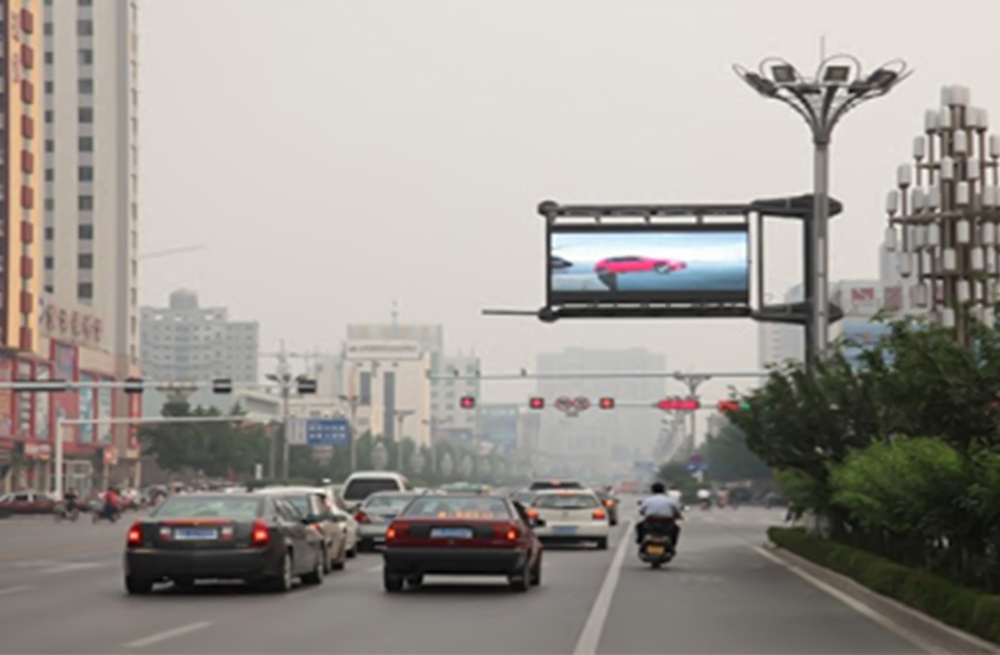
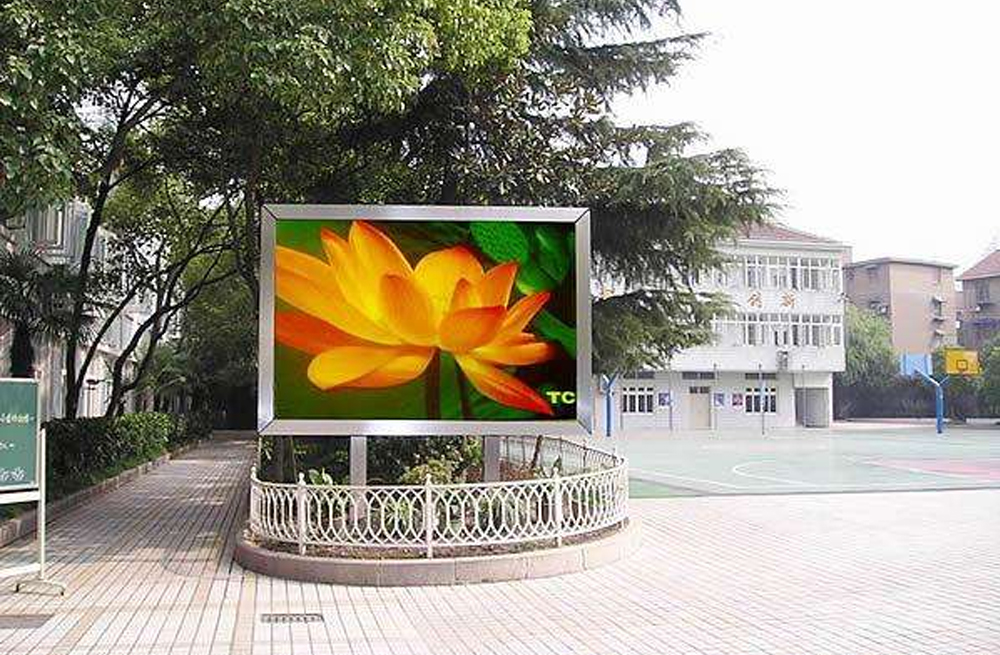
Quick answer: LED display brightness is the light intensity emitted from one square meter of screen area. It is measured in nits, where 1 nit equals 1 candela per square meter (cd/m2). A practical target is usually 600-1,000 nits indoors, 1,500-3,500 nits for bright indoor or window-facing installations, and 4,500-8,000+ nits outdoors. The correct value depends on ambient light, viewing direction, content, and local brightness limits.
The phrase LED display brightness index is often used informally, but it is not a separate standardized unit. For a complete evaluation, check peak and calibrated brightness, uniformity, grayscale performance, power consumption, and the screen’s ability to hold its target luminance over time.
What Is LED Display Brightness?
LED display brightness describes the luminance that reaches a viewer from the screen in a specified direction. The standard unit is cd/m2, commonly called a nit. For example, a display rated at 5,000 nits produces a luminance of 5,000 cd/m2 under the stated test conditions.
Brightness should not be confused with lumens or millicandela (mcd):
- Nits (cd/m2): luminance from a display surface. This is the correct unit for comparing LED screens.
- Lumens (lm): total visible light output from a source. Lumens do not describe how bright a display looks per unit area.
- Millicandela (mcd): luminous intensity of an individual LED in a direction. It does not by itself predict the brightness of a complete screen.
Recommended LED Screen Brightness by Environment
Use the ranges below as practical starting points, not universal pass/fail limits. Final settings should be verified at the installation site.
| Installation environment | Typical target brightness | Practical guidance |
|---|---|---|
| Indoor LED display | 600-1,000 nits | Suitable for meeting rooms, retail interiors, studios, and auditoriums with controlled lighting. |
| Bright indoor or window-facing display | 1,500-3,500 nits | Extra output helps overcome daylight and reflections near glass. |
| Outdoor display in shade or facing away from direct sun | 4,000-5,500 nits | Often sufficient when the screen is shaded for most of the day. |
| Outdoor LED display in direct sunlight | 5,500-8,000+ nits | High-brightness LEDs and automatic dimming are recommended for daytime visibility and nighttime comfort. |
Important: More brightness is not always better. Excessive luminance can wash out dark detail, increase power use and heat, accelerate LED aging, and cause glare for nearby residents or drivers. Use a light sensor and scheduled dimming so an outdoor screen does not remain at daytime brightness after sunset.
How to Measure the True Brightness of an LED Display
A calibrated luminance meter provides a meaningful, repeatable result. A phone app, photoresistor, or camera exposure can help with rough comparisons, but it cannot verify an advertised nit rating.
- Warm up and stabilize the display. Run the screen for at least 20-30 minutes at its normal operating temperature.
- Use a controlled test signal. Display a full-screen white field and confirm the brightness setting, color temperature, and power mode being tested.
- Control ambient light. Measure in darkness or subtract a documented ambient-light reading. Reflections can inflate or distort results.
- Position the meter correctly. Aim a calibrated luminance meter perpendicular to the screen from a distance that allows its measurement area to cover several pixels.
- Measure multiple points. Record the center and at least eight surrounding positions in a 3 x 3 grid. Do not judge the entire display from one bright pixel or one cabinet.
- Calculate average brightness and uniformity. Average the readings for representative screen brightness. Brightness uniformity can be expressed as the minimum reading divided by the maximum reading, multiplied by 100%.
- Repeat at operating levels. Check the display at 100%, 50%, and a normal calibrated setting. This reveals whether power limits or thermal control reduce output.
How to Compare Individual LEDs
When screening loose LEDs, use a regulated constant-current source rather than connecting them directly to a battery. Test devices from the same distance and angle, at the same forward current and temperature. A photometer can then compare relative light output. This procedure is useful for component matching, but it does not replace a full-screen cd/m2 measurement because the finished display also depends on pixel density, optical masks, scan ratio, calibration, and module design.
What Determines LED Display Brightness?
- LED chip and package: chip efficiency, package optics, wavelength, and quality affect usable light output.
- Pixel pitch and fill factor: the number and arrangement of LEDs per square meter influence surface luminance.
- Drive current and scan ratio: higher current can increase peak output, but excessive current raises heat and shortens service life.
- Calibration settings: white balance and per-pixel correction normally reduce maximum output to improve color accuracy and uniformity.
- Power and thermal design: inadequate power supplies, ventilation, or heat dissipation may cause brightness to fall after warm-up.
- Viewing angle: a screen can measure differently off-axis. Compare products at the angle viewers will actually use.
- Aging and maintenance: LEDs gradually lose output, while dust and weathered masks reduce apparent brightness and contrast.
Peak Brightness vs. Calibrated Brightness
A peak specification usually represents a new display showing full white under favorable conditions. Calibrated operating brightness is often lower because the screen has been adjusted for accurate color, consistent modules, acceptable power draw, and thermal stability. When comparing quotations, ask whether the value is peak, typical, or post-calibration brightness, and request the measurement distance, meter model, color temperature, screen settings, and warm-up time.
Brightness, Grayscale, and Image Quality
Brightness and grayscale are related but not interchangeable. A control system may support 8-bit, 10-bit, 12-bit, or higher processing, yet the visible result also depends on calibration, refresh rate, driver IC performance, and low-brightness behavior. For indoor studios and dark venues, stable low-level grayscale can matter more than extreme peak nits. A suitable LED video processor and control system help preserve detail while the display operates below maximum output.
LED Display Brightness Checklist
- Compare specifications in nits (cd/m2), not lumens.
- Match the target range to real ambient light and viewing distance.
- Ask whether the rating is peak or calibrated operating brightness.
- Verify the screen with a calibrated luminance meter after warm-up.
- Measure a grid of points and record uniformity, not only the center.
- Check performance after the display reaches normal temperature.
- Use automatic or scheduled dimming for outdoor installations.
- Confirm local rules for nighttime luminance, glare, and roadway safety.
Frequently Asked Questions
What is the brightness of a digital display measured in?
LED display brightness is measured in nits, equivalent to candelas per square meter (cd/m2).
How many nits are appropriate for an indoor LED screen?
Most indoor LED screens operate well at 600-1,000 nits. Bright atriums and window-facing installations may need 1,500-3,500 nits, while studios may use lower calibrated levels to protect grayscale and camera performance.
How many nits does an outdoor LED display need?
A shaded outdoor screen may need about 4,000-5,500 nits. Direct-sun installations commonly use 5,500-8,000 nits or more during the day, with automatic dimming at night.
Can a multimeter measure LED screen brightness?
No. A multimeter measures electrical values, not screen luminance. A photoresistor connected to a multimeter can compare relative output under tightly controlled conditions, but a calibrated luminance meter is required for a defensible nit measurement.
Does higher brightness shorten LED life?
It can. Running LEDs at higher current increases heat and stress. Proper thermal design, conservative current settings, and automatic dimming can improve stability and service life.
What proof should a supplier provide for a brightness claim?
Request a dated test report showing the meter model and calibration status, test pattern, measurement distance and angle, screen size, color temperature, brightness setting, warm-up time, ambient conditions, average luminance, and uniformity readings.
Conclusion
The true brightness of an LED display is a measured cd/m2 value under documented conditions, not a visual guess or a single-LED claim. Choose a realistic target for the environment, verify it across the screen after warm-up, and balance visibility with contrast, heat, power use, grayscale, and local lighting requirements. For help matching an LED display and control solution to a specific installation, contact our LED display team.