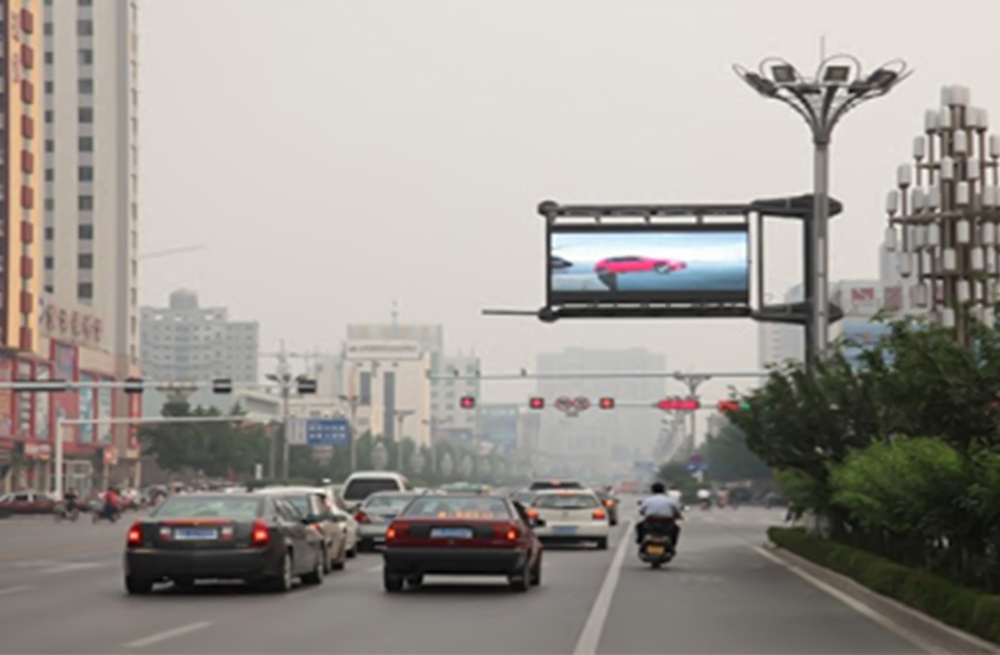
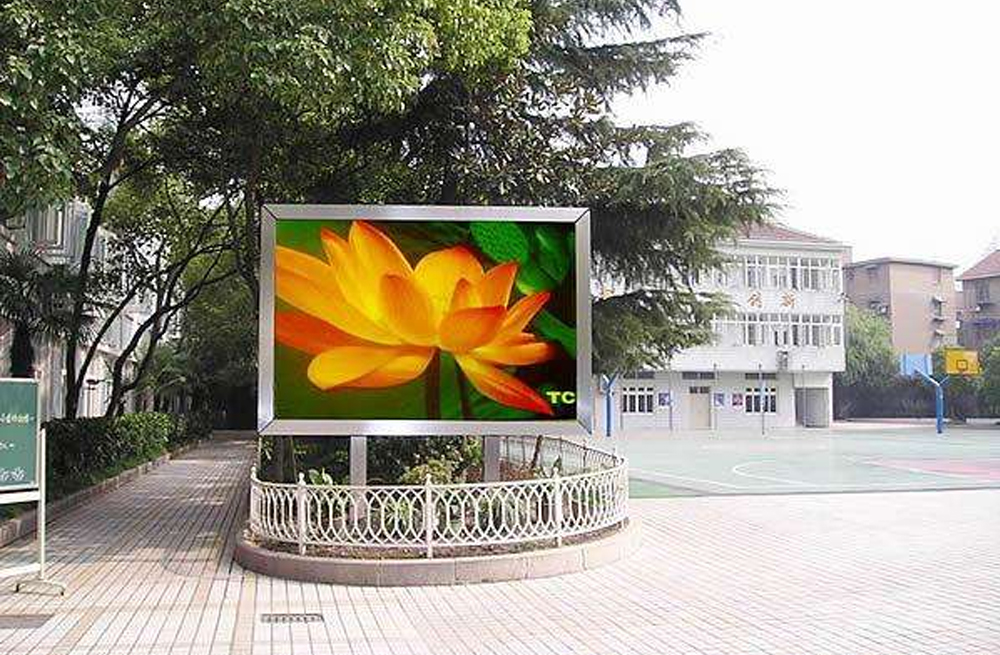
Outdoor LED screen black lamps use black LED packages and dark, matte surfaces to reduce reflected ambient light. Their main technical advantages are higher perceived contrast, deeper black levels, more accurate color, lower glare, better viewing comfort, and the potential to achieve a clear image without relying on maximum brightness. These benefits are most noticeable in advertising, sports, stage, and architectural displays viewed in daylight or under strong venue lighting.
This guide explains how black lamp LEDs work, how they compare with conventional white lamp packages, and what buyers should check before choosing an outdoor LED display screen.
What Is an Outdoor LED Screen Black Lamp?
A black lamp is an LED package whose housing, reflector area, and visible surface are designed to appear dark when the pixel is off. In an outdoor LED module, thousands of these red, green, and blue LED packages form the screen’s pixels. The term describes the package appearance; it does not mean that the LED emits black light.
Traditional outdoor modules often use white LED package surfaces. A white surface can help reflect emitted light, but it also reflects sunlight and other ambient light toward the viewer. That reflected light raises the apparent black level of the screen. A black package absorbs more of the surrounding light, so unlit pixels look darker and the difference between bright and dark areas becomes easier to see.
Quick Answer: What Are the Main Advantages?
- Higher perceived contrast: darker unlit pixels create a stronger separation between highlights and shadows.
- Better color fidelity: reduced ambient reflection helps colors look cleaner and more saturated.
- Lower glare: a dark matte surface reduces distracting reflections in bright environments.
- Clearer motion and detail: improved contrast makes edges, text, and fast scene changes easier to distinguish.
- Wider practical viewing conditions: content remains more legible as surrounding light changes.
- Potential energy savings: a high-contrast image may meet the visual target at a lower brightness setting.
- More premium appearance: the screen looks darker and more uniform when it is off or showing black content.
7 Technical Advantages of Outdoor LED Screen Black Lamps
1. Higher Native and Perceived Contrast
Contrast is the ratio between the brightest white and the darkest black a display can reproduce. Outdoor ambient light is reflected by the module surface and increases the apparent luminance of black pixels. Because a black LED package reflects less ambient light than a white package, it can improve real-world contrast even when two screens have a similar rated brightness.
This matters because viewers do not judge brightness in isolation. A screen with controlled reflections and darker blacks can appear clearer than a brighter screen with washed-out dark areas.
2. Deeper Black Levels and More Image Depth
When an LED is off, the surrounding package remains visible. A white package can make dark scenes appear gray, especially in direct sunlight. Black packages visually blend into the dark module mask, producing a more uniform black field. The result is stronger image depth, better shadow separation, and more convincing dark content.
3. More Accurate, Saturated Color
Ambient reflections add unwanted white light to the image. By reducing that contamination, black lamps help the emitted red, green, and blue light dominate what the viewer sees. Colors can therefore appear more saturated and closer to the source content. Correct calibration, driver performance, grayscale depth, and white-balance settings are still essential; the LED package alone cannot compensate for poor processing or calibration.
4. Reduced Glare and Stray-Light Interference
Many black lamp packages use a matte surface that scatters less reflected light toward the audience. This can reduce glare from sunlight, floodlights, and nearby signage. Lower glare improves comfort during extended viewing and helps fine text, logos, and image edges remain readable.
5. Better Detail in Video and Fast-Moving Content
High contrast improves the visual separation between adjacent tones. During fast scene changes, sports footage, or animated advertising, that separation helps the eye recognize outlines and motion. Refresh rate, scan mode, driver IC, and camera settings also influence motion quality, so black lamps should be evaluated as one part of the complete display system.
6. Useful Brightness-to-Contrast Efficiency
A display does not always need the highest possible nit rating to look bright. If the black level is lower, the image can achieve strong perceived contrast at a more moderate output. In suitable installations, operators may be able to use a lower brightness setting while maintaining readability. That can reduce power demand and thermal load, but actual savings depend on content, automatic brightness control, module efficiency, weather, and operating schedule.
7. A Cleaner Appearance When the Screen Is Dark
Black lamp modules create a more consistent dark surface when powered off or displaying black content. This is valuable for building facades, premium retail environments, stages, and venues where the physical appearance of the screen matters between presentations.
Black Lamp vs. White Lamp Outdoor LED Displays
| Factor | Black lamp package | White lamp package |
|---|---|---|
| Ambient-light reflection | Generally lower | Generally higher |
| Perceived black level | Deeper | Can appear gray in bright light |
| Real-world contrast | Usually stronger | More dependent on raw brightness |
| Color appearance | Often richer and less washed out | May lose saturation under strong ambient light |
| Glare control | Better with a matte black surface | More visible surface reflection |
| Maximum brightness | Depends on LED chip and package design | Can be advantageous in some ultra-high-brightness designs |
| Best fit | Contrast-critical outdoor and semi-outdoor applications | Projects prioritizing maximum luminance or lower initial cost |
Important: package color alone does not determine screen quality. Compare complete module specifications and request a side-by-side sample under the lighting conditions of the actual site.
Where Do Black Lamp Outdoor LED Screens Work Best?
- Outdoor advertising screens with detailed video and brand colors
- Sports scoreboards and perimeter displays
- Concert, broadcast, and rental LED screens
- Retail facades and digital signage exposed to changing daylight
- Architectural displays that should look discreet when switched off
- Semi-outdoor installations under canopies, glass, or strong artificial lighting
What Should You Check Before Buying?
Ask the supplier for measured specifications rather than judging the LED package by color alone. A practical evaluation should include:
- Brightness and contrast: review both rated values and test the display under expected ambient light.
- Reflection control: inspect the LED package, module mask, coating, and surface texture.
- Color performance: check calibration consistency, grayscale depth, color temperature, and low-brightness uniformity.
- Refresh rate and scan mode: confirm suitability for cameras, live events, and fast-moving content.
- Weather resistance: verify the module and cabinet IP rating, drainage, corrosion protection, and operating-temperature range.
- Power and heat: compare typical and maximum consumption, cooling design, and brightness-control strategy.
- Serviceability: confirm front or rear access, spare-module availability, and calibration-data replacement procedures.
- Viewing distance: select pixel pitch according to the closest normal viewer and content detail.
Frequently Asked Questions
Are black lamp LEDs brighter than white lamp LEDs?
Not necessarily. Package color affects reflected ambient light and perceived contrast, while maximum brightness depends on the LED chip, drive current, optics, thermal design, and module configuration. A black lamp screen may look clearer at the same measured brightness because its black level is lower.
Do black lamp LED screens use less power?
They can support lower operating brightness in some environments because stronger contrast improves perceived clarity. However, energy use is determined by the complete screen design, content, brightness schedule, power supply efficiency, and local conditions. Request typical power-consumption data for the proposed configuration.
Are black lamp LEDs suitable for direct sunlight?
Yes, when the complete display has adequate brightness, weather protection, thermal management, and reflection control. For a sun-facing site, test a sample outdoors and evaluate visibility at the most difficult time of day.
Is a black lamp always better than a white lamp?
No. Black lamps are a strong choice when contrast, color depth, glare control, and off-state appearance are priorities. A white lamp design may still be appropriate when extreme brightness, a particular viewing geometry, availability, or budget is more important. The correct choice depends on the installation.
What is the best way to compare two outdoor LED modules?
Display the same calibrated content side by side at matched brightness. Compare black level, color, fine text, shadow detail, reflections, viewing angle, and camera performance under both daylight and nighttime conditions.
Conclusion
Outdoor LED screen black lamps provide their clearest advantage by controlling reflected light. Deeper blacks, higher perceived contrast, richer color, and reduced glare can make an outdoor display easier to read without simply increasing brightness. For the best result, evaluate the black package together with the module mask, LED driver, processing system, cabinet design, and environmental protection.
For help matching pixel pitch, brightness, control hardware, and cabinet specifications to your project, contact our LED display team. We can recommend a configuration based on viewing distance, ambient light, installation method, and operating schedule.
This article was written by Yudong and updated for technical clarity.