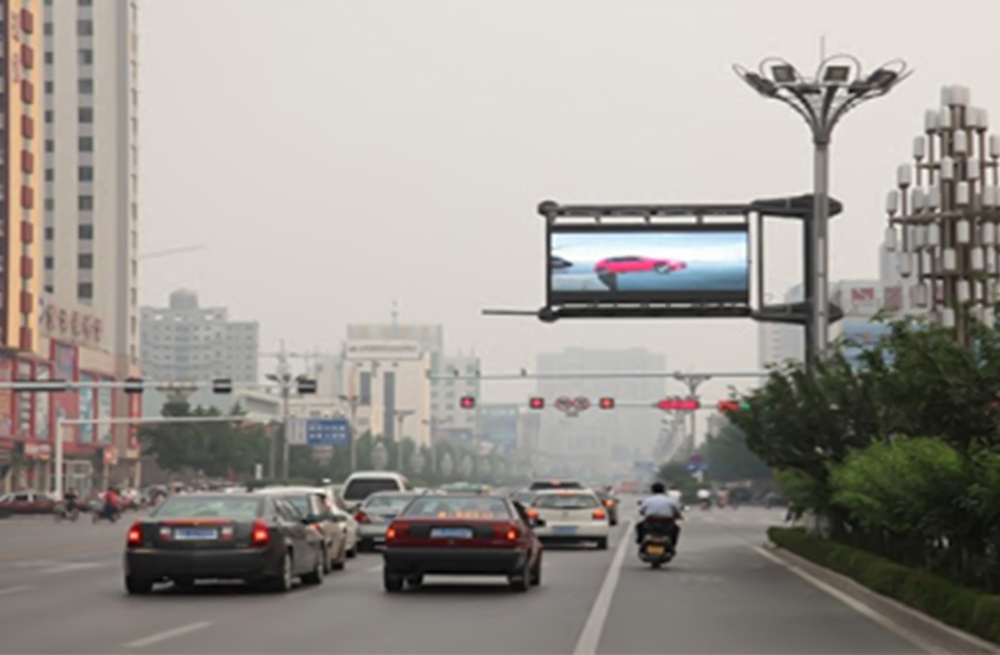
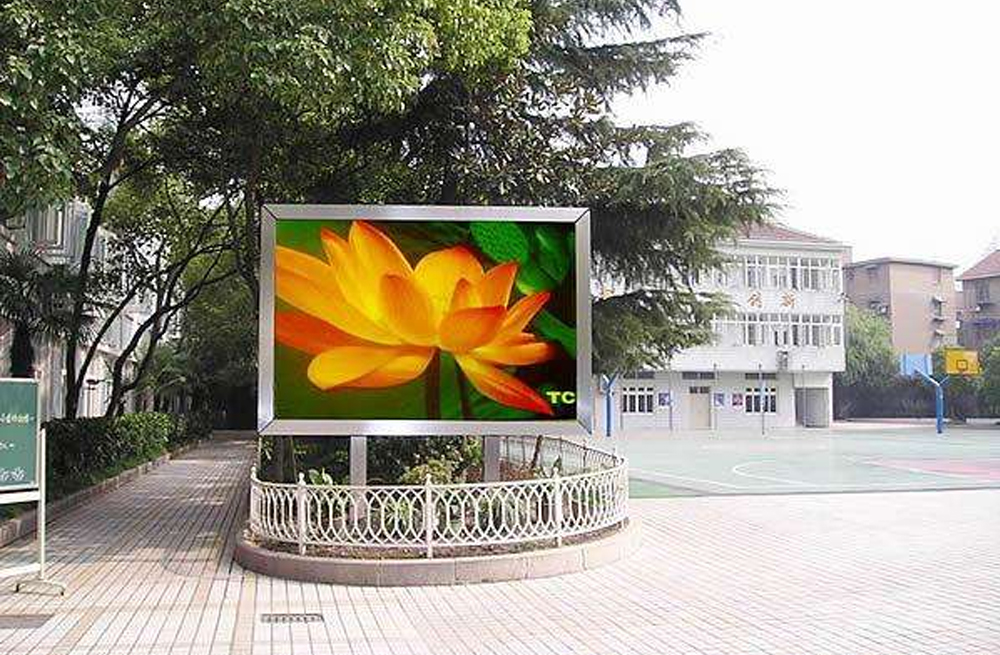
Large outdoor LED display screens are modular, weather-resistant video walls built to deliver bright, readable content across long viewing distances. For outdoor digital signage, the right screen is not simply the largest option. It must balance pixel pitch, brightness, IP protection, refresh rate, cabinet design, power, control equipment, installation conditions, and total lifetime cost.
This buyer’s guide explains how large outdoor LED display screens work, which specifications matter, and how to choose a reliable solution for advertising, stadiums, transport hubs, retail facades, public information, and live events.
Large Outdoor LED Display Screens at a Glance
| Decision factor | Practical starting point | Why it matters |
|---|---|---|
| Pixel pitch | Choose by viewing distance and content detail | Controls image detail, viewing comfort, and price |
| Brightness | About 3,500-5,000 nits for shaded locations; 5,000-8,000+ nits for direct sunlight | Keeps content readable without wasting power |
| Weather protection | Typically IP65 or higher on the exposed front; verify rear protection for the installation | Protects modules and electronics from dust and water |
| Refresh rate | At least 1,920 Hz for general signage; 3,840 Hz is preferred for camera use | Reduces visible scan lines and flicker in photos or video |
| Service access | Front, rear, or dual access | Determines installation depth and maintenance workflow |
| Control system | Match resolution, inputs, remote publishing, and redundancy needs | Ensures stable playback and simple content management |
| Structure and power | Engineer for wind load, drainage, grounding, heat, and peak demand | Directly affects safety, uptime, and operating cost |
These figures are planning ranges, not universal requirements. Final specifications should be confirmed against local sunlight, viewing distance, climate, screen dimensions, regulations, and structural calculations.
What Is a Large Outdoor LED Display Screen?
A large outdoor LED screen is assembled from individual LED modules mounted inside cabinets. Multiple cabinets connect to create a seamless display at the required width and height. A sending device or LED video processor prepares the source signal, while receiving cards distribute image data to the modules. Power supplies convert incoming electricity for the display electronics.
Unlike an outdoor LCD panel, a direct-view LED display has no fixed bezel between cabinets and can be built in custom sizes or aspect ratios. High light output makes it suitable for daylight viewing, while sealed modules and cabinets support permanent exterior installation.
How to Choose a Large Outdoor LED Display
1. Start With Viewing Distance and Pixel Pitch
Pixel pitch is the center-to-center distance between adjacent pixels, measured in millimeters. A smaller pitch produces finer detail but also increases LED density and cost. As a simple planning rule, the pitch number in millimeters is close to the minimum comfortable viewing distance in meters. For example, P6 is commonly evaluated for viewers around 6 meters or farther away. The correct choice still depends on content, screen size, viewing angle, and budget.
- Closer viewing or detailed text: consider a finer pitch.
- Roadside billboards viewed from farther away: a wider pitch may deliver better value.
- Mixed viewing distances: test sample content at the nearest expected viewing point before ordering.
2. Specify Brightness for the Actual Sunlight
Brightness is measured in nits. An outdoor screen facing direct sun needs more output than a shaded facade or covered concourse. More brightness is not always better: a screen that is too bright at night can be uncomfortable, consume unnecessary power, and conflict with local rules. Choose a display with automatic brightness adjustment so output follows ambient light throughout the day.
3. Check IP Rating, Climate, and Thermal Design
For exposed installations, confirm the ingress protection rating for both the front and rear of the cabinet. The IP code describes resistance to solids and water; it does not by itself guarantee performance in every climate. Also review the rated operating temperature, humidity range, corrosion protection, drainage path, ventilation, and resistance to ultraviolet exposure. Coastal locations may require additional protection from salt air.
4. Match Refresh Rate and Image Processing to the Content
Standard advertising can often run well at 1,920 Hz, while a 3,840 Hz refresh rate is preferred when the screen will be filmed for broadcast, social media, or live production. Also compare grayscale performance, color calibration, scan mode, frame rate support, and low-brightness image quality. These factors affect how smooth gradients, skin tones, small text, and fast motion appear.
5. Plan Front or Rear Maintenance Access
Rear-service cabinets are practical when technicians have a safe service corridor behind the display. Front-service cabinets reduce installation depth and suit walls or locations where rear access is impossible. Confirm how modules, power supplies, receiving cards, and cables can be replaced. A serviceable design can reduce downtime far more than a small saving in the initial purchase price.
6. Size the Control System Correctly
The control system must support the display’s total pixel resolution, signal format, input sources, scaling, scheduling, monitoring, and backup strategy. A large screen may require a dedicated video processor, sending device, fiber conversion, and multiple LED receiving cards. For unattended digital signage, ask for remote content publishing, power control, temperature alerts, and status monitoring.
7. Engineer the Structure and Electrical System
Large outdoor displays place significant wind and static loads on their supporting structure. A qualified local engineer should verify the steelwork, foundations, attachment points, access platforms, lightning protection, grounding, fire requirements, and permitting. Electrical design should account for peak demand, average consumption, circuit distribution, surge protection, and safe isolation. Confirm these items before cabinet production so mechanical and cable layouts match the site.
Which Outdoor LED Screen Fits Each Application?
| Application | Main priorities | Typical content |
|---|---|---|
| Roadside advertising | Long-distance readability, high brightness, remote scheduling | Short messages, brand visuals, campaign rotation |
| Retail facade | Closer viewing, color accuracy, slim installation, quiet operation | Promotions, product launches, store information |
| Stadium or arena | High refresh rate, wide viewing angle, redundancy, robust protection | Live video, scores, replays, sponsorship |
| Transport hub | Text clarity, uptime, monitoring, integration with information systems | Arrivals, departures, wayfinding, alerts |
| Public information | Reliability, legibility, scheduling, local compliance | Notices, emergency messages, civic information |
| Rental or live event | Fast assembly, lightweight cabinets, camera performance | IMAG, presentations, sponsor content, stage graphics |
Outdoor LED Digital Signage System Components
A complete large outdoor digital signage system includes more than LED cabinets. The design normally covers:
- LED modules and cabinets
- LED power supplies and power distribution
- Sending devices, receiving cards, and hub boards
- Video processing, scaling, and source switching
- Network, fiber, or other signal transmission
- Content management and playback hardware
- Brightness sensors and environmental monitoring
- Mounting structure, service access, cooling, and weather sealing
- Spare modules, receiving cards, power supplies, and cables
Ask the supplier for a signal-flow diagram and power-distribution drawing. These documents make installation, troubleshooting, and future component replacement much easier.
Installation Checklist
- Survey the site. Record viewing distances, sightlines, sun direction, available power, network access, maintenance space, and local restrictions.
- Define the screen. Confirm dimensions, aspect ratio, pixel pitch, resolution, brightness, viewing angle, and cabinet service method.
- Complete engineering. Approve structural, wind-load, electrical, grounding, drainage, cooling, and access plans.
- Bench-test components. Test cabinets, control equipment, cables, and backup files before shipment or lifting.
- Install and align cabinets. Keep the structure level and cabinet seams consistent to protect image uniformity.
- Configure and calibrate. Map receiving cards, set brightness limits, calibrate color, and test every input and playback schedule.
- Document handover. Store wiring diagrams, configuration files, calibration data, spare-parts lists, warranties, and maintenance procedures.
What Determines Outdoor LED Screen Cost?
The purchase price is driven by total display area, pixel pitch, LED quality, cabinet material, protection level, brightness, refresh rate, control equipment, and redundancy. Project cost also includes the steel structure, freight, lifting, power distribution, network equipment, installation labor, permits, commissioning, and spare parts.
Compare proposals using total cost of ownership, not price per square meter alone. Request expected maximum and typical power consumption, warranty terms, spare-parts availability, remote support, and the replacement process for modules and electronic components. Energy use and maintenance access can materially change the cost over the screen’s service life.
Maintenance for Reliable Outdoor Operation
- Inspect cabinet seals, doors, vents, drainage, and cable entries on a regular schedule.
- Remove dust and debris using the manufacturer’s approved cleaning method.
- Monitor temperature, humidity, power, communication status, and brightness.
- Back up receiver-card files, screen mapping, processor presets, and content schedules.
- Keep labeled spare modules, receiving cards, power supplies, and data cables from the same production batch when possible.
- Recheck structural fasteners, grounding, and surge-protection devices according to the engineering maintenance plan.
Frequently Asked Questions
What is the best pixel pitch for a large outdoor LED screen?
The best pixel pitch depends mainly on the nearest viewing distance and required detail. A practical first estimate is one meter of minimum viewing distance for each millimeter of pitch, then confirm the choice with real content and the full screen dimensions.
How bright should outdoor LED digital signage be?
Many shaded outdoor locations are planned around 3,500-5,000 nits, while direct-sun sites may need 5,000-8,000 nits or more. The correct value depends on orientation and local conditions. Automatic brightness control is important for nighttime comfort and energy efficiency.
Is IP65 enough for an outdoor LED display?
IP65 on the exposed face is a common starting specification because it indicates dust-tight construction and protection against water jets. However, you must also verify rear-side protection, cabinet seals, drainage, operating temperature, corrosion risk, and the site’s exposure.
What refresh rate is recommended?
At least 1,920 Hz is a common baseline for general signage. Choose 3,840 Hz when cameras will regularly record the display or when broadcast and live-event performance are important.
Can a large outdoor LED display show live video?
Yes. With the correct processor, inputs, bandwidth, and control system, it can show live video, scheduled advertising, data feeds, alerts, and multi-window layouts. Confirm the source formats and total output resolution during system design.
How long does an outdoor LED display last?
There is no single guaranteed lifespan for every installation. LED quality, brightness settings, heat, humidity, power quality, maintenance, and daily operating hours all affect service life. Compare warranties, component ratings, and spare-parts support instead of relying on one headline lifetime number.
What information is needed for an accurate quotation?
Provide the screen width and height, installation location, nearest viewing distance, photos or drawings, screen orientation, mounting method, service access, power supply, content sources, control-room distance, and expected use. This allows the supplier to recommend a suitable pixel pitch, cabinet layout, control system, and protection level.
Plan Your Large Outdoor LED Display
The best large outdoor LED display screen is the one engineered for its site and content. Begin with viewing distance and sunlight, then validate weather protection, processing, maintenance access, structure, power, and lifetime support as one complete system.
Browse our outdoor LED display screen solutions, or contact EagerLED with your screen size, viewing distance, installation drawings, and content requirements for a project-specific recommendation.