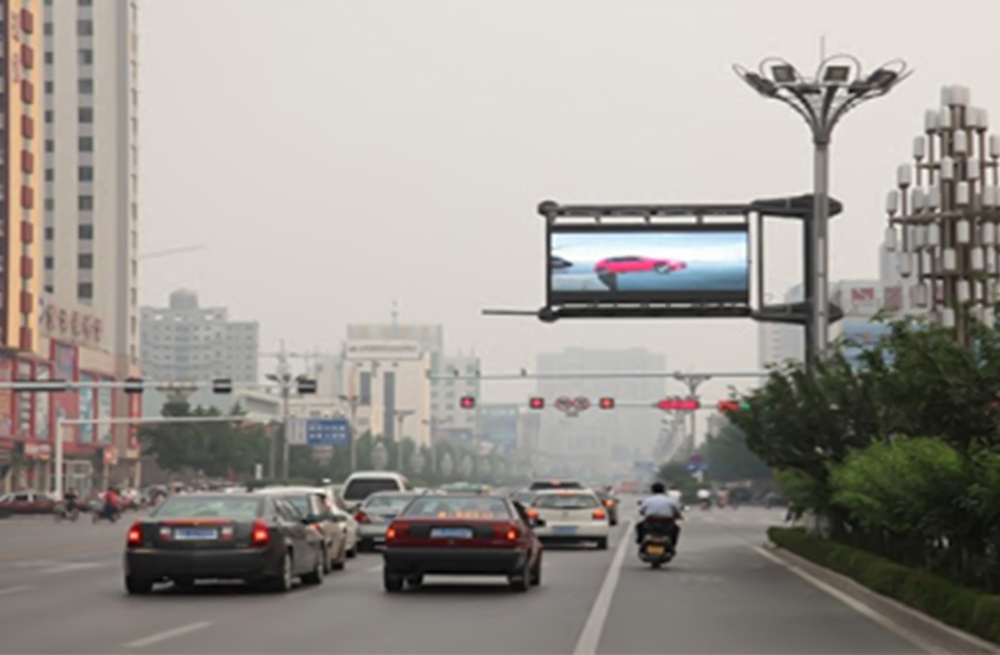
An outdoor LED display site survey verifies the structural, electrical, data, environmental, safety, and maintenance conditions before a fixed installation is designed or quoted. The survey should record exact dimensions, the mounting surface, wind-load inputs, power capacity, grounding, signal routes, viewing conditions, access, and local permit requirements. Getting these details right early reduces redesign, installation delays, and avoidable costs.
This practical checklist is intended for LED display buyers, system integrators, project managers, and installation teams planning a permanent outdoor LED display screen.
Outdoor LED Display Site Survey: Quick Checklist
| Survey area | What to verify | What to record |
|---|---|---|
| Screen requirements | Screen size, resolution, content, viewing distance, and brightness needs | Width, height, pixel pitch target, use case, and operating hours |
| Structure | Wall, roof, pole, or ground support and available fixing points | Dimensions, material, condition, obstructions, and engineering constraints |
| Power | Supply capacity, phase, protective devices, grounding, and cable route | Voltage, available load, distribution location, cable length, and earthing details |
| Control and data | Control-room location, signal source, network path, and backup route | Cable distances, conduit, termination points, and required converters |
| Environment | Rain, heat, sunlight, wind, dust, salt, chemicals, drainage, and lightning exposure | Site orientation, climate risks, corrosion level, and protection requirements |
| Access and safety | Installation access, lifting, scaffolding, work zone, and maintenance clearance | Equipment needed, access restrictions, safe working area, and service method |
Information to Collect Before the Site Visit
Ask the customer or project owner for the following information before traveling to the site:
- Proposed screen width, height, pixel pitch, and cabinet type.
- Fixed installation method: wall-mounted, embedded, roof-mounted, pole-mounted, suspended, or free-standing.
- Primary content, input sources, playback schedule, and whether the system is synchronous or asynchronous.
- Expected viewing distance, viewing angle, traffic direction, and sunlight orientation.
- Available drawings, structural reports, electrical single-line diagrams, and permit requirements.
- Who is responsible for the steel structure, power distribution, data cabling, lifting, installation, and commissioning.
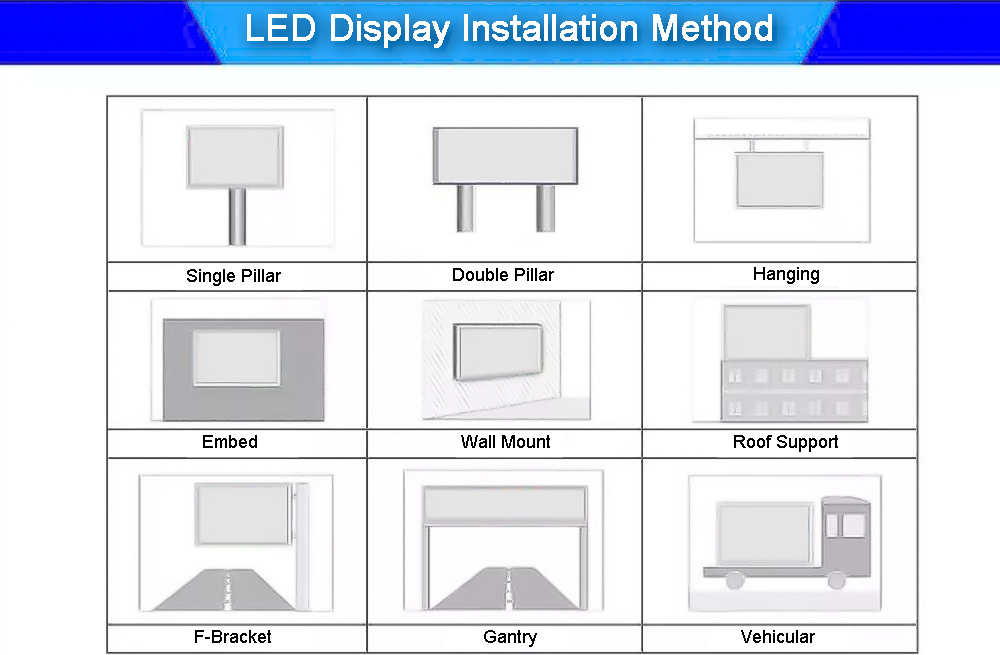
8-Point Fixed LED Display Site Survey Checklist
1. Inspect the Structure and Mounting Location
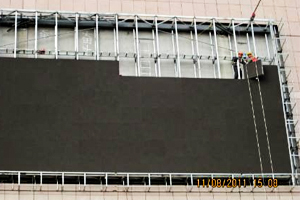
Measure the usable installation area and confirm the condition of the wall, roof, column, foundation, or supporting frame. Record the construction material, thickness, available anchor points, recess dimensions, nearby windows, signs, pipes, and any obstacle that could affect installation or ventilation.
For a pole-mounted or free-standing screen, a qualified structural engineer should assess the soil, foundation, steel structure, wind load, screen weight, and local design code. The site survey supplies the inputs; it does not replace stamped structural calculations.
2. Verify Power, Distribution, and Grounding
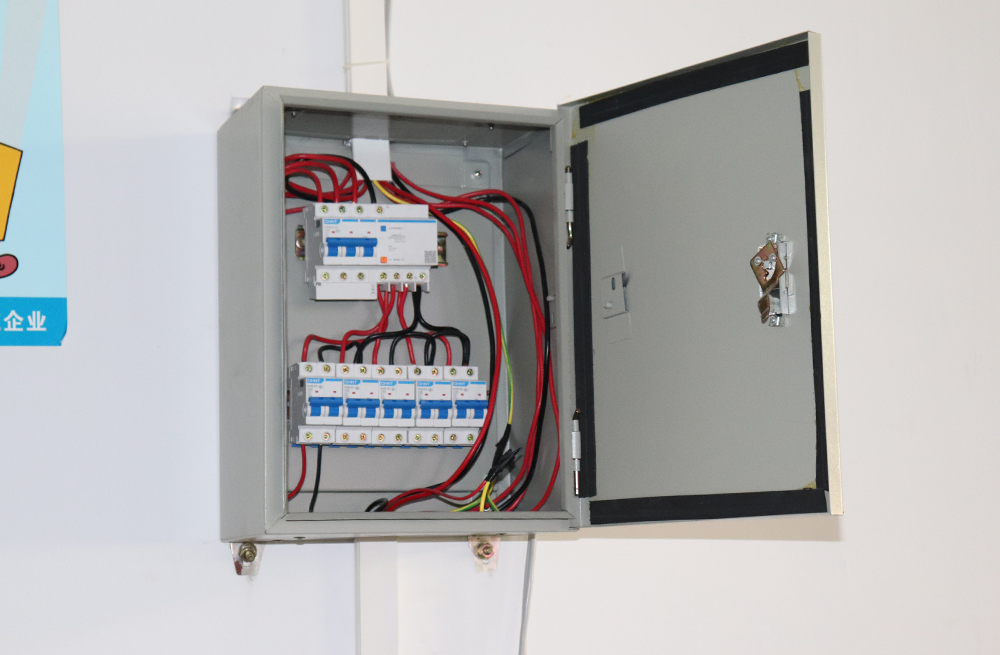
Confirm the available voltage, phase, frequency, and electrical capacity. Identify the distribution board location, cable route, isolation switch, protective devices, surge protection, and grounding point. Measure the required cable length and note whether existing conductors are appropriately sized for the calculated load and installation method.
Final conductor sizing, breakers, grounding, and lightning protection must be approved by a licensed electrician and comply with local electrical codes. Do not assume that an existing circuit is suitable simply because power is present.
3. Map the Control System and Signal Route
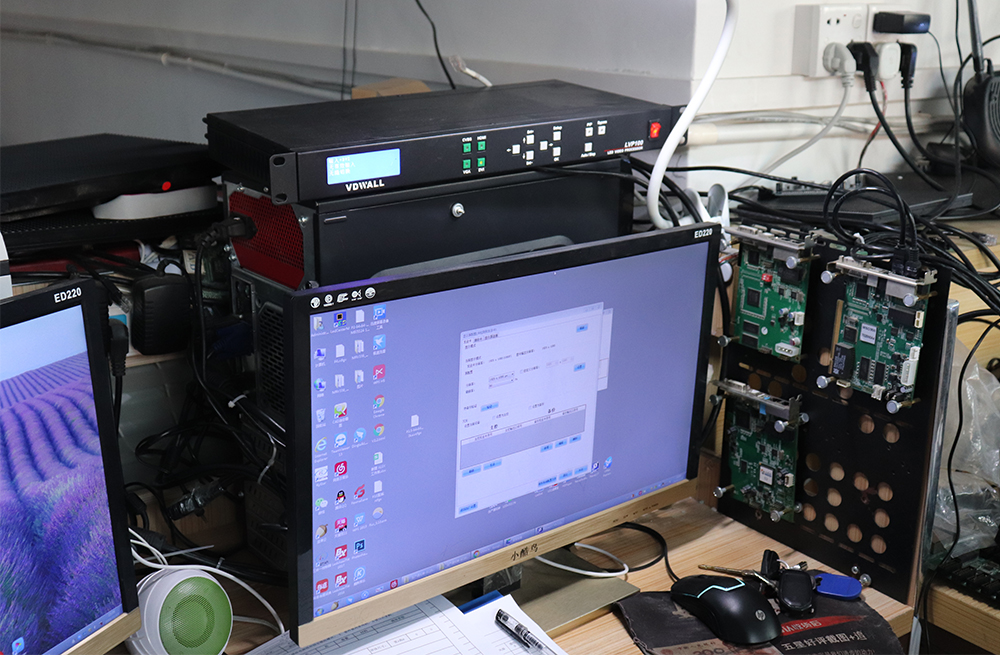
Locate the control room, media player, video processor, sending device, and display connection points. Record every cable route, conduit, bend, penetration, and termination. Also document live input sources, switching requirements, remote-control needs, and whether monitoring or backup equipment is required.
Standard copper Ethernet channels are normally limited to 100 meters, including patch cables. For longer runs, high-interference areas, or links between buildings, use a suitable fiber solution selected for the required distance, bandwidth, connectors, and network equipment. Include spare data paths or fibers for service continuity.
4. Confirm Installation Access, Tools, and Logistics
Determine how cabinets, steelwork, and electrical equipment will reach the installation point. Check vehicle access, loading limits, door and elevator dimensions, crane or hoist positions, scaffolding availability, work-at-height requirements, and permitted working hours.
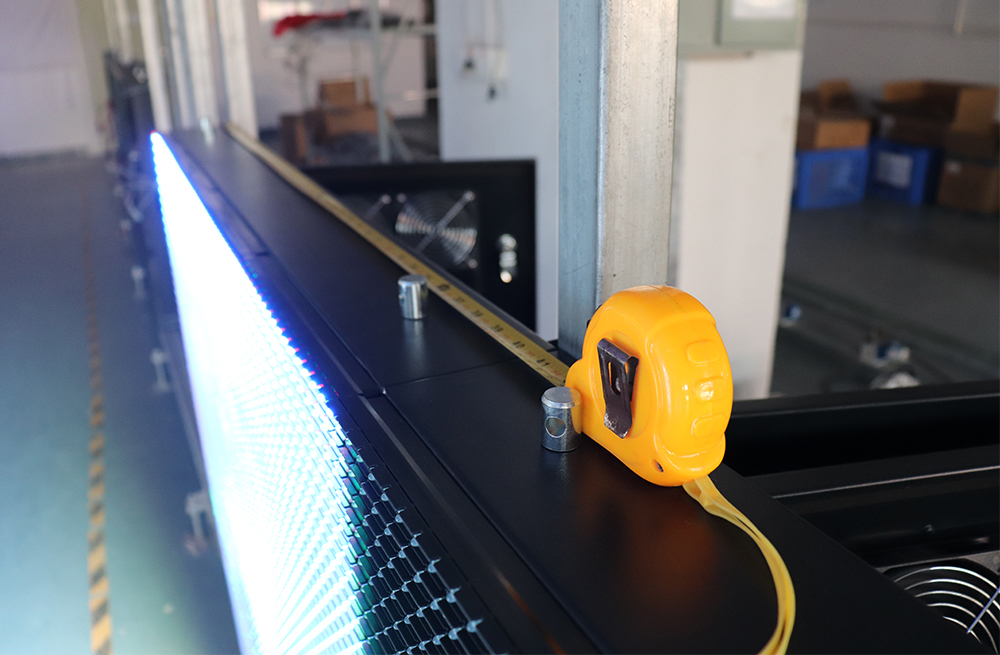
Typical survey tools include a laser distance meter, tape measure, camera, level, multimeter used by qualified personnel, drawing materials, PPE, and a laptop when configuration checks are required.
5. Assess the Outdoor Environment
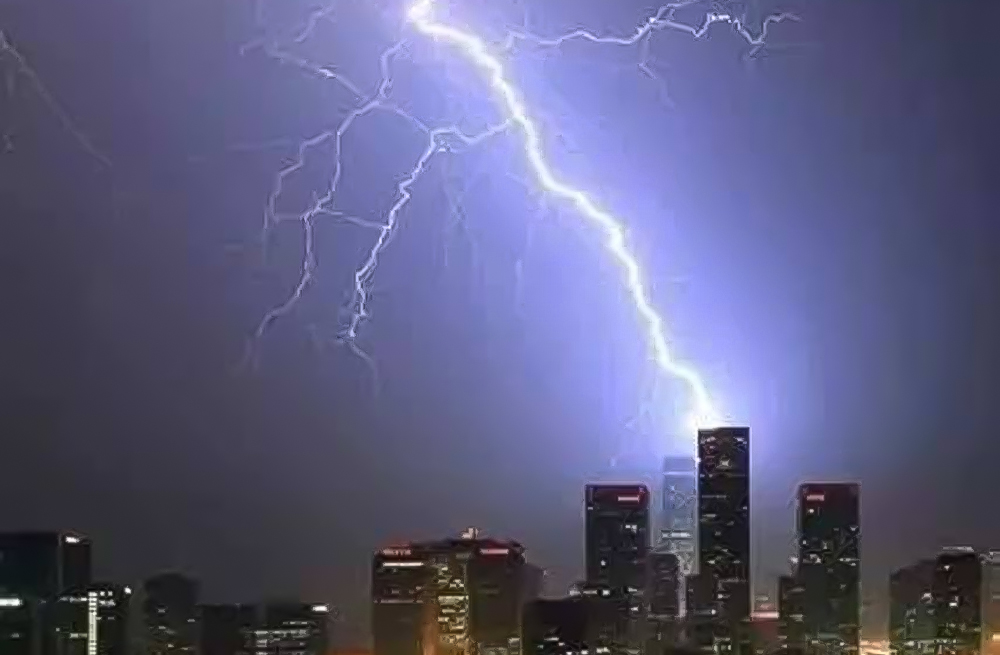
Record the screen orientation and exposure to direct sun, rain, prevailing wind, dust, heat, cold, humidity, standing water, and lightning. Coastal or industrial sites may require enhanced corrosion protection because salt, acids, or alkaline contaminants can shorten the life of cabinets, connectors, and steelwork.
Confirm drainage, ventilation, heat dissipation, waterproof cable entries, service clearance, and the protection rating required for the exposed face and rear service area. Brightness should be selected from the actual viewing and sunlight conditions rather than from screen size alone.
6. Create a Complete Photo and Measurement Record
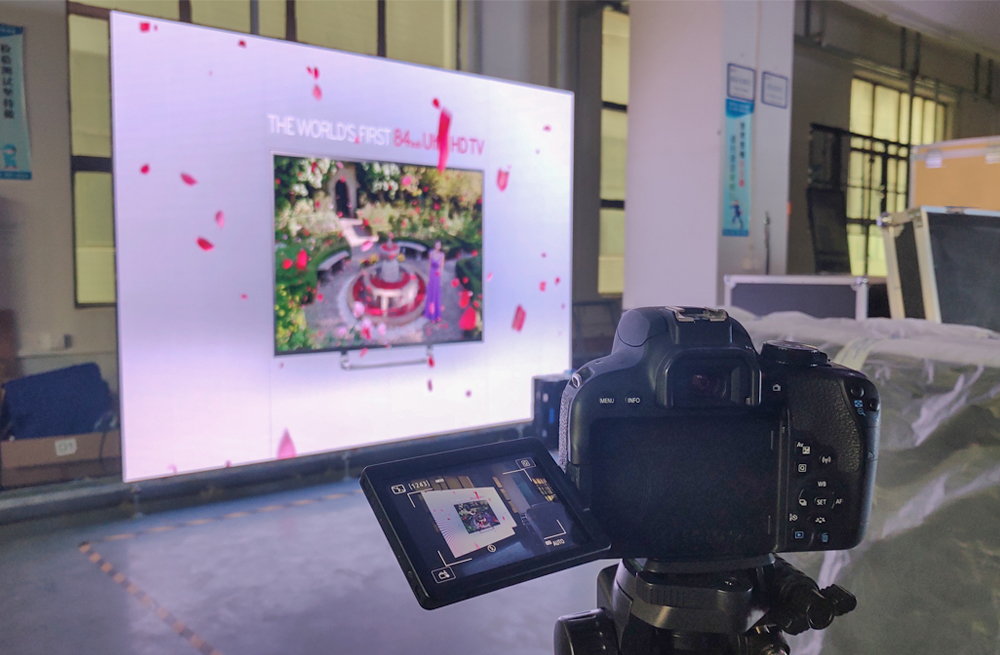
Photograph the installation surface, surrounding buildings, access route, power distribution, grounding point, signal path, control location, rear-service area, and wide views from the audience position. Add a reference scale where useful and label each image so engineers can connect it to the survey drawing.
7. Confirm Maintenance Access and Special Requirements
Decide whether the screen will use front or rear maintenance and verify the required service clearance. Record safe access to modules, receiving cards, power supplies, fans, distribution boxes, and cable connections. Ask about redundancy, noise limits, remote monitoring, emergency shutdown, branding, operating hours, and any architectural restrictions.
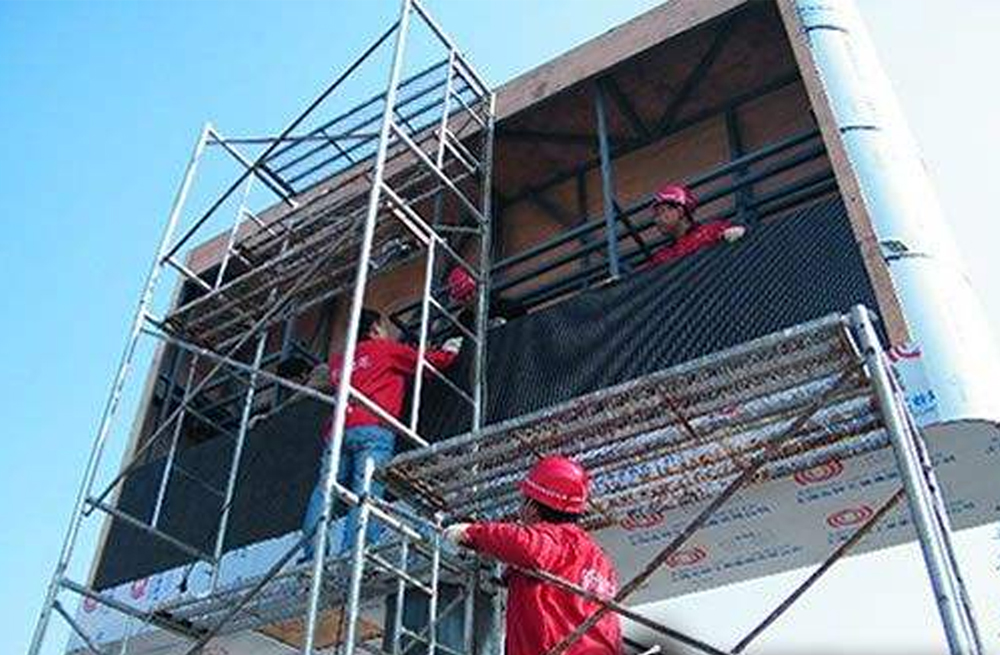
8. Check Permits, Local Resources, and Responsibilities
Identify the approvals that may be required for signage, structure, electrical work, road occupation, lifting, and work at height. Confirm which party will provide structural calculations, permits, steel fabrication, electrical installation, data cabling, lifting equipment, site security, and waste removal. When local procurement is planned, verify the availability and specifications of steel and building materials before finalizing the design.
Critical Outdoor LED Screen Risks
- Water ingress: Rain, condensation, poor drainage, or unsealed cable entries can cause corrosion, short circuits, and fire risk.
- Lightning and surges: Coordinate grounding, bonding, surge protection, and lightning protection with qualified professionals and applicable standards.
- Heat: Solar gain and internal heat can reduce component life or trigger shutdowns if ventilation and thermal management are inadequate.
- Wind and structure: Screen area, cabinet design, support steel, anchors, and foundation must be checked against local wind and structural requirements.
- Maintenance access: Inadequate clearance or unsafe access increases downtime and service cost throughout the display’s life.
What Should the Site Survey Report Include?
A useful outdoor LED display site survey report should include:
- A dimensioned site sketch and proposed screen location.
- Photos with labels and viewing-direction references.
- Mounting method and structural inputs for engineering review.
- Electrical supply, estimated cable distances, distribution, grounding, and protection notes.
- Control-system layout, signal sources, network route, and backup provisions.
- Environmental risks, access plan, maintenance method, and safety constraints.
- A responsibility matrix, open questions, approvals, and assumptions that affect the quotation.
The report should be reviewed by the customer, LED display supplier, structural engineer, and electrical contractor before manufacturing begins.
Frequently Asked Questions
Why is a site survey needed before quoting a fixed outdoor LED display?
A survey turns assumptions into measured requirements. It helps the supplier price the correct screen, structure, power distribution, control equipment, cabling, installation access, and environmental protection.
Who should attend the site survey?
For a typical project, include the customer representative, LED display system designer or installer, structural specialist, and electrical contractor. Complex sites may also require the architect, general contractor, network team, safety officer, or local authority.
What measurements are essential?
Measure the screen area, mounting surface, clearances, audience distance, cable routes, power-source distance, control-room distance, access openings, and lifting path. Record units and reference points consistently.
Can the survey replace structural and electrical engineering?
No. The survey collects accurate site information, but final structural calculations and electrical design should be completed and approved by qualified professionals under local regulations.
When should fiber be used for LED display signal transmission?
Fiber is appropriate when the link exceeds the practical limit of copper Ethernet, crosses between buildings, faces strong electromagnetic interference, or needs added distance and reliability. Select multimode or single-mode fiber according to the equipment, bandwidth, and total link distance.
Plan the Installation Before Manufacturing
A complete site survey gives every project party the same verified information before the screen and steelwork are produced. For help selecting an outdoor display, control system, power distribution, and signal solution, contact our LED display team with your site photos, dimensions, and project requirements.
Technical note: Product selection and installation details must be validated for the actual site by qualified structural and electrical professionals. Local building, electrical, fire, and safety requirements take priority.