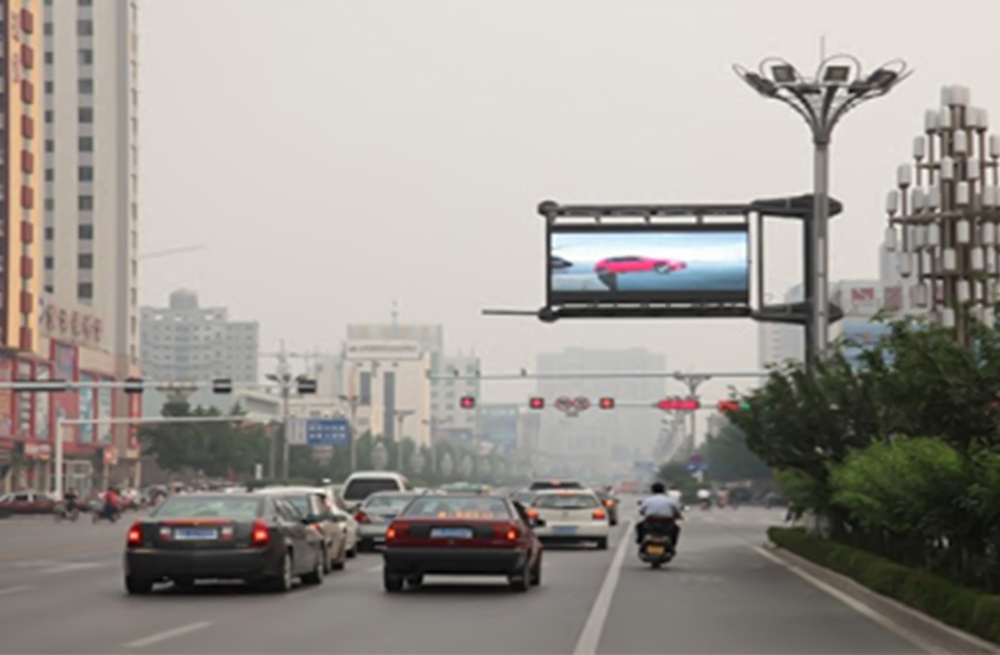
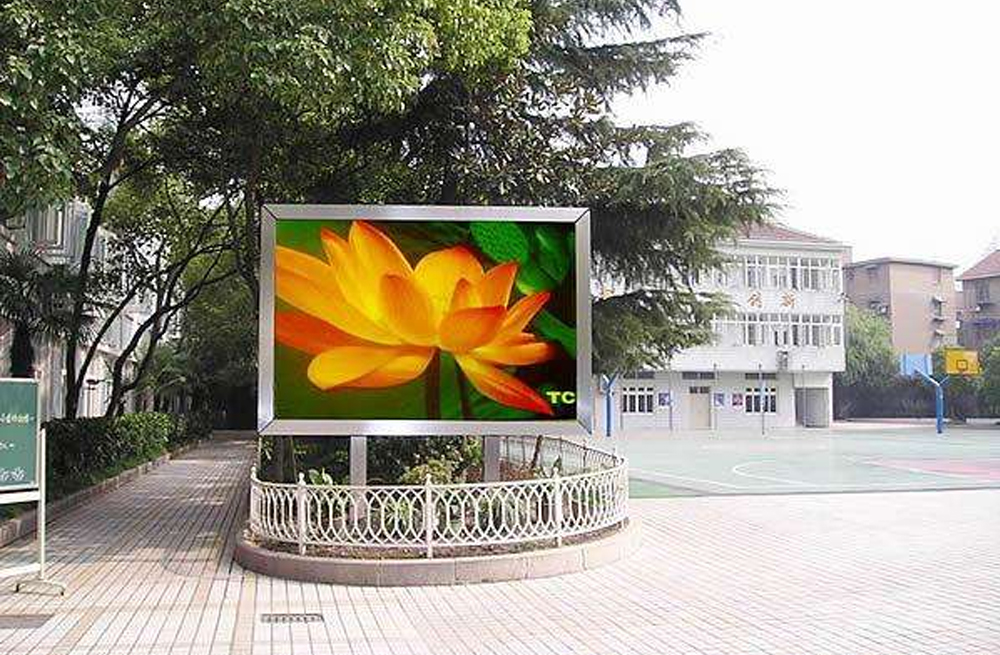
Short answer: Choose an outdoor LED display board by matching pixel pitch to viewing distance, specifying enough brightness for the installation environment, confirming weather protection, and checking refresh rate, cabinet design, control system, power use, maintenance access, warranty, and total cost. Do not compare products by price or maximum brightness alone.
An outdoor LED display board is a modular direct-view screen designed to present advertising, information, live video, or event content in exterior environments. A reliable system combines LED modules, cabinets, power supplies, receiving cards, a controller, cabling, mounting hardware, and content software. Every part must suit the same operating conditions.
This guide explains the ten factors buyers should verify before ordering a fixed or rental outdoor LED display screen.
Outdoor LED Display Board Selection Checklist
| Factor | What to confirm | Why it matters |
|---|---|---|
| Pixel pitch | Viewing distance and content detail | Controls image sharpness and cost |
| Brightness | Measured, calibrated output plus automatic dimming | Keeps content readable by day and comfortable at night |
| Weather protection | Front and rear IP ratings, temperature and humidity limits | Protects electronics in the actual installation environment |
| Refresh rate | On-camera requirements and scan configuration | Reduces visible scan lines and flicker |
| Cabinet | Material, dimensions, flatness, weight and locks | Affects alignment, transport and structural load |
| Maintenance | Front or rear access and module replacement time | Determines downtime and service space |
| Control system | Resolution capacity, inputs, redundancy and remote monitoring | Ensures stable playback and future compatibility |
| Power and cooling | Average and maximum consumption, distribution and heat removal | Affects operating cost and reliability |
| Image quality | Color calibration, grayscale and uniformity | Produces consistent colors across modules |
| Support | Warranty scope, spare parts and technical response | Reduces lifecycle risk |
1. Outdoor LED Display Board Pixel Pitch and Viewing Distance
Pixel pitch is the center-to-center distance between adjacent pixels, measured in millimeters. A smaller pitch produces more pixels in the same area and can show finer detail at close range, but it usually increases cost and power density.
A practical starting estimate is: minimum comfortable viewing distance in meters is approximately equal to the pixel pitch in millimeters. For example, P6 is often evaluated from about 6 meters or farther. This is a planning shortcut, not a universal standard. Text size, content type, screen dimensions, traffic speed, and installation height can justify a different choice.
Ask the supplier for the native resolution of the complete screen, not just the module resolution. Confirm that the proposed canvas has enough pixels for the smallest text and graphics you intend to display.
2. Outdoor LED Display Board Brightness and Automatic Dimming
Outdoor screens need high luminance to overcome sunlight and reflections. Many projects begin by evaluating roughly 4,500 to 7,000 nits, but the correct value depends on screen orientation, shade, latitude, operating hours, and local rules. A sun-facing roadside board may need more output than a shaded facade display.
Maximum brightness is not the whole answer. Request calibrated brightness data, contrast performance, and a light sensor with scheduled or automatic dimming. Running a screen unnecessarily bright at night wastes energy, accelerates component aging, and can create glare.
3. Outdoor LED Display Board Weather Protection and Structural Safety
Check the ingress protection rating separately for the front and rear of the cabinet. IP65 is a common target for an exposed front face, but the required rating depends on cabinet design and whether the rear is enclosed. The first IP digit describes protection from solid objects; the second describes water protection. Review the rating scope rather than treating the number as a blanket guarantee. The IEC overview of IP ratings explains the classification.
Also request operating temperature and humidity limits, corrosion protection, UV resistance, drainage, ventilation, and lightning or surge protection. A qualified structural engineer should confirm the frame, anchors, wind load, access platform, and local code requirements for the final location.
4. Outdoor LED Display Board Refresh Rate for Video and Cameras
Refresh rate describes how often the displayed image is redrawn. A higher refresh rate helps reduce flicker and rolling scan lines in photos or video. For installations that will frequently appear on camera, 3,840 Hz or higher is a useful specification to evaluate. Ordinary information boards may not require the same level.
Refresh rate alone does not guarantee good footage. Camera shutter settings, scan ratio, grayscale at low brightness, PWM behavior, and the controller configuration also matter. Request a camera test using the intended brightness and frame-rate conditions.
5. Compare Cabinet Design, Weight, and Flatness
Cabinet quality determines whether modules align into a flat, consistent surface. Confirm cabinet material, tolerance, total installed weight, seam accuracy, cable routing, safety locks, handles, and grounding points.
Fixed-installation steel cabinets can be economical and robust. Aluminum cabinets are lighter and dissipate heat well. Rental cabinets prioritize quick locks, corner protection, frequent assembly, and transport. The best choice depends on how the screen will be installed and serviced, not on material alone.
6. Plan Front or Rear Maintenance Access
Maintenance access should be decided before the support structure is built. Front-service modules and power boxes suit wall-mounted displays with little space behind them. Rear-service cabinets can be easier to inspect when a safe service corridor is available.
Ask for a replacement demonstration. A technician should be able to remove a module, power supply, receiving card, and fan without dismantling unrelated cabinets. Confirm the tools required and the time needed for each common repair.
7. Size the LED Control System Correctly
The control system must support the screen’s total pixel count, physical layout, source resolution, bit depth, frame rate, and transmission distance. Decide whether the application needs live HDMI or SDI input, scheduled asynchronous playback, cloud publishing, multi-screen management, or remote status monitoring.
Critical installations should also evaluate redundant power, signal-loop backup, dual controllers, and failover behavior. Match compatible sending and receiving hardware, and leave reasonable output capacity for mapping changes. Compare suitable LED video processors and controllers as part of the complete signal path.
8. Calculate Power, Heat, and Noise
Obtain both maximum and typical power consumption per square meter. Estimate operating energy with:
Monthly energy (kWh) = screen area (m2) x average power (kW/m2) x daily operating hours x operating days.
Use maximum consumption to size distribution equipment and typical consumption to estimate the bill. Include power supplies, ventilation or air conditioning, controller equipment, and conversion losses. Ask an electrician to verify circuits, breakers, grounding, phase balance, surge protection, and emergency isolation.
Cooling design must fit the climate and enclosure. Fans reduce heat but add noise and maintenance. Sealed or fanless designs can suit noise-sensitive sites when their thermal limits are properly engineered.
9. Inspect Image Quality and Calibration
Compare sample cabinets at multiple brightness levels. Look for color shifts, dark or bright modules, banding, dead pixels, uneven seams, low-brightness artifacts, and viewing-angle changes. Request factory calibration data and confirm whether replacement modules can be matched to the installed screen later.
Useful specifications include grayscale depth, color temperature adjustment, contrast, viewing angle, and brightness uniformity. However, a side-by-side visual test with your own content is more informative than a specification sheet alone.
10. Compare Total Cost, Warranty, and Spare Parts
The purchase price is only one part of total cost of ownership. Include the structure, shipping, customs, installation, control equipment, cabling, power distribution, commissioning, content software, energy, routine cleaning, replacement parts, and access equipment.
Confirm warranty duration and exactly what it covers. Ask who pays freight, whether labor is included, how quickly technical support responds, and how long matching modules remain available. A practical spare-parts package often includes LED modules, power supplies, receiving cards, cables, fans, and masks from the same production batch.
Fixed vs. Rental Outdoor LED Displays
| Requirement | Fixed installation | Rental and events |
|---|---|---|
| Priority | Long-term weather resistance and service access | Fast assembly, low weight and durability in transport |
| Cabinet | Project-specific steel or aluminum | Die-cast cabinet with quick locks |
| Control | Scheduled content and remote monitoring | Flexible live inputs and rapid remapping |
| Maintenance | Designed around permanent access constraints | Fast module and power-box swaps |
Questions to Ask Before Ordering
- What are the exact screen dimensions, native resolution, pixel pitch, and calibrated brightness?
- What are the front and rear IP ratings, operating limits, and wind-load assumptions?
- Which LED type, driver IC, power supply, receiving card, and controller are included?
- What are typical and maximum power consumption?
- Can the supplier provide a live test at low brightness and on camera?
- How are modules calibrated, labeled, packed, and matched for future replacement?
- What drawings, wiring diagrams, configuration files, training, and remote support are included?
- Which spare parts are supplied, and what does the warranty exclude?
Frequently Asked Questions
What pixel pitch is best for an outdoor LED display board?
The best pitch is the largest value that still delivers the required detail at the closest real viewing distance. Smaller is not automatically better. Start with the approximate pitch-to-distance rule, then verify resolution with the actual content and screen size.
How bright should an outdoor LED screen be?
Many outdoor projects evaluate 4,500 to 7,000 nits as a starting range. Orientation, shade, climate, local brightness limits, and day-versus-night use determine the final target. Automatic dimming is strongly recommended.
Is IP65 enough for an outdoor LED display?
IP65 is commonly specified for an exposed front face, but it does not address every environmental risk. Confirm separate front and rear ratings plus drainage, corrosion resistance, temperature limits, ventilation, and installation details.
Do I need a 3,840 Hz refresh rate?
It is a useful target when the display will be filmed or photographed frequently. For basic text or information displays, another configuration may be adequate. Test with the intended cameras and brightness settings.
How long does an outdoor LED display last?
Service life depends on component quality, temperature, brightness, duty cycle, moisture protection, maintenance, and power stability. Ask for component specifications and warranty terms rather than relying on one headline lifetime number.
Should I choose front or rear maintenance?
Choose front maintenance when there is little or no rear access. Choose rear maintenance when a safe service corridor is available and simplifies repair. The support structure and access plan should be designed around this decision.
Final Recommendation
Prepare a written requirement sheet before requesting quotations. Give every supplier the same screen size, viewing distance, environment, content sources, operating schedule, service access, and camera requirements. Then compare complete systems on a like-for-like basis.
For a project-specific configuration, review our outdoor LED display boards or contact the EagerLED team with your dimensions, installation photos, viewing distance, and intended content.