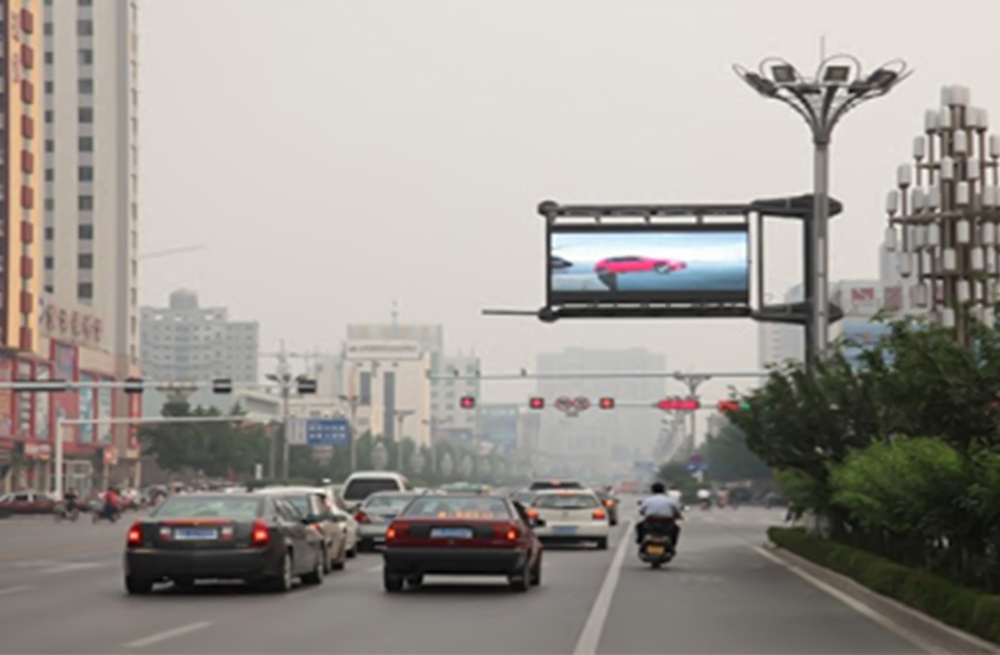
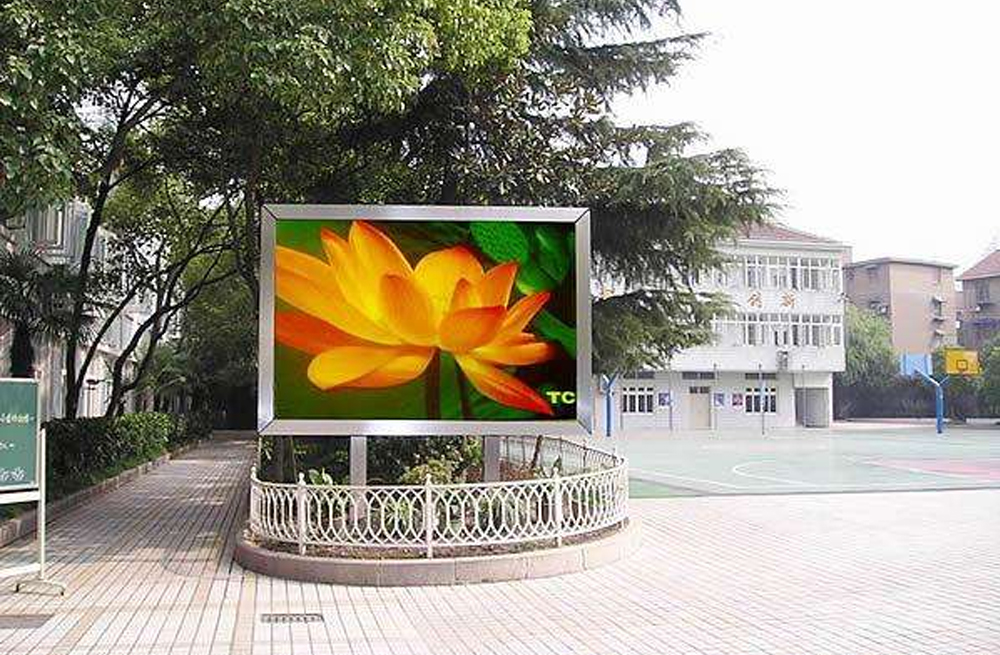
The most important LED display industry trends in 2026 are market consolidation, application specialization, stronger service expectations, and tighter cost control. Small and mid-sized LED display companies can stay competitive by choosing a defensible segment and delivering reliable pre-sales and after-sales support. Competing on screen price alone is increasingly risky because standard hardware is easier to source, while customers still need engineering, commissioning, maintenance, and long-term support.

This article explains the forces reshaping the LED display industry and gives small and medium-sized LED display companies a practical framework for choosing where to compete. The goal is not to predict which companies will disappear, but to identify the capabilities that make a supplier useful, credible, and difficult to replace.
Key takeaways
- Industry consolidation rewards focus. SMEs rarely win by offering every display type to every buyer.
- Technical execution matters as much as product price. System design, calibration, installation guidance, spare-parts planning, and response time reduce customer risk.
- Recurring service creates resilience. Maintenance contracts, remote support, training, and upgrade planning can stabilize revenue.
- A clear specialty improves search visibility and buyer trust. A company should be known for a specific application, environment, or service advantage.
LED display industry trends: What is changing in 2026?
The LED display market is moving from rapid capacity expansion toward more disciplined competition. Standard products are widely available, buyers can compare suppliers quickly, and margins are under pressure. At the same time, demand is becoming more specialized: control rooms need reliability and fine-pitch image quality, outdoor advertising needs brightness and weather resistance, rental projects need fast assembly, and retail installations need visual consistency and simple content management.

This combination creates a two-sided market. Large manufacturers benefit from scale, purchasing power, automated production, and global service networks. Smaller companies can still compete, but only when they solve a narrower customer problem more effectively or more responsively.
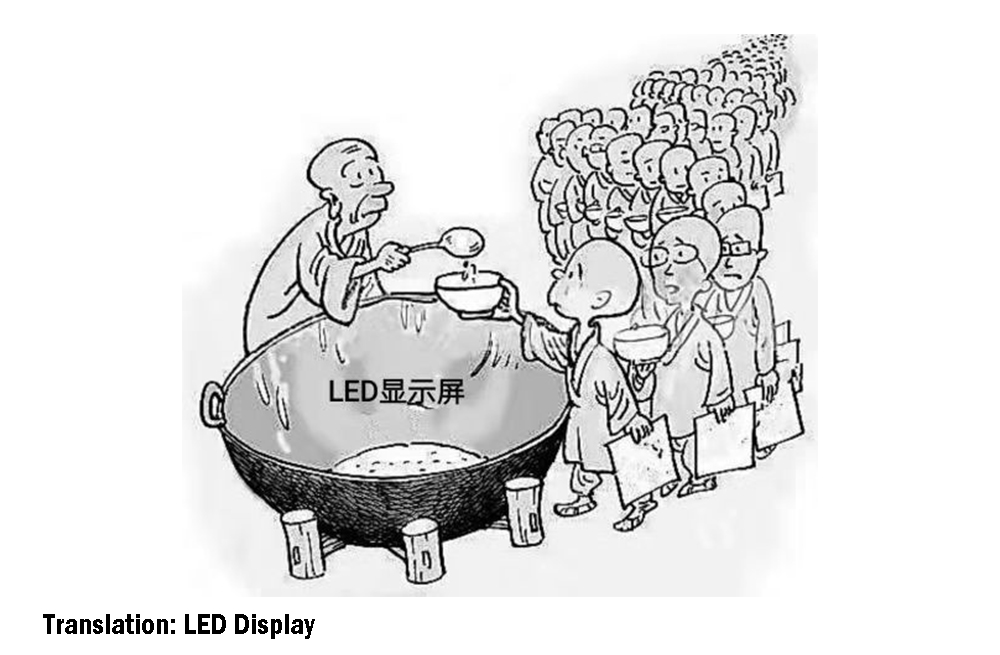
What does “swimming naked” mean for an LED display company?
The phrase describes a business whose weaknesses become visible when easy growth ends. During a fast-growing market, even a supplier with limited technology, weak quality control, or little service capacity may win orders. When demand slows or competition intensifies, those weaknesses appear in late delivery, inconsistent modules, unstable cash flow, poor documentation, and unresolved after-sales issues.
| Business area | Warning sign | Stronger practice |
|---|---|---|
| Market position | “We sell every kind of LED screen” | A defined application, customer type, or regional advantage |
| Product strategy | Competing only on cabinet or module price | Selling a verified system with documented performance |
| Quality | Inspection after problems occur | Incoming, in-process, aging, and final inspection records |
| Service | Support depends on one salesperson | Named response process, spare parts, training, and escalation |
| Cash flow | Growth funded by long receivable cycles | Project deposits, milestone payments, and disciplined inventory |
Five forces shaping LED display competition in 2026
1. Standard hardware is becoming easier to compare
LED modules, cabinets, receiving cards, power supplies, and processors can be sourced from many vendors. A long component list no longer proves differentiation. Buyers increasingly want evidence that the complete system has been engineered, tested, and supported for its intended use.
2. Fine-pitch projects raise the engineering threshold
Fine-pitch LED displays require careful decisions about viewing distance, resolution, heat, power distribution, redundancy, color calibration, front maintenance, and signal architecture. Smaller suppliers can participate when they offer genuine application expertise rather than treating fine pitch as only a pixel-pitch upgrade.
3. Outdoor projects face tighter operational requirements
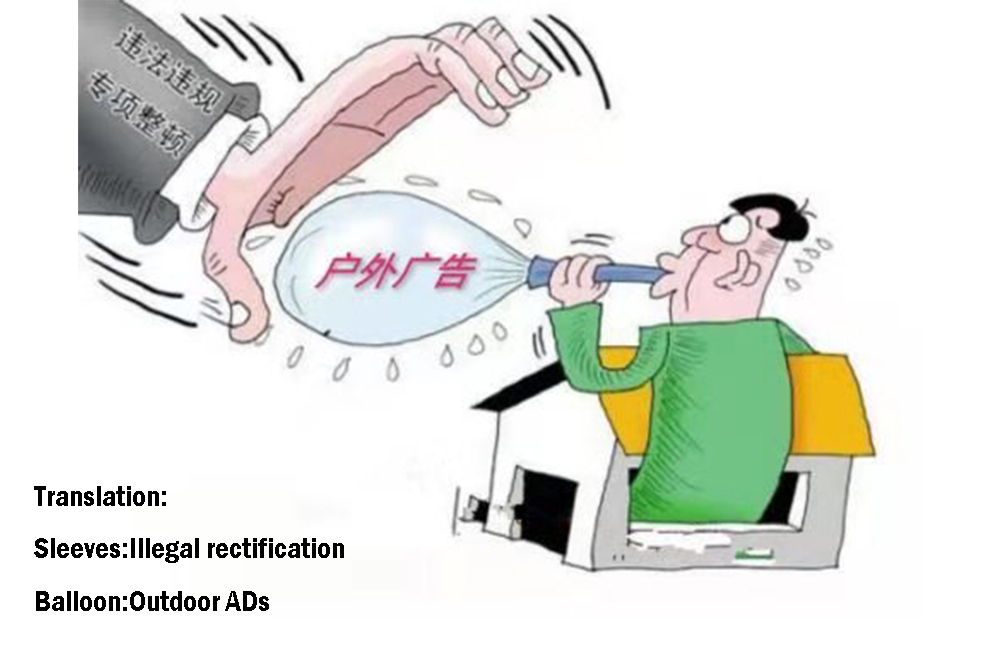
Outdoor LED displays must address local rules, structural loads, ingress protection, heat dissipation, brightness control, power consumption, safe access, and maintenance. The opportunity remains substantial, but the winning proposal is usually the one that reduces lifetime risk, not simply the one with the lowest purchase price. See our outdoor LED display screen solutions for relevant configurations.
4. Buyers expect faster, clearer support
Customers may operate equipment across time zones and often need help during installation or a live event. Clear wiring diagrams, configuration backups, remote diagnosis, training videos, spare-parts lists, and response targets are now part of the product experience.
5. Working capital can decide who survives
LED display projects involve deposits, procurement, production, shipping, installation, and final acceptance. A company can be profitable on paper and still fail if it carries excessive inventory or waits too long for payment. Order quality, payment terms, and inventory turnover deserve the same attention as sales volume.

How can small LED display companies stay competitive?
Choose one defendable niche
A useful niche is defined by a customer problem, not only by pixel pitch. Examples include front-service displays for space-limited retail stores, weather-resistant stadium perimeter screens, portable rental cabinets, fine-pitch control-room walls, or rapid replacement support for integrators. Focus makes engineering knowledge, case studies, spare parts, and marketing reinforce one another.
Package a solution instead of a parts list
A complete proposal should explain the LED module, cabinet, power supply, control system, video processing, mounting, cabling, software, spare parts, and commissioning responsibilities. Buyers should understand what is included, what performance is expected, and who owns each project risk. Compatible LED video processors and LED receiving cards should be selected as part of the system architecture, not as last-minute accessories.
Prove quality with records
Replace general claims such as “high quality” with verifiable evidence. Useful records include module batch information, brightness and color measurements, aging-test duration, cabinet flatness checks, waterproof testing where applicable, configuration files, inspection photos, and final packing lists. Documentation builds trust with both human buyers and AI-assisted procurement research.
Design after-sales service before the sale
Define support channels, response times, escalation owners, warranty boundaries, remote-access procedures, and spare-parts quantities before accepting the order. A service plan should answer three questions: who responds, how quickly they respond, and what information the customer must provide for diagnosis.

Control cost without damaging reliability
Cost reduction should remove waste, not remove safeguards. Standardize cabinet sizes where possible, limit slow-moving stock, reuse proven control architectures, negotiate component lead times, and create approved alternatives for critical parts. Avoid untested substitutions that can create color inconsistency, power instability, or service problems later.
Build partnerships for missing capabilities
An SME does not need to own every capability. Reliable partnerships with structural engineers, installers, logistics providers, control-system specialists, and local service teams can expand delivery capacity without excessive fixed cost. The customer should still receive one clear responsibility map.
A practical LED display supplier checklist
Buyers and channel partners can use this checklist to distinguish a resilient supplier from one that is competing only on price:
- Does the supplier ask about viewing distance, content, ambient light, installation, maintenance access, and operating hours?
- Can it explain why a particular pixel pitch, brightness level, scan mode, control system, and power design fit the project?
- Are product specifications, drawings, configuration files, test records, and warranty terms documented?
- Is there a clear plan for spare modules, receiving cards, power supplies, and remote troubleshooting?
- Can the supplier show relevant project experience without making unverifiable performance claims?
- Are delivery milestones, acceptance criteria, and responsibilities clear in the quotation?

Frequently asked questions
Is the LED display industry still growing?
Demand continues across advertising, retail, entertainment, sports, corporate, transport, and control-room applications, but growth is uneven. Suppliers should evaluate the specific application and region rather than assume that all LED display categories will expand at the same rate.
Can a small LED display manufacturer compete with a large brand?
Yes. A smaller company can compete through specialization, faster decisions, customization, local relationships, and responsive service. It is less likely to succeed by copying a large manufacturer’s full product range or matching its scale.
What is the best differentiation strategy for an LED display SME?
The best strategy combines a narrow target market with measurable customer value. Examples include faster front maintenance, lower installation time, better documentation, predictable spare-parts support, or expertise in a demanding environment.
What should an LED display buyer evaluate besides price?
Evaluate image performance, component consistency, control-system design, structural and electrical requirements, service access, documentation, warranty terms, spare parts, supplier response time, and total cost over the expected operating life.
Conclusion
These LED display industry trends do not mean that only the largest suppliers can succeed. Industry consolidation does not mean that only the largest LED display companies can succeed. It means that vague positioning, undocumented quality, and price-only selling are becoming less sustainable. SMEs that focus on a real customer problem, deliver a complete engineered solution, protect cash flow, and support the system after installation can remain valuable in a more demanding market.
For project-specific component selection or system planning, contact our LED display team. We can help match controllers, processors, receiving cards, power supplies, and outdoor display configurations to the application.